Stocks Surge on Positive Earnings and Inflation Anticipation, Eyes on CPI as Market Dynamics Shift

In a bullish session, stocks closed higher with the S&P 500, Dow Jones, and Nasdaq posting gains fueled by positive earnings reports, particularly from Intuitive Surgical and Lennar. Investor attention is now focused on the eagerly awaited consumer price index (CPI) report and producer price index, with expectations influencing speculation about potential shifts in Federal Reserve interest rate policies. The dollar index declined slightly due to gains against the yen and losses versus the euro, influenced by yield spreads and economic indicators. Meanwhile, the Bank of Japan maintains caution in unwinding monetary policies, while the eurozone faces economic concerns. Sterling rose, supported by higher gilts-Treasury yield spreads, despite BoE rate cuts pricing lower than the Fed’s.

Stock Market Updates

Stocks closed higher on Wednesday, driven by anticipation surrounding the upcoming release of fresh U.S. inflation data and corporate earnings reports. The S&P 500 rose by 0.57% to close at 4,783.45, the Dow Jones Industrial Average added 170.57 points (0.45%) to reach 37,695.73, and the Nasdaq Composite advanced 0.75% to settle at 14,969.65. Intuitive Surgical and Lennar played pivotal roles in lifting the market, with both companies experiencing notable stock increases of 10.3% and 3.5%, respectively. Intuitive Surgical raised its procedure growth outlook for fiscal year 2024, while Lennar announced an increase in its annual dividend.

Investor focus is now shifting towards the awaited consumer price index (CPI) report scheduled for release on Thursday, with expectations of a 3.2% year-over-year increase in December. Additionally, the producer price index is set for release on Friday. Investors are closely monitoring these reports for insights into potential shifts in the Federal Reserve’s interest rate policies, with current expectations hovering around a 64% likelihood of rate cuts, according to the CME Group FedWatch tool. The upcoming earnings season adds to the market’s dynamics, with major financial heavyweights like JPMorgan Chase, Bank of America, UnitedHealth, and Delta Air Lines set to reveal their results on Friday. Despite a mixed session on Tuesday, stocks exhibited positive momentum on Wednesday.
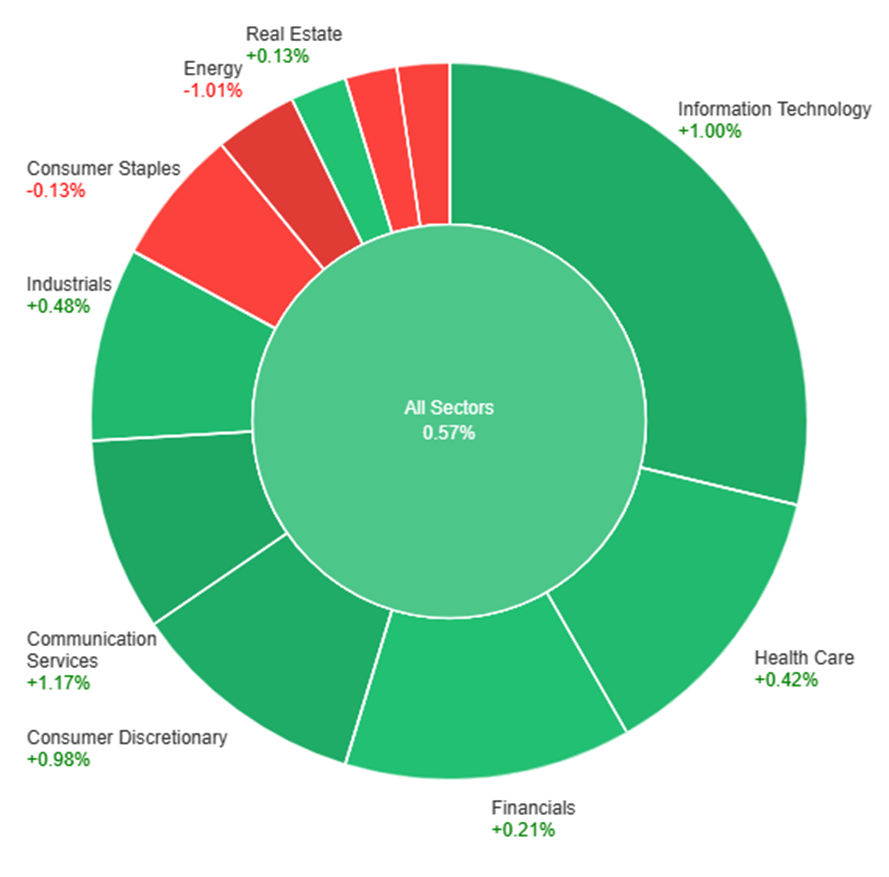
Data by Bloomberg

On Wednesday, the overall market exhibited a positive trend with a gain of 0.57%. Notable sector performances include Communication Services and Information Technology, both experiencing substantial increases at +1.17% and +1.00%, respectively. Consumer Discretionary and Industrials also contributed to the positive momentum with gains of +0.98% and +0.48%. Health Care and Financials showed more modest increases at +0.42% and +0.21%. On the flip side, Energy suffered a notable decline of -1.01%, dragging down the overall performance. Utilities and Consumer Staples experienced marginal losses at -0.06% and -0.13%, while Real Estate and Materials also showed slight decreases at +0.13% and -0.17%.

Currency Market Updates

The dollar index experienced a 0.1% decline, driven by notable gains against the vulnerable yen and losses versus the euro. This shift was influenced by the widening 2-year bund-Treasury yield spreads, reaching their highest point since July. The euro’s strength was partly attributed to comments made by ECB hawk Isabel Schnabel. Meanwhile, the Japanese yen faced broad selling pressure as Japanese data revealed a mere 1.2% rise in regular wages and a 3.0% year-on-year decline in real wages for November. This decline underscores persistent inflation concerns and a lack of domestic demand-driven wage growth, aligning with the Bank of Japan’s reluctance to end negative rates.

As the Japanese household spending continued to plummet, acting as a drag on growth and reinforcing disinflation in the December Tokyo CPI report, the BoJ governor expressed a cautious approach towards unwinding ultra-loose monetary policies. In contrast, the U.S. market anticipates the CPI report, assessing the likelihood of a soft landing and potential cuts to the Fed’s 5.5% policy rate compared to the BoJ’s -0.1% rate. The accommodative BoJ policies contributed to the Nikkei 225 reaching its highest point since the 1990s bubble, fostering risk-on sentiment and positively correlating with the rise of USD/JPY towards the key resistance. Meanwhile, EUR/USD showed a 0.34% increase, approaching the 10-day moving average but staying within the range set by Friday’s U.S. jobs data. ECB policymakers highlighted a tepid economic recovery outlook in the eurozone, anticipating a recession in late 2023, driven by concerns about the German property market and supply chain risks. Sterling saw a 0.24% rise, supported by higher gilts-Treasury yield spreads, despite remaining below the November and December highs, as the BoE’s 2024 rate cuts priced roughly 30bp less than those for the Fed.

Picks of the Day Analysis
EUR/USD (4 Hours)

EUR/USD Gains Ground Amidst Greenback’s Downside Pressure and Market Optimism

In response to a renewed downside bias in the greenback, EUR/USD rebounded, reaching two-day highs in the 1.0965/70 range. The firm optimism in the risk space on Wednesday contributed to the climb, as the USD Index (DXY) faced pressure, retreating to the 102.30 region. Factors such as the absence of clear direction in US yields, an uptick in Germany’s 10-year bund yields, and prevailing risk-on sentiment influenced the pair’s daily movement. Despite a lack of clarity in US yields and rising 10-year bund yields, the focus now shifts to the upcoming US inflation readings, set to be a crucial driver for the dollar’s price action, considering the Federal Reserve’s potential interest rate reductions in the second quarter. Conversely, comments from ECB’s De Guindos and Schnabel regarding a soft landing in the Eurozone’s economy and a reachable inflation target in 2025 had limited impact on the pair. Suggestions of premature interest rate cuts by the ECB, despite speculations of potential reductions, did not significantly sway the market.
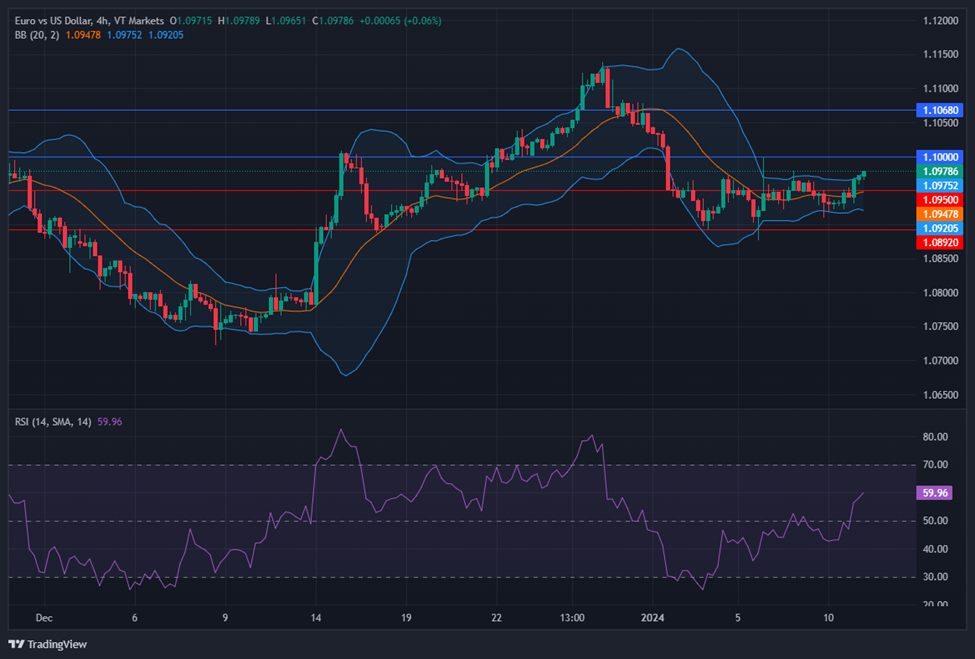
Chart EUR/USD by TradingView

On Wednesday, the EUR/USD moved slightly higher and reached the upper band of the Bollinger Bands. Currently, the price moving just around the upper band, suggesting another potential upward movement. Notably, the Relative Strength Index (RSI) maintains its position at 59, signaling a neutral but bullish outlook for this currency pair.

Resistance: 1.1000, 1.1068

Support: 1.0950, 1.0892

XAU/USD (4 Hours)

XAU/USD Hovers as Investors Await Key CPI Data Amidst Lethargic Trading

Gold (XAU/USD) continues to tread familiar levels, showing limited movement amid a cautious market environment marked by a sparse macroeconomic calendar. The precious metal recently touched a weekly low at $2,016.61 and faces support at various levels. As Wall Street maintains a positive but uneventful stance, anticipation builds for the upcoming release of the December Consumer Price Index (CPI) in the United States. Analysts predict a 3.2% annualized increase, with a potential impact on the US Federal Reserve’s rate-cutting decisions. The gold market remains on edge, awaiting CPI readings that could influence sentiment and guide the trajectory of the US Dollar in the coming days.
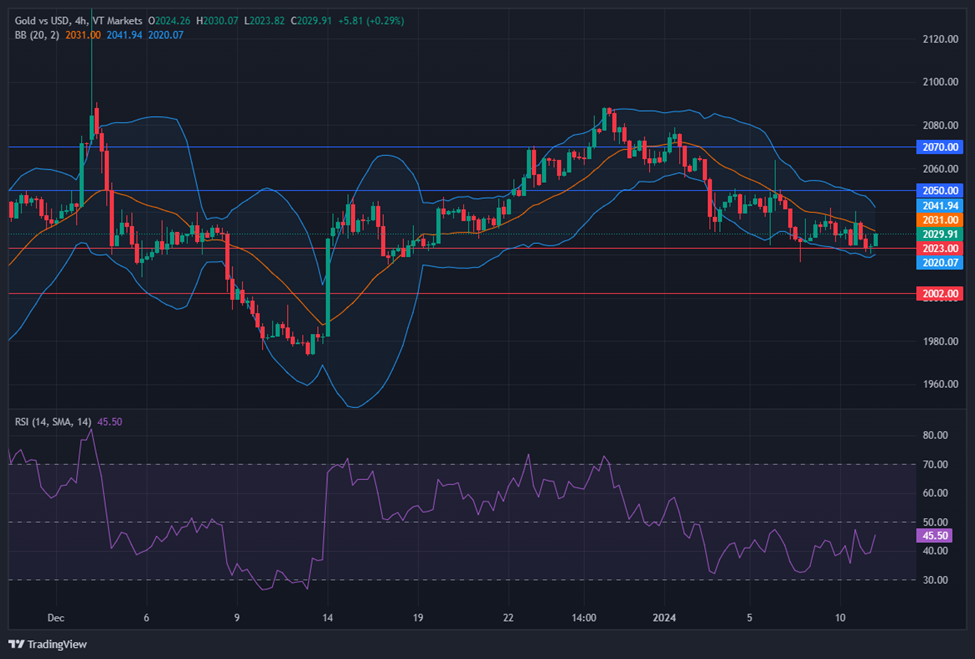
Chart XAU/USD by TradingView

On Wednesday, XAU/USD moved lower and was able to reach the lower band of the Bollinger Bands. Currently, the price moving higher and trying to reach the middle band. The Relative Strength Index (RSI) stands at 45, signaling a neutral outlook for this pair.

Resistance: $2,050, $2,070

Support: $2,023, $2,002

Economic Data
CurrencyDataTime (GMT + 8)Forecast
USDCore CPI m/m21:300.3%
USDCPI m/m21:300.2%
USDCPI y/y21:303.2%
USDUnemployment Claims21:30209K

Gold Trading Mistakes to Avoid: A Practical Guide

Are you considering trading gold, one of the most sought-after commodities in the financial world? Gold trading can be a lucrative venture, but it’s not without its challenges.  

To help you navigate the gold market successfully, we’ve put together a practical guide that highlights the common gold market pitfalls and provides smart strategies for safeguarding your gold investments. Let’s dive in! 

Gold Market Pitfalls: What to Watch Out For

Before we delve into the smart strategies, it’s essential to understand the potential pitfalls that can trip up gold traders. Avoiding these mistakes can save you both money and frustration. Let’s explore a few key gold market pitfalls: 

#1. Lack of Research:  

One of the most significant pitfalls is entering the gold market without proper research. Trading gold isn’t a guessing game; it’s a well-informed decision. Failing to research can lead to hasty decisions and substantial losses. 

For instance, imagine you hear a rumor that gold prices are about to skyrocket due to a geopolitical event. Without researching and verifying this information, you invest heavily in gold, only to find out that the rumor was false, leading to losses. 

#2. Ignoring Diversification 

Putting all your resources into gold can be risky. While gold can be a safe haven, it’s crucial not to ignore diversification. Overcommitting to a single asset class can leave your portfolio vulnerable. 

Let’s say that you invest all your savings in physical gold, expecting it to outperform other assets. However, if gold prices stagnate or decline while other investments thrive, your overall wealth suffers. 

#3. Overlooking Volatility  

Gold prices can be highly volatile. Failing to anticipate and prepare for this volatility can lead to panic selling or buying at the wrong time. 

Here’s another scenario. You invest in gold without considering its price swings. When gold experiences a sudden drop in value, you panic and sell your holdings, locking in losses that could have been avoided with a clear strategy. 

Smart Strategies for Safeguarding Gold

Now that you’re aware of the potential pitfalls, let’s explore some smart strategies to help you navigate the gold market successfully. 

Educate Yourself:  

The first step is to invest time in learning about gold and the factors that influence its price. Understand the global economic landscape, geopolitical events, and how they impact gold. 

By studying historical trends and global economic conditions, you can make informed decisions. If you see that gold tends to rise during times of economic uncertainty, you may choose to allocate more funds to it when such conditions arise. 

Diversify Your Portfolio:  

To safeguard your investments, consider diversifying your portfolio. This means spreading your funds across various asset classes, not just gold. 

In addition to gold, you may invest in stocks, bonds, and real estate. Diversification can help reduce risk because different asset classes often move independently of each other. 

Set Clear Goals and Stop-Loss Orders:  

Establish specific investment goals and set stop-loss orders to limit potential losses. Stop-loss orders automatically sell your gold holdings if prices drop to a predetermined level. 

You decide that you’ll only tolerate a 10% loss on your gold investment. You set a stop-loss order at 10% below your purchase price. If gold prices decline and hit that threshold, your holdings are sold, protecting you from further losses. 

Stay Informed and Be Patient:  

Continuously monitor the gold market and stay updated on relevant news and events. Patience is a virtue in gold trading. Don’t let short-term fluctuations dictate your actions. 

Instead of panicking during a sudden drop in gold prices, you stay informed about the underlying causes. If the drop is due to temporary factors and you believe in the long-term potential of gold, you may choose to hold your positions. 

Mastering Gold Trading: Key Takeaways and Next Steps

All in all, trading gold can be a rewarding endeavor, but it’s essential to be aware of the potential pitfalls and implement smart strategies to safeguard your investments.  

Remember to research thoroughly, diversify your portfolio, set clear goals and stop-loss orders, and stay informed while maintaining patience. 

If you’re new to gold trading or want to practice your strategies, we recommend opening a demo account with a reputable trading platform. A demo account allows you to trade with virtual money, providing a risk-free environment to hone your skills. 

So, why wait? Start your journey to becoming a savvy gold trader today, and remember, knowledge is your best ally in the world of gold trading.

Embark on Your Gold Trading Adventure with VT Markets

Ready to step into the fascinating world of gold trading? With VT Markets, you’re not just starting an investment journey; you’re unlocking a gateway to advanced trading technologies and expert insights. VT Markets offers a robust platform, tailored to both beginners and seasoned traders, ensuring a comprehensive gold trading experience.

Get started with VT Markets today and leverage the power of intuitive tools and resources to refine your gold trading strategies. Open your account now and join the ranks of savvy gold traders who choose VT Markets for their trading needs. Your gold trading success story begins here!

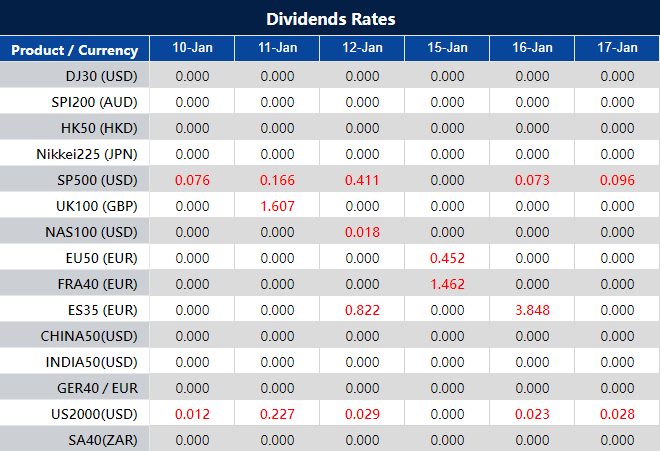
Dividend Adjustment Notice – January 10, 2024

Dear Client,

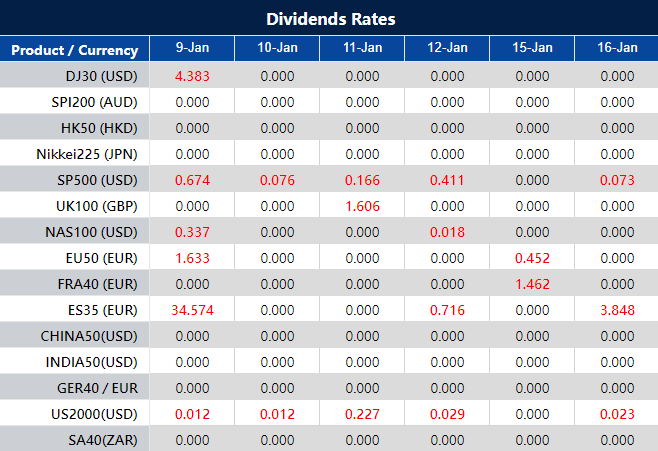
Please note that the dividends of the following products will be adjusted accordingly. Index dividends will be executed separately through a balance statement directly to your trading account, and the comment will be in the following format “Div & Product Name & Net Volume ”.

Please refer to the table below for more details:

The above data is for reference only, please refer to the MT4/MT5 software for specific data.

If you’d like more information, please don’t hesitate to contact info@vtmarkets.com.

Affilitate World Dubai

Affiliate World Dubai, the ultimate event for top affiliate marketers and ecommerce entrepreneurs, brings together 5,500+ industry players for three days of networking, learning, and expert sessions. Discover cutting-edge strategies and real-life case studies from leaders in affiliate and e-commerce marketing, making it a must-attend for insights and connections.

Join us at booth E16 to learn more.

Tech Stocks Rebound Amidst Market Fluctuations

Tuesday witnessed a rollercoaster ride in the stock market as the S&P 500 and Dow Jones ended with declines while the Nasdaq managed a slight gain, primarily propelled by tech stocks’ resurgence. Despite the market’s recovery, with notable companies like Nvidia and Amazon showing gains, uncertainties loom as investors brace for crucial inflation data and upcoming earnings reports from major corporations. Simultaneously, the currency market saw the US Dollar Index surge, impacting major pairs such as EUR/USD, GBP/USD, USD/JPY, AUD/USD, and USD/CAD, while precious metals faced headwinds amidst dollar demand and market uncertainties.

Stock Market Updates

The stock market on Tuesday experienced a fluctuating day, with the S&P 500 initially dropping but later recuperating slightly thanks to a surge in tech stocks. Despite this rebound, the S&P 500 closed with a 0.15% decrease at 4,756.50, following a volatile day where it had plunged by 0.7% at its lowest point. Similarly, the Dow Jones Industrial Average ended down by 0.42%, recovering from a 310-point deficit earlier in the session. Conversely, the Nasdaq Composite managed to reverse a 0.9% decline, finishing with a marginal gain of 0.09% at 14,857.71. Notably, Nvidia and Amazon both saw gains of over 1.5%, with Juniper Networks surging by almost 22% due to potential acquisition news by Hewlett Packard Enterprise.

Tech stocks, which had been performing strongly in 2023, faced challenges at the beginning of 2024, impacting the broader market. Despite this setback, healthcare emerged as one of the day’s winners, marking a 3% increase for the year and ranking as the top-performing sector. The recent market movements followed a positive session on Monday, where both the S&P 500 and Nasdaq Composite rebounded, particularly driven by the recovery of mega-cap tech stocks after previous declines. Looking ahead, investors await crucial inflation data later in the week, expecting insight into potential Federal Reserve rate adjustments. Additionally, significant companies like Infosys, JPMorgan Chase, UnitedHealth, Bank of America, and Delta Air Lines are scheduled to report earnings, contributing to market sentiment and direction.

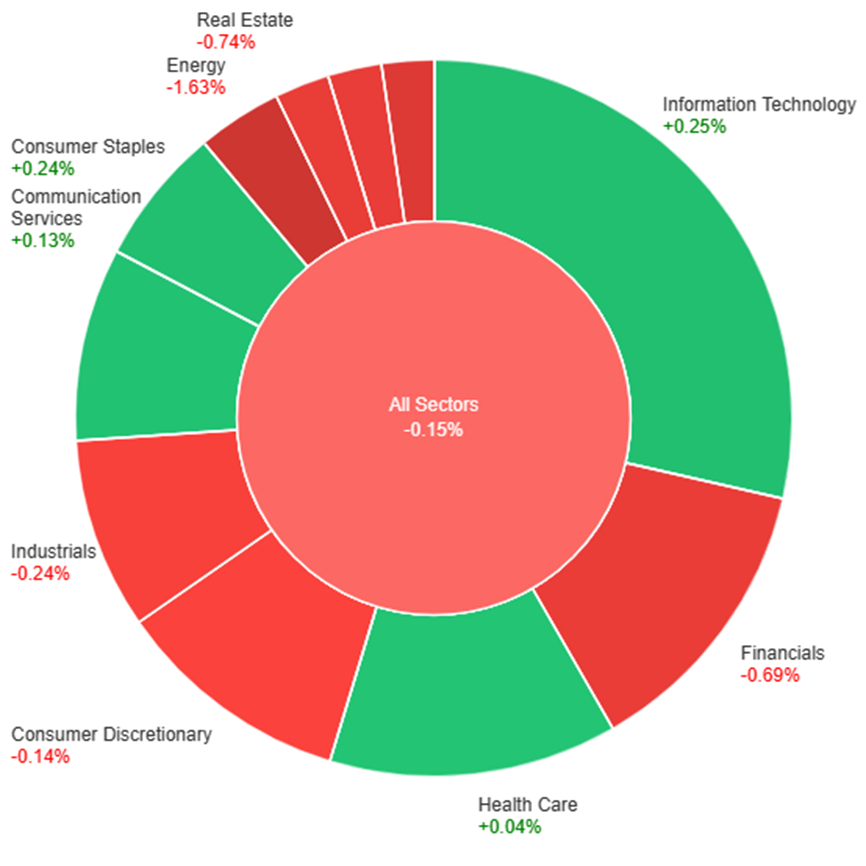
Data by Bloomberg

On Tuesday, the overall market experienced a slight decrease of 0.15%. However, there were sectoral variations, with Information Technology (+0.25%), Consumer Staples (+0.24%), and Communication Services (+0.13%) showing modest gains. Health Care (+0.04%) also saw a marginal increase. Conversely, Consumer Discretionary (-0.14%), Industrials (-0.24%), Financials (-0.69%), Real Estate (-0.74%), Utilities (-0.76%), Materials (-1.10%), and Energy (-1.63%) sectors faced declines, with Energy and Materials exhibiting the most significant decreases among the sectors.

Currency Market Updates

In the currency market, the US Dollar Index (DXY) surged to two-day highs, hitting the 102.70 zone, buoyed by increased demand for the greenback despite the lack of clear direction in US yields. This propelled EUR/USD downwards, nearly touching the critical support level of 1.0900 as the dollar gained traction alongside safe-haven assets. GBP/USD also faced downward pressure, slipping below 1.2700 and reversing gains from earlier in the week. Conversely, USD/JPY saw a notable recovery, surpassing the key barrier at 144.00 after consecutive sessions of losses, driven by inconclusive movements in US yields and a dip in JGB 10-year yields. Meanwhile, AUD/USD experienced a sharp decline to the 0.6680/75 region following two days of slight gains, ahead of the release of pivotal inflation data in Australia.

Additionally, the robust performance of the greenback pushed USD/CAD to fresh four-week highs beyond 1.3400 amid weak results in Canadian trade balance and building permits, sustaining selling pressure on the Canadian dollar. Precious metals faced headwinds as gold closed around $2030 per troy ounce due to heightened demand for the dollar and uncertain sentiments in US money markets. Silver prices echoed this trend, grappling with the significant $23.00 mark as they continued a negative trend from the beginning of the week. The currency market witnessed a shift in dynamics driven by the dollar’s resurgence, impacting major pairs and commodities alike as traders closely monitored key economic data releases and fluctuations in yields.

Picks of the Day Analysis
EUR/USD (4 Hours)

EUR/USD Reversal and Dollar Strength Amidst Economic Indicators

The EUR/USD pair retreated from early-week gains, hovering near 1.0900 amidst a stronger USD Index reaching 102.70. Market caution ahead of US inflation data and consumer sentiment reports contributed to the dollar’s uptick. The pair’s movement was influenced by mixed US yield trends and divergent central bank policies, with the ECB possibly eyeing rate cuts while the Fed leans toward reductions. Germany’s disappointing industrial production and an unexpected jobless rate improvement in the broader Eurozone added to the euro’s bearish sentiment, shaping the currency pair’s recent downturn.

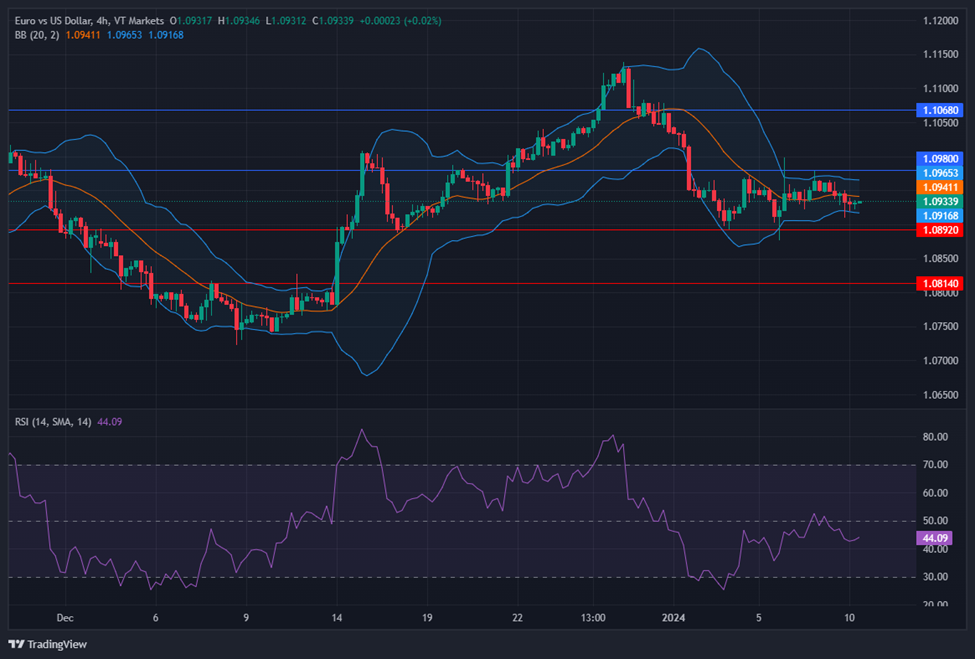
Chart EUR/USD by TradingView

On Tuesday, the EUR/USD moved slightly lower and reached the lower band of the Bollinger Bands. Currently, the price moving just below the middle band, suggesting a potential upward movement. Notably, the Relative Strength Index (RSI) maintains its position at 44, signaling a neutral outlook for this currency pair.

Resistance: 1.0980, 1.1068

Support: 1.0892, 1.0814

XAU/USD (4 Hours)

XAU/USD Treads Cautiously Amidst Economic Uncertainty and Fed Rate Expectations

Spot gold, reflected by XAU/USD, remains within familiar ranges, lingering at the lower end of Monday’s spectrum. The US Dollar gains momentum amid a gloomy market sentiment as stocks dip, while anticipation builds for key macroeconomic indicators. Market optimism regarding a potential Fed interest rate trim awaits validation from forthcoming Consumer Price Index (CPI) figures. Recent employment data signaling a tight labor market raises concerns about potential inflationary pressures, posing a dilemma for the Fed’s tightening policy. With rates at multi-year highs, there’s a looming risk of an economic setback, prompting speculation on potential rate cuts as early as March. Amidst this backdrop, the surge in US Treasury yields further bolsters the USD, creating a cautious atmosphere for gold traders.

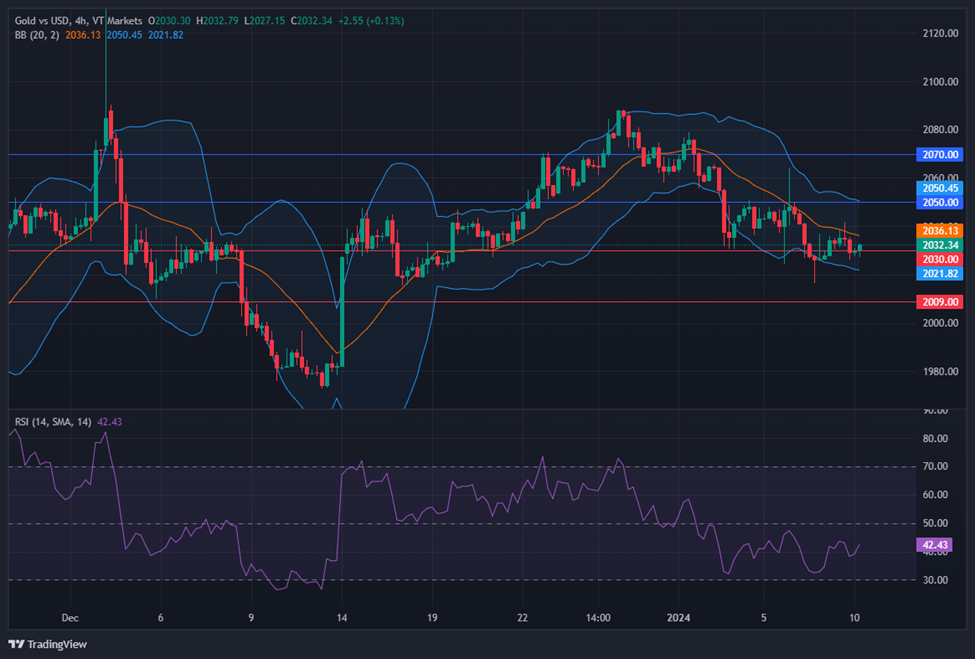
Chart XAU/USD by TradingView

On Tuesday, XAU/USD moved lower and moving between the middle and lower bands of the Bollinger Bands. Currently, the price moving higher and trying to reach the middle band. The Relative Strength Index (RSI) stands at 42, signaling a neutral outlook for this pair.

Resistance: $2,050, $2,070

Support: $2,030, $2,009

Economic Data
CurrencyDataTime (GMT + 8)Forecast
AUDCPI y/y08:304.3%(Actual)

How to Trade Gold in Forex: Beginner’s Basic Guide

Gold Trading Beginner’s Basic Guide

Gold trading is a popular investment choice for many traders. It’s a safe-haven asset that can be used to hedge against inflation and protect wealth. 

In this beginner’s guide, we’ll cover what moves gold prices and which currency pairs are correlated to gold.  

And, of course, the basics of gold trading in forex, including some simple calculations to explain further. 

What is Gold Trading

Gold trading is the practice of speculating the price of gold in the markets to make a profit. This can be done through futures, options, spot prices, equities, and exchange-traded funds (ETFs).  

Physical gold bars or coins aren’t handled during the transaction. Instead, they’re settled in cash. You might decide to trade gold for some reasons, including: 

1. Pure speculation,  

2. Intend to buy and take ownership of the physical gold,  

3. As a hedge against instability. 

When trading gold, you don’t necessarily need to hold the traditional mantra of ‘buy low, sell high.’ It’s because you can go long and short on gold prices, taking advantage of markets that fall in price and those that rise.  

The goal of gold trading is to predict which way the market will move. If the market moves in the direction you predicted, you’ll make more profit.  

However, if the market moves against your forecast, you’ll experience higher losses. 

What Moves Gold Prices

Gold prices are influenced by supply and demand, just like other exchange-traded markets. If there is an oversupply of gold and the demand doesn’t increase accordingly, the price of gold will decrease.  

Conversely, if there’s a higher demand for gold but the supply doesn’t increase, the price of gold will rise. 

How to Trade Gold in Forex

The first step to trading gold in forex is to open a trading account with a reputable broker. Once you’ve opened a trading account, you can start trading gold in forex. 

Now, here’s where things get fascinating:

Gold Correlation Pairs

Gold is often traded against the US dollar (USD), represented by the symbol XAU/USD, and the Japanese yen (JPY), its symbol being XAU/JPY.  These currency pairs are known as gold correlation pairs.

When trading gold correlation pairs, it’s important to understand the relationship between gold and the currency pair you are trading.  

For example, if the USD strengthens, the price of gold may fall, and if the JPY strengthens, the price of gold may rise. (Gold and the USD share an inverse relationship with each other.) 

Simple theory into practice

Let’s put the theory into practice with a simple gold trading scenario: 

Scenario:  

You believe gold prices will rise due to positive economic data in Europe. You decide to buy the XAU/USD pair at a current price of $1800. 

Step 1:  

Decide on your position size. 

This depends on your risk tolerance and capital. Let’s say you choose to buy 1 micro lot (0.01 standard lot), which represents $10 per pip (pip = the smallest price movement). 

Step 2:  

Calculate your margin requirement. 

Your broker might require a 1% margin on XAU/USD. So, the margin for your 1 micro lot position would be: 

Margin = $1800 (price) X 0.01 (lot size) X 1% (margin rate) = $1.80 

This means you need $1.80 in your account to open the position. 

Step 3:  

Track the price movement. 

After a few days, the XAU/USD price rises to $1850. This is a gain of 50 pips (1850 – 1800). 

Step 4:  

Calculate your profit (or loss). 

Your profit per pip is $10 (micro lot size). So, your total profit for the 50-pip movement is: 

Profit = 50 pips X $10/pip = $500 

Step 5:  

Calculate your profit percentage. 

Your percentage profit on the trade is: 

Profit% = (Profit / Entry Price) X 100% = ($500 / $1800) X 100% = 27.78% 

Remember:  

This is a simplified example. Real-world trading involves additional factors like spreads, commissions, and leverage, which can impact your results. 

In the upcoming blog articles, we’ll cover what spreads, commissions, and leverage are. 

Additional Scenarios:

Negative scenario: 

If the price falls, you will incur a loss calculated similarly. 

Sell position:  

You could also sell the XAU/USD pair if you expect gold to decline, calculating profits and losses based on price movements in the opposite direction. 

Before we leave…. 

If you’re interested in how to gold in forex, we recommend opening a demo account to practice trading without any money.  

This way will help you understand the market and develop your trading strategy. Once you’re comfortable trading gold in forex, you can open a live account and start trading with real money. 

Discover the VT Markets Advantage

Ready to start your gold trading journey? VT Markets offers a user-friendly platform, comprehensive educational resources, and expert support to help you succeed. Open a demo account today to practice trading without risk and develop your strategies confidently. Join VT Markets and unlock your potential in gold trading. Start trading with real money when you’re ready.

Dividend Adjustment Notice – January 9, 2024

Dear Client,

Please note that the dividends of the following products will be adjusted accordingly. Index dividends will be executed separately through a balance statement directly to your trading account, and the comment will be in the following format “Div & Product Name & Net Volume ”.

Please refer to the table below for more details:

The above data is for reference only, please refer to the MT4/MT5 software for specific data.

If you’d like more information, please don’t hesitate to contact info@vtmarkets.com.

Dividend Adjustment Notice – January 9, 2024

Dear Client,

Please note that the dividends of the following products will be adjusted accordingly. Index dividends will be executed separately through a balance statement directly to your trading account, and the comment will be in the following format “Div & Product Name & Net Volume ”.

Please refer to the table below for more details:

The above data is for reference only, please refer to the MT4/MT5 software for specific data.

If you’d like more information, please don’t hesitate to contact info@vtmarkets.com.

Gold Price Trends Insights: For Better Investment Choices

The Role of Gold Price Trends in Investment Strategies

Discover the significance of gold price forecasts, including the next week’s and tomorrow’s predictions. Learn how these forecasts impact your investments and make informed decisions. Explore examples, expert insights, and a practical step to start trading.  

In the world of finance and investments, staying ahead of the game is essential. This is where understanding the gold price forecast becomes crucial for investors. In this blog post, we’ll delve into why gold price forecasts, particularly for the next week and tomorrow, matter, and how they can influence your investment decisions. 

Learn more about VT Markets Gold Trading here.

Why Choose Gold Trading?

Gold’s market presence is global, offering high liquidity and diverse trading opportunities, from physical gold to ETFs and digital options. For beginners and seasoned investors alike, platforms like VT Markets provide accessible resources, making it easy to start. Whether aiming for portfolio diversification, hedging, or capitalizing on market trends, gold trading offers a unique blend of security and growth potential.

Why Gold Price Forecasting Matters

To grasp the importance of gold price forecasts, let’s break it down into two critical timeframes: the next week and tomorrow. 

Gold Price Forecast Next Week

Imagine you’re considering investing in gold, either for the long term or the short term. Knowing the gold price forecast for the next week can be a game-changer. 

If the forecast predicts a bullish trend, it might be an opportune moment to buy and profit from the expected price rise.  

Conversely, if the forecast is bearish, you might choose to hold off or even consider selling if you already hold gold assets. 

For instance, let’s say the next week’s gold price forecast indicates a rise due to geopolitical tensions. Investors can take advantage of this by buying gold today and selling it when the price peaks next week, thereby maximizing their returns. 

Gold Price Forecast Tomorrow

Now, let’s zoom in on the importance of knowing the gold price forecast for tomorrow. This short-term forecast is particularly valuable for day traders and those looking to make quick profits. 

If the forecast suggests a significant price drop for tomorrow, a day trader might opt to sell their gold holdings today and buy them back at a lower price, effectively making a profit in a single day. 

On the other hand, if the forecast predicts a price surge tomorrow, traders may decide to buy now and sell tomorrow at a higher price. These microtransactions can add up, providing consistent gains for skilled traders. 

Gold Price Forecasting in Risk Management

Beyond profit potential, gold price forecasts also play a vital role in risk management. Suppose you have a diversified investment portfolio that includes gold. In this case, knowing the expected price movement can help you balance your portfolio effectively. 

For example, if the gold price forecast for the next week is uncertain, you might decide to allocate more funds to other assets or hedging strategies to mitigate potential losses. 

References and Reliable Sources

It’s essential to rely on accurate and trustworthy sources for gold price forecasts. Several financial news websites, such as Bloomberg, CNBC, and Reuters, provide up-to-date and credible information on precious metal prices.  

Additionally, you can explore specialized financial platforms that offer in-depth analysis and forecasts. 

Start Your Gold Trading Journey with VT Markets

Now that you understand why gold price forecasts matter, it’s time to take action. If you’re new to trading or want to hone your skills, consider opening a demo account with a reputable trading platform.  

VT Markets is the Forex broker to consider, our demo account allows you to practice trading without risking any real money. It’s an excellent way to familiarize yourself with the dynamics of the gold market and test your strategies. 

Understanding gold price forecasts is crucial in navigating the dynamic world of investments. With VT Markets, you not only gain access to comprehensive market insights but also a user-friendly platform perfect for both new and seasoned traders. Our demo account offers a risk-free environment to apply your knowledge and refine your strategies.

Explore gold trading with VT Markets, where advanced tools, expert guidance, and a supportive trading community await to enhance your investment journey. Embark on your path to success in gold trading – start with VT Markets today.

Market Momentum Ignited by Nasdaq’s Tech Sector Surge

The stock market rallied strongly, particularly in the tech sector, with the S&P 500 rising by 1.41% and the Nasdaq Composite surging 2.2%, rebounding from a challenging prior week. Notable tech giants like Nvidia, Amazon, Alphabet, and Apple experienced gains, fueling investor confidence. However, Boeing’s 8% stumble due to 737 Max 9 inspections impacted the Dow Jones Industrial Average. As traders anticipate crucial data releases, including CPI and PPI, this week, the focus shifts to the Fed’s inflation control measures and their influence on market sentiment. The currency market saw varied movements, with the USD index declining slightly, affecting currency pairs differently, as the EUR/USD and GBP/USD surged, while USD/JPY and USD/CAD faced challenges. Precious metals like Gold dipped amid a reassessment of Fed policies, contrasting with Silver’s rebound.

Stock Market Updates

The stock market witnessed a significant rebound on Monday as major indices surged, led by a robust performance in the technology sector. The S&P 500 rallied by 1.41% to close at 4,763.54, and the Nasdaq Composite surged by 2.2%, reaching 14,843.77, marking its most impressive day since mid-November. Investors displayed renewed confidence in tech companies after a challenging prior week that saw a 4% decline in the sector, primarily driven by falling yields. Notable tech giants like Nvidia, Amazon, Alphabet, and Apple experienced notable gains, with Nvidia hitting an all-time high, Amazon climbing nearly 2.7%, Alphabet advancing 2.3%, and Apple rising by 2.4% post an Evercore ISI recommendation to buy the recent dip. The VanEck Semiconductor ETF (SMH) also surged by 3.5%, its most robust performance since November, further indicating a broader tech resurgence. However, Boeing’s shares tumbled by 8% due to the temporary grounding of Boeing 737 Max 9 planes for inspections after an Alaska Airlines fuselage incident, impacting the Dow Jones Industrial Average, which managed a 0.58% increase at the close.

Last week marked the market’s first downturn in ten weeks, primarily influenced by underperforming mega-cap tech stocks like Apple and rising Treasury yields, resulting in a 0.59% slide in the Dow, a 1.52% drop in the S&P 500, and the Nasdaq Composite witnessing its worst weekly performance since September with a 3.25% decline. As the new week progresses, traders are eagerly anticipating upcoming data releases, particularly the December consumer price index and the producer price index scheduled for Thursday and Friday, respectively. These crucial figures are expected to shed light on the Federal Reserve’s potential moves regarding interest rates, offering insights into the efficacy of their measures in reining in inflation towards the 2% target. This information could significantly influence market sentiment and trading strategies in the days ahead.

Data by Bloomberg

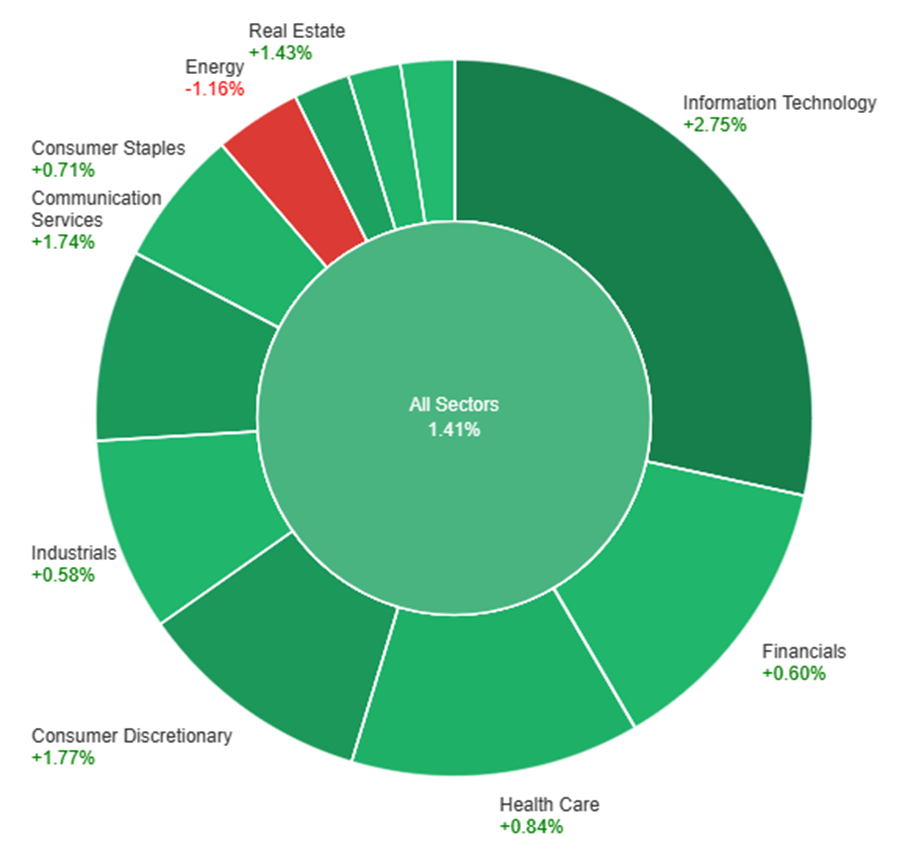
On Monday, the market saw an overall positive trend across various sectors, with a 1.41% increase across all sectors. Information Technology experienced the most significant surge at 2.75%, followed by Consumer Discretionary and Communication Services with gains of 1.77% and 1.74%, respectively. Real Estate and Health Care also showed notable growth, rising by 1.43% and 0.84%, respectively. However, Energy exhibited a decline of 1.16%, while Utilities, Consumer Staples, Financials, Industrials, and Materials sectors saw more modest increases ranging from 0.41% to 0.72%.

Currency Market Updates

The currency market exhibited varied movements amidst a shifting landscape of global economic sentiments. The US Dollar Index (DXY) saw a modest decline, hovering just above the 102.00 threshold as investors favored riskier assets and US yields underwent a corrective downturn. This decline in the dollar bolstered the performance of several currency pairs, notably the EUR/USD, which made significant gains reaching around 1.0980. Factors contributing to this uptick included a marginal increase in Investor Confidence tracked by the Sentix Index and better-than-expected Retail Sales figures in the eurozone. Similarly, GBP/USD continued its bullish trajectory for the fourth consecutive session, surging past the 1.2700 mark, largely supported by positive risk sentiment.

Conversely, the USD/JPY pair experienced a daily pullback to the 143.60 region due to declining US yields and a temporary weakening of the greenback, yet it managed to recover and surpass the 144.00 hurdle by the end of the North American session. AUD/USD showcased resilience by regaining the 0.6700 level, despite the broader bearish performance in the commodity market. However, USD/CAD faced challenges to maintain momentum beyond 1.3400, eventually retreating to the mid-1.3300s amidst a consolidative market environment. Amidst these currency fluctuations, precious metals like Gold saw a retreat to three-week lows, approximately $2015 per troy ounce, influenced by traders reassessing the potential for a prolonged restrictive stance by the Fed, especially in light of December’s Non-Farm Payrolls (NFP) data. In a similar vein, Silver rebounded from two consecutive sessions of losses, yet remained below the $23.00 mark.

Picks of the Day Analysis
EUR/USD (4 Hours)

EUR/USD Gains Ground Amidst USD Index Decline and Fed Rate Cut Speculation

EUR/USD saw a promising rise early in the week, reaching around 1.0975/80 against a weakening USD Index (DXY), sparked by uncertainties despite strong December Payrolls. Investor demand for bonds drove yields down on both sides of the Atlantic, slightly dimming the optimistic start to the trading year. The market’s focus remains on the Federal Reserve’s potential rate cuts versus the more restrained stance of the ECB, with consensus leaning towards a later rate cut by the ECB. Factors contributing to the euro’s strength included an uptick in Investor Confidence and stable Consumer Confidence, while Retail Sales in the bloc showed a slight contraction.

Chart EUR/USD by TradingView

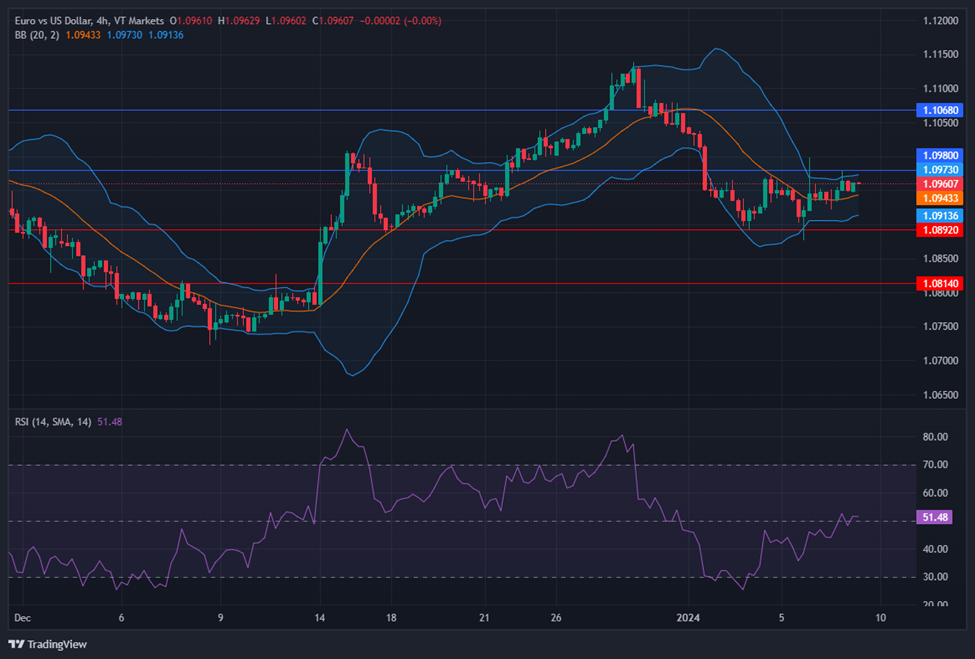
On Monday, the EUR/USD moved slightly higher and reached the upper band of the Bollinger Bands. Currently, the price moving just below the upper band, suggesting a potential downward movement. Notably, the Relative Strength Index (RSI) maintains its position at 51, signaling a neutral outlook for this currency pair.

Resistance: 1.0980, 1.1068

Support: 1.0892, 1.0814

XAU/USD (4 Hours)

XAU/USD Finds Support Amid Dollar Weakness and Fed Speculation

During American trading, XAU/USD managed to recover from early losses, hovering around $2,030 per ounce after hitting a mid-December low of $2,016.61. The weakening US Dollar spurred this turnaround, fueled by market optimism driven by expectations of a potential Federal Reserve rate cut in March. Additionally, Bank of America analysts’ predictions of a tapering in Treasury holdings by the Fed further influenced the market sentiment. As government bond yields dipped and stock indexes fluctuated, attention turned to the upcoming US inflation update, with the December Consumer Price Index anticipated to show a 3.2% YoY increase, potentially impacting the future trajectory of gold prices.

Chart XAU/USD by TradingView

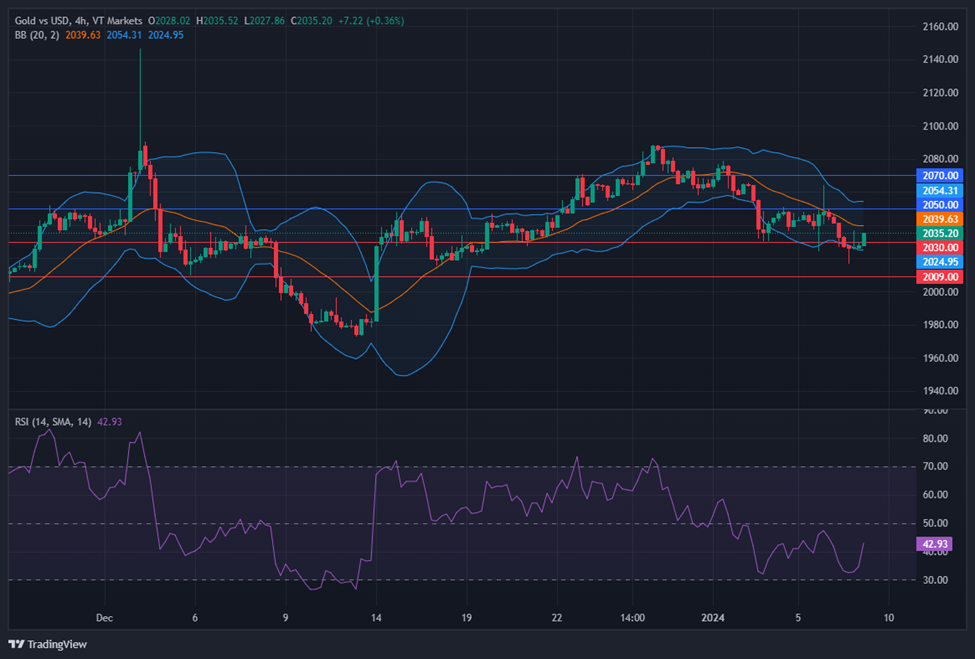
On Monday, XAU/USD moved lower and reached the lower band of the Bollinger Bands. Currently, the price moving higher and trying to reach the middle band. The Relative Strength Index (RSI) stands at 42, signaling a neutral but bearish outlook for this pair.

Resistance: $2,050, $2,070

Support: $2,030, $2,009

Back To Top
server

Hello there 👋

How can I help you?

Chat with our team instantly

Live Chat

Start a live conversation through...

  • Telegram
    hold On hold
  • Coming Soon...

Hello there 👋

How can I help you?

telegram

Scan the QR code with your smartphone to start a chat with us, or click here.

Don’t have the Telegram App or Desktop installed? Use Web Telegram instead.

QR code