Back

How to Use Market Sentiment to Buy or Sell Gold Today

Mastering Gold Trading with Market Sentiment Analysis

If you’re interested in trading gold, you may wonder how to predict future price movements. One of the tools that can help you is market sentiment analysis. Let’s read further to know what market sentiment is, how it affects the gold price, and how you can use it to make better trading decisions. 

What is market sentiment?

Market sentiment reflects the collective attitude, feelings, and expectations of traders and investors towards a specific market or asset. It reflects their expectations, emotions, and opinions about future market or asset performance. Market sentiment can be bullish, bearish, or neutral. 

A bullish sentiment means that most traders and investors are optimistic and expect the price to rise. On the contrary, a bearish sentiment means that most traders and investors are pessimistic and expect the price to fall. Neutral sentiment implies that there is no clear consensus or direction in the market. 

The role of market sentiment in gold price

The gold price is influenced by many factors, such as supply and demand, inflation, interest rates, geopolitical events, and so on. However, market sentiment can also play a significant role in driving the gold price up or down. Generally, gold is considered a safe-haven asset. It means it performs well when there is uncertainty, fear, or risk in the market.  

When traders and investors are worried about the global economy, political instability, or other threats, they tend to buy gold as a hedge against volatility and losses. This increases the demand and price of gold.  On the other hand, when traders and investors are confident and optimistic about the market outlook, they tend to sell gold and invest in other assets that offer higher returns. This decreases the demand and price of gold. 

Therefore, you can use market sentiment as a contrarian indicator to trade gold. When there is a strong bullish sentiment in the market, it might signal that the gold price is overbought and due for correction.  When there is a strong bearish sentiment in the market, it might signal that the gold price is oversold and due for a rebound. 

How to use market sentiment analysis to trade gold?

There are several ways to measure and analyze market sentiment for gold trading. Some of the common methods are: 

#1. Gold futures and options:

You can look at the open interest and volume of gold futures and options contracts traded on exchanges such as COMEX. Open interest is the number of contracts that are open and not settled.  

Volume is the number of contracts that are traded in a given period. High open interest and volume indicate strong market liquidity and activity.  

The put/call ratio, comparing the volume of put options to call options on gold, serves as a sentiment indicator. A higher ratio suggests bearish sentiment, while a lower ratio signals bullish sentiment.

A high put/call ratio indicates a bearish sentiment, while a low put/call ratio indicates a bullish sentiment. 

#2. Gold ETFs:

You can look at the inflows and outflows of gold exchange-traded funds (ETFs), such as SPDR Gold Shares (GLD) or iShares Gold Trust (IAU).  

These are funds that track the price of gold by holding physical gold or gold derivatives. The inflows and outflows of these funds reflect the demand and supply of gold in the market. A high inflow indicates a bullish sentiment, while a high outflow indicates a bearish sentiment. 

Read more about “How To Trade Gold” in this article

#3. Gold surveys:

You can look at the results of various surveys conducted by reputable organizations or websites that ask traders and investors about their views on the gold price direction.  

For example, Kitco News conducts a weekly survey of experts and retail investors on their gold outlook for the next week.  

The results show the percentage of bullish, bearish, and neutral respondents. A high percentage of bullish respondents indicates a bullish sentiment, while a high percentage of bearish respondents indicates a bearish sentiment. 

#4. Gold technical indicators:

You can look at various technical indicators that are based on historical price data and mathematical calculations to identify trends, patterns, support and resistance levels, momentum, and so on. Some of the popular technical indicators for gold trading are moving averages, trend lines, Fibonacci retracements, Bollinger bands, RSI, MACD, stochastic oscillator, etc.  

These indicators can help you determine whether the gold price is in an uptrend or downtrend, whether it is overbought or oversold, whether it is likely to break out or reverse direction, etc. By using these methods, you can get a better understanding of how the market feels about gold and what might happen next. However, you should not rely solely on market sentiment analysis to trade gold.  

You should also consider other fundamental and technical factors that affect the gold price. Moreover, you should always use risk management techniques such as stop-loss orders, position sizing, diversification, etc., to protect your capital and limit your losses. 

Elevate Your Gold Trading Strategy

Refine your gold trading strategies risk-free with our demo account. Trade using virtual funds, access real-time data, charts, and tools, and sharpen your skills in a simulated environment. Elevate your trading journey — open a demo account with us today.

Practicing with our demo account not only allows you to refine your trading strategies risk-free but also gives you the opportunity to apply market sentiment analysis in real-time scenarios. Elevate your Gold trading journey and gain a competitive edge by opening a demo account with VT Markets today.
Netflix Inc. – A Streaming Giant’s Journey to the Top 

Netflix in 2024: An Unparalleled Leader in Streaming

Netflix Inc. (NASDAQ: NFLX) stands as a colossus in the streaming domain, having redefined entertainment consumption globally. Its role in shaping media trends and market dynamics is profound and continues to evolve.

A Closer Look at Netflix’s Performance in 2024:

Overview:

Founded in 1997 by Reed Hastings and Marc Randolph, Netflix transitioned from a DVD-by-mail service to a premier streaming platform. As of now, it boasts over 200 million paid memberships across more than 190 countries, offering a rich mix of TV series, documentaries, and films in various genres and languages. A testament to its content caliber, Netflix secured 11 Academy Awards in 2023, a nod to its pioneering original programming.

Financial Health:

Netflix’s financial trajectory has been remarkable. In Q3 2023, it reported a revenue boost of 16% year-over-year, reaching $7.5 billion. Operating income soared by 31% to $1.9 billion, while net income climbed 25% to $1.5 billion. A significant turnaround was seen in its free cash flow, which improved to $1.2 billion from a previous year deficit of -$1.3 billion. With a gross margin of 39.5% and an operating margin of 25.5%, Netflix’s profitability metrics are impressive.

Investment Insights:

Netflix’s unique position in the streaming landscape is underpinned by its extensive content library and innovative originals. Its global footprint and consistently expanding subscriber base present a compelling growth narrative. The leadership’s strategic focus on content and technological advancements has fortified Netflix’s financial stature, marked by robust margins and a positive cash flow trajectory.

Navigating Risks:

However, potential investors should be mindful of the competitive pressures within the streaming industry, with formidable players like Disney+, Amazon Prime Video, and HBO Max vying for market share. Content acquisition costs remain a financial burden, possibly necessitating future price adjustments to sustain profitability. Additionally, Netflix’s stock exhibits volatility, influenced by broader market fluctuations. A thorough due diligence process and a strategy that includes portfolio diversification are advisable for those considering Netflix as an investment.

Embracing the Future: Netflix’s Strategic Path Forward

Netflix’s journey from a DVD rental service to a streaming behemoth reflects its adaptability and innovative spirit. Despite the competitive landscape and financial challenges, its commitment to content quality, as evidenced by its numerous awards and global presence, sets a solid foundation for future growth. Investors and analysts alike will be watching closely as Netflix navigates the evolving entertainment industry, continuing to make strategic investments in content and technology to maintain its leadership position.

Ready to leverage the dynamic world of streaming stocks? Start trading US Shares CFDs with VT Markets today and capitalize on the opportunities Netflix and other leading companies offer.

Nvidia’s stellar earnings propel S&P 500 and Nasdaq to new highs amidst broad market optimism

On Thursday, the S&P 500 and Nasdaq Composite reached impressive new heights, largely driven by Nvidia’s remarkable quarterly earnings report. The S&P 500 surged by 2.11%, its best performance since January 2023, while the Nasdaq Composite soared by 2.96%, flirting with its all-time high, thanks to Nvidia’s 16.4% share price jump after reporting a 265% revenue increase from its thriving AI business. This surge highlighted Nvidia’s growing dominance in the tech sector and boosted confidence across the broader market, particularly in Big Tech stocks like Meta, Amazon, Microsoft, and Netflix. Concurrently, the U.S. economy showed signs of robust health with a significant drop in jobless claims and a surge in existing home sales, further fueling market optimism. Meanwhile, currency markets adjusted to the mixed global economic indicators and policy expectations, with the dollar stabilizing and the USD/JPY pair experiencing an uptick, reflecting the complex interplay of global economic trends and monetary policy anticipations.

Stock Market Updates

On Thursday, the S&P 500 reached new heights, propelled by Nvidia’s unexpectedly strong quarterly earnings, which not only boosted the broader market but also significantly lifted the tech sector. The S&P 500 climbed 2.11% to close at 5,087.03, marking its most impressive performance since January 2023, while the Nasdaq Composite soared 2.96% to end the day at 16,041.62, nearing its all-time closing high. Meanwhile, the Dow Jones Industrial Average experienced a notable surge of 456.87 points or 1.18%, surpassing the 39,000 mark for the first time and closing at a new record of 39,069.11, reflecting widespread optimism in the financial markets.

Nvidia, a leading chipmaker, saw its shares jump 16.4% to an all-time high after announcing a staggering 265% increase in total revenue from the previous year, primarily fueled by its booming artificial intelligence business. This growth has positioned Nvidia as one of the largest U.S. companies by market capitalization, with expectations for continued revenue growth in the coming quarter. The enthusiasm around AI and Nvidia’s extraordinary performance has significantly influenced the rally in Big Tech stocks, including notable gains in shares of Meta, Amazon, Microsoft, and Netflix, thereby bolstering confidence in the tech space, and benefiting the broader stock market.

Data by Bloomberg

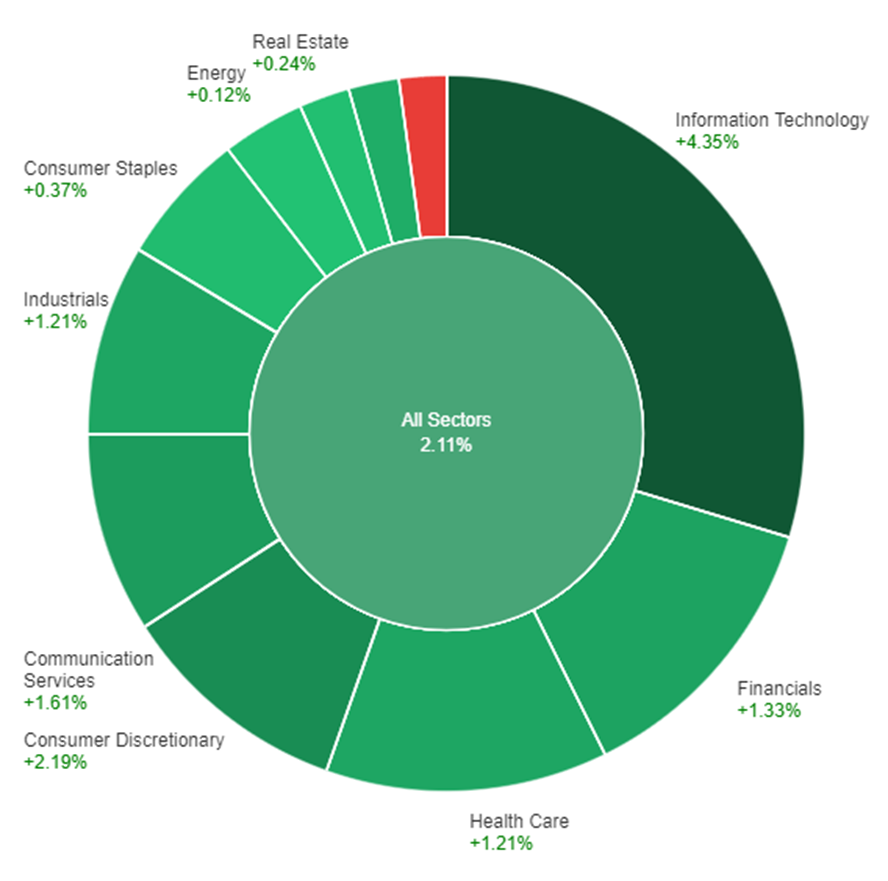
On Thursday, the stock market witnessed a positive trend across most sectors, with the overall sector experiencing a 2.11% increase in price. Information Technology led the gains with a significant rise of 4.35%, followed by Consumer Discretionary and Communication Services, which saw increases of 2.19% and 1.61%, respectively. Financial, Industrials and Health Care sectors also enjoyed gains, each increasing by over 1%. Materials, Consumer Staples, and Real Estate sectors saw modest rises, with Energy experiencing a slight increase of 0.12%. In contrast, Utilities were the only sector to decline, dropping by 0.77%.

Currency Market Updates

The currency market has seen a notable shift as the dollar index stabilized from a three-week low, propelled by an unexpected drop in U.S. jobless claims which overshadowed the mixed performance in flash PMIs across major economies. Despite the composite PMI readings from the eurozone and the UK slightly surpassing forecasts, and a contraction in the U.S. figures, the market’s attention gravitated towards the robust U.S. jobless claims data, showcasing the lowest levels since before 2018 and comparable to figures last seen in 1969. Additionally, the U.S. housing market demonstrated resilience with existing home sales in January surging by 3.1%, marking the highest point since the previous August, suggesting a sensitivity to fluctuating mortgage rates. This economic optimism was further buoyed by stellar quarterly results from Nvidia, which underscored the rapid expansion of AI usage, influencing global equity markets positively.

Amid these developments, currency pairs reacted to the broader economic indicators and policy expectations. The Euro dipped to a flat position against the dollar, reflective of Germany’s PMI contraction and aligning with anticipations of the ECB’s rate cuts preceding those of the Federal Reserve. Meanwhile, the Sterling showed modest gains against the dollar, buoyed by promising UK PMIs, despite being significantly off its recent high. The USD/JPY pair experienced an uptick, driven by the widening yield spreads between U.S. Treasury and Japanese government bonds, and a general shift towards risk-off flows that placed more pressure on the yen. As the market anticipates upcoming U.S. economic reports, including the core PCE inflation data, income, and consumption figures, the currency landscape remains poised for further adjustments, with special attention to the potential impacts on USD/JPY’s trajectory toward its yearly highs and the looming possibility of Japanese intervention amidst speculations of policy normalization by the Bank of Japan.

Picks of the Day Analysis
EUR/USD (4 Hours)

EUR/USD Retreats from Three-Week High Amid Mixed US Economic Signals and ECB Caution

EUR/USD experienced a decline from its three-week peak around 1.0900, settling near 1.0820 after an initial surge, influenced by positive US job data and varied bond yield performances amidst speculation of future Federal Reserve (Fed) interest rate cuts. The possibility of the Fed easing monetary policy has been bolstered by strong US inflation figures, though the likelihood of a May rate cut seems diminished, with a greater chance anticipated for June. Conversely, the European Central Bank (ECB) maintains a cautious stance against early rate reductions, despite expectations of a downward inflation forecast revision in March. This cautious approach is echoed by ECB officials, emphasizing the premature nature of financial market relaxation, and highlighting ongoing concerns over wage pressures and the labour market’s tightness, suggesting a potential delay in the ECB’s monetary easing.

Chart EUR/USD by TradingView

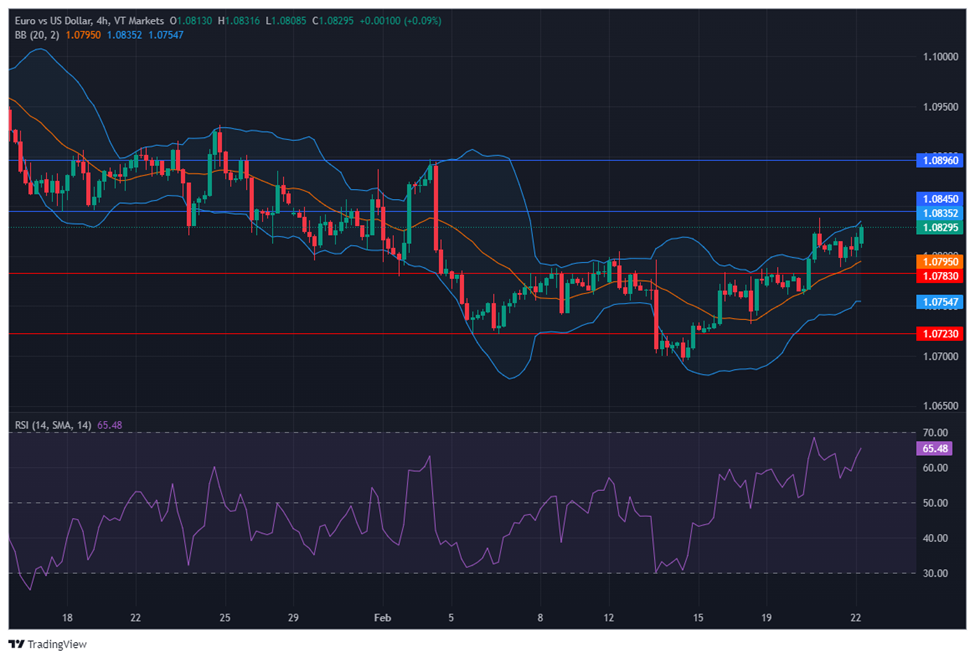
On Thursday, the EUR/USD moved higher and reached the upper band of the Bollinger Bands. Currently, the price is moving just above the middle band, suggesting a potential upward movement to reach back to the upper band. Notably, the Relative Strength Index (RSI) maintains its position at 58, signaling a neutral outlook for this currency pair.

Resistance: 1.0845, 1.0896

Support: 1.0783, 1.0723

XAU/USD (4 Hours)

XAU/USD Retreats from Peak as US Dollar Recovers Amid Positive Economic Indicators

Spot Gold receded from its recent high of $2,034.86 as the US Dollar regained strength following positive US economic data and increased government bond yields. Despite the Dollar’s initial drop amid a tech-led stock market rally in Asia and Europe, it rebounded before the US markets opened, influenced by less-than-expected growth in Initial Jobless Claims and a surge in February’s PMI figures, indicating a robust expansion in manufacturing and a slight contraction in services. Meanwhile, the 10-year Treasury note yields touched multi-week highs, driven by the Federal Open Market Committee’s minutes, which suggested a cautious approach towards rate cuts, awaiting further inflation progress.

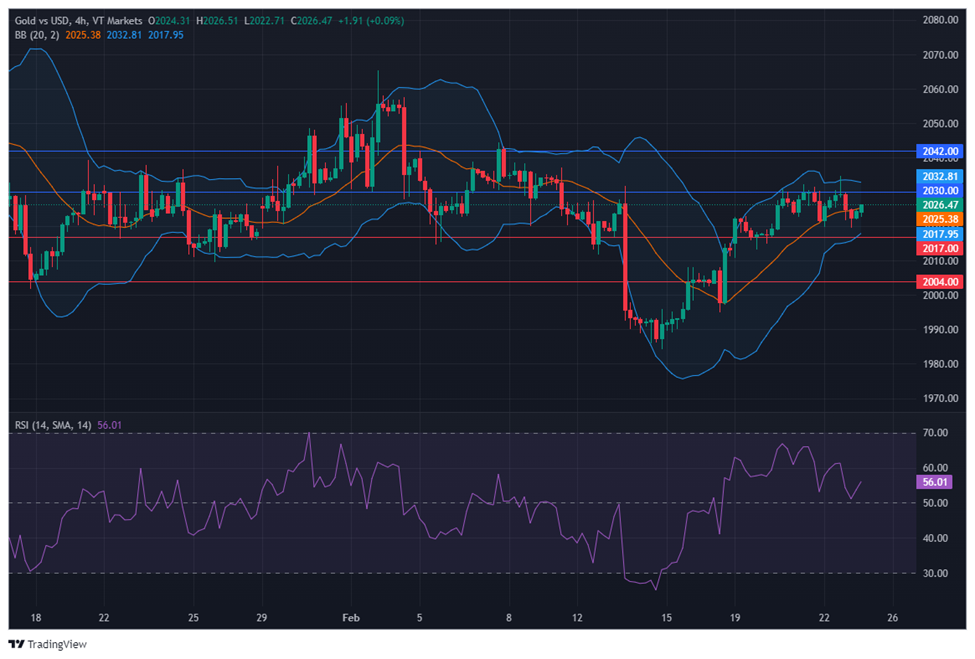
Chart XAU/USD by TradingView

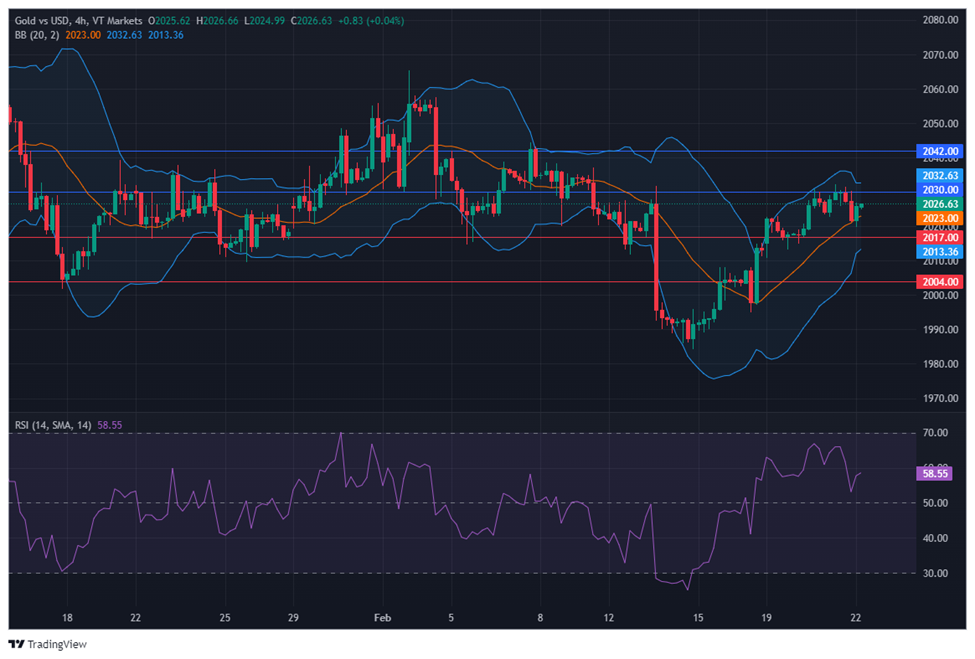
On Thursday, XAU/USD moved lower to reach below the middle band after reaching the upper band of the Bollinger Bands. Currently, the price is moving just around the middle band, suggesting a potential consolidation movement as the bands are squeezing. The Relative Strength Index (RSI) stands at 56, signaling a neutral outlook for this pair.

Resistance: $2,030, $2,042

Support: $2,017, $2,004

Diversifying investments through ETF trading 

ETFs, or Exchange-Traded Funds, are gaining popularity among investors for their simplicity and versatility. They provide an easy way to invest in a range of assets, making them accessible for non-professional traders. 

Imagine being able to invest in a diverse basket of stocks or bonds without the complexity of managing individual assets—that’s the power of ETFs. 

In this article, we’ll explore why ETFs matter for forex traders, covering their basics, advantages, popular categories, and practical trading tips. 

Understanding ETFs 

ETFs are investment funds traded on stock exchanges, similar to individual stocks. However, they’re different from mutual funds and individual stocks in a couple of ways. 

  • Firstly, ETFs are like mutual funds because they pool investors’ money to invest in various assets like stocks, bonds, or commodities. But, unlike mutual funds traded at the end of the day, ETFs are traded on stock exchanges throughout the day at market prices, just like stocks. 
  • Secondly, ETFs differ from individual stocks because they represent ownership in a mix of assets, not just one company. So, when you invest in an ETF, you’re actually buying a share of a fund holding a bunch of different securities. 

ETFs track specific benchmarks like the S&P 500 for stocks or the Barclays Capital Aggregate Bond Index for bonds, aiming to mirror their performance by holding similar assets. 

For forex traders, ETFs offer diversification by investing in a variety of securities within one investment. This spreads risk, ideal for those with limited capital or seeking a diverse portfolio without buying multiple securities. 

ETFs provide liquidity since they trade on stock exchanges throughout the day at market prices. This allows easy buying and selling, unlike mutual funds which trade once a day. 

Furthermore, ETFs offer transparency by disclosing their holdings daily, giving investors clear visibility into their investments. 

Popular ETF categories 

ETFs come in various categories, each offering unique investment opportunities for forex traders. Here is a breakdown of the most common types

1. Equity ETFs 

These ETFs invest in stocks, providing exposure to a particular market, industry, or region. They offer diversification across multiple companies within a single investment. 

For example, the SPDR S&P 500 ETF (SPY) tracks the performance of the S&P 500 Index, offering broad exposure to large-cap US stocks. 

2. Bond ETFs 

Bond ETFs invest in fixed-income securities such as government bonds, corporate bonds, or municipal bonds. They offer income generation and diversification, with varying levels of risk depending on the underlying bonds. 

An example is the iShares Core US Aggregate Bond ETF (AGG), which tracks the performance of the US investment-grade bond market. 

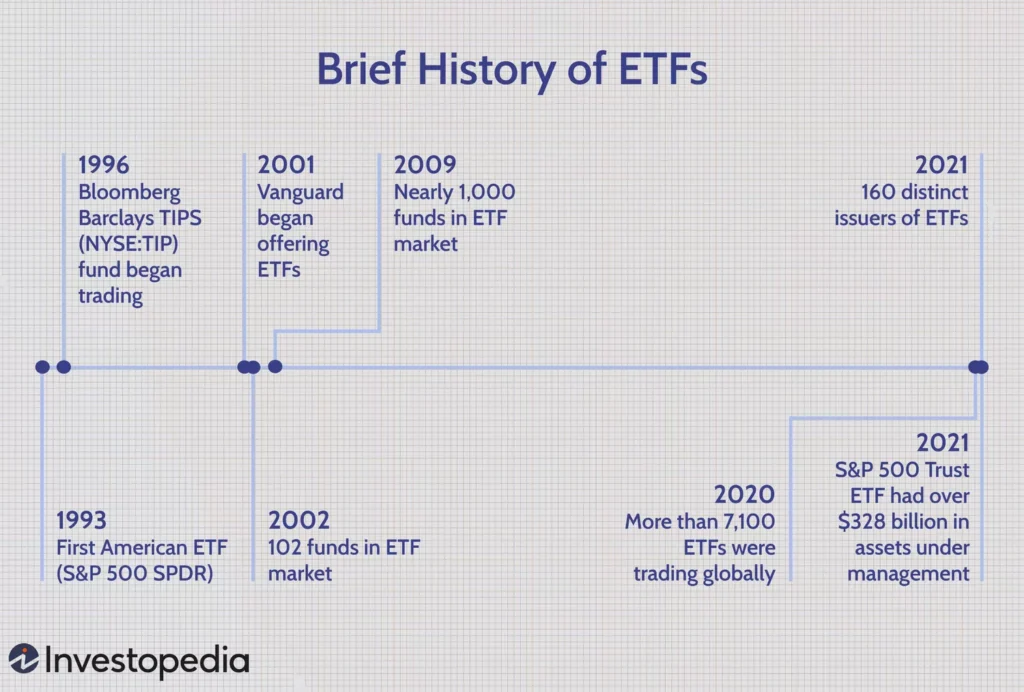
Brief history of ETFs
source: Investopedia

3. Commodity ETFs 

These ETFs track the performance of commodities like gold, silver, oil, or agricultural products. They provide exposure to commodity prices without the need for direct commodity ownership. 

The SPDR Gold Shares ETF (GLD) is a popular example, offering exposure to the price of gold. 

4. Sector ETFs 

Sector ETFs focus on specific sectors or industries, such as technology, healthcare, or energy. They allow investors to target areas of the market they believe will outperform or diversify their portfolio. 

For instance, the Technology Select Sector SPDR Fund (XLK) invests in technology companies within the S&P 500 Index. 

Each category of ETFs has its own characteristics and potential benefits, catering to different investment objectives and risk tolerances. 

Advantages of trading ETF CFDs 

Trading ETFs through CFDs (Contracts for Difference) involves entering into a contract with a broker to speculate on the price movement of the ETF without owning the underlying asset. 

When it comes to ETF CFDs trading, there are several advantages worth considering: 

  • Flexibility and leverage: CFDs offer traders the flexibility to control larger positions with a smaller amount of capital, potentially amplifying gains or losses compared to traditional investing. 
  • Long and short positions: CFD trading allows traders to take both long (buy) and short (sell) positions on ETFs, enabling them to profit from both rising and falling markets. 

In summary, trading ETFs through CFDs provides forex traders with flexibility, leverage, and the opportunity to profit from both upward and downward price movements in the market. 

Tips for successful ETF trading 

By following these tips, you can enhance your chances of success in ETF trading while managing risks effectively: 

  • Have a well-defined trading plan: It’s crucial to establish a clear trading plan outlining your goals, risk tolerance, and strategies. Stick to your plan and avoid making impulsive decisions based on emotions or market fluctuations. 
  • Stay informed about market trends: Keep yourself updated on market trends and news that could affect ETF prices. This includes economic indicators, geopolitical events, and industry-specific developments. Being informed allows you to make informed decisions and adapt your trading strategy accordingly. 
  • Diversify your investments: Spread your risk by diversifying across multiple ETFs representing different sectors or asset classes. This helps mitigate the impact of volatility in any single investment and allows you to capture opportunities in various market segments. 

In conclusion, ETFs serve as versatile investment vehicles for forex traders, offering exposure to various asset classes like stocks, bonds, and commodities. Trading ETFs through CFDs provides flexibility, leverage, and profit opportunities. It’s essential to have a well-defined trading plan, stay informed about market trends, and practice responsible trading strategies. By implementing these principles, traders can navigate the market confidently and responsibly, maximising their potential for success. 

Unlocking the power of correlations in forex trading 

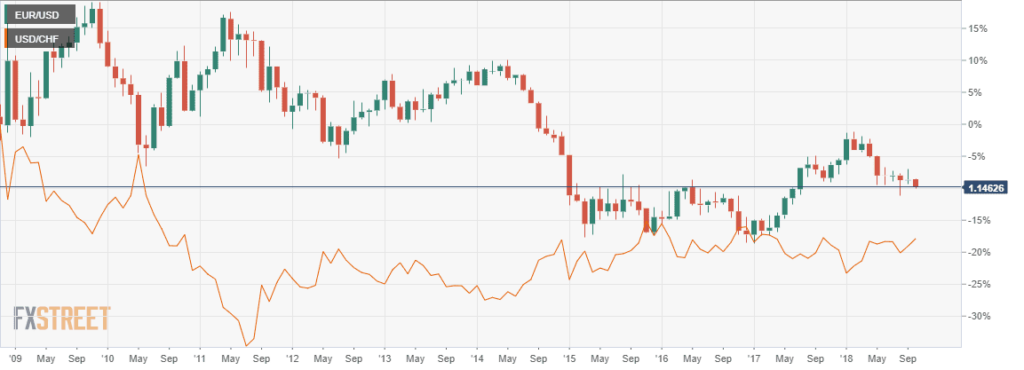
In forex trading, correlations show how different currency pairs or financial instruments move together. For example, when the EUR/USD pair goes up, the USD/CHF pair often goes down, and vice versa. 

source: investopedia

Understanding these relationships is crucial. It helps traders predict market movements, manage risks, and make smarter decisions. In this guide, we will explore correlations in forex trading and how you can use them to improve your strategies. Let’s get started! 

Understanding correlations 

Correlation in forex refers to the statistical relationship between different currency pairs or financial instruments and how they move in relation to each other. 

It is measured on a scale from -1 to +1, where -1 indicates a perfect negative correlation (inverse movement), +1 indicates a perfect positive correlation (same direction movement), and 0 indicates no correlation (movements are independent of each other). 

Correlation types
source: Simply Psychology

Understanding correlation helps traders anticipate how one asset’s movement may affect another. 

  • Positive correlation: This occurs when two currency pairs or assets tend to move in the same direction. For example, if the EUR/USD pair goes up, the GBP/USD pair also tends to rise. Traders can use positive correlations to diversify their portfolios by trading multiple currency pairs that move in tandem, potentially reducing overall risk exposure. 
  • Negative correlation: In contrast, negative correlation occurs when two currency pairs or assets move in opposite directions. For instance, when the USD/JPY pair increases, the price of Gold may decrease. Traders can use negative correlations as a hedging strategy to offset potential losses in one position with gains in another, helping to mitigate risk during market fluctuations. 
  • Neutral correlation: Neutral correlation indicates a weak or non-existent relationship between currency pairs or assets. For example, the EUR/USD and USD/CHF pairs may show little correlation, meaning their movements do not significantly influence each other. While neutral correlations may not offer direct trading opportunities, they can still provide valuable information about market dynamics and help traders avoid making decisions based on false assumptions of correlation. 
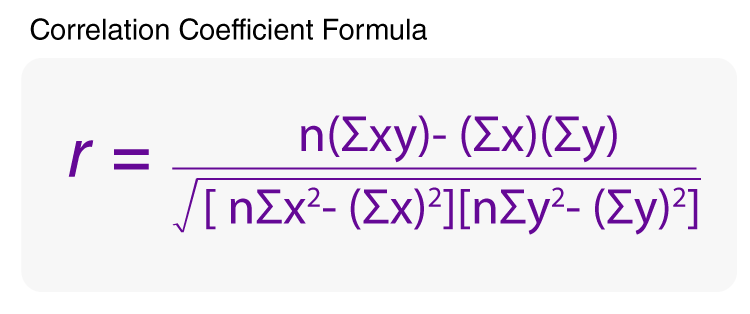
The correlation coefficient formula may seem complex, but you can use a specialised online calculator.
source: BYJU’S 

How to identify correlations 

If you’ve decided to count the correlation between two currency pairs, here’s a guide to help you get started: 

1. Select currency pairs: Choose the currency pairs you want to analyse for correlation. For example, you might want to examine the correlation between EUR/USD and GBP/USD. 

2. Collect historical data: Gather historical price data for the selected currency pairs. You can obtain this data from various sources such as trading platforms, financial websites, or specialised data providers. 

3. Calculate correlation coefficient: Use online correlation calculators, Excel spreadsheets with built-in functions like CORREL, or trading platforms such as MetaTrader 4 (MT4) and MetaTrader 5 (MT5) to compute correlation coefficients between the currency pairs. 

4. Interpret results: Analyse the correlation coefficient to understand the relationship between the currency pairs. A coefficient close to +1 indicates a strong positive correlation, while a coefficient close to -1 indicates a strong negative correlation. A coefficient close to 0 suggests a weak or no correlation. 

5. Repeat for different timeframes: Consider calculating correlations over different timeframes (e.g., daily, weekly, monthly) to identify any changes in correlation patterns over time. This can provide valuable insights into the stability of the correlation relationship. 

By following these steps, you can effectively count and interpret the correlation between currency pairs, helping you make more informed trading decisions in the forex market. 

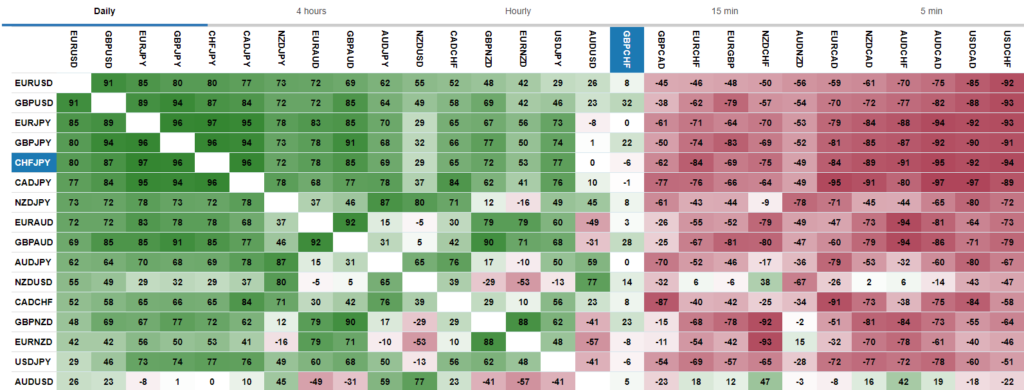
Currency pairs correlations table
source: Pinterest

Factors affecting correlations 

Various factors influence the correlations between currency pairs in forex trading. Understanding these nuances is crucial for traders seeking to anticipate market movements and make informed trading decisions.  

  • Economic indicators:  Gross Domestic Product (GDP), growth rates, and inflation significantly shape currency correlations. Positive GDP figures in both the Eurozone and the US can strengthen the correlation between EUR/USD and USD/CHF pairs. Divergent inflation rates can weaken correlations as traders adjust their strategies based on economic forecasts. 
  • Market sentiment: Reflecting traders’ attitudes towards currencies, market sentiment impacts correlations. During periods of increased risk appetite, currencies like the Australian dollar (AUD) and New Zealand dollar (NZD) tend to exhibit positive correlations. Safe-haven currencies such as the US dollar (USD) and Japanese yen (JPY) may strengthen during times of uncertainty, thereby weakening correlations with riskier currencies. 
  • Geopolitical events: Events such as elections or trade negotiations can disrupt currency correlations. Major agreements may strengthen correlations between currencies, while heightened tensions can weaken them as traders seek refuge in safer assets. Increased geopolitical risks might diminish the correlation between USD/JPY and gold. 
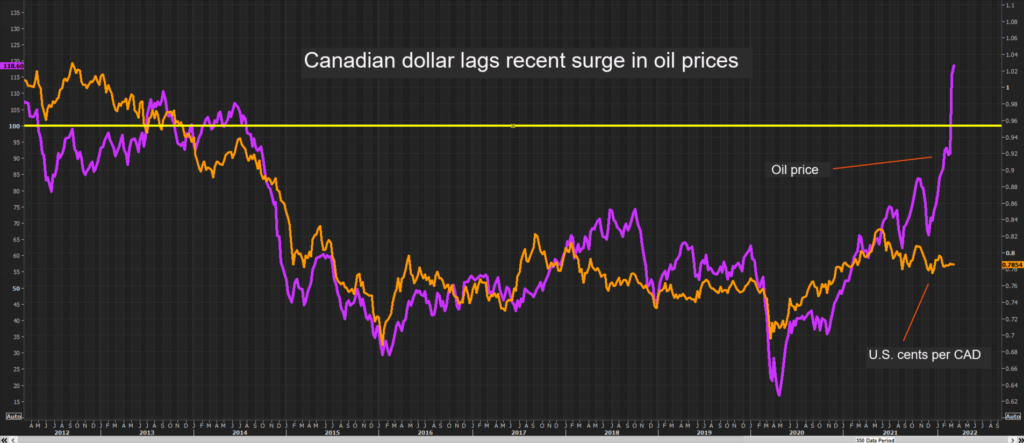
  • The relationship between currencies and commodities: The interplay between currencies and commodities also influences currency correlations. For example, the Canadian dollar (CAD) often correlates positively with oil prices due to Canada’s significant oil exports. Consequently, a rise in oil prices could strengthen the correlation between USD/CAD and oil. Conversely, if gold prices surge, the correlation between USD/JPY and gold may weaken, given the status of the Japanese yen as a safe-haven currency. 
USD/CAD and oil prices positive correlation
source: Reuters

Using correlations in trading 

Leveraging correlations in forex trading provides traders with a strategic advantage, offering insights into market dynamics and aiding in risk management. By incorporating correlations into trading strategies, traders refine their approach, optimise trade timing, and enhance overall performance in the forex market. 

  • Strategy development: Design strategies to capitalise on currency correlations, identifying trends, and optimising trade timing. 
  • Risk management: Utilise correlated pairs for hedging to mitigate losses and minimise risk exposure. Additionally, diversify risk across multiple currency pairs or asset classes to reduce volatility and enhance stability. 
  • Portfolio diversification: Spread investments across various currency pairs or asset classes with low or negative correlations to minimise overall portfolio risk and enhance long-term stability. 
  • Identifying opportunities: Utilise correlations to identify diversification opportunities by selecting currency pairs with low or negative correlations. 
  • Asset class monitoring: Monitor correlations between different asset classes to optimise portfolio allocation and achieve risk-adjusted returns. 

In conclusion, knowing how currency pairs interact is vital for smart decision-making and managing risks in forex trading. Using correlation analysis is strongly recommended as it helps traders choose the best times to trade, manage risks effectively, and get the most out of their investments. 

Notification of Server Upgrade – February 22, 2024

Dear Client,

As part of our commitment to provide the most reliable service to our clients, there will be server maintenance this weekend.

Maintenance Hours :
24th of February 2024 (Saturday) 02:00 – 10:00 (GMT+2)

Please note that the following aspects might be affected during the maintenance:

1. The price quote and trading management will be temporarily disabled during the maintenance. You will not be able to open new positions, close open positions, or make any adjustments to the trades.

2. There might be a gap between the original price and the price after maintenance. The gaps between Pending Orders, Stop Loss and Take Profit will be filled at the market price once the maintenance is completed. If you don’t want to hold any open positions during the maintenance, it is suggested to close the position in advance.

3. Please refer to MT4/MT5 for the latest update on the completion and market opening time. Our services will be back online once the maintenance is completed.

Thank you for your patience and understanding about this important initiative.

If you’d like more information, please don’t hesitate to contact info@vtmarkets.com

Dividend Adjustment Notice – February 22, 2024

Dear Client,

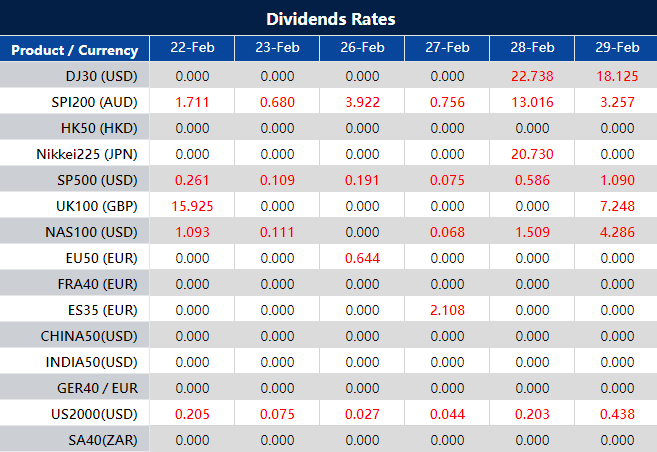
Please note that the dividends of the following products will be adjusted accordingly. Index dividends will be executed separately through a balance statement directly to your trading account, and the comment will be in the following format “Div & Product Name & Net Volume ”.

Please refer to the table below for more details:

The above data is for reference only, please refer to the MT4/MT5 software for specific data.

If you’d like more information, please don’t hesitate to contact info@vtmarkets.com.

Mixed Stock Market Results Amid Nvidia Earnings Anticipation and Fed’s Interest Rate Stance

On Wednesday, the stock market showed mixed outcomes, with the Dow Jones and S&P 500 making slight gains, while the Nasdaq Composite faced a decline, influenced by anxiously awaited Nvidia earnings and Federal Reserve insights. Nvidia’s stock dipped ahead of its fiscal report, reflecting investor concerns over its valuation after a significant year-long surge. The market also reacted to Palo Alto Networks’ and SolarEdge Technologies’ disappointing forecasts, alongside the Fed’s minutes indicating a cautious stance on interest rate cuts, emphasizing inflation control. Currency markets saw fluctuations, with the dollar index falling amidst complex global yield dynamics and central bank policies, highlighting the intricate interplay between economic signals, corporate earnings, and monetary policy expectations.

Stock Market Updates

The stock market experienced mixed results on Wednesday, with the Dow Jones Industrial Average slightly gaining by 48.44 points to close at 38,612.24 and the S&P 500 also up by 0.13% at 4,981.80. In contrast, the tech-heavy Nasdaq Composite fell by 0.32%, continuing its downward trend for the third consecutive session, to end at 15,580.87. The market’s attention was particularly focused on Nvidia, ahead of its fiscal fourth-quarter earnings report, amidst growing concerns over the chipmaker’s valuation after its shares surged nearly 230% over the past year. On the day, Nvidia’s stock declined by 2.85%, reflecting investor apprehension about whether it could continue to buoy the market amidst a backdrop of uncertain catalysts for growth.

Market sentiment was further influenced by a combination of corporate news and insights from the Federal Reserve. Palo Alto Networks saw a significant drop of 28.4% after revising its full-year revenue forecast downwards, while SolarEdge Technologies also faced a setback, with its shares falling approximately 12.2% due to weak first-quarter guidance. Adding to the cautious market outlook, minutes from the Federal Reserve’s January meeting revealed a reluctance to cut interest rates anytime soon, emphasizing that any decisions on rate cuts would require greater confidence in the slowing down of inflation. This stance underscores the central bank’s cautious approach to navigating economic signals, leaving the market to look towards corporate earnings and guidance as potential catalysts for future growth.

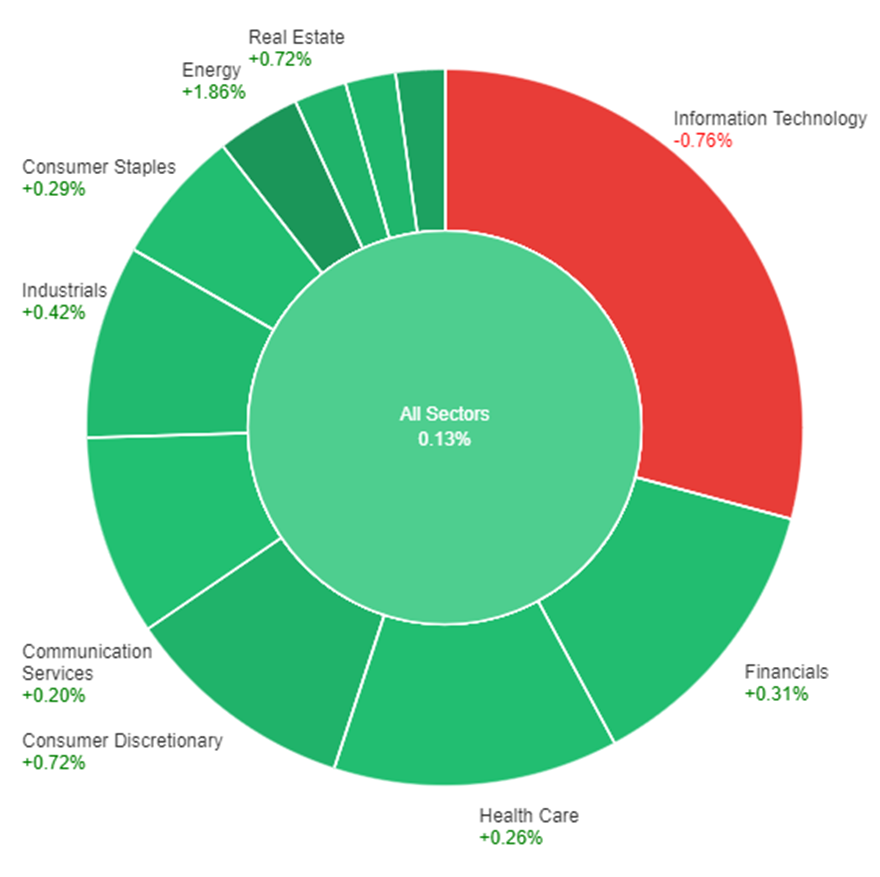
Data by Bloomberg

On Wednesday, the market witnessed modest gains across most sectors, with the overall sectors index up by 0.13%. The energy sector led the charge, recording a significant increase of 1.86%, followed closely by utilities, which saw a 1.36% rise. Consumer discretionary and real estate sectors both enjoyed gains of 0.72%, demonstrating a healthy appetite for risk among investors. Other sectors such as materials, industrials, financials, consumer staples, health care, and communication services also experienced growth, albeit at a more moderate pace. However, the information technology sector bucked the positive trend, facing a downturn of 0.76%, indicating sector-specific challenges or profit-taking by investors.

Currency Market Updates

The currency market experienced notable fluctuations, with the dollar index declining by 0.9% amid a complex interplay of treasury yields and central bank policies. The increase in Treasury yields, although outpaced by European yields, failed to keep up with the steadiness of Japanese Government Bond (JGB) yields. This dynamic, alongside the diminishing likelihood of interest rate cuts by major central banks such as the Federal Reserve (Fed), the European Central Bank (ECB), and the Bank of England (BoE), exerted pressure on risk appetite. The anticipation surrounding the Federal Reserve’s minutes and Nvidia’s report further influenced market sentiments. Despite the anticipation, the Fed minutes merely echoed previous statements and comments, offering no new impetus for dollar strength. Meanwhile, the USD/JPY pair saw a slight increase, attributed to the static nature of JGB yields which made the yen less attractive compared to its higher-yielding counterparts.

In Europe, the ECB’s stance, as articulated by Pierre Wunsch, suggested a prolonged period of tight monetary policy, given the persistent wage pressures and tight labor markets. This position was mirrored by the market’s adjustment in expectations for rate cuts, with the first ECB rate reduction now fully priced in for June. The euro found some support against the dollar, benefiting from a tightening in the 2-year bund-Treasury yield spreads. However, the recovery of the EUR/USD pair was tempered by technical resistance and a cautious outlook for the BoE’s policy direction, which also impacted the GBP/USD pair. The British pound struggled against the backdrop of rising Gilts-Treasury yield spreads and comments from BoE officials emphasizing the cost of delayed rate adjustments. These developments underscore the intricate balance of yield dynamics, central bank policies, and economic indicators shaping the currency markets, with implications for the path of the dollar and its major counterparts.

Picks of the Day Analysis
EUR/USD (4 Hours)

EUR/USD Stabilizes Amid Speculations of Fed Rate Cuts

The EUR/USD pair exhibited slight fluctuations, stabilizing around the 1.0800 mark, amidst a backdrop of uncertain US dollar movements and anticipations of Federal Reserve interest rate adjustments. This period of inconclusive price action follows a recent surge to 1.0840, driven by speculations and marginal gains in US bond yields, hinting at possible Fed rate cuts later in the year. Market probabilities lean towards a rate reduction by the Fed, with a 30% chance in May, escalating to 53% in June. Concurrently, the European Central Bank (ECB) faces its rate decision pressures, amidst improved consumer confidence in the Eurozone and ongoing discussions on monetary easing, setting a complex stage for the EUR/USD dynamics as both regions navigate through inflationary pressures and economic forecasts.

Chart EUR/USD by TradingView

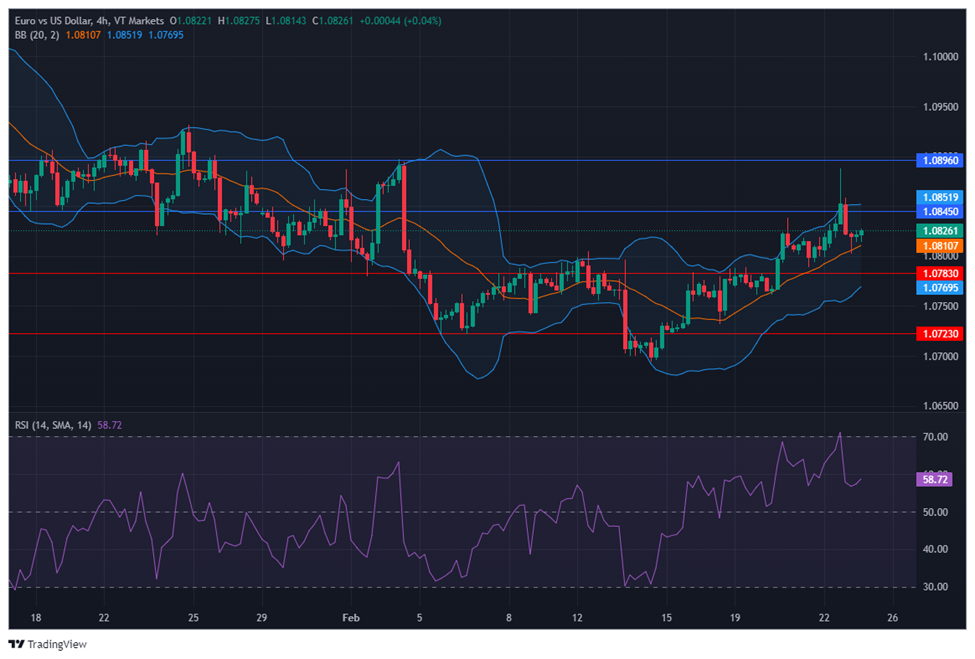
On Wednesday, the EUR/USD moved higher and was able to reach near the upper band of the Bollinger Bands. Currently, the price is moving just below the upper band, suggesting a potential upward movement to reach the upper band. Notably, the Relative Strength Index (RSI) maintains its position at 65, signaling a bullish outlook for this currency pair.

Resistance: 1.0845, 1.0896

Support: 1.0783, 1.0723

XAU/USD (4 Hours)

XAU/USD Trajectory Amidst Dollar Strength and Anticipation of FOMC Minutes

As the US Dollar gained momentum with Wall Street’s opening and before the release of the Federal Open Market Committee (FOMC) Minutes, gold prices (XAU/USD) were influenced by a complex interplay of factors. The anticipation surrounding the FOMC minutes, detailing reasons for holding interest rates steady in early 2024, and Chairman Jerome Powell’s remarks on the unlikelihood of a March rate cut, set a cautious tone in the market. Despite recent employment and inflation data backing the Federal Reserve’s wait-and-see approach, shifting rate-cut expectations to June from May, the overall mixed performance of the dollar amidst a lackluster risk appetite and struggling global equities highlights a potentially volatile environment for gold as investors digest these economic cues.

Chart XAU/USD by TradingView

On Wednesday, XAU/USD moved back lower to reach the middle band after reaching near the upper band of the Bollinger Bands. Currently, the price is moving just above the middle band, suggesting a potential upward movement toward the upper band. The Relative Strength Index (RSI) stands at 58, signaling a neutral with a slightly bullish outlook for this pair.

Resistance: $2,030, $2,042

Support: $2,017, $2,004

Economic Data
CurrencyDataTime (GMT + 8)Forecast
EURFrench Flash Manufacturing PMI16:1543.5
EURFrench Flash Services PMI16:1545.7
EURGerman Flash Manufacturing PMI16:3046.1
EURGerman Flash Services PMI16:3048.0
GBPFlash Manufacturing PMI17:3047.5
GBPFlash Services PMI17:3054.2
USDUnemployment Claims21:30217K
USDFlash Manufacturing PMI22:4550.5
USDFlash Services PMI22:4552.4

Strategies for navigating forex trading amidst inflation 

Imagine a time when basic commodities like bread and gas were just a few cents, and fast forward to today, where their prices often strain our budgets. 

This gradual increase in the price of goods and services over time is known as inflation, a phenomenon deeply embedded in economic history that significantly impacts market dynamics and investment strategies in the forex domain. 

Understanding inflation

Inflation, often termed the silent thief of purchasing power, influences individuals, businesses, and entire economies. 

At its core, inflation signifies a sustained uptick in the general price level of goods and services, resulting in a rise in the cost of living and a decline in the purchasing power of currency. 

While moderate inflation is seen as conducive to healthy economic growth, excessive inflation can erode purchasing power, disrupt economic stability, and hinder long-term prosperity. 

The driving forces behind inflation:

  • Demand-pull inflation: Arises when demand outpaces supply due to factors such as consumer spending patterns and policy interventions. 
  • Cost-push inflation: Emerges from rising production costs passed on to consumers. 
  • Monetary factors: Central bank actions, like interest rate adjustments, that impact inflation. 
  • Supply chain disruptions: Global phenomena leading to shortages and subsequent price hikes. 
  • Expectations and psychology: Influence consumer behaviour, affecting inflation outcomes. 

Types of inflation

Inflation presents itself in various forms, each with unique characteristics and underlying causes: 

  • Creeping inflation: Characterised by a gradual rise in prices, often associated with stable economic conditions and moderate inflation rates. 
  • Walking inflation: Signifies a slightly accelerated pace of price increases compared to creeping inflation, posing manageable economic risks. 
  • Galloping inflation: Represents a rapid surge in price levels, often reaching double or triple-digit inflation rates, jeopardising economic stability and currency confidence. 
  • Hyperinflation: The most extreme form of inflation, characterised by astronomical inflation rates, resulting in the collapse of the monetary system and severe economic turmoil. 

Impact of inflation on currency valuation

Understanding the relationship between inflation and currency valuation is crucial for forex traders. 

As inflation rises, a currency’s value typically declines due to the erosion of its purchasing power. Conversely, currencies from regions with low inflation or stable prices often experience heightened demand, bolstering their value against others. 

However, this correlation is not always straightforward, as various factors such as interest rate differentials, economic growth prospects, geopolitical events, and market sentiment also influence exchange rates. 

Role of central banks in inflation management

Central banks play a critical role in managing inflation through monetary policy tools like interest rates, open market operations, and forward guidance. 

For forex traders, closely monitoring central bank actions is essential, utilising tools like the Economic calendar to anticipate and react swiftly to policy shifts. 

Indicators and metrics for monitoring inflation

Inflation serves as a vital indicator of economic health, influencing policy decisions and investment strategies. 

  • Consumer Price Index (CPI): Tracks changes in household goods and services prices, indicating consumer inflation. 
  • Producer Price Index (PPI): Monitors changes in producer prices, reflecting upstream inflationary trends. 
  • Core vs. headline inflation: Core inflation excludes volatile items like food and energy, offering a stable measure of underlying trends. 
  • Other economic indicators: Monitoring unemployment rates and GDP growth provides insights into inflationary pressures and broader economic conditions. 

By analysing these indicators, forex traders gain a comprehensive view of inflation trends and their impact on currency values. 

Strategies for trading in an inflationary environment

Adapting to inflationary undercurrents in the forex domain requires strategic finesse. 

Here are succinct strategies for traders: 

  • Stay informed about inflation across economies, dissecting data releases and central bank communiques for nuanced trend prognostication. 
  • Incorporate CPI, PPI, and core inflation metrics into fundamental analyses to glean insights into economic robustness and currency values. 
  • Mitigate risks by recalibrating strategies: adjust position sizes, establish stop-loss thresholds, and diversify portfolios for effective risk management. 
  • Hedge against inflation by strategically positioning in currencies and assets poised for appreciation, such as those with robust inflation-combatting policies or inflation-resilient assets like gold. 

In conclusion, navigating forex trading amidst an inflationary landscape mandates a nuanced comprehension of inflation’s ripple effects on currency valuations. 

By discerning the interplay between inflation and currency dynamics, leveraging key indicators, and deploying strategic methodologies, traders can adeptly navigate the challenges and seize the opportunities presented by inflation in the forex sphere. 

Stay informed, stay adaptable, and integrate inflationary analyses into your trading blueprints to augment your prospects of success in the dynamic realm of forex trading. 

Explore your Forex Trading Strategies via VT Markets Demo Account. Start Trading Now!

A Guide to The Best Months in Gold Trading 

Best Months to Trade Gold

Gold is one of the most popular commodities in the world, and for good reason. It has a long history of being a store of value, a hedge against inflation, and a safe haven in times of crisis.  

But did you know that gold also has seasonal patterns that can help you optimize your trading strategy? 

Let’s dive in to know what seasonal patterns are, how they affect gold prices, and which are the best months to trade gold.  

We will also show you how to use a free tool to analyze seasonal patterns in gold trading and how to open a demo account to practice trading without risking any money. 

Seasonal patterns in gold trading

Seasonal patterns are recurring trends or cycles that occur in the price of an asset over a certain period of time. They are influenced by various factors, such as supply and demand, weather, holidays, festivals, geopolitics, and market sentiment. 

Seasonal patterns can help traders identify potential opportunities and risks in the market, as well as plan their entry and exit points.  

However, seasonal patterns are not always reliable or consistent. In addition, they can be affected by unexpected events or changes in market conditions.  

Therefore, traders should always use other tools and indicators to confirm their analysis and manage risk.

How do seasonal patterns affect gold prices?

Gold prices tend to follow certain seasonal patterns throughout the year, depending on the demand and supply of the precious metal. Some of the main factors that influence gold demand and supply are: 

1) Jewelry demand:

Gold is widely used for jewelry making, especially in countries like India and China, where gold is considered a symbol of wealth and prosperity. 

Jewelry demand usually peaks during festive seasons, such as Diwali, Chinese New Year, Valentine’s Day, and Christmas. 

2) Investment demand:

Gold is also sought after by investors who want to: 

  • Diversify their portfolio,  
  • Hedge against inflation,  
  • or protect their wealth from political or economic uncertainty.  

Investment demand usually rises during periods of market volatility, geopolitical tension, or currency devaluation. 

3) Central bank demand:

Gold is also held by central banks as part of their foreign exchange reserves. Central banks can buy or sell gold to influence their currency value, interest rates, or monetary policy. Central bank demand usually depends on their economic outlook and policy objectives. 

4) Mining supply:

Gold is also produced by mining companies who extract it from the earth. Mining supply usually depends on the cost of production, the availability of resources, and the environmental regulations. 

5) Choosing the best broker

When trading gold, selecting a reliable forex broker is crucial. A top-notch broker should offer competitive spreads, robust trading platforms, and excellent customer service. A great broker would be like VT Markets, we provide one of the best spreads and leverage for gold trading.

 Based on these factors, gold prices tend to exhibit some common seasonal patterns over the year, such as: 

  • January effect:  

Gold prices often start the year with a strong rally, as investors buy gold to hedge against the potential risks of the new year. This is also known as the January effect or the Santa Claus rally. 

  • Spring weakness:  

Gold prices often experience a correction or consolidation in the spring months, as jewelry demand slows down after the festive season and investors take profits from the January rally. 

  • Summer rally: 

Gold prices often rebound in the summer months, as jewelry demand picks up again ahead of the wedding season in India and China. This is also when central banks tend to buy more gold to diversify their reserves. 

  • Autumn strength:  

Gold prices often reach their highest levels in the autumn months, as jewelry demand peaks during Diwali and Chinese New Year. This is also when investors tend to buy more gold to hedge against inflation or market uncertainty. 

  • December weakness:  

Gold prices often end the year with a decline or stagnation, as jewelry demand drops after the festive season and investors sell gold to rebalance their portfolio or realize their gains. 

Capitalizing on Gold’s Seasonal Trends

Of course, these seasonal patterns are not set in stone and can vary from year to year depending on other factors. For example, in 2020, gold prices surged to a record high of over $2,000 per ounce in August due to the COVID-19 pandemic and its impact on the global economy and financial markets. 

 If you want to practice trading gold without risking any money, you can open a demo account with a reputable online broker. A demo account is a simulated trading account that allows you to trade with virtual money using real-time market data and conditions. 

Enhance Your Gold Trading Strategy with VT Markets

Ready to capitalize on gold’s seasonal trends? VT Markets offers a robust platform for trading gold with competitive spreads and excellent customer service. Open a demo account today to practice trading without financial risk and refine your strategies using real-time market data. Start your journey with VT Markets and take your gold trading to the next level! Visit vtmarkets.net to get started.

Back To Top
server

Hello there 👋

How can I help you?

Chat with our team instantly

Live Chat

Start a live conversation through...

  • Telegram
    hold On hold
  • Coming Soon...

Hello there 👋

How can I help you?

telegram

Scan the QR code with your smartphone to start a chat with us, or click here.

Don’t have the Telegram App or Desktop installed? Use Web Telegram instead.

QR code