Best Time to Trade EURUSD: Complete Guide

Best Time to Trade EURUSD: What Every Trader Should Know

The EUR/USD currency pair, being the most traded in the forex market, offers numerous opportunities for traders due to its high liquidity and volatility. However, understanding the best time to trade EUR/USD can significantly enhance your trading success. Timing your trades with market activity is critical, as it directly impacts volatility, spreads, and profit potential.

When is the Best Time to Trade EUR/USD?

The best time to trade EUR/USD is during periods of high liquidity and volatility, typically when the market sees the most activity. This often occurs during the London-New York session overlap (1:00 PM – 5:00 PM GMT), as traders from two major financial hubs are active simultaneously. This period offers tighter spreads, faster trade execution, and greater price movement, making it ideal for both day traders and scalpers. Additionally, key economic data releases, such as the U.S. Non-Farm Payroll (NFP) or European Central Bank (ECB) announcements, often occur during this overlap, driving sharp market movements.

Learn how to trade EUR/USD for beginners

Key Economic Events That Impact EUR/USD

Economic events are major catalysts for EUR/USD price movements. Monitoring these events can help traders identify opportunities and prepare for volatility:

1. European Central Bank (ECB)

The ECB plays a critical role in shaping EUR/USD movements. During its meetings, the bank announces key monetary policies, such as interest rate decisions and asset purchase programs. A rate hike signals economic strength in the Eurozone, often boosting the Euro and causing EUR/USD to rise. On the other hand, dovish policies like interest rate cuts or increased quantitative easing can weaken the Euro, leading to a drop in the pair. Traders often monitor these events closely as they can create significant market volatility.

2. US Non-Farm Payroll (NFP) Report

The US NFP report, released on the first Friday of every month, is a major driver of market activity. It measures job creation in the US (excluding farm-related industries) and provides a snapshot of the economy’s health. Strong NFP data typically strengthens the US Dollar, leading to a decline in EUR/USD, while weaker-than-expected results often weaken the Dollar, driving the pair higher. For example, during a strong NFP release, the USD strengthens sharply, providing traders with high volatility and potential trading opportunities.

3. Inflation Data (CPI)

Inflation, tracked through the CPI, is a key indicator of economic stability. Both the Eurozone and the US release monthly CPI data, which central banks use to decide monetary policies. A higher CPI in the Eurozone indicates inflationary pressure, often prompting the ECB to raise interest rates, which strengthens the Euro. Conversely, if US CPI data spikes, the Federal Reserve may adopt a more hawkish stance, boosting the Dollar and lowering EUR/USD. These reports often cause short-term volatility, providing strategic trading windows.

4. Federal Reserve Meetings and Statements

Federal Reserve meetings are closely watched for announcements on interest rates and economic projections. A hawkish stance, signaling future rate hikes, strengthens the USD and typically pushes EUR/USD lower. Conversely, dovish statements hinting at stimulus or rate cuts weaken the Dollar, causing EUR/USD to rise. These meetings provide clear direction on the Fed’s monetary strategy, making them essential for traders aiming to predict currency movements.

5. Geopolitical Developments

Geopolitical events, such as elections, trade negotiations, or unexpected political crises, can cause significant fluctuations in EUR/USD. For instance, during the Brexit negotiations, uncertainty about the Eurozone’s economic stability led to sharp declines in the Euro. Similarly, US elections often create volatility due to changes in fiscal or trade policies. Staying informed about such developments can help traders anticipate potential market shifts.

6. Trade Balance and Economic Health Indicators

Trade balance and PMI reports reveal the economic health of the Eurozone and the US. A trade surplus in the Eurozone usually strengthens the Euro, while a deficit weakens it. Similarly, strong US PMI data reflecting growth in the manufacturing or services sectors can boost the Dollar. These indicators help traders gauge overall economic trends, allowing them to make informed decisions about EUR/USD positions.

The General Trading Hours for Forex Trading

The forex market operates 24 hours a day, divided into four major sessions: Sydney, Tokyo, London, and New York. These sessions overlap, creating periods of heightened activity.

SessionTime (GMT)
Sydney Session10:00 PM to 7:00 AM
Tokyo Session12:00 AM to 9:00 AM
London Session8:00 AM to 5:00 PM
New York Session1:00 PM to 10:00 PM

The most active times in forex trading are during session overlaps, such as the London-New York overlap (1:00 PM – 5:00 PM GMT), when trading volumes peak due to the simultaneous participation of traders from both regions. These hours offer the best trading conditions with high liquidity, tighter spreads, and increased volatility.

Periods outside these overlaps, such as late in the Sydney or Tokyo sessions, tend to have lower trading volumes and wider spreads, making them less favorable for trading popular pairs like EUR/USD. Understanding these general trading hours allows traders to optimize their strategies by focusing on the most profitable times while avoiding less active periods.

Learn what forex trading is and how it works

Where are the Most Volatile Times for EUR/USD?

Volatility is a key factor that drives trading opportunities in the EUR/USD pair. The most volatile periods often coincide with major market events and specific trading hours, which see heightened activity and liquidity.

Economic Data Releases: The EUR/USD pair experiences significant volatility during major economic data releases. Key events include the US Non-Farm Payroll (NFP) report, Eurozone GDP data, and central bank meetings. These events often drive sharp price movements. 

Example: An unexpected rate hike by the ECB can strengthen the Euro, pushing EUR/USD higher, while a strong NFP report typically boosts the USD, causing the pair to drop. Traders actively monitor these scheduled events to seize trading opportunities.

Overlapping Trading Sessions: The London-New York overlap (1:00 PM – 5:00 PM GMT) is the most volatile trading period for EUR/USD. This overlap combines the activity of two major markets, resulting in high liquidity, tighter spreads, and more pronounced price movements. During this time, key economic announcements often amplify volatility, creating ideal conditions for both short-term and long-term trades. Using tools like stop-loss and take-profit orders is crucial to managing risks effectively during these active hours.

Example: During a London-New York session overlap, a surprise ECB announcement may cause the EUR/USD to break out of a consolidation range, with traders leveraging the high liquidity to enter and exit positions swiftly. This is often accompanied by sharp, decisive trends that offer opportunities for both short-term and swing traders.

Discover the 10 most volatile forex pairs.

How to Trade EURUSD

Learn how to trade EURUSD with the step-by-step guide below:

Step 1: Understand and Analyze the EUR/USD Currency Pair

Start by studying the EUR/USD pair using technical analysis, like the Relative Strength Index (RSI), and fundamental analysis, such as monitoring ECB meetings or US NFP reports. This helps you identify trends and key levels for making informed decisions.

Step 2: Select a Reliable Broker

Choose a reliable broker with competitive spreads, fast execution, and dedicated customer service. Ensure they provide essential tools like real-time data, educational resources, and a user-friendly platform to support your trading needs.

Step 3: Open and Fund Your Trading Account

Register a live trading account with your chosen broker, then fund your account using a secure payment method. Deposit an amount that fits your risk management plan.

Step 4: Open a Trade

Analyze the market, set your entry and exit points, and use limits or market orders to execute trades. Always set stop-loss and take-profit levels to manage risk.

Step 5: Monitor and Close Your Trade

Track your trade’s progress, stay updated on market news, and exit your position when your target is reached or market conditions change.

Discover the 9 best forex trading strategies and techniques

Tips for Choosing the Best Time to Trade EUR/USD

Trade During Overlaps: Focus on high-activity periods like the London-New York session overlap, as it offers increased liquidity and volatility, ideal for trading EUR/USD.

Avoid Low-Volume Periods: Steer clear of quieter periods, such as the late Asian session, unless there’s significant news impacting EUR/USD that may create trading opportunities.

Stay Updated: Regularly check economic calendars for high-impact events, such as ECB meetings or US NFP reports, to anticipate market movements and adjust your trades accordingly.

Choose Trading Hours That Suit You: Select trading hours that align with your schedule, ensuring you can fully focus on the market during active periods for EUR/USD.

Use Risk Management Tools: Always use risk management tools like stop-loss and take-profit orders to protect your account from unexpected price swings and manage your risk effectively.

Discover if forex trading is profitable.

Conclusion

Timing is a vital factor in forex trading, especially with the EUR/USD pair. Identifying the best time to trade EUR/USD based on market activity and economic events can enhance your trading outcomes. Whether you’re a day trader or swing trader, aligning your strategy with key trading hours and market overlaps is essential for success.

Trade EUR/USD with VT Markets

VT Markets provides a robust platform with low spreads and advanced trading tools, ideal for trading EUR/USD. Access MetaTrader 4 (MT4) and MetaTrader 5 (MT5) with a user-friendly interface and reliable execution, even during high-volatility periods. Whether you’re timing your trades around key sessions or economic releases, VT Markets ensures you can make the most of the best time to trade currency. Start trading EUR/USD today and enjoy a seamless, professional trading experience with VT Markets.

Not ready to trade EUR/USD? Start with a demo account to practice your strategies and build confidence before diving into the live market.

Frequently Asked Questions (FAQs)

1. What is the best time to trade EURUSD?

The best time to trade EURUSD is during the overlap between the London and New York sessions, typically from 1:00 PM – 5:00 PM GMT. This period sees the highest trading volume and market volatility, offering more opportunities and tighter spreads.

2. When is the best time to buy US dollars?

The best time to buy US dollars often aligns with U.S. market hours or key economic data releases like interest rate decisions, inflation reports, or employment figures. Buying USD during high-impact news can offer better price movement, but also comes with increased risk.

3. Why is EURUSD the most popular currency pair?

EURUSD is the most traded currency pair in the world and a leading major currency pair in the forex market. It offers high liquidity, low spreads, and consistent volatility, making it attractive for traders of all levels. Its popularity stems from the global economic influence of both the U.S. and the Eurozone, allowing traders to capitalise on macroeconomic trends and news events.

4. What is the best time to trade currency overall?

The best time to trade currency is when major markets overlap, especially the London/New York window. This is when liquidity is highest and spreads are usually the tightest, making it ideal for active trading.

5. Does timing really affect forex trading results?

Yes. Trading during high-liquidity hours can lead to better price execution, smaller spreads, and more predictable market behaviour. Understanding market sessions helps you optimise your trading strategy.
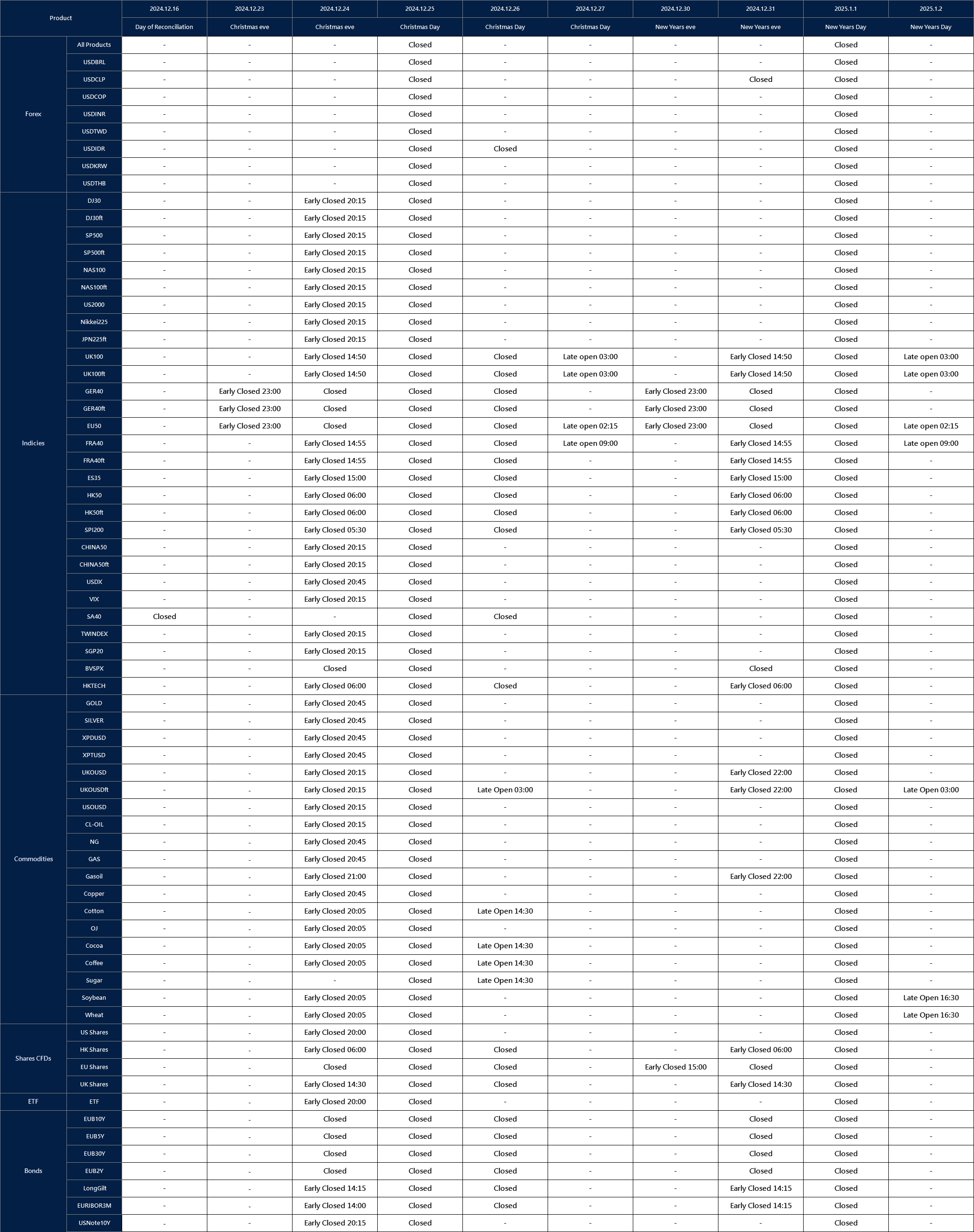
Notification of Trading Adjustment in Holiday (Update) – Dec 31, 2024

Dear Client,

Affected by international holidays, the trading hours of some VT Markets products will be adjusted.

Please check the following link for the affected products:

Notification of Trading Adjustment in Holiday (Update)

Note: The dash sign (-) indicates normal trading hours.

Friendly Reminder:
The above data is for reference only, please refer to the MT4/MT5 software for specific data.

If you’d like more information, please don’t hesitate to contact info@vtmarkets.com

18 Candlestick Patterns You Should Know & Learn

Candlestick Patterns: 18 Candlestick Patterns You Should Know as a Trader

This article provides an in-depth exploration of candlestick patterns, including their formation, interpretation, and significance in market analysis. It covers key types such as bullish, bearish, and continuation patterns, offering insights into how they can signal potential market movements.

What is a Candlestick Pattern?

Candlestick patterns are among the most widely used tools in technical analysis, providing traders with insights into market trends, momentum, and potential reversals. Originating from 18th-century Japanese rice trading, candlestick charts visually represent price movements over a specific period, making it easier to identify patterns and trends at a glance.

A candlestick pattern is a visual representation of price movement in the financial markets, built from a series of candlesticks that each reflect an asset’s open, high, low, and close within a specific time period. These patterns form when one or more candlesticks appear in a sequence that reflects the psychology of buyers and sellers, revealing shifts in momentum, sentiment, and potential market direction.

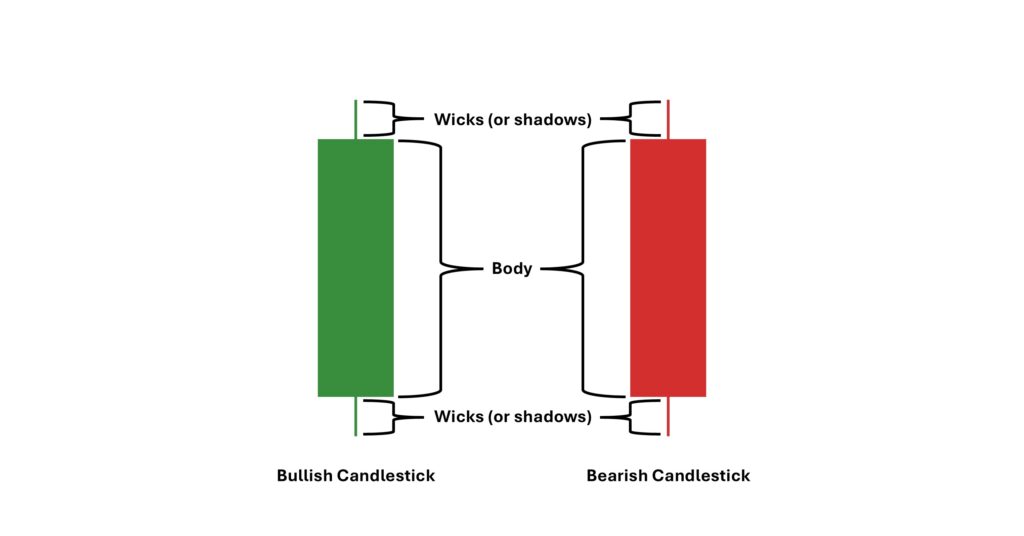
A candlestick is composed of three main parts:

Body: Indicates the opening and closing prices during a specific timeframe.

Wicks (or shadows): Represent the highest and lowest prices during the timeframe.

Color: Shows whether the market moved upward (bullish) or downward (bearish). Typically, a green or white candle is bullish, while a red or black candle is bearish.

By understanding candlestick patterns, traders can interpret market sentiment, assess momentum, and identify potential reversals or continuations. These patterns serve as a visual guide, helping traders anticipate market movements and align their strategies with prevailing trends, thereby improving decision-making accuracy.

How Are Candlesticks Formed, and How Do You Read Them?

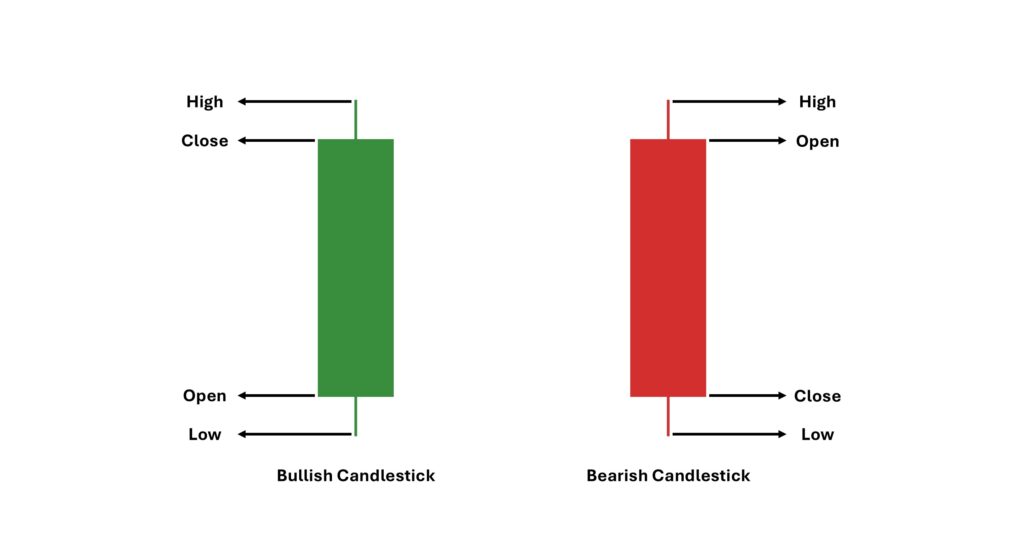
A single candlestick is formed using four key data points:

Open: The price at the start of the period, marking where trading began.

Close: The price at the end of the period, highlighting where trading finished.

High: The highest price reached during the period, showcasing the maximum price buyers were willing to pay.

Low: The lowest price reached during the period, representing the minimum price sellers were willing to accept.

These elements collectively provide a clear snapshot of market behavior within the given timeframe, helping traders analyze sentiment and momentum effectively.

To read candlestick patterns effectively, traders focus on three critical aspects:

The body’s size: A large body reflects strong momentum in the direction of the candle, indicating dominant buyer or seller activity. A small body, on the other hand, often points to indecision or market consolidation.

The wicks’ length: Long wicks indicate that prices moved significantly in one direction but were pushed back, signaling potential reversals or resistance at those levels.

The pattern’s context: A candlestick’s importance lies in its position within the broader trend or its proximity to key support and resistance levels, which helps determine its relevance.

For example, if a bullish candlestick pattern appears near a support level, it could suggest that buyers are defending the price, and a potential upward reversal may occur. Conversely, long upper wicks near resistance might indicate selling pressure and a possible downward shift.

Types of Candlestick Patterns

Candlestick patterns are essential tools in technical analysis, offering insights into potential price movements. They are categorized into bullish patterns, bearish patterns, and continuation patterns, each serving to identify shifts or persistence in market trends.

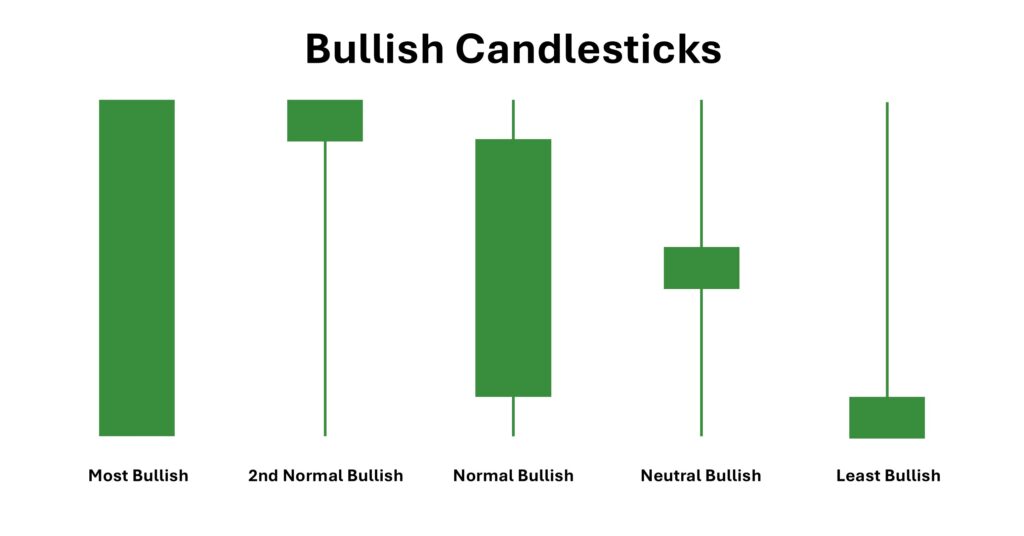
bullish-candlesticks

1. Bullish Candlestick Patterns

Bullish candlestick patterns are visual indicators on a price chart that suggest potential upward reversals or continued upward momentum in financial markets. These patterns typically form during downtrends or consolidation phases and signal that buyers are beginning to exert more influence, potentially overpowering sellers. They often reflect shifts in market sentiment and can help traders anticipate future price increases.

a. Hammer

The hammer is a single candlestick pattern that typically forms after a downward trend. It features a small real body near the top of the candlestick and a long lower shadow, which resembles a hammer. The absence of an upper shadow or its minimal length emphasizes the strength of the lower shadow. This pattern potentially indicates that, while sellers initially dominated the session, buyers regained control toward the close, suggesting a possible shift in market sentiment.

b. Inverted Hammer

The inverted hammer also appears to follow a downward trend and has a small real body located near the lower end of the candlestick. Unlike the hammer, its long upper shadow signifies significant buying activity during the session that was eventually subdued by sellers. This pattern may indicate resistance to continued declines, signaling a potential reversal in downward momentum if buyers gain greater control in subsequent sessions.

c. Morning Star

The morning star is a three-candle reversal pattern that emerges during a downward trend. It starts with a long bearish candle reflecting strong selling momentum. The second candle is smaller and can be bullish, bearish, or neutral, signifying a pause or indecision in the market. The pattern concludes with a large bullish candle that closes above the midpoint of the first candle, indicating a possible recovery and a shift in market sentiment toward buyers.

d. Bullish Engulfing

The bullish engulfing pattern consists of two candles and is a strong potential reversal indicator in a downtrend. The first candle is bearish, reflecting continued selling momentum. The second candle is a large bullish candlestick that completely engulfs the body of the previous bearish candle, indicating increasing buyer activity and a potential momentum shift in favor of upward price movement.

e. Piercing Line

The piercing line is a two-candle reversal pattern that forms during a downtrend. The first candle is bearish and reflects strong selling pressure. The second candle opens below the prior close but rallies to close above the midpoint of the first candle. This pattern suggests that buyers are beginning to outweigh sellers, indicating potential recovery and growing optimism in the market.

f. Three White Soldiers

The three white soldiers pattern is a series of three long bullish candles that typically follow a downtrend or period of consolidation. Each candle opens within the real body of the previous candle and closes higher, with minimal wicks, emphasizing steady buying pressure. This pattern is regarded as a sign of strong confidence among buyers and suggests sustained upward momentum.

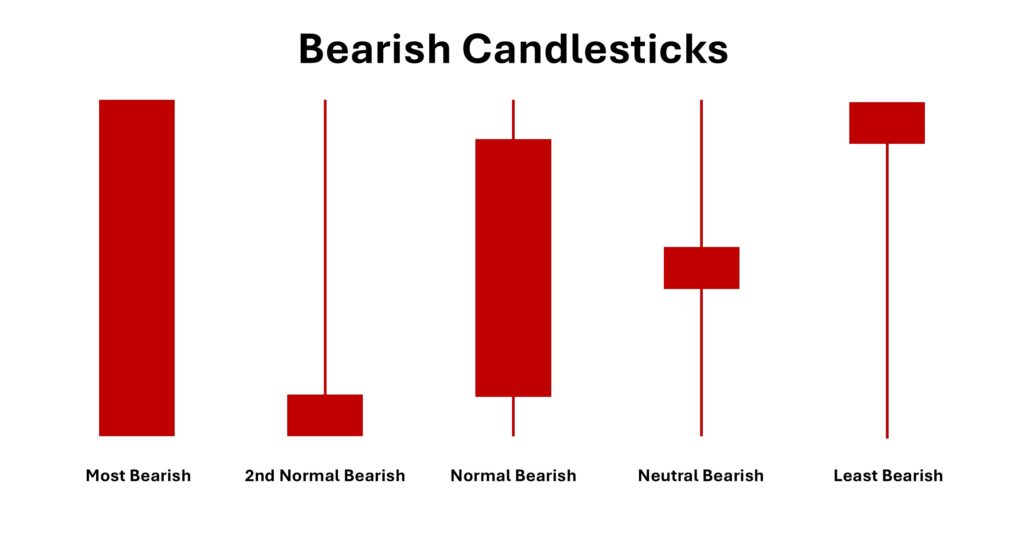
2. Bearish Candlestick Patterns

bearish-candlesticks

Bearish candlestick patterns are chart formations that signal potential downward reversals or continuation of a bearish trend in financial markets. These patterns typically emerge during uptrends or consolidation phases, suggesting that sellers are gaining momentum and overpowering buyers. They reflect a shift in market sentiment toward pessimism or declining confidence, often indicating future price declines.

a. Hanging Man

The hanging man is a single candlestick pattern that emerges at the end of an uptrend. It features a small body positioned near the top of the trading range and a long lower shadow, which indicates that sellers dominated the session but were unable to push the price significantly lower by the close. This pattern suggests that while the uptrend may still have some momentum, selling pressure is beginning to emerge, potentially leading to a reversal if confirmed by subsequent price action.

b. Shooting Star

The shooting star appears during an uptrend and is recognized by its small real body near the lower end of the candlestick and a long upper shadow. This pattern reflects an attempt by buyers to push prices higher during the session, but sellers ultimately regained control, forcing the close near the session’s low. The shooting star may indicate a weakening of the uptrend and the possibility of a reversal if subsequent candles confirm the pattern.

c. Evening Star

The evening star is a three-candle reversal pattern typically forming at the peak of an uptrend. The first candle is a long bullish candlestick that demonstrates strong buying pressure. The second candle is smaller and reflects market indecision or a pause in the trend, which could be bullish, bearish, or neutral. The third candle is a long bearish candlestick that closes below the midpoint of the first, signaling a potential reversal as selling pressure increases and buyers lose control.

d. Bearish Engulfing

The bearish engulfing pattern is a two-candle formation that typically appears at the end of an uptrend. The first candle is a small bullish candlestick, indicating continued upward momentum. The second candle is a large bearish candlestick that completely engulfs the body of the first, signaling a significant shift in sentiment as sellers overpower buyers. This pattern often indicates the potential onset of a downtrend if confirmed by additional bearish signals.

e. Dark Cloud Cover

The dark cloud cover pattern forms when a bearish candle follows a strong bullish candle during an uptrend. The second candle opens above the high of the first but closes well below its midpoint, signaling a rejection of higher prices and a potential shift in sentiment toward selling. This pattern suggests that sellers are beginning to exert influence, possibly leading to further declines if confirmed by subsequent bearish activity.

f. Three Black Crows

The three black crows pattern consists of three consecutive long bearish candles that typically appear after an uptrend or a period of consolidation. Each candle opens within the body of the previous candle and closes lower, with minimal wicks, indicating consistent selling pressure throughout the session. This pattern reflects growing confidence among sellers and suggests a strong bearish sentiment that could lead to continued declines.

3. Continuation Candlestick Patterns

Continuation candlestick patterns are chart formations that indicate the likelihood of a prevailing trend continuing in the same direction. They often appear during brief periods of market consolidation, where the price pauses before resuming its prior momentum. These patterns signal that either buyers or sellers are temporarily rebalancing before regaining control to sustain the existing trend.

a. Doji

The doji is a single candlestick pattern that appears when the open and close prices are nearly identical, resulting in a very thin or nonexistent body. It reflects a balance between buyers and sellers, indicating indecision in the market. Depending on the context, a doji can signal a pause in the current trend or a potential reversal, especially if it forms near significant support or resistance levels.

b. Spinning Top

The spinning top is another candlestick pattern that indicates market indecision. It has a small real body located in the middle of the candle and long wicks on both ends, showing that both buyers and sellers were active, but neither could gain control. This pattern often suggests a period of consolidation and may precede a continuation of the current trend or a potential reversal, depending on surrounding market conditions.

c. Marubozu

The marubozu candlestick lacks upper or lower shadows, with the open and close prices representing the candle’s high and low. A bullish marubozu indicates strong buying momentum as the price opened at the low and closed at the high of the session, while a bearish marubozu shows strong selling pressure. This pattern suggests decisive market sentiment and often signals the continuation of the prevailing trend.

d. Harami

The harami is a two-candle pattern that represents a potential pause or reversal in the market. The first candle is larger, and the second candle is entirely contained within its body, resembling a “pregnant” figure. A bullish harami often forms at the bottom of a downtrend, reflecting a potential hesitation in selling pressure, while a bearish harami may appear at the top of an uptrend, signaling potential buyer indecision.

e. Rising Three Methods

The rising three methods are a continuation pattern seen in uptrends. It begins with a strong bullish candle, followed by three smaller bearish candles that stay within the range of the first candle, and concludes with another strong bullish candle. This pattern indicates that selling pressure during the middle candles was absorbed, reinforcing the strength of the uptrend.

f. Falling Three Methods

The falling three methods are the bearish counterpart of the rising three methods and appear in downtrends. It starts with a strong bearish candle, followed by three smaller bullish candles within the range of the first, and ends with another strong bearish candle. This pattern suggests that temporary buying pressure was insufficient to reverse the trend, confirming the continuation of the downtrend.

Advantages and Disadvantages of Candlestick Patterns

Candlestick patterns are intuitive and versatile tools for analyzing market trends, providing comprehensive insights into price movements. However, their effectiveness is limited by subjective interpretation, potential false signals, and dependence on the broader market context.

Advantages

Visual Clarity: Candlestick charts provide an intuitive and quick way to interpret price movements, making them accessible to both beginners and experienced traders.

Versatility: Suitable for various timeframes and asset classes, including stocks, forex, commodities, and cryptocurrencies, they adapt well to different trading strategies.

Comprehensive Information: Each candlestick shows the open, high, low, and close prices, offering a complete snapshot of market activity within a given period.

Combination with Other Tools: When paired with technical indicators like RSI or Moving Averages, candlestick patterns become more reliable and enhance overall analysis.

Disadvantages

Subjectivity: Interpretation can vary among traders, leading to inconsistent conclusions and decision-making.

Limited Reliability: Candlestick patterns may generate false signals, especially in volatile markets or without additional confirmation tools.

Context Dependency: Their effectiveness depends on broader market conditions, such as trends or key support and resistance levels, which require careful evaluation.

Conclusion

Candlestick patterns are indispensable tools for traders seeking to understand market dynamics and predict potential price movements. By learning how to interpret various types of candlesticks, including bullish and bearish candlestick patterns, traders can gain valuable insights to inform their trading strategies. However, it’s crucial to use them alongside other technical tools and maintain a disciplined approach.

Trade Now with VT Markets

Master candlestick patterns and elevate your trading with VT Marketsa reliable broker offering competitive spreads and advanced tools. Access MetaTrader 4 (MT4) and MetaTrader 5 (MT5) platforms with real-time charts, intuitive analytics, and demo accounts to practise risk-free. VT Markets delivers a seamless, powerful trading experience designed to help you trade with confidence and achieve your financial goals.

Start trading today with VT Markets.

Frequently Asked Questions (FAQs)

1. What are candlestick patterns, and why are they important in trading?

Candlestick patterns are chart formations that display price movement over a specific time frame. They help traders understand market sentiment and anticipate potential price direction based on how the market opens, closes, and fluctuates.

2. What is a bullish candlestick pattern?

A bullish candlestick pattern suggests that buying pressure is increasing, often following a downtrend. It indicates the possibility of upward price movement. Common bullish patterns include the hammer, morning star, and bullish engulfing.

3. What is a bearish candlestick pattern?

A bearish candlestick pattern reflects rising selling pressure, typically after an uptrend. It may signal that prices are likely to move downward. Examples include the shooting star, evening star, and bearish engulfing.

4. How are candlesticks formed, and how do you read them?

Each candlestick is formed based on four key data points within a selected time frame: the opening price, closing price, highest price, and lowest price. The body of the candlestick shows the range between the open and close, while the wicks (or shadows) show the highs and lows. By analysing the size, color, and shape of a candlestick, traders can interpret market sentiment and identify potential trends or reversals.

5. What are the main types of candlesticks every trader should know?

There are three main types of candlesticks: bullish candlestick patterns, bearish candlestick patterns, and continuation patterns. Each candlestick type gives traders insight into potential market movement and helps guide trading decisions.

6. How do candlestick patterns support trading strategies?

Candlestick patterns help traders make sense of market psychology and price trends. When used with other forms of analysis, they can enhance strategy development and help traders spot potential entries and exits more effectively.

7. Can I practise candlestick pattern strategies without risk?

Yes. Many platforms offer demo accounts that allow traders to practise using different candlestick patterns in a simulated environment without risking real money.

8. Do candlestick patterns guarantee profitable trades?

No, while candlestick patterns can improve trade timing and decision-making, they do not guarantee profits. It’s important to combine them with solid risk management and broader market analysis.

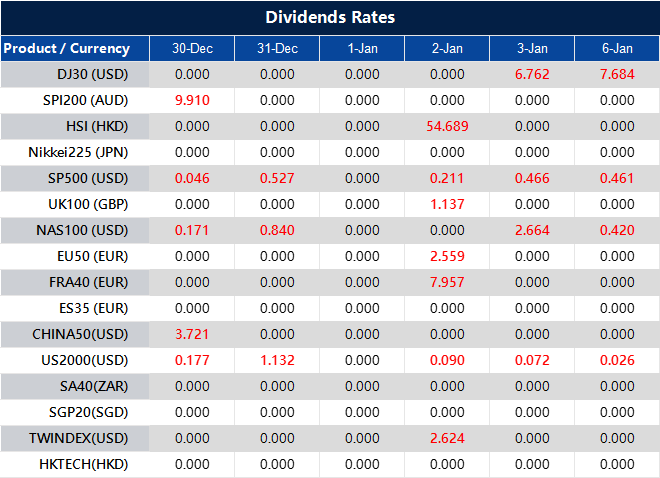
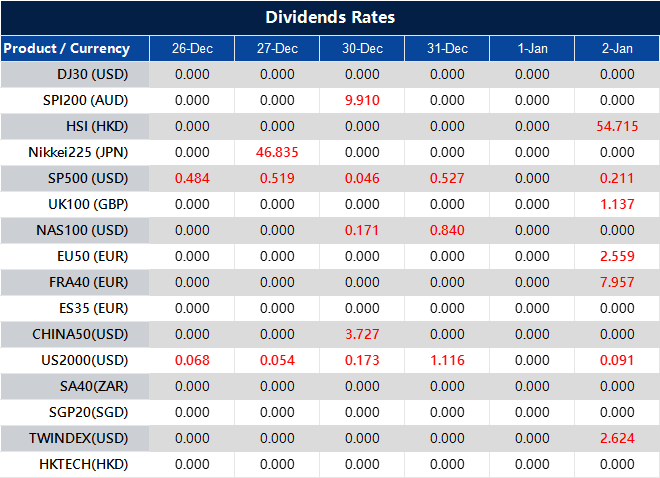
Dividend Adjustment Notice – Dec 30,2024

Dear Client,

Please note that the dividends of the following products will be adjusted accordingly. Index dividends will be executed separately through a balance statement directly to your trading account, and the comment will be in the following format “Div & Product Name & Net Volume ”.

Please refer to the table below for more details:

The above data is for reference only, please refer to the MT4/MT5 software for specific data.

If you’d like more information, please don’t hesitate to contact info@vtmarkets.com.

Is Forex Trading Profitable? Discover the Truth

Is Forex Trading Profitable? Here’s What You Need to Know

In this article, we discuss whether forex trading is profitable, explore the factors that influence success, and share actionable tips and strategies to help you enhance profitability and trade smarter in the forex market.

What is Forex Trading?

Forex trading, also known as foreign exchange or currency trading, is the process of exchanging one currency for another on a decentralized global market. It is the largest and most liquid financial market, with trillions of dollars traded daily. Forex trading operates through currency pairs, such as EUR/USD or GBP/JPY, where traders speculate on the price movements of these pairs to generate profit.

The appeal of forex trading lies in its accessibility. Traders can start with minimal capital, trade from anywhere, and engage in a market that operates 24/5. However, a critical question that many ask is whether forex trading is profitable, and understanding the mechanics and tools is essential to unlocking the potential of this market.

Learn what forex trading is and how it works

Why is Forex Popular?

Forex trading has gained immense global popularity due to its unique characteristics that cater to a wide range of traders. From its accessibility to the potential for high returns, forex offers opportunities unmatched by other markets.

High Liquidity: The forex market processes trillions of dollars in daily transactions, making it the most liquid financial market in the world. This high liquidity ensures that traders can quickly buy or sell currencies without causing significant price changes, even when trading large volumes.

Leverage Opportunities: Forex brokers provide leverage, allowing traders to control substantial positions with minimal capital. For example, with a 1:100 leverage, a trader can manage a $100,000 trade with just $1,000. While this amplifies the potential for profits, it also heightens the risk of losses, making leverage both a powerful tool and a critical responsibility.

24/5 Market Access: Unlike traditional markets with limited hours, forex operates continuously from Monday to Friday. This around-the-clock availability accommodates traders from all time zones and provides flexibility to those balancing trading with other commitments.

Diverse Trading Strategies: The forex market supports a variety of trading styles, whether you’re a day trader seeking quick profits, a swing trader holding positions for days, or a scalper executing multiple trades in minutes. This versatility attracts traders with varying skill levels and goals.

Discover the 9 best forex trading strategies and techniques

Is Forex Trading Profitable?

The potential for profitability in forex trading exists, but it’s important to recognize that not everyone achieves consistent success. Is currency trading profitable? It can be, but the outcome depends heavily on the trader’s skills, strategies, discipline, and willingness to learn.

Studies suggest that only a small percentage of traders consistently generate profits, while many face challenges such as high market volatility and the risks associated with leverage. How much can you earn from forex? Earnings vary significantly; some traders manage to achieve substantial gains, while others may experience losses.

Profitability in forex trading is not guaranteed, but it is attainable for those who dedicate time to understanding the market, applying risk management techniques, and remaining disciplined in their approach. With realistic expectations and continuous improvement, traders can increase their chances of success.

Learn how to trade forex for beginners

5 Ways to Increase Profitability in Forex Trading

Becoming consistently profitable in forex trading requires a combination of strategic planning, disciplined execution, and continuous learning. Here’s a deeper dive into five proven methods to boost profitability:

1. Master Market Analysis

Successful forex trading begins with understanding the market. Traders should combine technical analysis and fundamental analysis for a well-rounded approach:

Technical Analysis: Use tools such as trend lines, support and resistance levels, and indicators like moving averages or RSI to identify potential entry and exit points. Chart patterns, such as head and shoulders or double tops, provide insights into price behavior.

Fundamental Analysis: Monitor key economic indicators such as GDP, inflation rates, interest rate decisions, and employment data. Geopolitical events and central bank announcements also play a crucial role in currency price movements.

A trader combining these analyses gains a broader perspective, improving accuracy in predicting price movements and enhancing decision-making.

2. Manage Risks Effectively

Risk management is the cornerstone of profitable trading. Without it, even the best strategies can fail. Here’s how to manage risks:

Set Stop-Loss Orders: Define the maximum loss you’re willing to accept on each trade. Stop-loss orders automatically close your position, preventing emotional decision-making.

Proper Position Sizing: Avoid risking more than 1-2% of your trading capital on a single trade. This ensures a few losses won’t wipe out your account.

Risk/Reward Ratio: Aim for a risk/reward ratio of at least 1:2, where potential profits are double the potential loss. This ensures overall profitability, even with a lower win rate.

3. Diversify Your Trades

Relying on a single currency pair increases vulnerability to market fluctuations. Diversifying trades spreads risk and provides more opportunities:

Trade Multiple Currency Pairs: Mix major pairs (e.g., EUR/USD), minors (e.g., AUD/NZD), and exotics (e.g., USD/TRY). This reduces the impact of volatility in a specific region or economy.

Balance Correlation Risks: Be aware of correlations between pairs. For instance, EUR/USD and GBP/USD often move in tandem. Diversifying with negatively correlated or unrelated pairs can provide balance.

Learn how to build a well-diversified portfolio

4. Leverage Judiciously

Leverage can be both a blessing and a curse. While it allows traders to control larger positions with less capital, it also magnifies potential losses:

Start Conservatively: Beginners should avoid high leverage. For example, instead of 1:500, consider 1:50 until you gain more experience.

Focus on Capital Protection: Leverage should be used only when confident about a trade setup. Avoid using full leverage capacity, even for seemingly “sure trades.”

Understand Margin Requirements: Ensure you have sufficient funds to avoid margin calls. A sudden market move against your position can liquidate trades if your account balance is insufficient.

5. Adopt a Long-Term Mindset

Chasing quick profits often leads to emotional decisions, overtrading, and significant losses. A long-term mindset is crucial for sustained profitability:

Prioritize Consistency Over Big Wins: Focus on achieving smaller, consistent profits rather than taking high-risk trades for large payouts. Compounding these smaller wins leads to substantial growth over time.

Stick to a Strategy: Avoid frequently changing your trading strategy. Give your plan enough time to prove its effectiveness, tweaking it based on results rather than short-term outcomes.

Learn Patience: Wait for high-probability setups instead of forcing trades. Quality over quantity is a mantra every profitable trader follows.

By mastering these five key areas, traders can significantly enhance their profitability while managing risks effectively. The journey requires patience and persistence, but the potential rewards make it worthwhile.

5 Tips to Stay Profitable in Forex Trading

Sustaining profitability in forex trading requires a disciplined approach, strategic planning, and ongoing learning. Here’s a closer look at five essential tips to help traders remain consistently profitable:

1. Stick to a Trading Plan

Create a detailed plan that defines your goals, strategies, and risk tolerance. A trading plan eliminates emotional decision-making and ensures consistency, especially during volatile market conditions. Regularly review and refine your plan as needed.

2. Control Emotions

Trading with fear or greed can lead to overtrading or holding onto losing positions. Use tools like stop-loss and take-profit orders to automate decisions and stay objective. Approach trading as a business, relying on data rather than instinct.

3. Learn from Losses

Losses are inevitable, but valuable if analyzed correctly. Use a trading journal to identify patterns, refine strategies, and avoid repeating mistakes. Treat every loss as a step toward improving your trading skills.

4. Stay Updated on Market News

Forex markets respond to economic events like interest rate changes and geopolitical developments. Use an economic calendar to track important events and plan your trades accordingly, combining technical analysis with market insights.

5. Use Demo Accounts for Practice

Practice strategies risk-free with demo accounts before trading live. Beginners can master the basics, while experienced traders can test new approaches—transition to live trading with small positions when you are confident.

Conclusion

While forex trading offers the potential for profitability, it is not guaranteed and requires a disciplined approach, continuous learning, and proper risk management. The market’s opportunities come with inherent risks, but for those willing to invest time and effort into developing their skills and strategies, profitability is possible. By adopting the right mindset, utilizing effective tools, and staying informed, traders can improve their chances of success. 

Trade Forex with VT Markets

VT Markets is a regulated broker offering tight spreads, lightning-fast execution, and access to over 200 trading instruments via MetaTrader 4 (MT4) and MetaTrader 5 (MT5). Whether you’re a beginner or a seasoned trader, VT Markets provides advanced tools, in-depth educational resources, and responsive customer support to elevate your trading journey.

Start trading forex with VT Markets today and unlock your full potential.

Frequently Asked Questions (FAQs)

1. Is forex trading profitable for new traders?

Forex trading has the potential to be profitable, but it also carries significant risks. Success often depends on a trader’s knowledge, strategy, and ability to manage risk effectively. It’s important to approach the market with realistic expectations.

2. How do you make money from forex trading?

Profit in forex trading is made by speculating on the price movement of currency pairs. Traders buy or sell based on their market analysis, but outcomes can vary. A clear strategy and proper risk controls are essential to manage both gains and losses.

3. How much can you earn from forex trading?

Earnings from forex trading can differ greatly between individuals and are influenced by factors such as capital size, market conditions, risk tolerance, and strategy. While some traders see positive returns, others may incur losses, especially during volatile periods.

4. Is currency trading profitable in the long term?

Currency trading can be profitable over the long term if done with discipline, ongoing learning, and risk awareness. However, it is not guaranteed, and consistent profitability requires adapting to changing market conditions.

5. What are the main risks involved in forex trading?

Key risks include market volatility, overleveraging, and emotional decision-making. Even experienced traders face losses, which is why managing exposure and using tools like stop-loss orders is crucial.

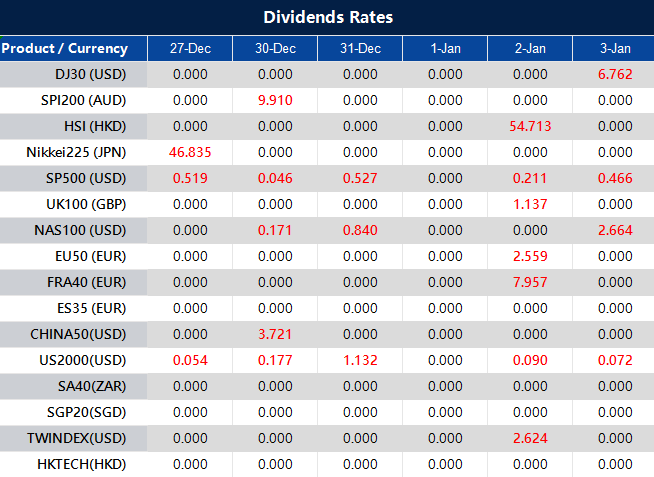
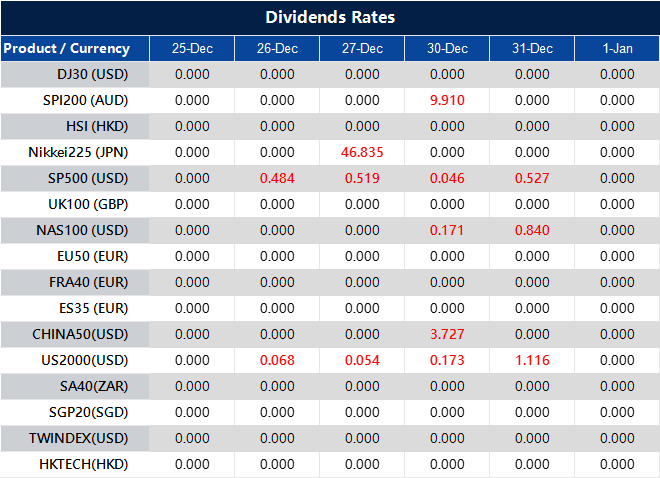
Dividend Adjustment Notice – Dec 27,2024

Dear Client,

Please note that the dividends of the following products will be adjusted accordingly. Index dividends will be executed separately through a balance statement directly to your trading account, and the comment will be in the following format “Div & Product Name & Net Volume”.

Please refer to the table below for more details:

The above data is for reference only, please refer to the MT4/MT5 software for specific data.

If you’d like more information, please don’t hesitate to contact info@vtmarkets.com.

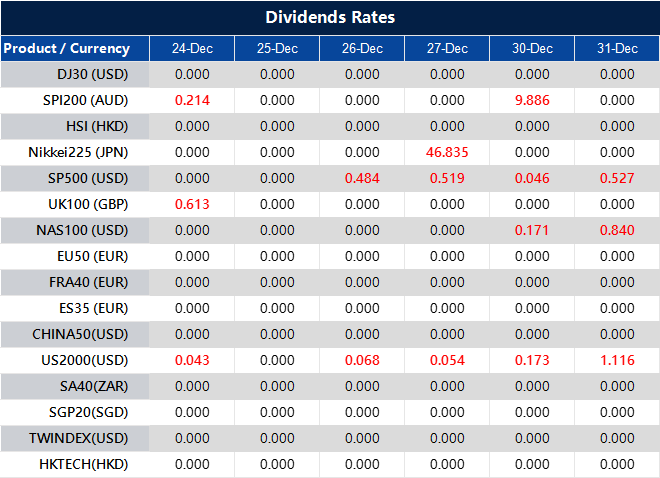
Dividend Adjustment Notice – Dec 26,2024

Dear Client,

Please note that the dividends of the following products will be adjusted accordingly. Index dividends will be executed separately through a balance statement directly to your trading account, and the comment will be in the following format “Div & Product Name & Net Volume ”.

Please refer to the table below for more details:

The above data is for reference only, please refer to the MT4/MT5 software for specific data.

If you’d like more information, please don’t hesitate to contact info@vtmarkets.com.

Fundamental vs Technical Analysis: Key Differences Explained

Fundamental vs Technical Analysis: Which One Should You Use?

Discover the key differences between fundamental and technical analysis, their benefits, and when to use each method. Learn how to integrate both fundamental and technical analysis effectively to make better trading decisions, and get step-by-step guidance on placing your first trade while managing risks. 

What is Fundamental Analysis?

Fundamental analysis evaluates financial assets by determining their intrinsic value through a comprehensive review of economic factors, financial statements, and industry trends. This method helps investors assess whether an asset is overvalued or undervalued, offering valuable insights for long-term decision-making. Key components include analyzing revenue growth, earnings reports, macroeconomic indicators, and competitive positioning.

For example, an investor might use fundamental analysis to evaluate a company like Tesla by reviewing its earnings reports, market share, and industry outlook to decide whether the stock represents a good investment opportunity. This approach focuses on long-term value and is widely favored by investors seeking sustainable growth.

Additionally, in the commodities market, fundamental analysis can help assess supply-demand dynamics. For instance, evaluating global oil production reports and geopolitical tensions, such as the impact of OPEC’s recent production cuts or conflicts in oil-rich regions, can provide insights into whether crude oil prices are likely to rise or fall.

When to Use Fundamental Analysis

Fundamental analysis is most effective for long-term investments and understanding the core value of an asset. It’s commonly used when:

Assessing Stocks: This involves examining a company’s revenue, earnings growth, and market share to understand its financial health and growth potential. For example, analyzing Amazon’s recent earnings reports and innovative advancements could indicate whether it’s a worthwhile long-term investment.

Investing in Commodities: Fundamental analysis here focuses on supply-demand trends, weather patterns, and geopolitical factors. For instance, a rise in geopolitical tensions in oil-producing countries could predict a spike in crude oil prices.

Evaluating Economies: This entails reviewing key macroeconomic indicators like GDP, inflation, and interest rates to assess the overall economic environment. A country with steady GDP growth and controlled inflation may signal a strong investment climate for local equities or bonds.

For example, fundamental analysis is ideal when choosing stocks for a retirement portfolio, where the focus is on steady growth rather than short-term fluctuations. A practical case is assessing Apple’s earnings reports and innovative product launches to gauge its future profitability and growth potential over the next decade.

What is Technical Analysis?

Technical analysis focuses on studying historical price data, patterns, and indicators to predict future market movements. Unlike fundamental analysis, which evaluates intrinsic value and long-term growth potential, technical analysis is centered on short-term market trends and trading signals. It relies on charts, volume trends, and statistical tools to identify opportunities.

Popular techniques include moving averages, candlestick patterns, and the Relative Strength Index (RSI). For instance, a trader might use a head-and-shoulders pattern on a price chart to anticipate a potential reversal in stock price. Another example is using the MACD (Moving Average Convergence Divergence) to confirm trends before entering trades.

When to Use Technical Analysis

Technical analysis is best suited for short-term trading strategies and timing market entries and exits. It is frequently used in:

Day Trading: Day trading involves focusing on small, rapid price movements that occur within a single trading session. Traders often rely on technical tools like candlestick patterns, moving averages, and volume indicators to identify profitable entry and exit points quickly. For instance, a trader might capitalize on price fluctuations in the S&P 500 index by monitoring hourly chart patterns.

Swing Trading: Swing trading seeks to capture price trends over a few days or weeks. Swing traders commonly use tools like trendlines, moving averages, and the Relative Strength Index (RSI) to predict mid-term market movements. For example, a swing trader might spot a bullish trend in a tech stock and hold it for several weeks until momentum fades.

Forex Trading: In forex markets, technical analysis is crucial for tracking currency pair movements. Tools like Fibonacci retracements, Bollinger Bands, and support/resistance levels are often applied. For example, a forex trader might use a Fibonacci retracement level to predict where a currency pair, such as EUR/USD, could reverse after a pullback.

Learn what forex trading is and how it works

For example, a forex trader might use Bollinger Bands to determine when a currency pair is overbought or oversold, enabling precise trade execution. Similarly, swing traders might rely on stochastic oscillators to identify potential reversals in mid-term market trends.

Learn the 9 best forex trading strategies & techniques.

Key Differences Between Fundamental Analysis and Technical Analysis

AspectFundamental AnalysisTechnical Analysis
PurposeDetermine an asset’s intrinsic value.Predict future price movements based on past data.
Data UsedFinancial statements, economic indicators, and industry trends.Price charts, volume, and statistical patterns.
Time HorizonIdeal for long-term investing.Suited for short-term trading.
Decision BasisCompany’s performance, market trends, and macroeconomic factors.Market trends, price patterns, and trading signals.
ExamplesEvaluating Tesla’s earnings reports for long-term investment.Using RSI to decide when to buy or sell Tesla stock.

1. Purpose

Fundamental Analysis: Focuses on understanding the true worth of an asset by analyzing underlying factors such as financial health, market conditions, and industry trends. This is ideal for investors seeking to build wealth over time.

Technical Analysis: Aims to identify patterns in historical price movements to forecast future trends. This is particularly useful for traders looking to profit from short-term market fluctuations.

2. Data Used

Fundamental Analysis: Relies on tangible data such as revenue, earnings, GDP growth, and market share, combined with qualitative insights like competitive positioning and innovation.

Technical Analysis: Uses charts, indicators (e.g., MACD, RSI), and candlestick patterns to visualize and predict price movements.

3. Time Horizon

Fundamental Analysis: Best for investments held over months or years, providing insights into sustainable growth and long-term potential.

Technical Analysis: Suitable for trades lasting from minutes to weeks, emphasizing precise timing for entering and exiting positions.

4. Decision Basis

Fundamental Analysis: Considers factors like a company’s financial statements, economic policies, and global events to determine if an asset is undervalued or overvalued.

Technical Analysis: Leverages tools like trendlines, support/resistance levels, and momentum indicators to gauge market sentiment and predict price action.

5. Examples

Fundamental Analysis: An investor evaluates Tesla’s quarterly earnings, EV market growth, and technological advancements to decide on a long-term investment.

Technical Analysis: A trader monitors Tesla’s stock using RSI and Bollinger Bands to identify an optimal short-term trade opportunity.

Fundamental Analysis vs Technical Analysis: Which is Better?

The choice between fundamental vs technical analysis depends on your investment style and goals. Fundamental analysis is superior for long-term investments and assessing core value. In contrast, technical analysis excels in short-term trading and market timing.

Pros and Cons of Fundamental Analysis

ProsCons 
Focuses on long-term growth and sustainability.

Relies on comprehensive data such as financial statements and macroeconomic indicators, providing a solid foundation for investment decisions.

Helps identify undervalued assets with significant potential for appreciation.
Time-intensive: Requires detailed research and analysis.

Less effective for short-term trading as market sentiment can overshadow intrinsic value.

Subject to external factors like sudden geopolitical events that may disrupt projections.

Fundamental analysis focuses on identifying the intrinsic value of assets by relying on measurable data like revenue, earnings growth, and macroeconomic indicators, making it ideal for long-term investments. Its key advantages include helping investors make informed decisions based on comprehensive data and identifying undervalued assets for sustainable growth. However, it requires extensive research, making it time-intensive and less effective for short-term trading. Additionally, external factors such as geopolitical tensions can disrupt even well-grounded projections.

Pros and Cons of Technical Analysis

ProsCons 
Excellent for short-term trading by identifying precise entry and exit points.

Relatively faster to use once familiar with tools and patterns.

Works well in highly liquid markets like forex and equities.
Relies heavily on historical data, which may not always predict future movements accurately.

Prone to misinterpretation, especially with conflicting indicators.

It may overlook the broader economic or fundamental factors influencing asset prices.

Technical analysis excels in short-term trading by using tools like RSI and candlestick patterns to identify precise entry and exit points quickly, making it especially effective in highly liquid markets like forex. Once familiar with the patterns, traders can make fast decisions. However, its heavy reliance on historical data can lead to inaccuracies in unpredictable market conditions. Additionally, conflicting signals from indicators may cause misinterpretation, and it often overlooks broader economic or fundamental factors that can significantly impact asset prices.

Integrate Fundamental and Technical Analysis

Integrating fundamental and technical analysis enables traders and investors to leverage the strengths of both approaches for more effective decision-making. Start by using fundamental analysis to evaluate the intrinsic value of an asset, such as a stock or commodity, by examining key factors like earnings reports, industry trends, and macroeconomic indicators. This helps in identifying assets with strong long-term growth potential. Once a fundamentally sound asset is chosen, use technical analysis tools like moving averages, RSI, or candlestick patterns to determine optimal entry and exit points. 

For example, analyze a tech company’s market share and future growth potential using fundamental analysis, then monitor its price chart to identify a bullish trend or support level for buying opportunities. Similarly, when trading forex, consider economic reports such as GDP or inflation rates for fundamental insights, and use Fibonacci retracements or trendlines to time your trades effectively. Integrating these methods ensures that investments are backed by robust data and executed with precision, leading to better overall outcomes.

How to Trade with Fundamental and Technical Analysis?

Learn how to combine fundamental and technical analysis for smarter trading decisions. Follow the steps below:

Step 1: Understand Fundamental and Technical Analysis

Learn the basics of both fundamental analysis and technical analysis. Fundamental analysis helps you assess the intrinsic value of an asset, while technical analysis allows you to identify price trends and market movements.

Step 2: Open and Fund Your Trading Account

Choose a reliable trading platform like VT Markets. Open an account, ensure it suits your trading needs, and deposit funds to start trading.

Step 3: Combine Insights

Use fundamental analysis to evaluate the long-term value of an asset, such as a stock or commodity. Then apply technical analysis to determine the best time to enter or exit trades based on price patterns and market trends.

Step 4: Place Your First Trade

After evaluating the asset with both fundamental and technical analysis, execute your trade by integrating insights.

Step 5: Use Risk Management Strategies and Tools

Protect your investments with risk management tools like stop-loss orders and position sizing. Continuously monitor your trades and adjust strategies as needed to minimize risks and maximize returns.

Conclusion

Both fundamental and technical analysis offer unique insights into the financial markets, and understanding their differences is key to developing a well-rounded trading strategy. While fundamental analysis focuses on the bigger economic picture, technical analysis helps pinpoint precise market entry and exit points. By learning to apply both approaches effectively, traders can make more informed decisions and adapt to changing market conditions with greater confidence.

Apply Your Knowledge in Action with VT Markets

VT Markets equips traders with the necessary tools to effectively integrate fundamental and technical analysis into their strategies. With access to MetaTrader 4 and MetaTrader 5, traders benefit from advanced charting tools for technical analysis, real-time data for evaluating economic indicators, and a user-friendly interface for seamless navigation. VT Markets simplifies the trading process for all skill levels.

Start trading today to fully leverage the combined power of fundamental and technical insights and take your financial goals to the next level.

Frequently Asked Questions (FAQs)

1. What is fundamental analysis?

Fundamental analysis is a trading method that evaluates the intrinsic value of an asset by examining economic indicators, financial statements, interest rates, and broader market conditions. It helps traders understand long-term market trends and the underlying forces driving price movements.

2. What is technical analysis?

Technical analysis is a method of evaluating and forecasting asset prices by studying historical market data, primarily price and volume. It relies on chart patterns, technical indicators, and trend analysis to identify short-term trading opportunities and entry/exit points.

3. What is the difference between fundamental and technical analysis?

Fundamental analysis focuses on economic data and financial health, while technical analysis examines price charts and patterns to forecast future movements.

4. Can I use fundamental and technical analysis together?

Yes. Many traders combine both approaches—using fundamental analysis to determine the overall market direction and technical analysis to time their trades.

5. Which is better: fundamental or technical analysis?

Neither is inherently better. The choice depends on your trading goals—fundamental analysis is often used for long-term investing, while technical suits short-term trading.

6. What types of assets can I analyse using both methods?

You can apply both fundamental and technical analysis to forex, commodities, stocks, indices, and bonds—making them versatile tools across asset classes.

Dividend Adjustment Notice – Dec 25,2024

Dear Client,

Please note that the dividends of the following products will be adjusted accordingly. Index dividends will be executed separately through a balance statement directly to your trading account, and the comment will be in the following format “Div & Product Name & Net Volume ”.

Please refer to the table below for more details:

The above data is for reference only, please refer to the MT4/MT5 software for specific data.

If you’d like more information, please don’t hesitate to contact info@vtmarkets.com.

Dividend Adjustment Notice – Dec 24,2024

Dear Client,

Please note that the dividends of the following products will be adjusted accordingly. Index dividends will be executed separately through a balance statement directly to your trading account, and the comment will be in the following format “Div & Product Name & Net Volume ”.

Please refer to the table below for more details:

The above data is for reference only, please refer to the MT4/MT5 software for specific data.

If you’d like more information, please don’t hesitate to contact info@vtmarkets.com.

Back To Top
server

Hello there 👋

How can I help you?

Chat with our team instantly

Live Chat

Start a live conversation through...

  • Telegram
    hold On hold
  • Coming Soon...

Hello there 👋

How can I help you?

telegram

Scan the QR code with your smartphone to start a chat with us, or click here.

Don’t have the Telegram App or Desktop installed? Use Web Telegram instead.

QR code