As part of our commitment to provide the most reliable service to our clients, there will be server maintenance this weekend.
Maintenance Hours :
25th of November 2023 (Saturday) 00:00-23:59 (GMT+2)
26th of November 2023 (Sunday) 00:00-23:59 (GMT+2)
Please note that the following aspects might be affected during the maintenance:
1. The price quote and trading management will be temporarily disabled during the maintenance. You will not be able to open new positions, close open positions, or make any adjustments to the trades.
2. There might be a gap between the original price and the price after maintenance. The gaps between Pending Orders, Stop Loss and Take Profit will be filled at the market price once the maintenance is completed. If you don’t want to hold any open positions during the maintenance, it is suggested to close the position in advance.
3. Please refer to MT4/MT5 for the latest update on the completion and market opening time. Our services will be back online once the maintenance is completed.
Thank you for your patience and understanding about this important initiative.
If you’d like more information, please don’t hesitate to contact info@vtmarkets.com
Written on November 23, 2023 at 8:23 am, by anakin
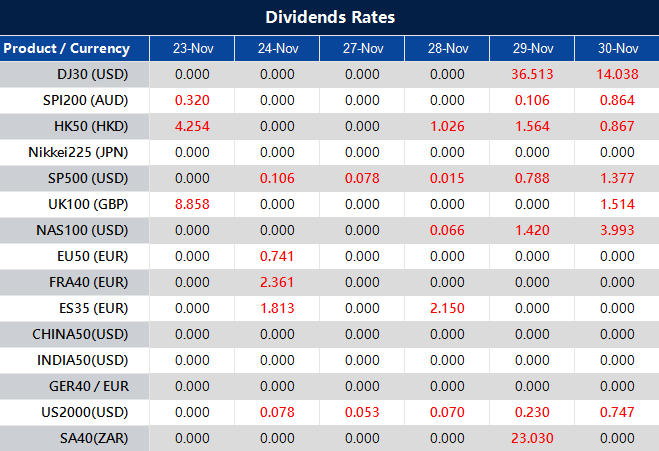
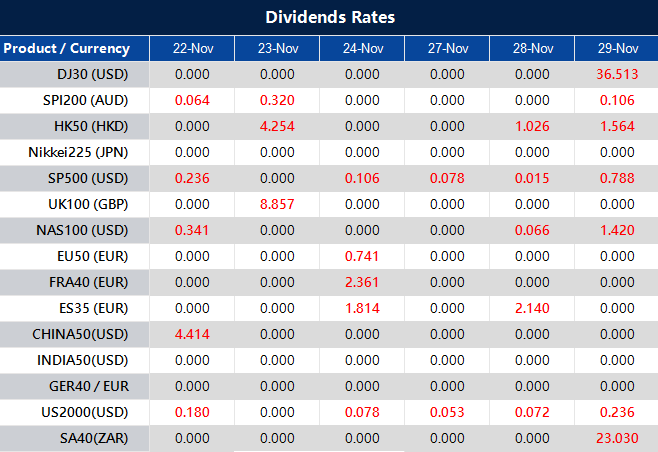
Please note that the dividends of the following products will be adjusted accordingly. Index dividends will be executed separately through a balance statement directly to your trading account, and the comment will be in the following format “Div & Product Name & Net Volume ”.
Please refer to the table below for more details:
The above data is for reference only, please refer to the MT4/MT5 software for specific data.
If you’d like more information, please don’t hesitate to contact info@vtmarkets.com.
Written on November 23, 2023 at 7:45 am, by anakin
The Best Risk Management Tips for Forex Trader in UK
Risk management is a critical component of successful Forex trading, especially in the dynamic and unpredictable UK market. It’s about protecting your capital, maximizing your trading potential, and ensuring a long-term presence in the market. This article explores key risk management strategies that every Forex trader in the UK should know.
Forex trading involves significant risk due to market volatility, leverage, and the 24-hour nature of the market. The first step in risk management is understanding the types of risks involved, including market risk, leverage risk, and interest rate risk.
Establish a Risk Management Plan:
Set Clear Goals: Define your trading objectives and how much risk you are willing to take to achieve them.
Risk-Reward Ratio: Aim for a risk-reward ratio that aligns with your trading strategy. A common approach is to not risk more than 2% of your account balance on a single trade.
Use Stop Loss and Take Profit Orders:
Stop-Loss Orders: These orders limit your losses by automatically closing a position at a predetermined price level.
Take Profit Orders: Similar to stop-loss orders, these orders automatically close a position once it reaches a certain profit level.
Leverage Management:
The use of leverage can magnify both gains and losses. It’s crucial to understand how leverage works and use it judiciously.
Margin Calls: Be aware of your broker’s margin call policy. Ensure you have sufficient funds in your account to avoid liquidation.
Stay informed about market conditions, economic indicators, and global events that can impact currency rates.
Use both technical and fundamental analysis to guide your trading decisions.
Emotion Control and Trading Discipline:
Forex trading requires discipline. Avoid emotional trading and stick to your trading plan.
Regularly review your trades to learn from both successes and failures.
Utilizing Technology:
Use trading tools and analytics provided by platforms like VT Markets to make informed decisions.
Automated tools can help in executing trades and managing risks effectively.
Navigating the Path to Successful Forex Trading in the UK:
Effective risk management is the cornerstone of sustainable Forex trading. By understanding and implementing these strategies, traders in the UK can navigate the Forex market more confidently and with greater control over their investments.
FAQ: Advanced Risk Management Insights for Forex Traders
Q: How can I mentally prepare for potential losses in Forex trading?
A: Accept that losses are a natural part of trading. Mentally preparing involves setting realistic expectations, focusing on long-term growth, and viewing losses as learning opportunities rather than failures.
Q: What are some common psychological pitfalls in Forex trading, and how can I avoid them?
A: Common pitfalls include overtrading, revenge trading, and fear of missing out (FOMO). Avoid these by sticking to your trading plan, maintaining discipline, and taking regular breaks to prevent emotional decision-making.
Q: How does geopolitical news impact risk management in Forex trading?
A: Geopolitical events can cause sudden market volatility. Stay informed about global news and consider using hedging strategies or adjusting your position sizes during uncertain times to manage risk effectively.
Q: What is the significance of liquidity in Forex trading risk management?
A: Liquidity affects how easily you can enter or exit trades. Low liquidity can lead to slippage and wider spreads, increasing your risk. Focus on trading major currency pairs, which typically have higher liquidity.
Q: Can automated trading systems help with risk management?
A: Yes, automated systems can help by executing trades based on predefined risk parameters, reducing emotional biases. However, they should be regularly monitored and adjusted to ensure they align with current market conditions.
Q: How do professional traders manage risk differently from retail traders?
A: Professional traders often use more sophisticated tools, such as options and futures for hedging, and may diversify across asset classes. They also typically have stricter risk management protocols and larger capital reserves.
Q: How can I use volatility indicators in my risk management strategy?
A: Volatility indicators, like the Average True Range (ATR), can help you set more accurate stop-loss levels by accounting for market fluctuations. Higher volatility may require wider stops to prevent being stopped out prematurely.
Q: What role does time horizon play in risk management?
A: Your time horizon determines how long you’re willing to hold a trade. Short-term traders may focus on minimizing risks in a single session, while long-term traders may need to manage risks over weeks or months. Adjust your risk management strategy according to your time horizon.
Explore VT Markets for More:
At VT Markets, we are committed to empowering our traders with the tools, resources, and support they need to master risk management in Forex trading. Visit VT Markets to learn more and to explore our trading platforms and educational resources.
Written on November 23, 2023 at 2:44 am, by anakin
The stock market witnessed a surge in major indices, with the Dow Jones, S&P 500, and Nasdaq all marking notable gains, signaling a widening positive trend across the market. However, the energy sector faced a slight decline due to OPEC’s postponed meeting on production cuts. Treasury yields experienced a significant drop, reaching a low not seen since September, influenced by the Federal Reserve’s persistent stance on monetary policy. Despite slight fluctuations and concerns over export restrictions on China impacting Nvidia’s shares, the market remains on track for monthly gains. Meanwhile, in currency markets, the US dollar strengthened against various currencies like the euro, yen, and pound, driven by positive US economic data and global market dynamics. The focus now shifts to upcoming flash PMI releases, which are anticipated to shape currency trajectories and impact key support levels.
Stock Market Updates
The stock market saw a rise in indices as the Dow Jones Industrial Average gained 184.74 points to reach 35,273.03, marking a 0.53% increase. Similarly, the S&P 500 climbed 0.41% to 4,556.62, and the Nasdaq Composite advanced by 0.46% to 14,265.86. This broadening market rally was reflected in over half of the stocks on the NYSE showing gains, suggesting a widening scope for the positive trend. Notably, smaller cap stocks outperformed with a 0.7% and 0.6% rise for small and mid-cap stocks, respectively. However, the energy sector faced a 0.1% decline due to OPEC’s postponed meeting on production cuts, impacting companies like Marathon Oil, EOG Resources, and Devon Energy.
The Treasury yield for the 10-year briefly dropped to 4.369%, hitting its lowest since September, a significant decrease from October’s milestone of crossing the 5% mark for the first time in 16 years. The Federal Reserve’s notes from its recent meeting suggested a persistent stance on restrictive monetary policy, with no hint of imminent interest rate cuts. Despite this, investor optimism prevailed regarding the December meeting. Nvidia’s quarterly report revealed better-than-expected earnings and revenue but cautioned about the impact of export restrictions on China, leading to a 2.5% drop in its shares. Despite Tuesday’s slight decline, the major indices remain on track for monthly gains, with the Nasdaq rallying 11% in November, the Dow up nearly 7%, and the S&P 500 rising over 8%. The market sentiment leans towards the possibility of continued rally, especially with inflation trends and the likelihood of a “soft landing” from the Fed, as noted by Charlie Ripley, a senior investment strategist at Allianz Investment Management. The New York Stock Exchange closed for Thanksgiving and will have an early closure on Friday.
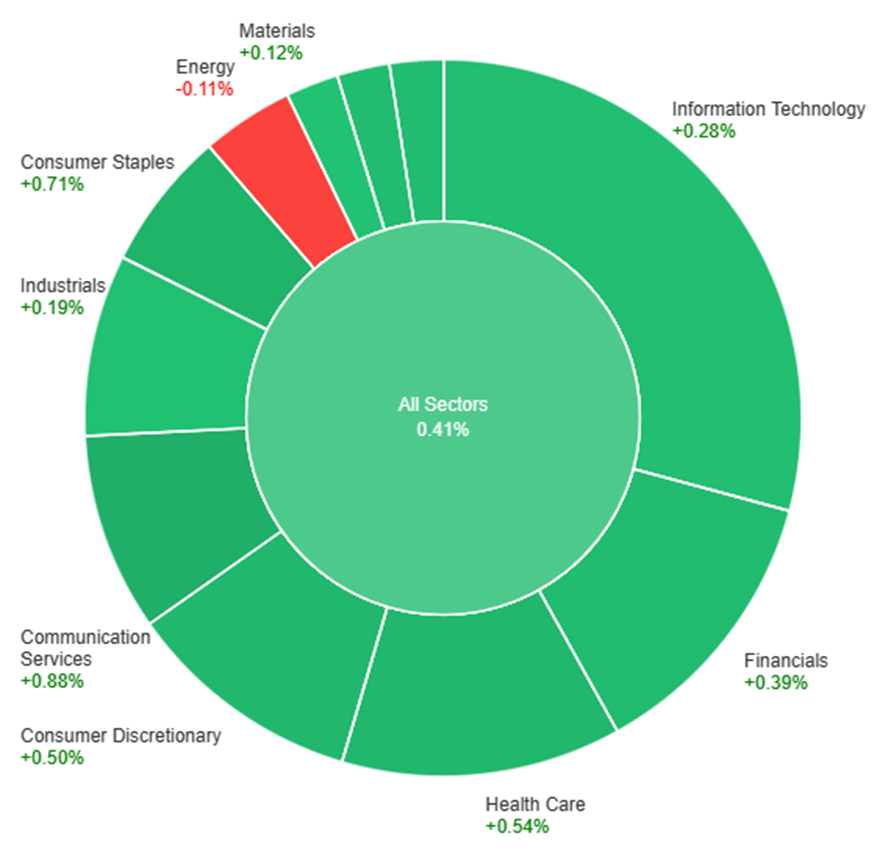
On Wednesday, across various sectors, the market generally saw positive gains, with the Communication Services sector leading the way with a rise of 0.88%. Following closely were Consumer Staples at 0.71% and Health Care at 0.54%. Sectors such as Financials, Real Estate, and Consumer Discretionary also experienced moderate gains, ranging from 0.37% to 0.50%. However, some sectors did not fare as well, with Energy being the only sector to experience a decrease, falling by 0.11%. Sectors like Information Technology, Industrials, and Materials saw gains ranging from 0.12% to 0.28%, contributing to the overall positive trend in the market for the day.
Currency Market Updates
The recent updates in the currency markets have seen the US dollar gaining strength, primarily driven by positive data on U.S. jobless claims and Michigan sentiment, reinforcing the Federal Reserve’s stance against premature rate cuts. Treasury yields experienced an upsurge following a notable drop in initial claims during the job report survey week and a concurrent decrease in continued claims, supporting the dollar’s ascent. Despite below-forecast October durable goods orders, the upward revision in Michigan sentiment and a rise in 1-year inflation expectations propelled Treasury yields further, benefiting the dollar. Notably, EUR/USD faced a 0.3% decline, largely influenced by the widening gap between 2-year Treasury yields and bund yields.
Meanwhile, USD/JPY exhibited a rebound, erasing a significant portion of its previous dive, driven partly by Japan’s economic view being reduced for the first time in 10 months, following an unexpected drop in Q3 GDP. Sterling experienced a 0.4% decline amid the dollar’s broader resurgence and the announcement of fiscal stimulus plans by British Finance Minister Jeremy Hunt. The pound found support at the 1.2450 200-DMA, with the retreat in risk-sensitive cable partially offset by the rise in U.S. equities. Other currencies like the Aussie faced a 0.24% fall, encountering resistance at the 200-DMA amidst a backdrop of weakened Chinese markets and commodities.
The upcoming focus in the market lies on the November flash PMI releases, which are expected to serve as crucial indicators for major economies, potentially impacting the trajectory of currencies like EUR/USD and influencing key support levels, such as the 100-day moving average around 1.08. Additionally, USD/JPY’s movement is closely tied to the convergence of various DMAs in a specific range, indicative of potential future trends. These developments reflect a dynamic landscape in the currency market, shaped by economic data releases and geopolitical events impacting different currencies differently.
Picks of the Day Analysis
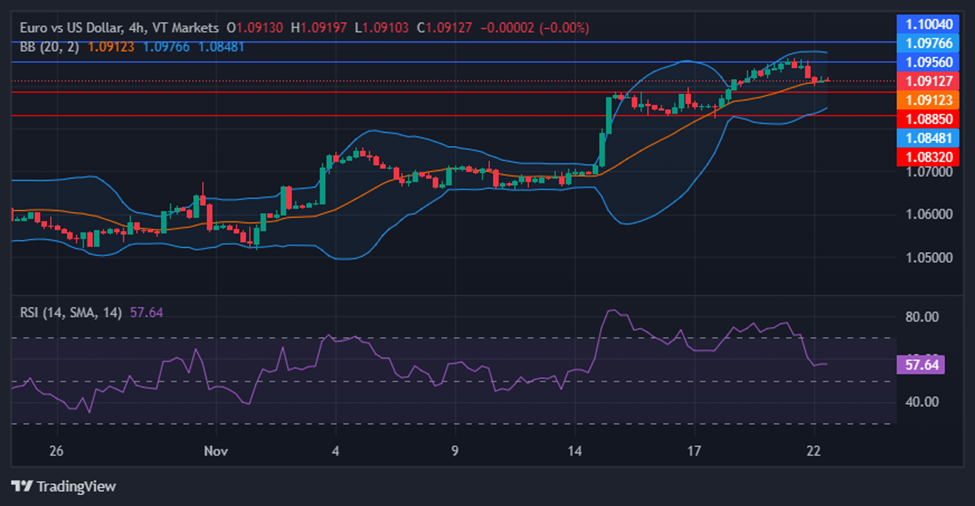
EUR/USD (4 Hours)
EUR/USD Corrects Amidst US Dollar Strength: Market Anticipation on Eurozone Rates and US Data
The EUR/USD retreated to 1.0850 as the US Dollar surged post-release of robust US economic data, marking a correction from recent highs. Bundesbank President Joachim Nagel’s remarks on Eurozone interest rates nearing their peak spurred speculation, hinting at limited rate hikes without an inflation rebound. Thursday’s focus lies on preliminary November PMI data, expected to show slight improvements below the pivotal 50 mark, potentially amplifying pressure on EUR/USD if outcomes disappoint. Concurrently, the US Dollar strengthened on mixed data, including a larger-than-expected drop in Jobless Claims and a sizable contraction in Durable Goods Orders. With US markets closed Thursday, attention shifts to the ECB’s monetary policy meeting minutes, while Treasury yields bolster the Dollar’s corrective momentum amid anticipations for market consolidation.
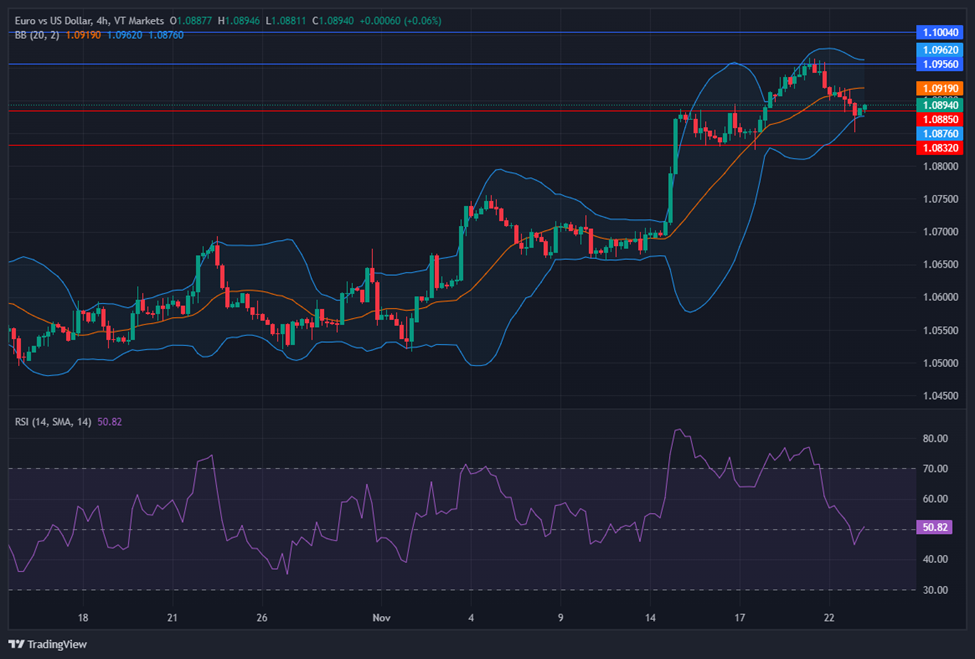
On Wednesday, the EUR/USD demonstrated a robust downward trend, hitting the lower band of the Bollinger Bands. Presently, it trades marginally above this point, suggesting a potential upward shift aiming for the middle band. With the Relative Strength Index (RSI) resting at 50, it reflects a neutral position for the currency pair.
Resistance: 1.0956, 1.1004
Support: 1.0885, 1.0832
XAU/USD (4 Hours)
XAU/USD Retreats Amid US Dollar Rebound and Economic Data Surge
In response to a surge earlier in the week, Spot Gold (XAU/USD) experienced a pullback as it approached the critical resistance level of $2,010. The decline continued through the American session, signaling potential further downside, albeit at a gradual pace. Despite this retreat, the yellow metal retains an underlying bullish outlook. Concurrently, the US Dollar Index (DXY) rebounded from monthly lows, spurred by robust US economic data, reaching 104.20 before retracing slightly below 104.00. The climb was supported by an uptick in US Yields following a bounce from 4.37% to 4.40%. Notably, recent US data showcased a drop in Initial and Continuing Claims alongside a larger-than-expected contraction in October Durable Goods Orders. With the US market set to be closed on Thursday, a decline in trading volume is anticipated in the upcoming sessions.
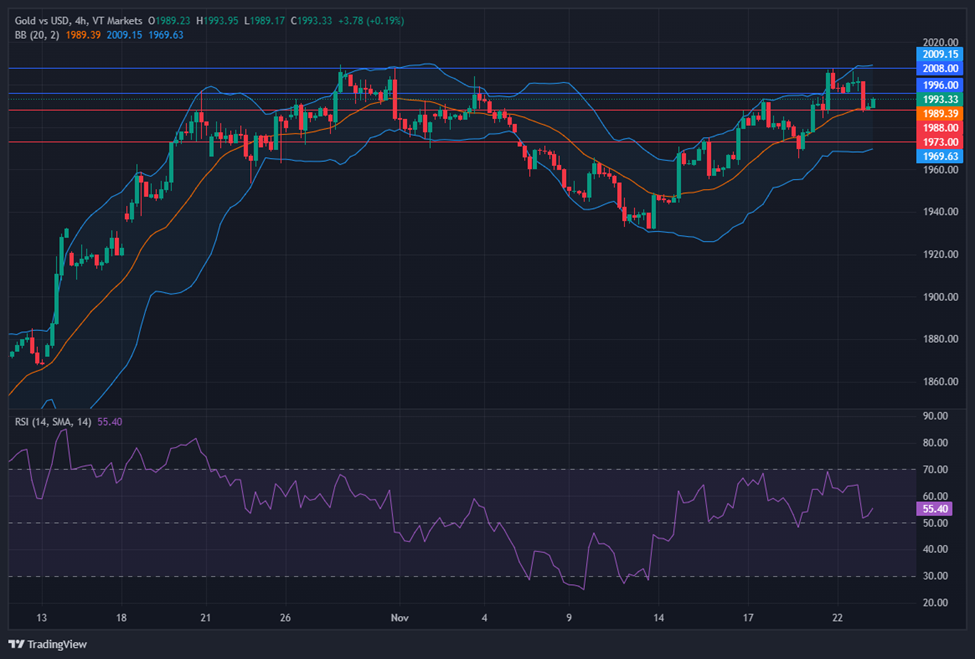
On Wednesday, XAU/USD experienced a downward movement, reaching the middle band of the Bollinger Bands. Presently, the gold price hovers slightly above this level, indicating a potential minor uptick aiming for the upper band. The Relative Strength Index (RSI) sits at 55, indicating a period of consolidation for the XAU/USD pair.
Resistance: $1,996, $2,008
Support: $1,988, $1,973
Economic Data
Currency
Data
Time (GMT + 8)
Forecast
JPY
Bank Holiday
USD
Bank Holiday
EUR
French Flash Manufacturing PMI
16:15
43.2
EUR
French Flash Services PMI
16:15
45.6
EUR
German Flash Manufacturing PMI
16:30
41.1
EUR
German Flash Services PMI
16:30
48.4
GBP
Flash Manufacturing PMI
17:30
45.0
GBP
Flash Services PMI
17:30
49.5
Written on November 23, 2023 at 2:11 am, by anakin
Join us for an insightful webinar where we delve into the intricacies of the Year-End Market. In this session, we will decode the trends, challenges, and opportunities that characterize Quarter 4. Our expert panel will provide valuable insights into the factors influencing the market dynamics as we approach the year’s conclusion.
Written on November 22, 2023 at 7:20 am, by anakin
Please note that the dividends of the following products will be adjusted accordingly. Index dividends will be executed separately through a balance statement directly to your trading account, and the comment will be in the following format “Div & Product Name & Net Volume ”.
Please refer to the table below for more details:
The above data is for reference only, please refer to the MT4/MT5 software for specific data.
If you’d like more information, please don’t hesitate to contact info@vtmarkets.com.
Written on November 22, 2023 at 6:48 am, by anakin
The Federal Reserve’s indication of maintaining high-interest rates led to a stock market dip, impacting indices like the Dow Jones, S&P 500, and Nasdaq Composite. This stance affected sectors including housing, reflected in the lowest existing home sales since 2010, impacting companies like Lowe’s and American Eagle. Amidst this, Amazon’s stock fell due to Jeff Bezos’ shares sale, while Nvidia faced a slight decline ahead of its earnings announcement. The dollar saw a rebound after a significant drop, influenced by FOMC minutes and market volatility from weak economic data. Currency pairs like EUR/USD faced downward trends, diverging from USD/JPY’s speculative long positions. Expectations on rate cuts varied between the ECB and Fed, impacting movements in pairs like USD/CAD and USD/CNY. Future market sentiments hinge on upcoming economic releases like U.S. durable goods and jobless claims, likely affecting currency valuations and sentiments.
Stock Market Updates
The stock market saw a decline following the release of the Federal Reserve meeting minutes, which indicated no plans for interest rate cuts. This led to the Dow Jones slipping by 0.18%, closing at 35,088.29, while the S&P 500 dipped 0.20% and the Nasdaq Composite fell by 0.59%. The Fed emphasized the need for a “restrictive” policy to combat potentially stubborn or rising inflation, maintaining the benchmark rate at 5.25% to 5.5%. Market expectations suggest the Fed will maintain this stance through its December meeting, with potential rate cuts anticipated from May onwards.
This environment of sustained higher rates impacted various sectors. Housing data revealed a tough month for homebuyers, with existing home sales dropping to 3.79 million units, the slowest pace since August 2010. Companies like Lowe’s and American Eagle faced stock declines due to reduced sales outlooks and weaker operating income guidance, respectively. Additionally, Amazon’s shares dropped 1.5% following news of former CEO Jeff Bezos selling 1.67 million shares. Amidst this, Nvidia, despite hitting an all-time high on Monday, experienced a slight dip in shares by 0.9% on Tuesday ahead of its earnings announcement.
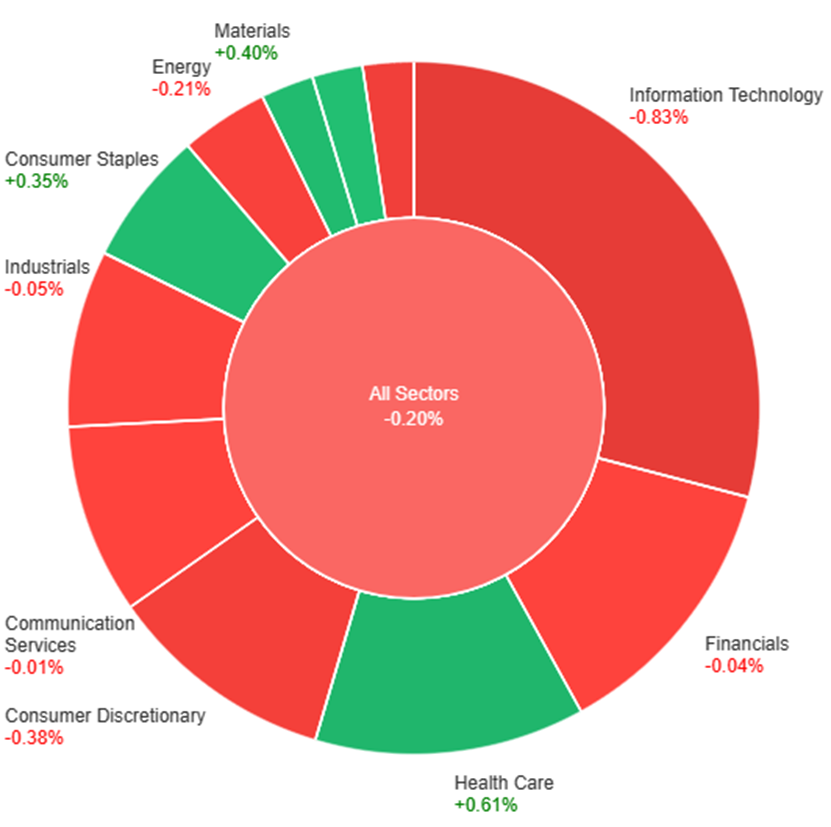
On Tuesday, across all sectors, there was a slight downturn of 0.20%. However, some sectors experienced positive growth, with Health Care leading the way at +0.61%, followed by Materials (+0.40%), Consumer Staples (+0.35%), and Utilities (+0.22%). Conversely, Information Technology witnessed the most significant decline at -0.83%, while Consumer Discretionary (-0.38%) and Real Estate (-0.47%) also faced notable decreases. Communication Services showed marginal negative movement at -0.01%, and Energy (-0.21%), Financials (-0.04%), and Industrials (-0.05%) followed suit with minor decreases.
Currency Market Updates
In recent market updates, the US dollar index showed a slight rebound after a 4% decline following the November 1st Federal Reserve meeting. This recovery was driven by short positions taking profits ahead of the release of the Federal Open Market Committee (FOMC) minutes. However, the dollar’s decline had been influenced by soft data on jobs, CPI, and retail sales, contributing to market volatility. Despite falling Treasury yields, profit-taking affected the Nasdaq index, reflecting the broader susceptibility of markets to traders’ profit-booking strategies. The dollar’s trajectory remains tied to economic forces, exemplified by existing home sales falling below forecasts and hitting their lowest since 2010, indicating the substantial impact of the Fed’s 5.25% rate hike, which could continue to exert pressure on the dollar’s value.
Meanwhile, in currency pairs, the EUR/USD saw a 0.33% decrease, retracting from earlier gains and hovering around the 61.8% Fibonacci level. The market sentiment differs between pairs, with USD/JPY showing increased speculative long positions compared to EUR/USD, potentially influencing a downward trend. Expectations regarding rate cuts diverge between the European Central Bank (ECB) and the Federal Reserve, with markets leaning towards rate adjustments in April for the ECB and May for the Fed. Additionally, the Sterling rose to a 10-week high against the dollar, backed by relatively hawkish comments from Bank of England speakers, despite market pricing predicting a potential rate cut by June. Other currency pairs, such as USD/CAD and USD/CNY, exhibited varied movements influenced by economic indicators and reports, underscoring the complex interplay of factors affecting currency markets. Looking ahead, upcoming releases like U.S. durable goods and jobless claims are anticipated to impact market sentiments and currency valuations.
Picks of the Day Analysis
EUR/USD (4 Hours)
EUR/USD Corrects from Three-Month High Amid Dollar Strength
The EUR/USD pair retreated on Tuesday following a recent peak, marking a corrective move amidst a weaker US Dollar. Factors including steady yields and a dip in equities favored the Greenback, causing the Euro to lag. US data revealed a larger-than-expected drop in Existing Home Sales, impacting market sentiment. Meanwhile, upcoming reports like Jobless Claims, Durable Goods Orders, and the University of Michigan Consumer Sentiment will likely influence further market movements. The FOMC minutes reiterated concerns about inflation, signaling potential future tightening measures. The Euro’s performance was also affected by a decline against the GBP, with anticipation building for the Eurozone’s preliminary November PMIs as the next key report.
In technical analysis, the EUR/USD is showing a strong upward trend on early Tuesday just to end the day weaker able to reach the middle band of the Bollinger Bands. It’s currently trading just around this level, indicating the possibility of another upward movement. The Relative Strength Index (RSI) at 57 shows a neutral but slightly bullish stance.
Resistance: 1.0956, 1.1004
Support: 1.0885, 1.0832
XAU/USD (4 Hours)
XAU/USD Surges Towards Key Resistance Amidst Dollar Stability
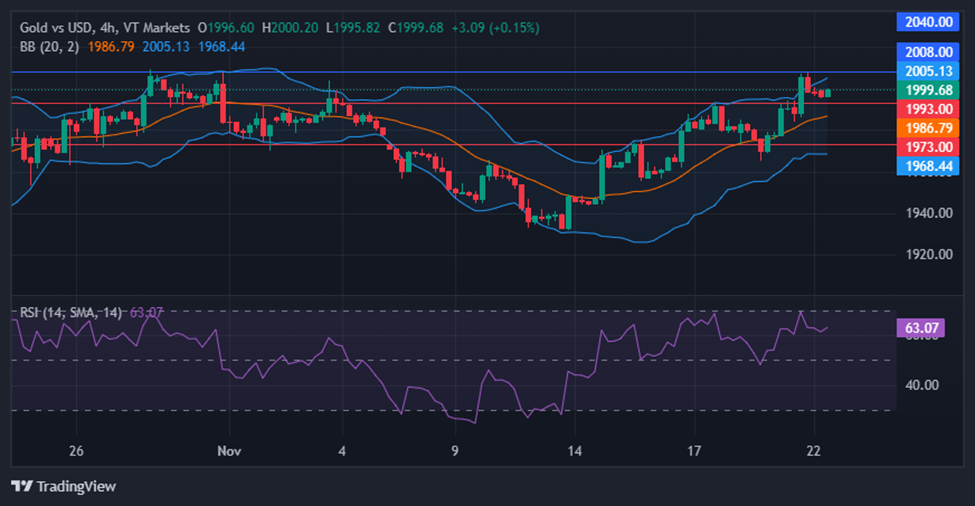
Spot Gold demonstrated a robust surge on Tuesday, rallying from sub-$1,980 levels to approach a significant resistance mark at $2,010. This bullish movement occurred despite a dip in stock prices and a stabilized US Dollar. The climb coincided with steady US yields, showcasing resilience after briefly touching $2,007 before retracing toward $2,000. The prevailing upward bias hinges on the anticipation that the Federal Reserve has halted interest rate hikes, bolstering Gold’s appeal. However, while market attention focuses on the upcoming FOMC minutes and critical US data releases like Jobless Claims and Durable Goods Orders, a more aggressive Gold rally may hinge on a clear downturn in Treasury yields signaling a peak, as of now, keeping the metal’s surge subdued.
In technical terms, the analysis shows that XAU/USD moved higher on Tuesday, able to reach the upper band of the Bollinger Bands. The gold price is currently moving back below this band, suggesting a possible minor increase to reach back to the upper band. With the Relative Strength Index (RSI) at 63, it signals a continuing slight bullish trend for the XAU/USD pair.
Resistance: $2,008, $2,040
Support: $1,993, $1,973
Economic Data
Currency
Data
Time (GMT + 8)
Forecast
USD
Unemployment Claims
21:30
226K
USD
Revised UoM Consumer Sentiment
23:00
61.1
Written on November 22, 2023 at 5:23 am, by anakin
In the fast-paced world of Forex trading, the right education can make all the difference. With the UK’s robust financial market, learning Forex trading here offers a unique advantage. Whether you’re a beginner or looking to sharpen your skills, this guide outlines the top resources for Forex trading education in the UK.
Source 1: Online Forex Trading Courses
The digital age brings the classroom to you with a variety of online courses. Platforms like Udemy, Coursera, and even specialised Forex websites offer courses ranging from the basics of Forex trading to advanced strategies. Look for courses that focus on practical skills and offer interactive components.
Source 2: University and College Courses
For a more formal approach, many UK universities and colleges offer finance and economics courses with modules specifically on Forex trading. Institutions like the London School of Economics provide comprehensive programs that cover both theoretical and practical aspects of Forex trading.
Source 3: Webinars and Workshops
Interactive webinars and workshops are invaluable for real-time learning. They offer an opportunity to get your questions answered by experts. Check out platforms like ForexFactory or local financial advisories in the UK that regularly host these events.
Source 4: Books and Educational Materials
Building a strong foundational knowledge is crucial, and there’s no shortage of excellent reading material. Start with classics like “Currency Trading for Dummies” by Brian Dolan, and gradually move to more advanced texts like “The Art of Currency Trading” by Brent Donnelly.
Source 5: Community and Forums
Engaging with a community of traders can offer practical tips and real-world advice. Online forums like BabyPips and the UK-based Trade2Win provide a platform to discuss strategies, share experiences, and learn from seasoned traders.
VT Markets steps beyond just being a trading platform by offering an array of educational resources tailored for the UK market. From detailed tutorials and e-books to expert-led webinars and personalized coaching, VT Markets ensures that you have access to comprehensive learning tools.
Theory is important, but trading is a skill honed through practice. Start with a demo account to apply your learning in real market conditions without financial risk. VT Markets offers demo accounts that simulate live trading, allowing you to practice strategies and build confidence.
Final Thoughts: Learn Forex Trading from right sources
Forex trading in the UK holds vast potential, and the right education is key to tapping into it. From online courses and formal education to practical experience, the resources available are as diverse as the market itself. Remember, continuous learning and staying updated with market trends are crucial for success in Forex trading.
Join VT Markets UK
Ready to embark on your Forex trading educational journey? Explore the rich learning resources offered by VT Markets and take the first step towards becoming a skilled Forex trader. Sign up for a demo account today and start practicing your trades in a risk-free environment. Your journey to mastering the Forex markets begins here!
Written on November 22, 2023 at 2:51 am, by anakin
In order to provide you with a better user experience, VT Markets will update our MT5 software on November 25, 2023 (Saturday), requiring a minimum version of 3980 and Windows 10. During this upgrade period, the MT5 trading software will be temporarily unavailable for login and use. However, this will not impact your existing trading orders, and there will be no changes to your trading account or login password for the software.
If your current software version has not been updated, we sincerely recommend that you upgrade it after November 25, 2023.
Check your MT5 software version with the following steps:
※ PC: Open the MT5 software>Help>About;
※ Android: Open the MT5 app>About;
※ iOS: Open the MT5 app>Settings>Settings.
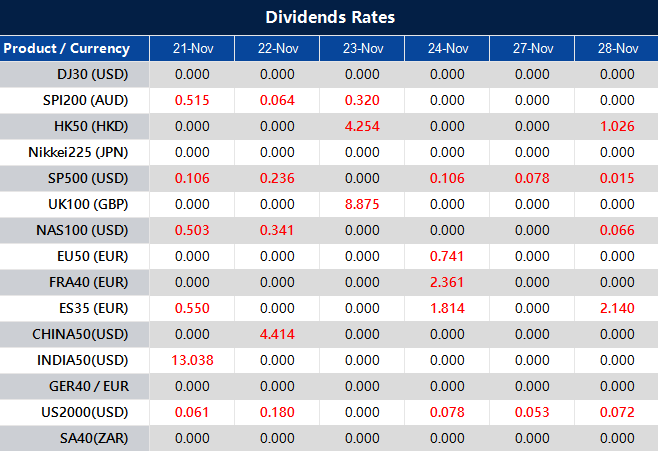
Please note that the dividends of the following products will be adjusted accordingly. Index dividends will be executed separately through a balance statement directly to your trading account, and the comment will be in the following format “Div & Product Name & Net Volume ”.
Please refer to the table below for more details:
The above data is for reference only, please refer to the MT4/MT5 software for specific data.
If you’d like more information, please don’t hesitate to contact info@vtmarkets.com.
Written on November 21, 2023 at 7:07 am, by anakin