VT Markets’ exclusive events at Monaco E-Prix

Sydney, Australia, 9 April, 2024 – Global multi-asset broker VT Markets is hosting its most significant event to date—an exclusive three-day gathering in Monaco, the home ground of their key partner, Formula E team, Maserati MSG Racing.

Taking place from 25th to 27th April, select VIP guests, partners and media are invited for exclusive experiences including a media event, exquisite private yachting along the Monegasque coast, and thrilling views of the Formula E race.

The media event will feature keynote addresses from representatives of both VT Markets and Maserati MSG Racing. Attendees will have the unique opportunity to gain invaluable insights into the future of trading, the partnership story and significance of both companies’ shared dedication to seizing opportunities and driving progress.

“We look forward to a challenging yet fruitful 2024, as we increase our global footprint, bringing with us opportunity and excellence that we strive to provide,” remarked Ludovic Moncla, Head of Affiliates, VT Markets, who will be speaking at the event. “”In addition to our recent approval as a member of the Financial Commission, this initiative underscores our ongoing commitment to enhancing the client experience, with further enhancements on the horizon.” “We firmly believe that our partnership with VT Markets will unlock exciting opportunities for both brands,” said a spokesperson for Maserati MSG Racing. “By aligning our shared values of innovation and performance, we are confident in our ability to reach new audiences and achieve greater success together.”

Attendees can expect engaging discussions, networking opportunities, and exclusive insights into the future of trading. To learn more about this event please visit the VT Markets Events website. Members of the press or media who would like access or further information to cover the event may contact media@vtmarkets.com.

About VT Markets:

VT Markets is a regulated multi-asset broker with a presence in over 160 countries. To date, it has won numerous international accolades including Best Customer Service and Fastest Growing Broker.

In line with its mission to make trading accessible to all, VT Markets currently offers unfettered access to over 1,000 financial instruments and a seamless trading experience via its award-winning mobile app.

For more information, please visit the official VT Markets website or email us at info@vtmarkets.com. Alternatively, follow VT Markets on Facebook, Instagram, or LinkedIn.

For media enquiries and sponsorship opportunities, please email media@vtmarkets.com.

Notification of Trading Adjustment – April 9, 2024

Dear Client,

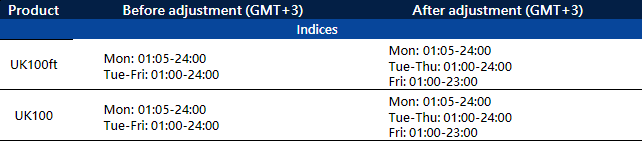
Starting from April 12, 2024, the trading hours of some MT4/MT5 products will change due to the Daylight Saving Time change in the EU/UK.

Please refer to the table below outlining the affected instruments:

The above information is provided for reference only; please refer to the MT4/MT5 software for specific data.

If you’d like more information, please don’t hesitate to contact info@vtmarkets.com.

Dividend Adjustment Notice – April 8, 2024

Dear Client,

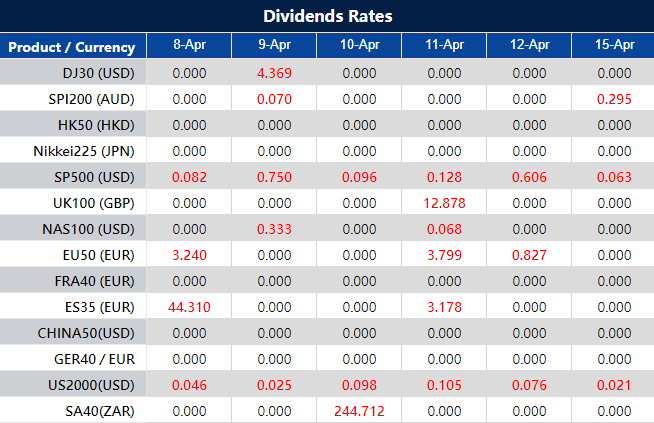
Please note that the dividends of the following products will be adjusted accordingly. Index dividends will be executed separately through a balance statement directly to your trading account, and the comment will be in the following format “Div & Product Name & Net Volume ”.

Please refer to the table below for more details:

The above data is for reference only, please refer to the MT4/MT5 software for specific data.

If you’d like more information, please don’t hesitate to contact info@vtmarkets.com.

Week ahead: Central bank decisions take centre stage

As we approach the second week of April 2024, financial markets and policymakers around the globe are bracing for a series of critical economic reports and central bank decisions. These events are expected to offer valuable insights into the ongoing economic recovery efforts, inflationary pressures, and future monetary policy directions. Here’s a day-by-day breakdown of what to anticipate:

Reserve Bank of New Zealand holds firm

On 10 April 2024, the Reserve Bank of New Zealand (RBNZ) made headlines by maintaining its official cash rate (OCR) at 5.5% during its first policy meeting of the year. This decision marked the fifth consecutive meeting without a change in the rate, signalling a cautious stance by the RBNZ amidst economic uncertainties. Analysts are already looking ahead, predicting the OCR to remain at 5.5% following the upcoming meeting, reflecting a steady approach to monetary policy.

U.S. inflation trends upward

In a surprising turn, the annual inflation rate in the United States nudged up to 3.2% in February 2024 from 3.1% in January. This incremental rise, though slight, has caught the attention of market watchers who now forecast a further increase to 3.4% for March. The data, expected to be released on 10 April 2024, will be pivotal for future Federal Reserve decisions.

Bank of Canada’s rate decision

The Bank of Canada, on its part, held its overnight rate target steady at 5% during its March meeting. The bank’s commitment to normalising its balance sheet, despite inflationary concerns, suggests a cautious optimism. Analysts anticipate this trend to continue, with expectations set for the interest rate to remain at 5% in the Bank of Canada’s next meeting.

Federal Reserve and ECB stance

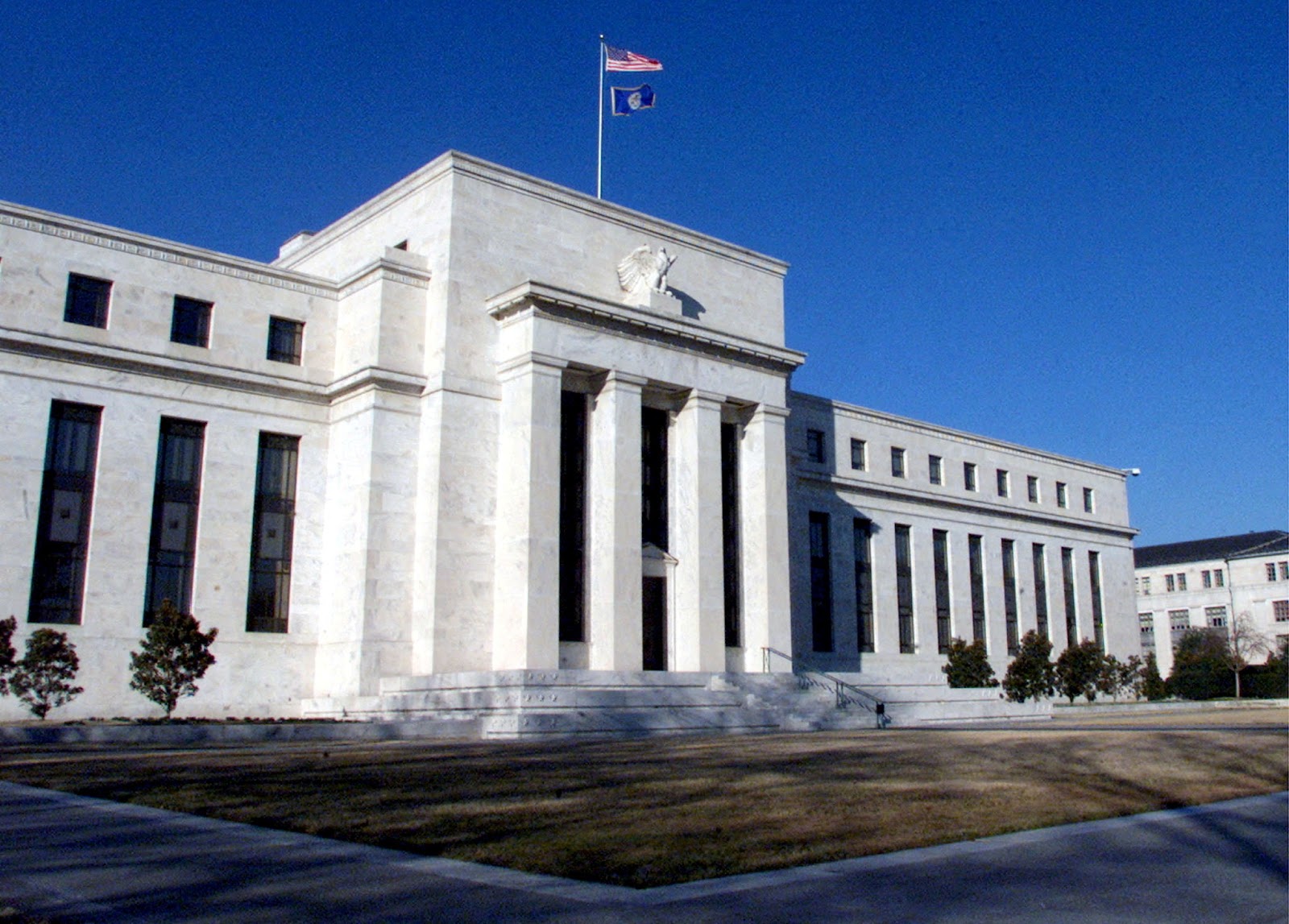
Minutes from the Federal Reserve’s meeting, expected on 11 April 2024, will be closely scrutinised. With the fed funds rate holding steady at a 23-year peak of 5.25%-5.5%, the Federal Reserve’s projections for future rate cuts will be of significant interest. Similarly, the European Central Bank (ECB), which has kept interest rates at historically high levels, faces its own set of challenges balancing recession risks with inflation. Analysts foresee the ECB maintaining its current interest rate levels at 4.5% in its forthcoming meeting.

Upcoming economic data

Additionally, the release of the U.S. Producer Price Index (PPI) on 11 April will offer insights into wholesale price movements, having risen by 0.6% in February. Expectations for March are set at a more modest 0.3% increase. The UK’s GDP data, expected on 12 April, will also be pivotal. After a modest expansion of 0.2% in January, forecasts for February suggest a slight increase of 0.1%, indicating a cautious yet positive economic trajectory.

In summary, the coming week promises a wealth of information for economists, investors, and policymakers alike. With each announcement, the global economic picture for 2024 will become clearer, highlighting the delicate balance central banks are striking between fostering economic growth and managing inflationary pressures.

Dividend Adjustment Notice – April 5, 2024

Dear Client,

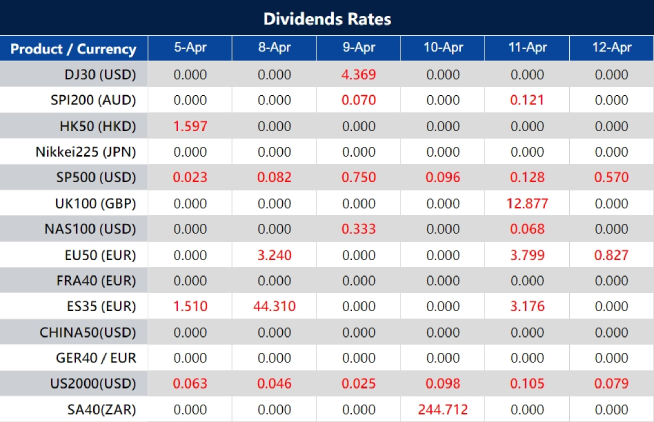
Please note that the dividends of the following products will be adjusted accordingly. Index dividends will be executed separately through a balance statement directly to your trading account, and the comment will be in the following format “Div & Product Name & Net Volume ”.

Please refer to the table below for more details:

The above data is for reference only, please refer to the MT4/MT5 software for specific data.

If you’d like more information, please don’t hesitate to contact info@vtmarkets.com.

A Complete FAQ on VT Markets Standard STP Account

VT Markets Standard STP Account FAQ

What is a VT Markets Standard STP Account?

A VT Markets Standard STP Account is designed for traders transitioning to live trading. It provides access to institutional-grade spreads, dark liquidity pools, enhanced liquidity, consistent pricing, and fast execution with no commissions. Trades are facilitated through the Equinix Fibre Optic Network, ensuring swift execution for every transaction.


How does a Standard STP account differ from a RAW ECN account?

The primary difference lies in the commission and spread structure. The Standard STP account incorporates a spread markup but charges no commission, offering direct access to inter-bank rates plus a spread. In contrast, the RAW ECN account displays raw spreads from liquidity providers and applies a commission of $6 per standard lot round turn. A comparison table on our trading page provides a detailed overview.


What are typical spreads for the STP Account?

For the Standard STP Account, spreads start from:

  • EUR/USD: 1.3 pips
  • GBP/USD: 1.8 pips
  • AUD/USD: 1.6 pips
  • USD/JPY: 1.5 pips

How do lot size and leverage work?

Forex trading is conducted in standard lot sizes:

  • 1 STANDARD lot equals 100,000 currency units.
  • 1 MINI lot equals 10,000 currency units.
  • 1 MICRO lot equals 1,000 currency units.

VT Markets’ platform allows trading down to 0.01 of a standard lot. With a leverage of 500:1, you control a larger position than your account balance would ordinarily permit.


What spreads and charges are applied to VT Markets’ swap-free accounts?

Swap-free accounts are charged with Standard STP or RAW ECN spreads, along with an administrative (Wakeel) fee for account management. Note: Swap-free accounts with zero admin fees are available in select countries and regions.


Why might a trade stop out below the specified margin level?

The margin stop-out level for STP Accounts is 20%. If your account’s margin level falls to this threshold or below, the system will start closing positions, prioritizing those with the highest losses, to bring the margin level above the stop-out level.


Open Your Standard STP Account with VT Markets

For any further inquiries or detailed guidance, our support team is ready to assist. Visit our FAQ Page for a comprehensive FAQ or contact our customer support for more details on our Standard STP Account and other offerings.

Alternatively, you can proceed to our help centre for more information.

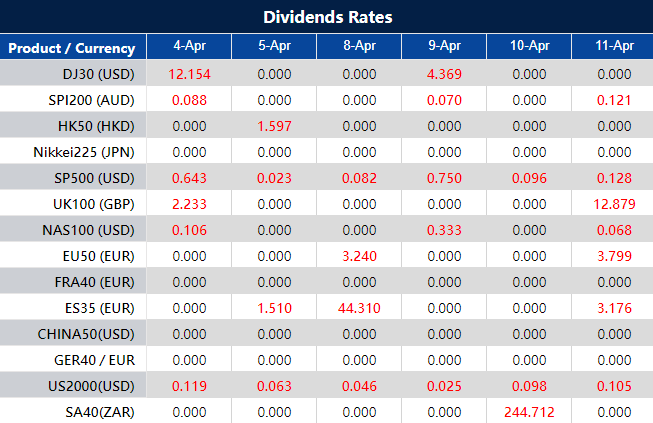
Dividend Adjustment Notice – April 4, 2024

Dear Client,

Please note that the dividends of the following products will be adjusted accordingly. Index dividends will be executed separately through a balance statement directly to your trading account, and the comment will be in the following format “Div & Product Name & Net Volume ”.

Please refer to the table below for more details:

The above data is for reference only, please refer to the MT4/MT5 software for specific data.

If you’d like more information, please don’t hesitate to contact info@vtmarkets.com.

Notification of Trading Adjustment – April 4, 2024

Dear Client,

Starting from April 07, 2024, the trading hours of some MT4/MT5 products will change due to the upcoming Daylight Saving Time change in the AU.

Please refer to the table below outlining the affected instruments:

The above information is provided for reference only, please refer to the MT4/MT5 software for specific data.

If you’d like more information, please don’t hesitate to contact info@vtmarkets.com.

After-hours trading: A beginner’s guide

Have you ever wondered what happens to the market after the closing bell?

Well, you are not alone. After-hours trading, also known as extended-hours trading, offers traders the opportunity to buy and sell assets outside of regular market hours.

In this beginner’s guide, we’ll delve into the world of after-hours trading, exploring its mechanics, advantages, disadvantages, risks, and essential tips for traders.

What is after-hours trading

Imagine this scenario: you are sitting at your computer after a long day of work, and suddenly you hear about a groundbreaking development in a particular asset you’ve been eyeing. With traditional trading hours closed, you might think you’ve missed your chance to act. However, that’s where after-hours trading comes into play.

After-hours trading refers to the buying and selling of assets outside of the standard trading hours of the major exchanges. These extended trading hours typically occur before the market opens in the morning and after it closes in the evening.

While after-hours trading was once limited to institutional traders, advancements in technology have made it accessible to retail traders as well.

Market hours vs. after hours

During regular market hours, the majority of trading takes place. After-hours trading, on the other hand, occurs before the market opens (pre-market) and after it closes (post-market), extending the window of opportunity for traders.

For European traders, after-hours trading usually occurs from 9:00 AM to 5:30 PM Central European Time (CET), extending until around 8:00 PM CET after the regular market closes. Some platforms offer trading until 10:00 PM CET.

Participants in after-hours trading

After-hours trading isn’t just for professionals. Both institutional traders, such as hedge funds and mutual funds, and retail traders like individual investors have the opportunity to participate. This increased accessibility has levelled the playing field, allowing traders to capitalise on market movements outside of regular hours.

Assets for after-hours trading

While after-hours trading encompasses various asset classes, certain assets are more actively traded during extended hours. Stocks of companies reporting earnings after the market closes, futures contracts tied to commodities, and certain foreign exchange pairs can experience heightened activity during after-hours sessions. However, it’s essential to research and understand the liquidity and volatility of specific assets before trading them after hours.

Source: Investopedia

Special techniques for after-hours trading

After-hours trading offers unique opportunities for traders, but it requires specialised techniques to navigate effectively. Here are some strategies tailored for non-professional traders:

1. News-based trading

Stay updated on news and events outside of regular market hours, especially earnings announcements and major corporate developments. React quickly to market-moving news to capitalise on price movements.

2. Earnings plays

During earnings season, focus on stocks releasing earnings reports after hours. Anticipate surprises or discrepancies between actual results and expectations to make informed trading decisions.

3. Gap trading

Take advantage of price gaps between the closing price of one session and the opening price of the next. Enter positions at the open of after-hours trading and anticipate price retracements or continuations.

4. Overnight swings

Identify potential overnight swings by analysing pre-market activity and news catalysts. Enter positions before the close and hold overnight to profit from anticipated price movements.

5. Extended hours breakouts

Look for breakout opportunities outside of regular market hours. Enter positions when an asset’s price breaks significant support or resistance levels, and ride the momentum as the price continues to move.

6. Arbitrage opportunities

Exploit price differences between different markets or platforms to make risk-free trades. Buy and sell the same asset simultaneously in different markets to lock in profits from pricing discrepancies.

7. Volatility squeeze plays

Identify assets with low volatility and anticipate a potential breakout. Use technical indicators such as Bollinger Bands or Keltner Channels to pinpoint periods of low volatility and enter positions before expected price movements.

Pre-market analysis

Before diving into after-hours trading, it’s essential to conduct pre-market analysis to prepare yourself for potential trading opportunities. Here’s a simplified guide for novice traders:

Step 1. Stay updated on market news

Keep an eye on news and events that could affect asset prices during after-hours trading. This includes earnings reports, economic data releases, and major news headlines. Be aware of any significant updates or surprises that could impact market sentiment.

Step 2. Watch pre-market activity

Monitor pre-market trading to gauge investor sentiment and anticipate potential price movements. Look for significant price changes and trading volume, as they can provide clues about market direction. Pay attention to how prices react around key levels of support and resistance.

Step 3. Use simple technical indicators

Consider using basic technical indicators like moving averages or support/resistance levels to help inform your trading decisions. These indicators can provide insights into market trends and momentum. Keep your analysis straightforward and easy to understand.

4. Plan your strategy

Based on your analysis, develop a clear trading strategy outlining your entry and exit points, as well as your risk management approach. Stick to your plan and avoid making impulsive decisions based on emotions or short-term fluctuations. Stay disciplined and patient.

Risks and considerations

  • Volatility: after-hours trading is known for its volatility due to reduced liquidity and participation, amplifying price fluctuations. Not-experienced traders should be cautious and ready for sudden price movements.
  • Liquidity concerns: Thin trading volumes in after-hours sessions can hinder trade execution at desired prices. Always consider liquidity when trading outside regular market hours to avoid difficulties in executing trades.
  • Price discrepancies: Asset prices often vary between regular market hours and after-hours trading. This discrepancy can offer both opportunities and challenges for traders to navigate.
  • Impact of news and events: News and events outside regular market hours can significantly influence after-hours trading. Traders must stay informed and be prepared to react swiftly to market-moving developments.

In conclusion, after-hours trading offers traders an opportunity to capitalise on market opportunities outside of regular trading hours. While it can be advantageous, it also comes with increased risks and challenges. Remember, education and preparation are key to success in after-hours trading. Happy trading!

After-hours trading: A beginner’s guide

A Beginners Guide to After-Hours Trading

Have you ever wondered what happens to the market after the closing bell?

Well, you are not alone. After-hours trading, also known as extended-hours trading, offers traders the opportunity to buy and sell assets outside of regular market hours.

In this beginner’s guide, we’ll delve into the world of after-hours trading, exploring its mechanics, advantages, disadvantages, risks, and essential tips for traders.

What is after-hours trading

Imagine this scenario: you are sitting at your computer after a long day of work, and suddenly you hear about a groundbreaking development in a particular asset you’ve been eyeing. With traditional trading hours closed, you might think you’ve missed your chance to act. However, that’s where after-hours trading comes into play.

After-hours trading refers to the buying and selling of assets outside of the standard trading hours of the major exchanges. These extended trading hours typically occur before the market opens in the morning and after it closes in the evening.

While after-hours trading was once limited to institutional traders, advancements in technology have made it accessible to retail traders as well.

Market hours vs. after hours

During regular market hours, the majority of trading takes place. After-hours trading, on the other hand, occurs before the market opens (pre-market) and after it closes (post-market), extending the window of opportunity for traders.

For European traders, after-hours trading usually occurs from 9:00 AM to 5:30 PM Central European Time (CET), extending until around 8:00 PM CET after the regular market closes. Some platforms offer trading until 10:00 PM CET.

Participants in after-hours trading

After-hours trading isn’t just for professionals. Both institutional traders, such as hedge funds and mutual funds, and retail traders like individual investors have the opportunity to participate. This increased accessibility has levelled the playing field, allowing traders to capitalise on market movements outside of regular hours.

Assets for after-hours trading

While after-hours trading encompasses various asset classes, certain assets are more actively traded during extended hours. Stocks of companies reporting earnings after the market closes, futures contracts tied to commodities, and certain foreign exchange pairs can experience heightened activity during after-hours sessions. However, it’s essential to research and understand the liquidity and volatility of specific assets before trading them after hours.

Special techniques for after-hours trading

After-hours trading offers unique opportunities for traders, but it requires specialised techniques to navigate effectively. Here are some strategies tailored for non-professional traders:

1. News-based trading

Stay updated on news and events outside of regular market hours, especially earnings announcements and major corporate developments. React quickly to market-moving news to capitalise on price movements.

2. Earnings plays

During earnings season, focus on stocks releasing earnings reports after hours. Anticipate surprises or discrepancies between actual results and expectations to make informed trading decisions.

3. Gap trading

Take advantage of price gaps between the closing price of one session and the opening price of the next. Enter positions at the open of after-hours trading and anticipate price retracements or continuations.

4. Overnight swings

Identify potential overnight swings by analysing pre-market activity and news catalysts. Enter positions before the close and hold overnight to profit from anticipated price movements.

5. Extended hours breakouts

Look for breakout opportunities outside of regular market hours. Enter positions when an asset’s price breaks significant support or resistance levels, and ride the momentum as the price continues to move.

6. Arbitrage opportunities

Exploit price differences between different markets or platforms to make risk-free trades. Buy and sell the same asset simultaneously in different markets to lock in profits from pricing discrepancies.

7. Volatility squeeze plays

Identify assets with low volatility and anticipate a potential breakout. Use technical indicators such as Bollinger Bands or Keltner Channels to pinpoint periods of low volatility and enter positions before expected price movements.

Pre-market analysis

Before diving into after-hours trading, it’s essential to conduct pre-market analysis to prepare yourself for potential trading opportunities. Here’s a simplified guide for novice traders:

Step 1. Stay updated on market news

Keep an eye on news and events that could affect asset prices during after-hours trading. This includes earnings reports, economic data releases, and major news headlines. Be aware of any significant updates or surprises that could impact market sentiment.

Step 2. Watch pre-market activity

Monitor pre-market trading to gauge investor sentiment and anticipate potential price movements. Look for significant price changes and trading volume, as they can provide clues about market direction. Pay attention to how prices react around key levels of support and resistance.

Step 3. Use simple technical indicators

Consider using basic technical indicators like moving averages or support/resistance levels to help inform your trading decisions. These indicators can provide insights into market trends and momentum. Keep your analysis straightforward and easy to understand.

4. Plan your strategy

Based on your analysis, develop a clear trading strategy outlining your entry and exit points, as well as your risk management approach. Stick to your plan and avoid making impulsive decisions based on emotions or short-term fluctuations. Stay disciplined and patient.

Risks and considerations

  • Volatility: after-hours trading is known for its volatility due to reduced liquidity and participation, amplifying price fluctuations. Not-experienced traders should be cautious and ready for sudden price movements.
  • Liquidity concerns: Thin trading volumes in after-hours sessions can hinder trade execution at desired prices. Always consider liquidity when trading outside regular market hours to avoid difficulties in executing trades.
  • Price discrepancies: Asset prices often vary between regular market hours and after-hours trading. This discrepancy can offer both opportunities and challenges for traders to navigate.
  • Impact of news and events: News and events outside regular market hours can significantly influence after-hours trading. Traders must stay informed and be prepared to react swiftly to market-moving developments.

In conclusion, after-hours trading offers traders an opportunity to capitalise on market opportunities outside of regular trading hours. While it can be advantageous, it also comes with increased risks and challenges. Remember, education and preparation are key to success in after-hours trading. Happy trading!

Visit VT Markets Discover for more for more Educational Articles on Forex.

Back To Top
server

Hello there 👋

How can I help you?

Chat with our team instantly

Live Chat

Start a live conversation through...

  • Telegram
    hold On hold
  • Coming Soon...

Hello there 👋

How can I help you?

telegram

Scan the QR code with your smartphone to start a chat with us, or click here.

Don’t have the Telegram App or Desktop installed? Use Web Telegram instead.

QR code