Back

10 Things You Can Learn From a Forex Demo Account

Understanding the Importance of a Forex Demo Account

Forex trading can be both thrilling and intimidating, especially for newcomers. Fortunately, a Forex demo account offers an excellent way to learn the ropes without risking real money. By using a demo account, you can build your trading skills, understand market dynamics, and gain the confidence needed to succeed in the real world. Here are ten valuable lessons you can learn from a Forex demo account.

1. Get Comfortable with the Trading Platform

Firstly, using a demo account allows you to get comfortable with the trading platform. Whether it’s MT4, MT5, or another platform, you’ll need to know how to navigate its features. As you explore the platform, you’ll learn how to execute trades, set stop-loss orders, and analyze charts. Therefore, by the time you start trading with real money, you’ll feel confident and prepared.

2. Understand How the Market Works

A demo account also helps you understand how the forex market operates. You’ll get to see how currency pairs move, how trends develop, and how global events impact exchange rates. This knowledge is crucial for making informed trading decisions in the future.

3. Develop and Test Your Trading Strategy

Building a successful trading strategy takes time and patience. With a demo account, you can test different strategies without any financial risk. Whether you’re into day trading, swing trading, or long-term investing, you can refine your approach until you find what works best for you.

4. Learn the Basics of Risk Management

Risk management is key to surviving in forex trading. A demo account teaches you how to manage risk by setting stop-losses and take-profits. It also shows you the importance of not overleveraging. You’ll learn how to protect your capital, which is essential in the volatile world of forex.

5. Practice Technical Analysis

Technical analysis is a crucial skill in forex trading. It involves analyzing charts and using indicators to predict future price movements. A forex demo account allows you to practice this skill extensively. You can experiment with tools like moving averages, RSI, and MACD to see how they influence your trading decisions.

6. Build Emotional Discipline

Trading can be an emotional rollercoaster. When real money is on the line, fear and greed can cloud your judgment. A demo account helps you build the discipline needed to stick to your trading plan, even when the market is volatile. You’ll learn to manage your emotions, which is critical for long-term success.

7. Experiment with New Trading Ideas

The forex market is constantly changing, and new trading ideas emerge all the time. A demo account is a safe space to experiment with these ideas. You can try different currency pairs, time frames, and techniques without worrying about losing money. This experimentation will make you a more versatile trader.

8. See the Impact of Global News

Global events can have a big impact on currency prices. By using a demo account, you can observe how the market reacts to news like interest rate changes, employment reports, and political events. Understanding these reactions will help you make better trading decisions in the future.

9. Gain Confidence in Your Trading Skills

Confidence is a key factor in successful trading. A demo account allows you to build this confidence gradually. As you practice and improve your trading skills, you’ll become more comfortable making decisions in a live trading environment.

10. Prepare for Live Trading

The ultimate goal of using a demo account is to prepare for live trading. By mastering the skills mentioned above, you’ll be ready to handle the challenges of trading with real money. The transition from demo to live trading will be smoother, and you’ll be better equipped to achieve consistent profitability.

FAQ: Forex Demo Account

Q: How long should I use a demo account before switching to live trading?

A: It depends, but using a demo account for at least 3-6 months is recommended to build a solid foundation.

Q: Can I use a demo account to test different trading platforms?

A: Yes, a demo account is an excellent way to explore and compare different trading platforms without financial risk.

Q: Are the conditions in a demo account exactly like a live account?

A: While demo accounts simulate real market conditions, slight differences may exist, particularly in execution speed and slippage.

Q: Can I lose money in a demo account?

A: No, a demo account uses virtual funds, so there’s no financial risk involved.

Q: How can a demo account help with risk management?

A: A demo account allows you to practice setting stop-losses, take-profits, and managing leverage without risking real capital.

Q: What should I do after gaining confidence in a demo account?

A: Once confident, transition to a live account with a small capital to start implementing your strategies with real money.

Q: Is it possible to trade all currency pairs in a demo account?

A: Yes, most demo accounts offer access to a wide range of currency pairs, allowing you to practice trading with various instruments.

Q: Can I switch between a demo and live account easily?

A: Yes, most brokers allow you to switch between your demo and live accounts on the same platform.

Ready to put your skills to the test? Open a demo account with VT Markets today and start practicing with virtual funds. Build your confidence, refine your strategies, and prepare for live trading with VT Markets’ top-notch tools and support. Start your journey to successful trading now!
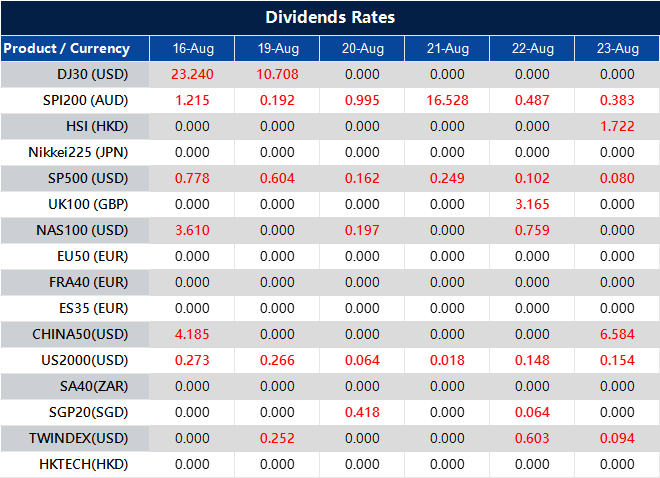
Dividend Adjustment Notice – Aug 20,2024

Dear Client,

Please note that the dividends of the following products will be adjusted accordingly. Index dividends will be executed separately through a balance statement directly to your trading account, and the comment will be in the following format “Div & Product Name & Net Volume ”.

Please refer to the table below for more details:

The above data is for reference only, please refer to the MT4/MT5 software for specific data.

If you’d like more information, please don’t hesitate to contact info@vtmarkets.com.

A Complete Guide for the Best Laptop for FX Trading in 2024

The Best Laptops For Forex Trading in 2024

Forex (FX) trading demands a reliable, powerful, and efficient laptop. Your laptop is your primary tool. Choosing the right one can significantly impact your trading performance. In 2024, advancements in technology and the increasing demands of trading platforms make selecting the best laptop for FX trading more critical than ever. This guide will walk you through the essential factors to consider and recommend some of the best laptops for FX trading in 2024.

What to Look for in a Laptop for FX Trading

Before diving into specific laptop models, understanding the key features and specifications is crucial. These factors ensure that your device handles trading platforms, charts, and other tasks efficiently.

1. Processing Power

A fast and reliable CPU is vital. For FX trading, consider a laptop with at least an Intel Core i7 or AMD Ryzen 7 processor. These processors offer the speed and multitasking capabilities required for trading. With these, your trading platforms will run smoothly.

2. RAM

RAM is crucial for running multiple applications. FX trading often involves using several programs at once. A laptop with at least 16GB of RAM is ideal. It ensures seamless multitasking and prevents slowdowns during critical trading moments.

3. Storage

Solid State Drives (SSDs) are the preferred storage option. SSDs reduce boot times and load applications faster than traditional HDDs. Aim for a laptop with at least 512GB of SSD storage, though 1TB is preferable for storing data and applications.

4. Display

A clear, sharp display is essential. A Full HD (1920×1080) resolution is the minimum requirement. For better clarity, a higher resolution like 4K is ideal. Consider a 15.6-inch screen for balance, but a 17-inch laptop offers more visibility.

5. Graphics Card

While FX trading doesn’t need a high-end GPU, a dedicated GPU can enhance performance. An integrated GPU suffices for most traders. However, if connecting multiple monitors, consider a mid-range dedicated GPU.

6. Battery Life

Long battery life is essential. Look for laptops offering at least 8 hours of battery life. This ensures uninterrupted trading during power outages or on the move.

7. Portability and Build Quality

If you travel frequently, consider the laptop’s weight and build quality. A lightweight, durable laptop enhances your trading experience. Ultrabooks offer portability without sacrificing performance.

8. Connectivity

Ensure your laptop has multiple USB ports, HDMI, and possibly Thunderbolt 4 for connecting external monitors. Reliable Wi-Fi and Bluetooth connectivity are also essential for seamless trading.

Best Laptops for FX Trading in 2024

Based on the factors mentioned above, here are some updated recommendations for the best laptops for FX trading in 2024:

1. MacBook Pro 16-inch (M2 Pro/Max)

Apple’s MacBook Pro 16-inch with M2 Pro/Max chips is a top choice for traders. The M2 chip offers incredible speed and efficiency. With up to 64GB of RAM and 8TB of SSD storage, it’s perfect for handling complex trading tasks. The Retina display provides sharp visuals, and the laptop’s battery life is outstanding, making it ideal for long trading sessions. Read here for MT4 For Mac instructions.

2. Dell XPS 17 (2024)

The Dell XPS 17 combines power and portability. It features up to an Intel Core i9 processor, 32GB of RAM, and 1TB SSD storage. The 17-inch 4K UHD+ display is perfect for chart analysis. Its robust build and long battery life make it suitable for traders who need a balance of performance and portability.

3. ASUS ROG Zephyrus G14 (2024)

For those who want a mix of gaming and trading, the ASUS ROG Zephyrus G14 is a great option. It’s powered by AMD Ryzen 9 7940HS and up to 32GB RAM. It also features a 1TB SSD, making it capable of running multiple trading platforms. The 14-inch QHD display and NVIDIA GeForce RTX 4060 GPU allow seamless multi-monitor setups.

4. HP Spectre x360 14 (2024)

The HP Spectre x360 is an excellent choice for traders who need a versatile device. It comes with an Intel Core i7 processor, 16GB RAM, and 1TB SSD storage. The 14-inch OLED 3K2K display provides vivid colors and sharp details, while the 360-degree hinge offers flexibility. Its lightweight design and long battery life make it perfect for on-the-go trading.

5. Lenovo Legion 5 Pro (2024)

The Lenovo Legion 5 Pro is a solid option for traders who need a powerful and affordable laptop. It features AMD Ryzen 7 7840HS, 16GB of RAM, and 1TB SSD storage. The 16-inch QHD display and NVIDIA GeForce RTX 4070 GPU make it ideal for handling multiple charts and trading platforms simultaneously.

How to Maintain Your Trading Laptop

Investing in a high-quality laptop is just the beginning. Maintaining it properly ensures it continues performing at its best. Regularly clean your laptop to prevent dust buildup. Keep your software up to date, and consider using a cooling pad if running resource-intensive applications. Backing up your data frequently and using antivirus software also helps protect your trading activities from unforeseen issues.

Conclusion: Choosing the Right Laptop for FX Trading

Choosing the best laptop for FX trading in 2024 involves considering your specific needs, budget, and preferences. Whether you prioritize processing power, display quality, or portability, there is a laptop on the market to meet your requirements. By investing in a reliable and efficient laptop, you can enhance your trading experience and improve your chances of success in the fast-paced world of Forex trading.

FAQ For Forex Trading Laptop in 2024

Q: What are the key specs for a trading laptop?

A: Prioritize at least 16GB RAM, an Intel i7 or AMD Ryzen 7, and SSD storage for smooth performance.

Q: Is a high refresh rate important?

A: Yes, a high refresh rate, like 144Hz, offers smoother chart movement, helping you react quickly to market changes.

Q: Do I need a dedicated GPU?

A: While not essential, a dedicated GPU ensures better visuals, especially if using multiple monitors.

Q: How important is battery life?

A: A long battery life is crucial for uninterrupted trading, especially when trading on the go.

Q: Should I choose a lightweight laptop?

A: A lightweight laptop is convenient if you often travel, making it easier to trade from anywhere.

Q: What screen size is best?

A: A 15-inch screen offers a good balance of portability and enough space for detailed charts.

Q: Can I use a gaming laptop for trading?

A: Yes, gaming laptops often meet the performance needs of traders due to their high specs.

Q: How important is cooling?

A: Good cooling is vital to prevent overheating during long trading sessions, ensuring smooth performance.

Q: Should I consider laptop upgradability?

A: Yes, upgradable laptops allow you to boost performance over time, keeping up with trading demands.

Q: What’s the best OS for trading?

A: Windows is preferred for most trading platforms, though MacOS also works well for some traders.

Maximize your trading potential with the right tools. Whether you’re just starting or looking to upgrade your trading setup, VT Markets provides the platform and resources you need. Open a demo account today and experience the VT Markets advantage with top-notch trading tools and support.

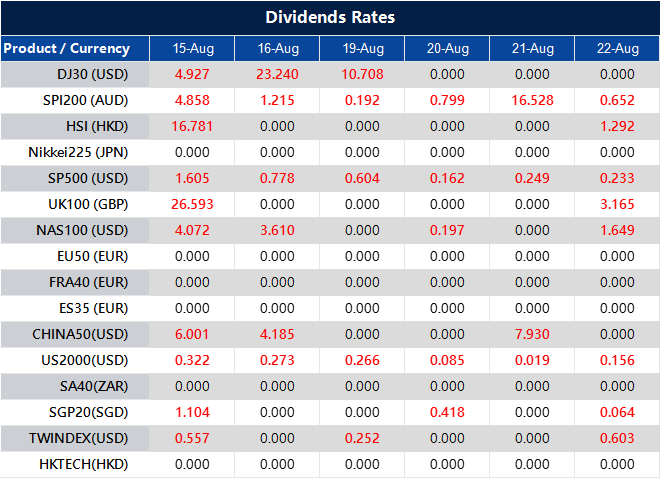
Dividend Adjustment Notice – Aug 19,2024

Dear Client,

Please note that the dividends of the following products will be adjusted accordingly. Index dividends will be executed separately through a balance statement directly to your trading account, and the comment will be in the following format “Div & Product Name & Net Volume ”.

Please refer to the table below for more details:

The above data is for reference only, please refer to the MT4/MT5 software for specific data.

If you’d like more information, please don’t hesitate to contact info@vtmarkets.com.

Fed Minutes Shape Market Expectations for 2024

Another week of market volatility is expected as investors navigate a complex economic landscape. The US dollar strengthened against the Japanese yen after positive economic data. Investors await key economic reports and Federal Reserve news this week. Gold prices are high, while oil prices are stable. Overall, market conditions are uncertain. 

KEY ECONOMIC INDICATORS 

Fed minutes and economic signals: 

  • The release of the Federal Reserve’s minutes from their July meeting will be the centrepiece of the week.  
  • Investors will examine the details for signals about future interest rate hikes or possible shifts in the Fed’s approach to inflation.  
  • These minutes could be pivotal in shaping market expectations for the rest of the year. 

Crude oil inventories: 

  • The EIA’s weekly inventory report showed stockpiles of crude oil rose 1.36mbbl last week, snapping a six-week streak of declines. 
  • Traders are on edge, as geopolitical tensions remain high. 

Focus on housing market data: 

  • Next week, the U.S. housing market will be in the spotlight with the release of new and existing home sales data for July. 
  • As rising interest rates have started to weigh on housing demand, these reports will give investors a clearer picture of how the real estate market is holding up. 

Technical Indications show us a potential incline in the various Markets, not taking into consideration the Fundamental Analysis, i.e., News, Reports, and Announcements. 

CURRENCIES 

Dow Jones index: 

  • S1-S3 – Means potential support points. If the market declines further, these are the potential levels it can reach. 
  • R1-R3 – Means potential resistance points. If the market starts to increase again, these are the potential levels it can reach. 

Crude oil inventories expectations: 

The Inventory Report is scheduled to be released this Wednesday, 21 August 2024. 

Events since the last release of the Inventory Report: 

  • U.S. Crude Oil Inventories Fall for Third Straight Week. 
  • Both contracts were set to rise between 1.5% and 2% this week, with gains coming on the heels of some strong U.S. economic readings and signs of easing inflation in the country. 
  • Continued caution over an Iranian strike against Israel kept traders attaching a risk premium to crude after Hezbollah and Hamas were seen launching strikes against the country earlier this week. 

Previous report figures and forecast figures for the latest release 1.357M (barrels of oil). 

Forecast figures for 21 August 2024 – TBA (To be Announced) (barrels of oil). 

USD/JPY outlook: Dollar pushes to 2-week high on solid sales 

  • US retail sales rose 1.0% in July. 
  • The likelihood of a 50 bps Fed rate cut in September dropped to 25%. 
  • US jobless claims fell to 227,000 with their last report released. 
  • The upbeat US economic reports followed inflation data showing a moderate increase. As a result, the market is optimistic that the Fed might achieve a soft landing. 

Unwinds of stretched positions, U.S. recession fears and policy uncertainty have sparked big market swings. 

The Bank of Japan’s sudden willingness to incorporate the Yen as a factor in setting policy accelerated an unwind of carry trades that use the low-yielding yen to buy other assets. 

Market movers: Key instruments to follow this week 

  • USD/JPY 
  • GBP/USD 
  • Nasdaq100 
  • XAU/USD 
  • CRUDE OIL 

MARKET NEWS 

Gold prices hover close to record highs amid easing recession fears: 

  • Spot gold fell 0.1% to $2,453.02 an ounce 
  • Gold futures expiring in December fell 0.1% to $2,490.15 an ounce by 01:08 ET (05:08 GMT). 
  • Spot prices were trading up 0.9% for the week and were about $30 away from a record high. 
  • Silver futures fell 0.7% to $28.207 an ounce. 

GBP/EUR exchange rate recovers on upbeat UK GDP: 

  • GBP/EUR was trading at around €1.1669, up around 0.2% from the morning’s opening level but still down from Wednesday’s high of €1.1726.  
  • The Pound (GBP) climbed on Thursday morning as the British currency drew support from the UK’s GDP figures for the second quarter of 2024. 
  • Looking ahead, Friday brings the UK’s retail sales figures for July – the final release this week after a slew of high-impact British data. British sales growth is forecast to have rebounded in July by 0.5% after June’s surprisingly steep drop of 1.2%. 

Oil prices edge lower, but set for positive week as the economic outlook improves:

  • Brent oil futures expiring in October fell 0.1% to $80.94 a barrel 
  • West Texas Intermediate crude futures fell 0.2% to $76.85 a barrel by 21:25 ET (01:25 GMT). 
  • China remained a key point of concern for oil markets, as economic activity in the world’s biggest oil importer showed little signs of improving. 
  • Concerns over China saw both the OPEC and the IEA downgrade their forecasts for oil demand growth in 2024, with the two citing policy uncertainty in the country and persistent weakness in its economy. 

Click here to open account and start trading.

Fortune Favours the Bold: VT Markets Unveiled a New Global Partnership with Newcastle United 

Sydney, Australia, [16 August 2024] – VT Markets, a global multi-asset broker, is proud to announce a new partnership with Newcastle United. This collaboration unites two entities that exemplify bravery, perseverance, and innovation. 

“We’re proud that VT Markets views Newcastle United as the ideal partner to support and elevate its ambitious growth plans in markets across the world.” said Newcastle United’s Chief Commercial Officer, Peter Silverstone. “We are delighted to welcome another internationally recognised partner to our club and look forward to working closely with VT Markets.” 

“We are incredibly excited about this partnership with Newcastle United, a team that exemplifies the same drive for excellence and innovation that we strive for at VT Markets,” said Agustin Bilinskis, Head of Strategy Operations, APAC of VT Markets.  

A special jersey bearing the number ‘77’ has been unveiled in honour of this collaboration. The number ‘77’ holds great significance for VT Markets, symbolizing good fortune and our aspirations for continued growth. In football, a player’s number and name represents their iconic and memorable identity, and to embody this global partnership, we chose a number that resonates deeply with our brand.  

The partnership was officially inaugurated at the J. League International Series 2024 in Japan. The event’s highlights included an exchange of appreciation tokens. Newcastle United presented a curated number ‘77’ jersey while VT Markets reciprocated with an appreciation trophy.  

This occasion unfolded at the 63,700-capacity Saitama Stadium in Japan on July 31st, attended by representatives from both organisations. VT Markets was represented by Agustin Bilinskis, Head of Strategy Operations, APAC and Dandelyn Koh, Global Brand Lead. Representing Newcastle United was their Chief Commercial Officer, Peter Silverstone.  

About VT Markets  

VT Markets is a regulated multi-asset broker with a presence in over 160 countries as of today. It has earned numerous international accolades including Best Online Trading and Fastest Growing Broker. In line with its mission to make trading accessible to all, VT Markets offers comprehensive access to over 1,000 financial instruments and clients benefit from a seamless trading experience via its award-winning mobile application. 

For more information, please visit the official VT Markets website or email us at info@vtmarkets.com. Alternatively, follow VT Markets on Facebook, Instagram, or LinkedIn

For media enquiries and sponsorship opportunities, please email media@vtmarkets.com, or contact: 

Dandelyn Koh 
Global Brand & PR Lead 
dandelyn.koh@vtmarkets.com  

Brenda Wong 
Assistant Manager, Global PR & Communications 
brenda.wong@vtmarkets.com

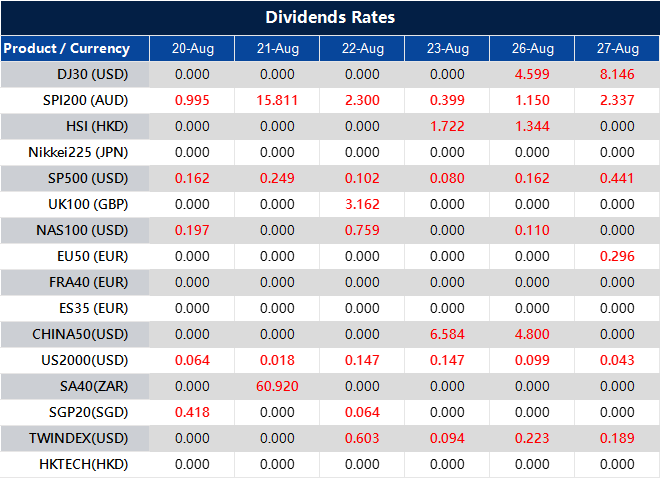
Dividend Adjustment Notice – Aug 16,2024

Dear Client,

Please note that the dividends of the following products will be adjusted accordingly. Index dividends will be executed separately through a balance statement directly to your trading account, and the comment will be in the following format “Div & Product Name & Net Volume ”.

Please refer to the table below for more details:

The above data is for reference only, please refer to the MT4/MT5 software for specific data.

If you’d like more information, please don’t hesitate to contact info@vtmarkets.com.

3 ways for traders to profit from a market crash

If you want to understand why the markets are collapsing, read on to discover the reasons behind the recent Black Monday on Wall Street—and how you can still earn a tidy sum during a market crash. 

For those who have ever wondered when the next financial bubble might burst – it just did

For one, if you saw how stocks ended last week and checked the global indexes last night, you can tell there’s a lot of fear in the markets right now. 
 
Global markets have entered a perfect storm for a sell off.  

In case you missed it, here’s what happened last Monday on Wall Street:  

• The S&P 500 experienced its largest single-day decline since September 2022. 

• The Dow plummeted by over 1,000 points. 

• The Nasdaq 100 lost nearly $1 billion in market value. 

• The VIX, Wall Street’s Fear Gauge, reached levels last observed during the 2008 Financial Crisis and the 2020 pandemic. 
 
And that was only in the US. 

Source: Reuters  

There’s no way to predict exactly when a stock market downturn will occur, but it’s safe to assume it will happen eventually. Market downturns are normal, and, unfortunately, they’re also unavoidable. 

A market crash essentially means that stock prices across various sectors of the market take a sharp decline. Many investors start selling their shares at the same time, and stock prices fall. When this happens on a broad scale, a market crash can occur. 

Just like this trade that’s causing mayhem in financial markets outside the US: The yen-carry trade. 

Over the last few days, the Japanese yen has surged and hit levels that haven’t been seen since World War II. 

The recent selloff is largely due to the yen-carry trade unwinding after the Bank of Japan raised rates twice in a row for the first time in 17 years. This move caused the yen to rebound from a 40-year low of 161.61 to 142.71 against the U.S. dollar 

Traders responded by selling off foreign assets and converting their money back to yen to limit their losses. It looks like the market might have gone too far too quickly, so we’re now seeing some adjustments during the European trading session as it moves back to more normal levels. 

Here’s what we found the other day: US stock market rebound after major market selloff during recession fears 

Many people associate market crashes with losing money. But if you take the right steps before a market downturn, you might not lose money at all.  

In fact, the opportunistic would see it as the best time to take advantage of the crash and make money from it. 
 
Take a cue from the “Rich Dad Poor Dad” author Robert Kiyosaki who expected a historic crash across financial markets. 

“The biggest crash in world history is coming,” he said, adding that sell-offs create buying opportunities but that markets wouldn’t recover for a long time. “Get more gold, silver, and bitcoin while you can,” he tweeted

And because the entry point has been lowered, it’s easy for beginner traders to tap into the markets and start building their portfolios with minimal initial investment. It just takes the right approach. 

3 ways to profit from the market crash 

Exploit the yen-carry trade

While we did say that the crash was caused by the yen-carry trade, opportunities remain; the revised rates remain low enough for investor demand. As with how it has been done, the Japanese yen’s low-interest rates allow traders to borrow yen at low rates and invest in higher-yielding assets or currencies that are temporarily undervalued.  

Traders are, however, advised to be careful of sudden increases in the yen’s value due to upcoming BOJ hikes and Fed cuts; this can affect their returns. 

Trend trading 

Trend trading, a strategy based on identifying and following the direction of market movements, can be particularly effective during such volatile periods. 

We’ve written an article on why trend trading is one of the most effective ways to capture the hottest moments in the market.  
 
Read it here: The glamour of trend trading  

Short the market with CFD  

Since CFDs are derivatives, you don’t own the underlying asset. This also means you have the flexibility to respond swiftly to market crashes, capturing opportunities as they arise. 
 
Another word of wisdom to take heed from is this advice from Robert Kiyosaki

 Market crashes can be intimidating, but they also present opportunities for traders who know how to navigate them.  

Why trade CFDs with VT Markets? 

As an award-winning broker, VT Markets equips traders with everything they need to profit from the markets, regardless of market trajectory. By trading CFDs on the VT Markets app, you have… 

  • Access to a wide range of assets 
  • Tighter spread and near-instant liquidity 
  • The power of leverage for higher returns 

…which makes it easy for traders to find opportunities to profit, whether it’s a bear market, a crash, or a downturn. 
 
 
 Start trading with VT Markets now 

Why CFD Trading Might Be a Good Fit for a Side Hustle Income

What is CFD Trading?

CFD (Contract for Difference) trading allows you to speculate on the price movements of various financial assets without owning them. When you engage in CFD trading, you’re entering a contract to exchange the difference in an asset’s price from the time the trade opens to when it closes. This flexibility enables access to global markets, including stocks, commodities, indices, and currencies, making it a versatile option for traders.

Why Trading is the Perfect Side Hustle

CFD trading offers an excellent opportunity as a side hustle due to its flexibility and potential profitability. Unlike traditional jobs, CFD trading doesn’t require you to adhere to a fixed schedule. You can trade during your free time, which makes it easy to integrate trading into your existing routine. Moreover, online platforms like MT4 and MT5 provide 24/5 access to global markets, enabling you to trade from anywhere at any time.

Additionally, the leverage provided in CFD trading allows you to control larger positions with a relatively small amount of capital. This means that even if you start with a modest investment, there’s potential for significant returns. However, leverage also amplifies risk, so it’s essential to approach CFD trading with a sound strategy and risk management practices.

Where to Learn CFD Trading

Before diving into CFD trading, it’s crucial to equip yourself with the necessary knowledge. Fortunately, numerous online resources are available to help you get started. These include educational websites, trading courses, and webinars that provide comprehensive training. For instance, VT Markets offers an extensive range of educational materials tailored for both beginners and experienced traders.

Additionally, practicing with a demo account is an excellent way to gain hands-on experience without risking real money. Demo accounts allow you to simulate real market conditions, enabling you to develop and refine your trading strategies.

Starting with a Small Trading Capital

One of the most attractive features of CFD trading is the ability to start with a small trading capital. Unlike traditional investments that often require substantial upfront capital, CFD trading enables you to control larger positions through leverage. This makes it accessible for those looking to start a side hustle without a significant financial commitment.

However, it’s crucial to manage leverage carefully. While leverage can amplify your profits, it can also magnify your losses. Therefore, starting with smaller positions and gradually increasing your exposure as you gain experience is advisable.

How to Manage Risk for CFD Trading

Effective risk management is essential for success in CFD trading. One of the most important aspects of risk management is setting stop-loss orders. A stop-loss order automatically closes your position when the market moves against you by a certain amount, limiting your potential losses.

In addition to stop-loss orders, diversification is another key risk management strategy. By spreading your trades across different assets, you reduce the risk of a significant loss in any one position. For example, instead of trading only on a single currency pair, you might also consider trading commodities or indices.

Moreover, maintaining emotional discipline is crucial. It’s easy to let emotions like fear or greed influence your trading decisions, but doing so can lead to poor outcomes. Instead, stick to your trading plan and make decisions based on analysis rather than impulse.

Trading CFDs with VT Markets

VT Markets offers a reliable and user-friendly platform for CFD trading, equipped with advanced tools and resources to support your trading journey. Whether you prefer MT4 or MT5, VT Markets provides a seamless trading experience with competitive spreads and efficient order execution.

The platform also offers leverage options and risk management tools to help you trade confidently. Moreover, VT Markets’ educational resources and customer support are designed to assist traders at all levels, ensuring you have the guidance and information needed to succeed.

FAQ For CFD Trading as Side Hustle

Q: Can I start CFD trading as a side hustle with a small amount of money?

A: Yes, CFD trading allows you to start with a small capital due to leverage, but it’s crucial to manage risk carefully.

Q: Is CFD trading risky?

A: CFD trading involves risk, particularly due to leverage, but proper risk management can help mitigate potential losses.

Q: How can I learn CFD trading?

A: You can learn CFD trading through online courses, webinars, and practice on demo accounts. VT Markets offers extensive educational resources.

Q: What markets can I trade with CFDs?

A: CFDs allow you to trade various markets, including shares, commodities, indices, and currencies.

Q: Why is CFD trading a good side hustle?

A: CFD trading offers flexibility, allowing you to trade in your spare time, and the potential for significant returns with a small initial investment.

Q: How important is risk management in CFD trading?

A: Risk management is crucial to protect your capital and ensure sustainable trading, especially when using leverage.

Conclusion For CFD Trading Side Hustle

CFD trading offers a flexible and potentially profitable way to earn side income, making it an excellent choice for a side hustle. By starting with a small capital, learning the fundamentals, and managing risks effectively, you can build a sustainable trading strategy.

VT Markets provides the tools, resources, and support to help you succeed in your CFD trading journey. Whether you’re a beginner or an experienced trader, the right platform and approach can make a significant difference in your success.

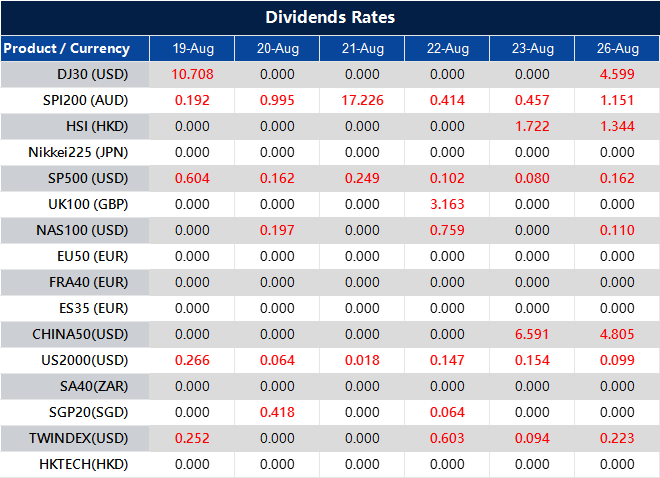
Dividend Adjustment Notice – Aug 15,2024

Dear Client,

Please note that the dividends of the following products will be adjusted accordingly. Index dividends will be executed separately through a balance statement directly to your trading account, and the comment will be in the following format “Div & Product Name & Net Volume ”.

Please refer to the table below for more details:

The above data is for reference only, please refer to the MT4/MT5 software for specific data.

If you’d like more information, please don’t hesitate to contact info@vtmarkets.com.

Back To Top
server

Hello there 👋

How can I help you?

Chat with our team instantly

Live Chat

Start a live conversation through...

  • Telegram
    hold On hold
  • Coming Soon...

Hello there 👋

How can I help you?

telegram

Scan the QR code with your smartphone to start a chat with us, or click here.

Don’t have the Telegram App or Desktop installed? Use Web Telegram instead.

QR code