How to Trade Forex for Beginners: Full Guide

Learn How to Trade Forex for Beginners

This comprehensive guide provides forex beginners with the essential knowledge and tools they need to start trading forex confidently. We cover the basics, key strategies, risk management, common mistakes, and where to learn more as you embark on your journey in forex trading for beginners.

What is Forex Trading?

Forex, or foreign exchange, refers to the global marketplace where currencies are traded. It is the world’s largest financial market, with a daily trading volume surpassing $6 trillion. Unlike stocks, forex involves the exchange of one currency for another. For instance, when you exchange US dollars for euros, you are participating in a forex trade.

For forex trading beginners, understanding the mechanics of this market is essential. Every trade involves buying one currency while selling another, and the aim is to profit from changes in their exchange rates. For example, if you think the euro will strengthen against the US dollar, you would buy the EUR/USD pair.

Key Concepts Every Forex Beginner Must Know

To start trading forex successfully, it’s crucial to get familiar with a few core concepts that drive the market:

1. CFD Trading

A Contract for Difference (CFD) lets you speculate on price movements in currency pairs without owning the actual currencies. For beginners in forex trading, you can trade CFDs on pairs like EUR/USD and profit from price changes.

2. Currency Pairs

Forex involves trading currency pairs, like EUR/USD (Euro/US Dollar). The first currency is the “base” currency, and the second is the “quote” currency. For forex beginners, it’s important to understand that when EUR/USD rises, the Euro strengthens against the US Dollar.

3. Pips

A pip is the smallest price movement in forex. It represents the difference between the buying and selling price. For example, if EUR/USD moves from 1.1000 to 1.1005, that’s a 5-pip move. Calculating pips is crucial for determining profits and losses in forex trading for beginners.

4. Spread

The spread is the difference between the bid price (what buyers are willing to pay) and the ask price (what sellers want to sell at). The spread is a cost that traders pay when entering and exiting a position. A smaller spread means lower transaction costs, which is ideal for forex beginners trading major pairs like EUR/USD.

5. Leverage

Leverage allows you to control a larger position than your account balance would normally allow. For instance, with 100:1 leverage, you control $100,000 with just $1,000. While leverage amplifies profits, it also increases the risk of losses, making it crucial for forex beginners to use it cautiously and understand the risks involved.

6. Lot Sizes

In forex, trades are conducted in specific amounts known as “lots.” A standard lot is 100,000 units of the base currency, but forex trading for beginners often involves smaller lot sizes, such as mini lots (10,000 units) or micro lots (1,000 units). These smaller positions help manage risk and ensure that forex trading for beginners doesn’t result in excessive losses on small price moves.

How to Start Your First Forex Trade as a Beginner

Starting your first forex trade as a beginner can be overwhelming, but breaking it down into simple steps makes it more manageable for beginners. Follow these steps to begin:

Step 1: Familiarise Yourself with the Forex Market

Before diving into trading, it’s crucial to understand how the forex market works. Learn the key concepts such as currency pairs, pips, and leverage, and get familiar with the factors that influence currency prices. For forex beginners, educating yourself about how the market operates will set a solid foundation for your trading journey.

Step 2: Develop a Forex Trading Plan

A solid trading plan is vital for success. It should include your goals, risk tolerance, trading strategy, and rules for entering and exiting trades. By having a plan in place, you can avoid impulsive decisions and stay disciplined during your trading journey, which is especially important for forex trading for beginners.

Step 3: Choose a Reliable Forex Broker

Selecting a trustworthy broker like VT Markets is one of the most important decisions for any beginner. Look for a broker that is regulated by reputable authorities and offers a user-friendly trading platform. Many brokers provide demo accounts, which are a perfect option for beginners to practice trading without risking real money.

Step 4: Open and Fund Your Trading Account

Once you’ve selected a broker, the next step is to open a trading account. This process typically involves providing identification and funding your account. As a beginner, it’s advisable to start with a small deposit and use risk management techniques like stop-loss orders to protect your initial capital.

Step 5: Select a Currency Pair to Trade

When you’re ready to start, choose a currency pair to trade. Major pairs like EUR/USD and GBP/USD are usually the best starting points for forex beginners because they are liquid, meaning they have low spreads and plenty of trading activity. These pairs are also less volatile compared to exotic currencies, making them easier to manage as a beginner.

Learn how to trade EUR/USD for beginners

Step 6: Determine Your Trade Size and Leverage

For forex trading for beginners, it’s essential to start small. You can choose to trade in micro or mini lots, which require less capital to enter a position. Additionally, be cautious with leverage. While it allows you to control a larger position with less capital, it also increases both potential profits and losses.

Step 7: Place Your First Trade

Once you’ve selected your currency pair and decided on the trade size, it’s time to place your order. You can either buy (go long) or sell (go short), depending on whether you believe the currency will rise or fall.

Step 8: Monitor Your Trade and Close It

After your trade is live, keep an eye on it to see if it’s moving in your favour. As a beginner, you might want to manually close the trade once it reaches your target profit or loss. Alternatively, if you’ve set stop-loss or take-profit orders, they will automatically close the trade once your conditions are met.

Types of Forex Trading Strategies

As a forex beginner, choosing the right strategy is crucial for successful trading. Here are a few popular strategies to consider:

1. Trend Following

The trend-following strategy involves identifying the prevailing direction of the market and trading in line with it. This strategy works best when the market is clearly trending in one direction.

Example: If EUR/USD is consistently moving upwards (an uptrend), you might enter a long position (buy) whenever the price pulls back slightly, expecting the trend to continue. In this case, you’d use indicators like moving averages to confirm the strength of the trend.

2. Range Trading

Range trading is most effective when the market is consolidating, meaning the price fluctuates within a defined range between support and resistance levels.

Example: If EUR/USD is bouncing between 1.1200 (support) and 1.1300 (resistance), you would buy near 1.1200 when the price approaches support and sell near 1.1300 when it reaches resistance. The goal is to capture small price movements within this range.

3. Breakout Trading

Breakout trading focuses on entering a trade when the price breaks through established support or resistance levels, signaling the potential start of a new trend.

Example: If EUR/USD is trading within a range of 1.1200 to 1.1300 and then breaks above 1.1300, you would enter a buy trade, anticipating a bullish trend to follow. Similarly, a breakdown below support (e.g., 1.1200) could signal a bearish move.

4. Scalping

Scalping is a high-frequency trading strategy where you make numerous small trades throughout the day to profit from tiny price movements. It requires quick decision-making and a high level of focus.

Example: You might buy EUR/USD when it moves up by 5-10 pips and sell immediately after making that small profit. This process is repeated many times throughout the day, relying on high volume and tight spreads to achieve profitability.

Learn more about the 9 best forex trading strategies & techniques.

Importance of Risk Management in Forex Trading for Beginners

Risk management is one of the most critical aspects of forex trading for beginners. It ensures that you protect your capital while maximising potential profits. Here are a few risk management techniques you should use:

Stop-Loss Orders: A stop-loss is a risk management tool that automatically closes your trade when the market reaches a certain price, preventing larger-than-expected losses.

Position Sizing: Always calculate the amount of capital at risk on each trade. Forex beginners should use only a small portion of their account balance per trade (typically 1-2%).

Leverage Control: Avoid using high leverage until you fully understand how it works. Leverage magnifies both profits and losses.

5 Common Mistakes That Beginners Make

Overleveraging: Leverage can magnify both profits and losses. Many forex beginners make the mistake of using high leverage without fully understanding the risks, leading to large losses. Always start with lower leverage and increase it gradually as you gain experience.

Lack of a Trading Plan: Trading without a plan is like navigating without a map. Many forex trading beginners jump into the market without clear goals or strategies, leading to impulsive decisions and unnecessary losses. Always plan your trades, and trade your plan.

Ignoring Economic News: The forex market is strongly influenced by global economic events. Ignoring key updates, such as economic reports, central bank decisions, and geopolitical news, can lead to missed opportunities or losses. Stay informed by following an economic calendar to help guide your trading decisions.

Chasing Losses: It’s easy to get emotional after a loss and try to recover quickly by taking high-risk trades. This behaviour, known as “chasing losses,” is a common mistake among forex beginners. Stick to your plan, avoid impulsive trades, and know when to step away from the market.

Neglecting Risk Management: As mentioned earlier, failing to implement effective risk management techniques is a critical mistake. Without it, even the best trading strategy can lead to significant losses. Always use stop-loss orders, set reasonable position sizes, and never risk more than you’re willing to lose.

5 Forex Trading Tips for Beginners

Understand the Forex Market First: Before trading live, take the time to understand how the forex market works, including key concepts like currency pairs, pips, and spreads. The more you learn, the better prepared you’ll be for success in forex trading for beginners.

Utilise the Demo Account: Practising with a demo account allows you to familiarise yourself with trading platforms and test your strategies without risking real money. This is an essential tool for forex trading beginners to gain confidence before trading live.

Start Small: It’s tempting to take big risks for big rewards, but as a forex beginner, it’s better to start small and gradually increase your trading size as you gain more experience. This helps protect your capital while you’re still learning.

Stay Patient & Disciplined: The forex market can be volatile, and it’s easy to make emotional decisions when things aren’t going your way. Stay disciplined, stick to your trading plan, and avoid impulsive actions that could lead to unnecessary losses.

Keep Learning: The forex market is always changing, so continuous learning is key. Read books, take courses, and stay updated on market news to continually improve your knowledge and skills as a forex trading beginner. The more you learn, the better equipped you’ll be to handle the complexities of the forex market.

Where to Learn More About Forex Trading

VT Markets offers a range of resources to help forex beginners learn and improve their trading skills. You can access online courses tailored for both beginners and intermediate traders, as well as expert market forecasts and daily market analysis to stay informed on the latest trends. With these tools, you can deepen your understanding of forex and enhance your trading strategies, ensuring you’re always equipped with the knowledge you need to succeed in forex trading for beginners.

Find out the best sources to learn forex trading.

Conclusion

Learning how to trade forex for beginners takes time and practice, but with the right tools, strategies, and discipline, you can start your journey toward becoming a successful forex trader. Focus on mastering the basics, managing risk, and avoiding common mistakes, and over time, you’ll see your skills improve. Stay patient, keep learning, and remember that success in the forex market doesn’t happen overnight.

Why Trade Forex with VT Markets

At VT Markets, we provide everything forex beginners need to start their trading journey. From a user-friendly trading platform like MetaTrader 4 (MT4) and MetaTrader 5 (MT5) to educational resources, expert advisors, customer support, and competitive spreads, we help you trade confidently and securely.

Start trading with VT Markets today and take the first step towards mastering forex trading!

Frequently Asked Questions (FAQs) 

1. What is forex trading?

Forex trading involves buying and selling currencies to profit from their price fluctuations. It’s the largest financial market globally, with a daily trading volume exceeding $7.5 trillion. 

2. How do I start trading forex as a beginner?

To get started with forex trading, follow these essential steps:

  • Step 1: Familiarise Yourself with the Forex Market
  • Step 2: Develop a Forex Trading Plan
  • Step 3: Choose a Reliable Forex Broker
  • Step 4: Open and Fund Your Trading Account
  • Step 5: Select a Currency Pair to Trade
  • Step 6: Determine Your Trade Size and Leverage
  • Step 7: Place Your First Trade
  • Step 8: Monitor Your Trade and Close It

3. What are currency pairs?

In forex trading, currencies are traded in pairs, such as EUR/USD. The first currency is the base currency, and the second is the quote currency. The pair’s price indicates how much of the quote currency is needed to purchase one unit of the base currency. 

4. What is a pip?

A pip (percentage in point) is the smallest price movement in the forex market, typically representing 0.0001 of a currency pair’s price. Understanding pips is essential for calculating potential profits and losses.

5. What is leverage in forex trading?

Leverage allows traders to control a larger position with a smaller amount of capital. While it can amplify profits, it also increases the potential for significant losses. It’s vital to use leverage cautiously and understand its implications.

6. How can I manage risk in forex trading?

Implementing risk management strategies, such as setting stop-loss orders, determining appropriate position sizes, and using proper leverage, can help protect your capital and minimize potential losses.

7. How can I practice forex trading without real money?

Most brokers offer demo accounts that simulate real market conditions, allowing you to practice trading without risking actual money. This is an excellent way to build confidence and refine your strategies.

8. How can I stay updated with forex market news?

Regularly following financial news, economic calendars, and market analysis from reputable sources can help you stay informed about factors influencing currency prices.
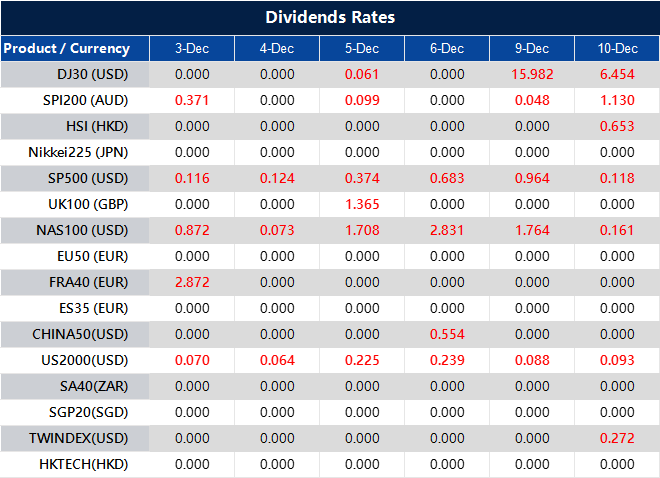
Dividend Adjustment Notice – Dec 03,2024

Dear Client,

Please note that the dividends of the following products will be adjusted accordingly. Index dividends will be executed separately through a balance statement directly to your trading account, and the comment will be in the following format “Div & Product Name & Net Volume ”.

Please refer to the table below for more details:

The above data is for reference only, please refer to the MT4/MT5 software for specific data.

If you’d like more information, please don’t hesitate to contact info@vtmarkets.com.

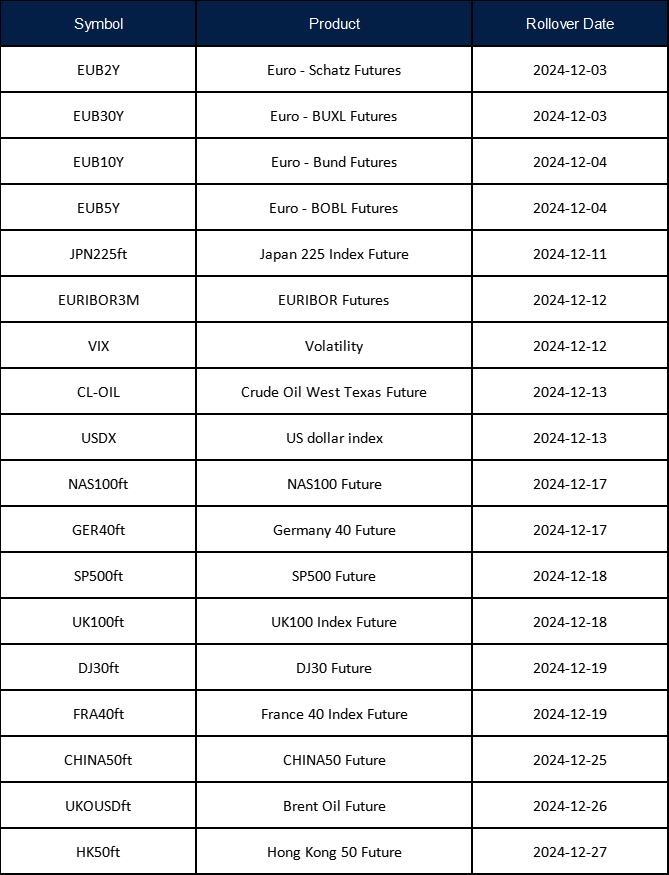
December Futures Rollover Announcement – Dec 03, 2024

Dear Client,

New contracts will automatically be rolled over as follows:

Please note:
• The rollover will be automatic, and any existing open positions will remain open.

• Positions that are open on the expiration date will be adjusted via a rollover charge or credit to reflect the price difference between the expiring and new contracts.

• To avoid CFD rollovers, clients can choose to close any open CFD positions prior to the expiration date.

• Please ensure that all take-profit and stop-loss settings are adjusted before the rollover occurs.

• All internal transfers for accounts under the same name will be prohibited during the first and last 30 minutes of the trading hours on the rollover dates.

If you’d like more information, please don’t hesitate to contact info@vtmarkets.com.

How to Start Trading for Beginners: Full Guide

Trading for Beginners: How to Start Trading for Beginners

This guide walks you through every step to get started with trading for beginners. From understanding the basics to placing your first trade, we’ll explain everything you need to know to confidently enter the world of trading and begin your journey as a beginner trader.

What is Trading?

At its foundation, trading refers to the active buying and selling of financial instruments such as stocks, bonds, commodities, or currencies with the goal of generating profit. In financial markets, various trading methodologies and strategies exist, making it essential for beginner traders to understand the methods and markets that best align with their goals and risk tolerance.

Unlike investing, which is typically characterised by a long-term strategy aimed at wealth accumulation over time, trading focuses on capitalising on short-term price movements. Traders aim to benefit from market volatility by employing strategies such as buying low and selling high or selling high and buying low. The objective is to capture profit opportunities from price fluctuations over shorter periods, ranging from minutes to weeks.

Example: Imagine you decide to purchase 100 shares of Tesla at $300 per share, anticipating an upward price movement. The total cost of your investment would be $30,000. If Tesla’s stock price increases to $350 per share, you could sell your 100 shares for a total of $35,000, resulting in a realised profit of $5,000, excluding transaction fees and associated costs.

5 Key Terms Every Beginner Should Know

Understanding key trading terms is essential for every beginner trader. In this section, we break down five fundamental terms that will help you navigate the world of trading with confidence:

1. CFD (Contract for Difference)

CFD trading allows traders to speculate on the price movements of assets like stocks, commodities, or indices without owning the underlying asset. When you open a CFD, you’re entering into a contract with your broker to exchange the difference in price between the opening and closing of your position. If the price moves in your favour, you make a profit; if it moves against you, you incur a loss. CFDs are versatile, allowing you to both go long (buy) and go short (sell).

2. Leverage

Leverage allows traders to control larger positions with a smaller amount of capital. For example, with 50:1 leverage, a beginner trader can control a position worth $50,000 with just $1,000. Leverage is widely used in CFD trading, where it magnifies both potential profits and risks.

3. Spread

The spread is the difference between the buy and sell price of an asset. It’s an important consideration for beginner traders, as wider spreads can increase trading costs. In CFD trading, the spread refers to the difference between the opening and closing prices of a CFD contract. This cost is incurred when entering a trade and can vary based on the liquidity and volatility of the underlying asset.

4. Going Long (Buy)

When a trader buys an asset, they are said to be “going long.” The goal is to profit from price increases. For example, if you buy a stock at $50, you aim to sell it later for a higher price, say $60, locking in a $10 profit per share. CFD trading works similarly—traders can buy a CFD to speculate on price increases in assets like stocks or commodities.

5. Going Short (Short Selling)

Going short, or short selling, is when a trader borrows an asset, such as a stock or currency, and sells it at the current market price. The goal is to buy the asset back at a lower price, profiting from the decline. For instance, if you short a stock at $100, you aim to buy it back at $80, earning $20 per share. In CFD trading, short selling is also possible, where you sell a contract if you expect the asset’s price to fall, and aim to buy it back later at a lower price.

Discover the difference between a long position and a short position.

Types of Trading Markets

As a beginner trader, you’ll encounter various markets where assets can be traded. Here’s an overview of some of the major types:

1. Forex Market

The Forex market (also known as the foreign exchange market) is the largest financial market in the world, with a daily trading volume exceeding $6 trillion. It’s particularly popular for currency trading, where traders speculate on the price movements of currency pairs like EUR/USD or GBP/USD. The high liquidity and 24-hour trading schedule make Forex an ideal choice for beginner traders looking to capitalise on short-term price movements.

2. Indices Market

In the indices market, traders buy and sell contracts based on the performance of a group of stocks within a specific market or sector, such as the CHINA50, NAS100, or SP500. Indices reflect the overall health of an economy or sector, giving traders opportunities to profit from broader market trends rather than individual stocks.

3. Energies Market

The energy market includes the trading of energy sources like oil, natural gas, and other energy resources. Prices in the energy market are influenced by geopolitical events, supply and demand, and seasonal factors. CFD trading in energies provides an opportunity to profit from both rising and falling prices, appealing to traders who seek volatility and potential profit opportunities.

4. Precious Metals Market

Precious metals like gold, silver, and platinum are sought after for their intrinsic value and role as a hedge against economic uncertainty. Many beginner traders use CFD trading to speculate on price movements in these metals, with gold being particularly popular for its ability to retain value during times of economic instability.

5. Soft Commodities Market

Soft commodities include agricultural products such as coffee, cotton, sugar, cocoa, and wheat. Prices of these commodities are driven by weather conditions, crop yields, and global demand. For beginner traders, trading soft commodities presents an exciting way to capitalise on market trends shaped by global events and seasonality.

6. ETFs (Exchange-Traded Funds)

ETFs are investment funds traded on stock exchanges, much like stocks, and hold assets such as stocks, bonds, or commodities. CFD shares can be used to speculate on price movements of ETFs without owning the underlying assets, offering a flexible option for traders.

7. CFD Shares

CFD Shares allow traders to speculate on the price movements of individual stocks, such as Apple, Tesla, or Microsoft, without actually owning the shares. This gives traders the ability to profit from both rising and falling stock prices. For beginner traders, CFD shares offer a popular entry point into the market, especially because they allow for margin trading and the potential to leverage returns. Whether you’re new to trading or looking to diversify, trading CFD shares can be a flexible and accessible way to get started.
8. CFD Bonds

Bonds are fixed-income securities that pay interest over time, making them a staple for conservative investors. However, CFD bonds allow traders to speculate on the price movements of government and corporate bonds without owning the actual bonds. This provides an opportunity to diversify trading strategies, particularly for those who prefer trading lower-volatility assets compared to stocks or commodities. CFD bonds can be especially appealing to beginner traders looking to explore more stable markets while still having the ability to profit from price fluctuations.

Types of Trading Accounts

Before diving into the markets, it’s important to understand the different types of trading accounts available. Choosing the right one is crucial for managing risk and capital effectively. Below are the two main types of accounts you’ll encounter as a beginner trader:

Demo Account: A demo account is a risk-free way for beginner traders to practice trading without using real money. It allows you to familiarise yourself with the trading platform, test your trading strategies, and understand how markets move. This is the perfect starting point for those new to trading and looking to build confidence before committing to their real funds.

Live Account: Once you’re ready to trade with real money, you’ll transition to a live account. This type of account comes with financial risk but also offers the potential for real rewards. Opening a live account means you can start executing real trades and experience firsthand how markets can fluctuate. Understanding the risks and having a clear strategy is vital when switching to a live account.

VT Markets offers both live and demo accounts for beginner traders. Hence, beginner traders can practice and master their knowledge on a demo account and move to a live account once they are ready. 

How to Start Your First Trade

Now that you’re familiar with the basics of trading, here’s a step-by-step guide to help beginner traders place their first trade:

Step 1: Open and Fund Your Live Account

The first step is to open a live trading account with a broker. After registration, you’ll need to deposit funds into your account, ensuring you choose the best payment method for you. Be sure to fund your account sufficiently to start trading in your selected market.

Step 2: Choose Your Market

After your account is set up and funded, decide which market you’d like to trade in. Whether it’s Forex, indices, precious metals, or any other asset, it’s important to choose a market that aligns with your interests and trading goals. Understanding your chosen market is crucial for making informed trading decisions.

Step 3: Select Your Position

Once you’ve chosen your market, decide whether you want to buy (going long) or sell (going short) the asset. For example, if you expect a stock’s price to rise, you would go long. If you expect it to fall, you would go short. As a beginner trader, understanding when to go long or short is key to successful trades.

Step 4: Set Your Entry and Exit Points

Before executing the trade, define your entry point (the price at which you want to buy or sell) and your exit points (where you plan to close the trade). By setting clear entry and exit levels, you create a strategy that helps you manage your trade effectively. This could involve setting a take-profit point to lock in profits or using a stop-loss to limit potential losses.

Step 5: Set Your Stop Loss and Take Profit

Managing risk is essential when trading for beginners. Using tools like stop-loss orders and take-profit orders helps protect your capital and manage your risk. Additionally, consider not overleveraging your trades, as this can amplify both potential profits and losses. A well-defined risk-to-reward ratio before entering a trade helps ensure you’re managing risks effectively.

Step 6: Execute the Trade

Once your strategy is in place, execute the trade through your platform. You can place a market order (for immediate execution) or a limit order (to enter at a specific price). After executing the trade, monitor it closely and adjust your strategy if necessary, based on market movements.

Step 7: Monitor Your Trade

After execution, it’s important to keep an eye on your trade as the market fluctuates. Stay updated on market news, track performance, and adjust your strategy if needed. For beginner traders, this step is crucial in learning how to manage your trades effectively in real-time market conditions.

6 Common Mistakes That Beginner Traders Often Make

As you start your trading journey, it’s important to be aware of the common mistakes that many beginner traders make. These include:

Overleveraging: Using too much leverage can magnify both profits and losses. Beginner traders should understand their risk tolerance and use leverage that aligns with their trading strategy. Overleveraging can lead to significant losses, so it’s essential to start with lower leverage to minimise risk while gaining experience.

Lack of a Trading Plan: Trading without a clear plan often leads to impulsive decisions and unnecessary losses. A well-structured trading plan should include risk management rules, clear entry and exit strategies, and realistic profit targets. Always follow your plan to avoid emotional decisions and stay focused on your goals.

Failing to Manage Risk: Not using risk management tools like stop-loss or take-profit orders is a common mistake. These tools help protect your capital and lock in profits. Without them, you risk larger losses than you can handle. Make sure to always set your stop-loss orders to limit losses and take profit points to secure gains.

Overtrading: Trading too frequently in an attempt to capitalise on every market movement can be detrimental. Beginner traders often overtrade out of excitement or frustration, leading to poor decisions. Instead of trading out of impulse, wait for high-quality setups that align with your strategy.

Not Adapting to Market Conditions: Markets are constantly changing, and beginner traders often struggle to adapt their strategies. Relying on one strategy without adjusting to different market conditions, such as trending or ranging markets, can lead to missed opportunities or unnecessary losses. Staying flexible and continuously learning is crucial for long-term success.

Ignoring Emotional Discipline: Trading can trigger emotions like fear and greed, which can cloud decision-making. Beginner traders who let emotions drive their actions may hold onto losing trades too long or exit profitable ones too early. Maintaining emotional discipline by sticking to your plan is key to making objective and well-thought-out trading decisions.

By understanding and avoiding these common mistakes, beginner traders can greatly improve their chances of success. Trading is a skill that develops with time, and by being aware of these pitfalls, you can navigate the markets with greater ease and avoid unnecessary setbacks.

7 Tips for Beginner Traders

Starting as a beginner trader can be overwhelming, but with the right approach, you can significantly improve your chances of success. Here are some key trading for beginners tips to guide you:

Practice with a Demo Account: If you’re wondering how to start trading for beginners, using a demo account is the perfect way to begin. Many brokers, including VT Markets, offer free demo accounts. This allows you to practice trading without risking real money, helping you understand the platform and test strategies in real market conditions.

Start Small and Scale Gradually: It’s tempting to dive into large trades hoping for quick profits, but it’s crucial for beginner traders to start small. Focus on mastering the basics and managing smaller trades effectively. This allows you to gain valuable experience without risking too much capital. As you grow, gradually scale your trades.

Develop a Trading Strategy: Trading for beginners requires a solid plan. Successful traders always have a strategy. Your strategy should include clear entry and exit points, risk management rules, and profit goals. Avoid making trades based on emotions, as this can lead to poor decisions. Learn the 9 best forex trading strategies and techniques.

Use Risk Management Tools: One of the most important lessons beginner traders must learn is risk management. Tools like stop-loss and take-profit orders can help protect your capital and lock in profits. Always ensure you’re using these tools, especially in volatile markets.

Keep Learning and Stay Updated: Financial markets are constantly evolving, and to become a successful beginner trader, it’s important to keep learning. Follow market news, attend webinars, and read articles on trading strategies. The more informed you are, the better your trading decisions will be.

Don’t Let Emotions Control You: Trading for beginners can stir emotions like fear and greed, leading to impulsive decisions. Stick to your strategy and avoid chasing quick profits. If you experience a loss, don’t overtrade to make up for it — emotional discipline is key to long-term success.

Track Your Trades and Learn from Mistakes: As a beginner trader, it’s helpful to track your trades. Keep a journal to note your strategies, entry points, exit points, and results. By reviewing your trades regularly, you can identify what works and what doesn’t, improving your strategy over time.

Where to Learn More About Trading

To sharpen your skills and deepen your market knowledge, there are plenty of resources available for beginner traders. On our Discover page, traders can gain valuable insights into various trading strategies, helping you sharpen your skills and deepen your understanding of the markets.

Additionally, VT Markets offers advanced ProTrader Tools that provide powerful charting, analysis, and trading features that enable you to make informed decisions. One valuable option is working with an expert advisor, which offers personalised insights and guidance from professionals who can help you navigate the complexities of the market. 

Keeping up with market forecasts and daily market analysis is also essential, as we offer up-to-date insights on market trends and key events, helping you stay informed and ahead of the curve. With these tools and resources, you can continually improve your trading strategies and stay well-equipped for success.

In Summary

Starting your journey as a beginner trader can be both exciting and challenging. By understanding key trading terms, choosing the right markets, and executing trades with solid risk management strategies, you can build a strong foundation for long-term success. Avoid common mistakes like overleveraging, failing to manage risk, or trading emotionally by following a disciplined approach and sticking to your plan.

Why Choose VT Markets?

If you’re wondering how to start trading for beginners and are looking for a trusted broker, VT Markets is a top choice. Here’s why:

Various Assets: You can trade over 1,000+ assets, including stocks, forex, commodities, and more, giving you the flexibility to diversify your portfolio and explore different markets.

Regulated Broker: As a regulated broker, VT Markets offers a secure and transparent trading environment, so you can trade with peace of mind.

Advanced Tools and Platforms: Whether you’re trading stocks, forex, or commodities, VT Markets provides access to top trading platforms like MetaTrader 4 (MT4) and MetaTrader 5 (MT5). These platforms come with advanced charting tools, technical indicators, and analysis features to help you stay informed and make better trading decisions.

24/7 Customer Support: VT Markets offers round-the-clock customer service, so you can reach out for support anytime, anywhere, and get the assistance you need to navigate the markets confidently.

Frequently Asked Questions (FAQs)

1. What is trading?

Trading is the process of buying and selling financial assets like forex, stocks, or commodities with the aim of making profits over short timeframes. It focuses on market timing and price fluctuations.

2. What are the differences between trading and investing?

Trading and investing differ mainly in strategy and duration. Trading involves frequent transactions to capitalise on short-term market moves, while investing is a long-term approach focused on gradual wealth accumulation and holding assets over time.

3. How to start trading for beginners?

To place your first trade as a beginner, follow these seven steps:

  • Step 1: Open and Fund Your Live Account
  • Step 2: Choose Your Market
  • Step 3: Select Your Position
  • Step 4: Set Your Entry and Exit Points
  • Step 5: Set Your Stop Loss and Take Profit
  • Step 6: Execute the Trade
  • Step 7: Monitor Your Trade

4. What are the available markets to trade in VT Markets?

VT Markets offers access to a wide range of global financial markets, including:

  • Forex Market
  • Indices Market
  • Energies Market
  • Precious Metals Market
  • Soft Commodities Market
  • ETFs (Exchange-Traded Funds)
  • CFD Shares
  • CFD Bonds

5. What are the common mistakes to avoid as a beginner?

Beginner traders often make these six common mistakes:

  • Overleveraging – Using excessive leverage that magnifies losses.
  • Lack of a Trading Plan – Entering trades without a clear strategy.
  • Failing to Manage Risk – Not setting stop-loss or take-profit levels.
  • Overtrading – Taking too many trades without proper setups.
  • Not Adapting to Market Conditions – Sticking to one strategy regardless of market changes.
  • Ignoring Emotional Discipline – Letting fear or greed drive decisions.

6. What are the essential tips for beginner traders?

Here are seven tips to help new traders build confidence and consistency:

  • Practice with a Demo Account – Get familiar with the platform risk-free.
  • Start Small and Scale Gradually – Begin with smaller trade sizes to manage risk.
  • Develop a Trading Strategy – Have a clear plan for entries, exits, and risk.
  • Use Risk Management Tools – Apply stop-loss and take-profit orders wisely.
  • Keep Learning and Stay Updated – Follow market news and analysis.
  • Don’t Let Emotions Control You – Stay calm and disciplined under pressure.
  • Track Your Trades and Learn from Mistakes – Review and refine your approach regularly.

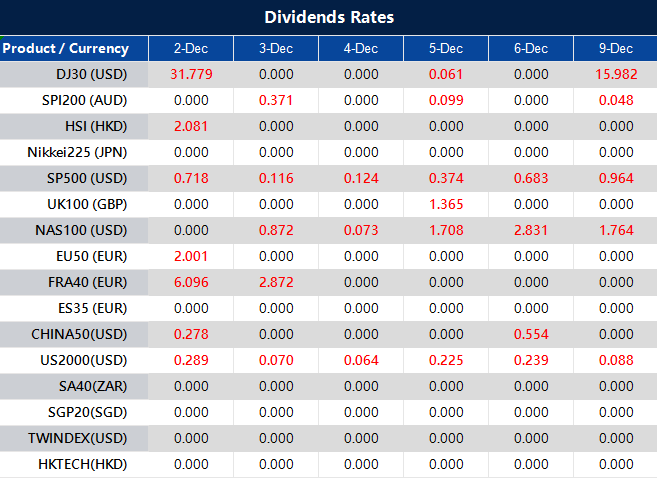
Dividend Adjustment Notice – Dec 2,2024

Dear Client,

Please note that the dividends of the following products will be adjusted accordingly. Index dividends will be executed separately through a balance statement directly to your trading account, and the comment will be in the following format “Div & Product Name & Net Volume ”.

Please refer to the table below for more details:

The above data is for reference only, please refer to the MT4/MT5 software for specific data.

If you’d like more information, please don’t hesitate to contact info@vtmarkets.com.

Trading Risk Management Tools & Strategies

Essential Trading Risk Management Tools & Strategies for Traders

In this article, discover the types of trading risks, what they are, how they impact your trades, and how effective risk management tools and strategies can help you mitigate potential losses and enhance your trading strategy.

What is Risk Management?

Risk management is the process of identifying, assessing, and controlling potential threats to your financial assets. In trading, it’s a crucial practice that ensures no single event or market downturn can jeopardise your capital. Effective trading risk management creates a buffer between traders and the unpredictable nature of financial markets, which is essential for long-term success and stability.

What is Risk Management in Trading?

Risk management in trading refers to the strategies and tools designed to minimise losses while maximising gains. By setting predefined rules for entering and exiting trades, traders can maintain control over their portfolios, regardless of market volatility. For example, a trader using stop-loss orders to cap potential losses ensures they don’t overexpose themselves to market risks. Key elements of risk management in trading include understanding market volatility, using risk-reward ratios, and diversifying investments to spread exposure.

The Importance of Trading Risk Management

Implementing trading risk management strategies is essential for preserving your financial stability and emotional well-being as a trader. Without effective risk management, even the most profitable strategies can fail due to unexpected market events.

Capital Preservation: Safeguarding your capital ensures you can continue trading, even during losing streaks.

Long-term Sustainability: Traders who effectively manage risk can withstand market downturns and capitalise on favourable opportunities later.

Emotional Discipline: Clear rules in trading and risk management prevent impulsive decisions driven by fear or greed, helping traders stay focused on their long-term goals.

Types of Trading Risk Management Tools

Understanding each type of trading risk management tool helps traders manage risks effectively, safeguard capital, and make informed decisions in volatile markets. Each tool offers unique benefits, helping traders stay disciplined and minimise exposure to risks.

1. Stop-loss Orders

A stop-loss order automatically closes a trade when the price reaches a predetermined level, limiting potential losses. This tool is essential for controlling risk in volatile markets.

Example: A trader might set a stop-loss 30 pips below their entry point in a forex trade to prevent substantial losses if the market moves unfavourably. It ensures traders do not have to constantly monitor positions, thus protecting their capital from significant downturns.

2. Position Sizing Calculators

Position sizing calculators help traders determine the optimal trade size based on their risk tolerance, stop-loss level, and overall account size.

Position Size = Account Risk ÷ (Stop Loss × Tick Value)

This tool ensures traders avoid overexposure by calculating the right size of each trade, ensuring that no single position risks too much of their account balance.

Example: If a trader wants to risk 2% of a $10,000 account on a trade with a 50-pip stop loss, the calculator will help determine the correct position size to adhere to risk management rules.

3. Take-profit Orders

Take-profit orders automatically close a trade once a predefined profit level is reached. This tool locks in gains without requiring traders to monitor the market constantly.

Example: A trader sets a take-profit order at $1,000 profit from a long gold position. When the price hits that level, the position is automatically closed, securing the profits even if the trader is away from their desk.

4. Diversification

Diversification involves spreading trading capital across various instruments or asset classes, reducing the risk of a large loss from a single trade or market. A diversified portfolio might include forex pairs, stocks, commodities, or even cryptocurrency. By distributing investments, traders can mitigate risks, especially when one market is highly volatile. 

Example: A trader might invest in both stock indices and commodities to mitigate risks from market corrections or sector-specific downturns.

5. Trailing Stops

A trailing stop adjusts the stop-loss level as the market moves in the trader’s favour, locking in profits while leaving room for further gains.

Example: In a rising stock market, a trader might set a trailing stop 5% below the highest price achieved. This ensures profits are captured while protecting against sudden reversals.

6. Hedging

Hedging is a risk management strategy where traders take positions in correlated assets to offset potential losses in their primary positions. 

Example: A trader long on EUR/USD may hedge their position by taking a short position in GBP/USD, as both currencies often move similarly. Hedging can reduce risk exposure, although it may also limit potential profits.

7. Risk-Reward Ratio

The risk-reward ratio helps traders evaluate the potential profit versus the potential loss in any given trade. A favourable risk-reward ratio allows traders to ensure their potential reward justifies the risk they are taking.

Example: A common rule is to aim for a 1:2 risk-reward ratio, meaning a trader risks $100 to potentially make $200. This tool helps traders evaluate whether a trade is worth entering based on the potential reward compared to the possible loss.

8. Guaranteed Stop-loss Orders (GSLOs)

A guaranteed stop-loss order (GSLO) ensures that a position is closed at the exact price level specified, even in the case of extreme market fluctuations or slippage.

Example: If a trader sets a GSLO at 1.2000 for GBP/USD and the market opens at 1.1900 due to overnight volatility, the GSLO ensures the position is closed at 1.2000, eliminating the risk of slippage. GSLOs often come with an additional fee but provide a higher level of protection, particularly during volatile periods.

8 Types of Risk

Traders face multiple types of risks in the financial markets. Understanding these risks and employing tailored solutions is vital.

Market Risk: Market risk is the potential loss from adverse price movements across assets like stocks, forex, or commodities. For example, a sudden market dip could result from a poor earnings report or unexpected central bank announcements. Effective trading risk management helps manage this risk by setting predefined entry and exit points.

Liquidity Risk: Liquidity risk occurs when a trader can’t execute a trade at the desired price due to a lack of market participants. This is more common with thinly traded assets or during off-peak hours. Risk management trading tools, like position sizing and stop-loss orders, help reduce this risk by setting appropriate trading limits.

Leverage Risk: Leverage risk arises when traders use borrowed funds to increase market exposure. While leverage amplifies potential gains, it also magnifies losses. Risk management trading helps limit this risk by using lower leverage ratios and tools like stop-loss orders to protect capital.

Credit Risk: Credit risk is the chance that a counterparty, such as a broker, fails to meet its financial obligations. For example, if a broker defaults, traders may face difficulty closing positions. Using trading risk management tools like GSLOs and working with regulated brokers can help mitigate credit risk.

Operational Risk: Operational risk involves losses due to technical issues, like platform outages or human error. Traders can manage this risk by using reliable platforms and maintaining a stable internet connection during critical trading periods.

Regulatory Risk: Regulatory risk is the uncertainty created by changes in laws or trading regulations. These shifts can disrupt trading strategies, such as limits on leverage or trading restrictions. Staying informed about regulatory updates is essential for effective trading and risk management.

Political Risk: Political risk arises from geopolitical events like elections, trade wars, or policy changes. For example, the Brexit referendum caused GBP/USD volatility. Diversification and hedging can help manage political risk by reducing exposure to one event or region.

Emotional Risk: Emotional risk stems from psychological factors like fear or greed, causing poor trading decisions. Risk management in trading involves setting clear rules, sticking to plans, and using tools like stop-loss orders to avoid emotional decisions that can lead to significant losses.

Types of Risk Potential Solution
Market RiskUse stop-loss orders to cap potential losses and diversify your portfolio across different assets.
Liquidity RiskFocus on trading highly liquid assets such as major forex pairs or blue-chip stocks.
Leverage RiskUse leverage conservatively and align it with your risk tolerance and account size.
Credit RiskChoose brokers with strong regulatory oversight and segregated client accounts.
Operational RiskUse reliable trading platforms, maintain backup internet connections, and double-check order details before execution.
Regulatory RiskStay updated on regulatory developments and diversify trading instruments to reduce exposure to specific markets.
Political RiskMonitor geopolitical news and hedge against potential risks using safe-haven assets like gold.
Emotional RiskStick to a trading plan, use automated tools like stop-losses, and maintain a trading journal to improve discipline.

Conclusion

Trading risk management is not just a protective measure; it is the foundation of a sustainable trading journey. By using tools like stop-loss orders, diversification, and position sizing, traders can navigate volatile markets with confidence and discipline.

Understanding and applying risk management strategies ensures that even when losses occur, they are manageable and do not jeopardise your trading goals. Every trade becomes an opportunity to grow within a controlled framework, safeguarding your financial future.

How to Start Your Trading Journey with VT Markets

Start trading with a reliable broker like VT Markets can set you up for success. VT Markets provides access to advanced trading platforms such as MT4 and MT5, equipped with built-in risk management tools like stop-loss and take-profit orders.

Whether you’re trading forex, indices, or commodities, VT Markets offers resources and educational materials to help you master trading and risk management. With transparent pricing, competitive spreads, and customer support, VT Markets ensures a seamless and professional trading experience.

If you’re not ready to dive into the live market yet, open a demo account with VT Markets. Safeguard your capital and practice trading with confidence in a risk-free environment.

Frequently Asked Questions (FAQs)

1. What is risk management in trading?

Risk management in trading involves using techniques and strategies to minimize potential losses while maximizing profits. It includes methods such as setting stop-loss orders, diversifying investments, and using proper position sizing to protect your capital.

2. What are the best risk management tools for traders?

The best risk management tools include:

  • Stop-loss orders
  • Position sizing calculators
  • Take-profit orders
  • Diversification
  • Trailing stops
  • Hedging
  • Risk-reward ratio
  • Guaranteed stop-loss orders (GSLOs)

These tools help control risk and maintain a balanced trading approach.

3. How does leverage impact risk management in trading?

Leverage amplifies both potential profits and losses. Using high leverage increases the risk of substantial losses, especially in volatile markets. It’s essential to use leverage carefully and ensure proper risk management strategies are in place to mitigate its effects.

4. What is a risk-reward ratio?

The risk-reward ratio compares the potential risk of a trade with the potential reward. A common rule is to aim for a risk-reward ratio of 1:2, meaning you’re willing to risk $1 to potentially make $2. Setting a favorable risk-reward ratio can help improve long-term profitability.

5. How can I use stop-loss orders effectively?

A stop-loss order is one of the most powerful tools in risk management trading. It automatically closes a position when the price hits a predetermined level, preventing further losses. Use it to protect against large market swings and to ensure that losses do not exceed your risk tolerance.

6. How do I set a stop-loss order?

To set a stop-loss order, choose a price level at which you want your trade to close if the market moves against you. This can be based on a specific percentage of loss you’re willing to tolerate or technical levels, like support or resistance points.

7. Can I manage risk in volatile markets?

Yes, managing risk in volatile markets is critical. Use tight stop-loss orders, reduce leverage, and stay informed on market-moving news. Additionally, diversifying your trades and employing risk-reward strategies can help you navigate highly volatile conditions.

Holiday trading decoded: Turn festive volatility into success

The financial markets don’t take holidays—and neither should your trading strategy. While most traders are unwrapping presents and planning festive meals, a staggering 87% are unknowingly navigating a complex landscape of market volatility. The holiday season isn’t just a break from work; it’s a critical period that can either preserve your hard-earned gains or expose your portfolio to unexpected risks.

Understanding holiday market dynamics

Holidays are far more than just days off; they are complex economic events that can dramatically reshape financial markets. The intricate web of global trading systems creates a nuanced landscape where national, religious, and international holidays intersect to produce unique market conditions that can challenge traders.

Take the Chinese New Year as a prime example. This holiday can cause significant disruptions in Asian markets, with trading volumes in Hong Kong and Shanghai dropping by up to 50%, while simultaneously creating ripple effects in global commodity markets such as copper, iron ore, and agricultural commodities.

The global nature of financial markets creates a fascinating trading environment where market liquidity and volatility can shift dramatically. While the New York Stock Exchange might be closed for Thanksgiving, European markets could be fully operational, and Asian markets might be experiencing their own unique trading patterns. This asynchronous global market creates a unique challenge for traders who must simultaneously monitor multiple economic zones.

Market research reveals compelling insights into holiday trading patterns. During major holidays, trading volumes can plummet by up to 40-60%, with liquidity reduction typically occurring one to two days before and after significant holiday periods. Market volatility can increase by 25-35% during these uncertain trading windows, presenting both challenges and opportunities for astute traders.

The period between Christmas and New Year’s Day historically demonstrates particularly unique market characteristics. Many institutional investors reduce their trading activities, leading to lower volumes but potentially higher price sensitivity. In recent years, this period has seen some of the most unpredictable market movements, with some indices experiencing more significant price swings in these few days than in entire months of standard trading.

Specific holiday trading challenges

Professional traders understand that holidays are not simply days to step away from the market—they are opportunities and potential pitfalls that require strategic navigation. Reduced market liquidity becomes a critical concern during these periods, with trading activity dramatically diminishing and creating a complex environment for traders.

When market participation declines, traders face several significant challenges

  • Wider bid-ask spreads: With fewer participants, the gap between the buying and selling price widens, making it more expensive to enter and exit trades. This can erode profits or increase losses for traders who don’t account for these costs. 
  • Increased price volatility: Price movements during holidays are often more pronounced as fewer trades amplify the impact of individual transactions, leading to sudden and unpredictable price swings. 
  • Higher risk of market manipulation: Thin liquidity can make markets more susceptible to large players influencing prices, leaving non-professional traders vulnerable to sudden reversals.
  • Delayed trade execution: Reduced activity may result in slower order processing, potentially causing traders to miss their intended price levels. 

A clear example of these dynamics occurred during December 2018, when the S&P 500 dropped 9% amidst economic uncertainty, compounded by holiday trading conditions.

Understanding these holiday-specific market behaviours is essential for any trader looking to navigate this complex period effectively.

Practical strategies for holiday trading

Navigating holiday trading requires a multifaceted approach. Risk management becomes paramount, with traders needing to implement strategic techniques to protect their investments. This includes reducing position sizes, using tight stop-loss orders, and keeping a close eye on global economic calendars to anticipate significant events.

Preparation is equally important. Traders should review historical market behaviours to identify trends, such as increased volatility around economic data releases during holidays or potential anomalies like sudden price reversals. For example, certain commodities, such as gold and oil, may experience heightened sensitivity to global events during holiday periods due to fewer active traders.

Modern trading platforms can support holiday trading strategies by offering features such as customisable price alerts, automated stop-loss settings, and market sentiment indicators, which allow traders to stay informed and respond quickly to market changes.

Timing is also a critical factor. Traders may benefit from focusing on periods of increased activity within the day, such as during overlapping trading sessions for major markets, to avoid the risks associated with extremely thin liquidity. Additionally, being mindful of differing holiday schedules across global markets can help traders align their strategies with expected activity levels in key regions.

By combining diligent preparation with advanced tools, traders can better navigate the challenges and opportunities unique to holiday trading.

Turning challenges into opportunities

Holiday trading isn’t about avoiding the market—it’s about understanding and strategically navigating its unique dynamics. By recognising potential challenges and implementing robust risk management strategies, traders can transform holiday trading from a potential minefield into a calculated opportunity.

Successful trading requires continuous learning and strategic adaptation. The most effective traders view holidays not as obstacles, but as another chapter in their trading narrative. They remain informed, technologically equipped, and emotionally disciplined.

Ultimately, success in holiday trading comes down to preparation, awareness, and a willingness to adapt. Stay informed about global market conditions, leverage technological tools, and never stop refining your approach.

Ready to take the next step? Open a live account with VT Markets today and turn your holiday trading insights into actionable opportunities.

What is Pip in Forex Trading & Why They Matter?

Understand What Pips Are in Forex Trading

Understanding what pips are in forex trading is essential for every forex trader. Pips are a cornerstone of forex market analysis, and mastering them can dramatically improve your trading success. In this comprehensive guide, we explain what a pip is in forex, how pip trading works, and how you can leverage this knowledge to enhance your forex strategies.

Find out the 9 best forex trading strategies & techniques.

What Are Pips in Forex Trading? 

A pip (percentage in point) is the smallest unit of price movement in a currency pair. It is a crucial concept in pips trading, as it quantifies price fluctuations. For most currency pairs, what pips are in trading refers to a change of 0.0001 in the exchange rate. However, for currency pairs involving the Japanese yen (JPY), the pip value is calculated to two decimal places (0.01).

Example: If the EUR/USD moves from 1.1050 to 1.1051, that’s a 1-pip movement. This may seem like a small change, but understanding it is crucial for making informed decisions on trade entries and exits.

How Does Pip Work? 

In pips trading, every pip movement represents a shift in the price of a currency pair, influencing potential profits or losses. The key to successful forex trading is predicting whether the price will rise or fall by a specific number of pips. Traders can capitalise on these small price fluctuations, especially when using leverage.

Each pip movement can represent a potential profit or loss, depending on the size of the trader’s position. While the pip itself is a small unit of change, the impact on profit or loss can be significant, especially when trading with leverage.

Example: If you enter a long position on the EUR/USD at 1.1050 and the price rises to 1.1060, that’s a 10-pip gain. With a standard lot of 100,000 units, this could mean a profit of $100, as each pip in EUR/USD is roughly worth $10.

How to Use Pips in Forex Trading

Pips are essential for determining how much profit or loss a trader makes in a given trade. When you open a position in pips trading, you use pips to gauge the change in the value of the currency pair you’re trading. Here’s how to use pips effectively:

1. Setting Stop-Loss and Take-Profit Levels:

Traders often use pips to set stop-loss and take-profit orders. For example, a trader may place a stop-loss order 20 pips below the entry point and a take-profit order 40 pips above the entry point, setting clear risk-to-reward ratios.

2. Managing Risk

Knowing how many pips your trade has moved can help you decide whether to stay in the trade or close it. For instance, if a trade moves against you by 50 pips, it could be time to re-evaluate your position and limit potential losses.

3. Position Sizing

Understanding the value of pips is crucial for position sizing. By adjusting your position size, you control how much you gain or lose per pip movement. This helps you manage your capital efficiently.

How to Calculate the Value of a Pip

The value of a pip depends on the currency pair you’re trading, the size of your position, and the exchange rate at the time of the trade. For most currency pairs, calculating pip value involves the following formula:

Pip Value = (One Pip / Exchange Rate) × Position Size

Let’s break this down with an example. If you’re trading the EUR/USD pair, where the exchange rate is 1.1050 and your position size is 10,000 units (1 micro lot), the pip value is:

Pip Value = (0.0001 / 1.1050) × 10,000 = $0.90

This means that for every 1-pip movement in the EUR/USD, your profit or loss will be $0.90. Understanding how to calculate the value of a pip allows traders to make more precise and informed decisions.

Real-Life Example of Pips in Forex Trading

Let’s explore a real-world example of what pips are in forex and how pips trading works in practice.

Imagine you’re trading the USD/JPY pair. You enter a position at 110.00 with a standard lot size (100,000 units). If the price moves from 110.00 to 110.50, this is a 50-pip move. Each pip in USD/JPY is worth approximately $9.09, so a 50-pip move would result in:

Profit = 50 pips × $9.09 = $454.50

In this example, you’ve made a profit of $454.50 from a 50-pip movement. This demonstrates how pips trading can lead to meaningful profits, especially when large positions and leverage are involved.

In Summary

Understanding what pips are in forex trading is essential for success in the forex market. By knowing how to leverage pips trading, traders can track price movements, manage risks, and optimise their trading strategies for better outcomes. Whether you’re new to forex or an experienced trader, mastering pips trading is key to navigating the complexities of the market.

Why Trade Forex with VT Markets?

When it comes to pips trading, having a reliable trading platform is essential. VT Markets offers an excellent environment for forex traders to capitalise on small price movements and manage their trades effectively.

Competitive Spreads: With competitive spreads, VT Markets allows traders to maximise their profits from even small pip movements.

Reliability: When it comes to pips trading, selecting a reliable platform is critical. VT Markets offers a robust and safe environment for traders to capitalise on price movements and manage their positions effectively.

Cutting-Edge Tools: VT Markets provides a suite of tools for technical analysis, real-time data, and risk management, which can help you track pip movements and execute trades more efficiently.

Customer Support: VT Markets offers expert customer service and comprehensive trading education to help traders navigate the market and manage their positions effectively.

Not ready to dive in yet? Start trading with a demo account at VT Markets today and practice your strategies risk-free!

Frequently Asked Questions (FAQs) 

1. What is a pip in forex trading?

A pip is the smallest price movement in the forex market. For most currency pairs, it is 0.0001, representing a change of one one-hundredth of a percent. For pairs involving the Japanese yen, a pip is 0.01.

2. What is spread trading?

Spread trading involves taking advantage of the difference between the bid and ask prices of an asset. In forex trading, the spread is measured in pips, and traders look to profit from the price movement in either direction.

3. How do I calculate pip value?

To calculate the pip value, use the formula:

Pip Value = (One Pip / Exchange Rate) × Position Size

4. Why are pips important in forex trading?

Pips are vital for measuring price movements in forex trading. They help traders assess market volatility, manage risk, and determine potential profits or losses on trades.

5. Can I trade fractional pips?

Yes, some brokers offer fractional pips (also known as pipettes), which are one-tenth of a pip. This feature allows traders to trade more precisely and benefit from tighter spreads.

6. How do pips affect profit and loss in forex trading?

In forex trading, the value of each pip movement directly impacts your profit or loss. By calculating the pip value, traders can better understand how price fluctuations will affect their positions and adjust their strategies accordingly.

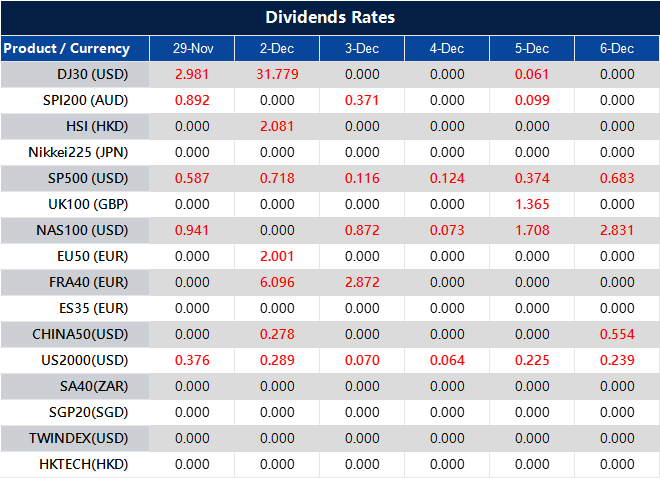
Dividend Adjustment Notice – Nov 29,2024

Dear Client,

Please note that the dividends of the following products will be adjusted accordingly. Index dividends will be executed separately through a balance statement directly to your trading account, and the comment will be in the following format “Div & Product Name & Net Volume ”.

Please refer to the table below for more details:

The above data is for reference only, please refer to the MT4/MT5 software for specific data.

If you’d like more information, please don’t hesitate to contact info@vtmarkets.com.

What is Spread in Trading & How Does it Work?

Understand What is Spread in Trading

In this article, let’s discover the meaning of spread, what spread is in trading, how spread trading works, the different types of spreads, and the factors that influence the spread in the market.

Spread Meaning: What is Spread?

A spread refers to the difference between the bid price (the price a buyer is willing to pay) and the ask price (the price a seller is willing to accept) for an asset. This difference determines the cost of entering or exiting a trade in financial markets like forex, stocks, or commodities. Essentially, what is spread in trading terms can be viewed as the implicit cost a trader incurs when they open or close a position. The size of the spread can vary depending on the asset, market conditions, and the broker’s pricing model.

What is Spread in Trading?

When we talk about what is spread in trading, we are referring to the cost of executing a trade, specifically the difference between the buying price (ask) and the selling price (bid) of an asset. This spread is crucial for traders to understand because it represents the initial cost to enter a trade. The spread in trading can vary due to several factors such as liquidity, volatility, and the asset being traded. For example, in the forex market, spread trading with a narrow spread is often preferred by high-frequency traders who seek quick price movements.

For example, if the EUR/USD currency pair is quoted with a bid of 1.1000 and an ask of 1.1005, the spread is 5 pips. This means the price must move at least 5 pips in your favour to overcome the spread cost and start making a profit.

How Does Spread Trading Work?

Spread trading involves taking positions on two related financial instruments to profit from the price difference between them. Traders don’t necessarily bet on the absolute price movements of an individual asset; instead, they trade the relative price movements between two instruments. This strategy helps mitigate risk while seeking profit from smaller price changes. The spread plays a crucial role in CFD trading, as it determines the cost of entering and exiting positions in these derivatives.

For example, a trader might engage in spread trading by buying EUR/USD while simultaneously selling GBP/USD. This strategy allows the trader to profit from the relative movement of the two currency pairs, rather than predicting the overall direction of the market.

How to Calculate the Spread

To calculate the spread price, subtract the bid price from the ask price. For instance, if the bid for EUR/USD is 1.1000 and the ask is 1.1005, the spread is 5 pips. This spread represents the cost of entering the trade. When trading with brokers offering tight spreads, you may reduce your overall trading costs, especially if you’re engaging in high-frequency spread trading.

Spread Price = Ask Price − Bid Price

Spread Price = 1.1005 (Ask Price) − 1.1000 (Bid Price) = 0.0005 (5 pips)

So, the spread price is 5 pips. This is the cost you pay to enter a trade with that currency pair.

Example: A trader considering two forex brokers finds that Broker A offers a 1-pip spread on EUR/USD, while Broker B offers a 3-pip spread. By choosing Broker A, the trader saves on trading costs, which can make a difference over multiple trades, especially for traders involved in spread trading.

Types of Spreads

1. Bid-Ask Spread

The bid-ask spread is the most common type of spread in spread trading. It refers to the difference between the price at which you can buy (ask) and the price at which you can sell (bid) an asset. This spread is a direct cost to traders and represents the liquidity in the market. A narrower bid-ask spread typically indicates higher liquidity, while a wider spread suggests lower liquidity.

2. Options Spread

An option spread refers to a strategy in options trading where a trader simultaneously buys and sells options of the same underlying asset but with different strike prices or expiration dates. There are several types of option spreads, including vertical spreads, horizontal spreads, and diagonal spreads, each with its own risk/reward profile. Traders use option spreads to hedge or limit risk.

3. Yield Spread

A yield spread is the difference in yields between two fixed-income securities, such as government bonds or corporate bonds. Yield spreads can reflect the perceived risk or credit quality difference between the two securities. For instance, the yield spread between US Treasury bonds and corporate bonds often increases as investors demand higher returns for taking on more risk.

4. Z-Spread

The Z-spread is a measure of the spread over the benchmark risk-free rate (usually US Treasury securities) that an investor requires to compensate for the risk of a particular bond. This spread takes into account the credit risk and liquidity of the bond, providing a more accurate picture of the yield compared to other spreads.

5. Credit Spread

A credit spread is the difference in yield between two bonds of similar maturity but different credit quality. This spread is used to measure the risk premium that investors require for taking on lower-rated debt. For example, the spread between a corporate bond and a government bond of the same maturity reflects the additional risk of investing in corporate debt.

Factors Affecting Spread in Trading

Liquidity: Liquidity refers to how easily an asset can be bought or sold in the market without affecting its price. Higher liquidity typically leads to narrower spreads because there are more participants willing to buy and sell, making the market more efficient. For example, the EUR/USD forex pair has high liquidity, resulting in a smaller bid-ask spread compared to more illiquid pairs.

Volatility: Volatility represents the price fluctuations of an asset over time. During periods of high volatility, spreads can widen because of increased market uncertainty and risk. When significant economic news or geopolitical events cause sharp price movements, brokers may increase spreads to protect themselves from potential losses.

Volume: The volume of trades executed in a market also affects the spread. Higher trading volume typically leads to smaller spreads as more buyers and sellers are actively participating. Conversely, during times of low volume or outside major trading hours, spreads may widen due to fewer participants in the market.

In Summary

Spread trading is a strategy that can offer significant advantages for traders, particularly when aiming to profit from price differences between related instruments or when managing risk. Understanding what spread means, including the various types of spreads such as bid-ask spreads, option spreads, and credit spreads, is key to effectively using spread trading strategies. By calculating the spread and factoring it into your trade decisions, you can better manage your trading costs and enhance your potential for success.

Why Trade with VT Markets?

VT Markets offers competitive spreads, a wide range of financial instruments, and a fully regulated environment to help traders optimize their strategies and maximize profitability. With MetaTrader 4 (MT4) and MetaTrader 5 (MT5), you can access advanced tools, real-time market analysis, and tight spreads to enhance your trading experience. If you’re not ready to trade in the live market, try out the VT Markets demo account to practice and build confidence before diving into the market!

Start trading today and benefit from these powerful platforms with VT Markets.

Frequently Asked Questions (FAQs)

1. What is spread in trading?

The spread in trading is the difference between the bid and ask prices of an asset. It represents the cost of executing a trade and is a key factor in determining transaction costs.

2. How does spread trading work?

Spread trading involves simultaneously buying and selling related securities to profit from the difference in their prices. Traders aim to benefit from the change in the spread between the two positions.

3. What factors influence the spread in trading?

Several factors can affect the spread, including:

  • Liquidity: Higher liquidity typically results in narrower spreads.
  • Market volatility: Increased volatility can widen spreads.
  • Trading volume: Higher trading volumes often lead to tighter spreads.

4. Can I reduce the spread in trading?

To minimize the impact of spreads:

  • Trade during peak market hours: When liquidity is higher, spreads tend to be narrower.
  • Choose assets with high trading volumes: These assets usually have tighter spreads.
  • Select brokers with competitive spreads: Compare brokers to find those offering favorable spread conditions.

5. How is the spread calculated in trading?

The spread is calculated by subtracting the bid price from the ask price of an asset. For example, if the bid price is 1.2050 and the ask price is 1.2055, the spread is 5 pips.

Back To Top
server

Hello there 👋

How can I help you?

Chat with our team instantly

Live Chat

Start a live conversation through...

  • Telegram
    hold On hold
  • Coming Soon...

Hello there 👋

How can I help you?

telegram

Scan the QR code with your smartphone to start a chat with us, or click here.

Don’t have the Telegram App or Desktop installed? Use Web Telegram instead.

QR code