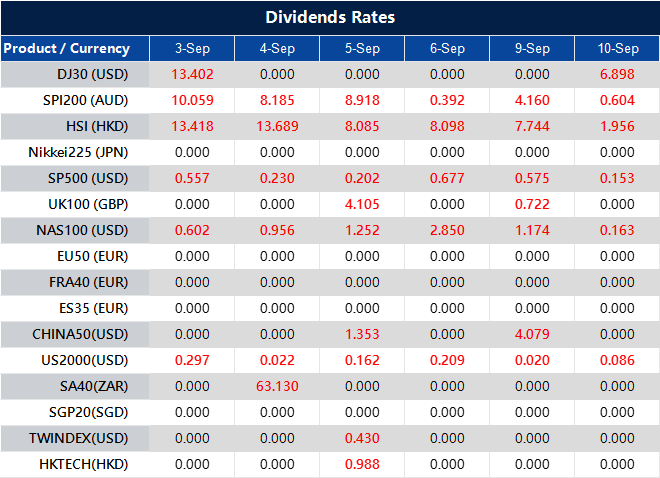
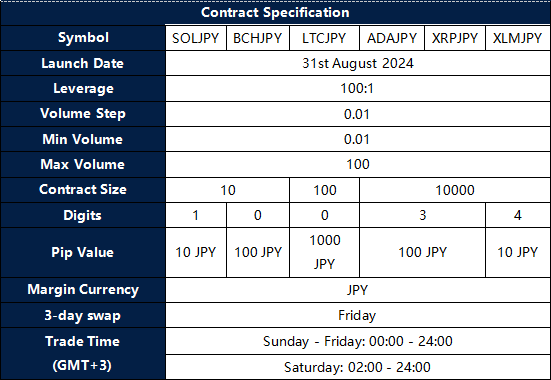
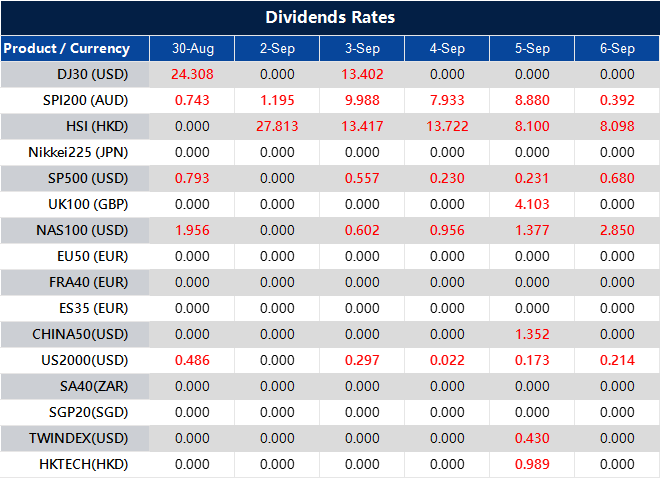
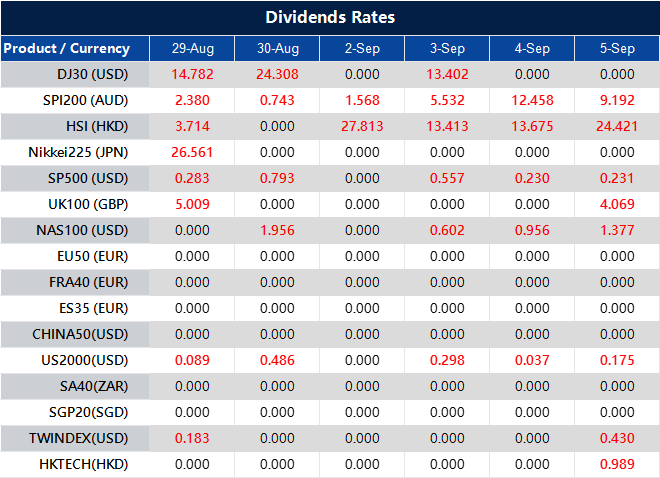
Please note that the dividends of the following products will be adjusted accordingly. Index dividends will be executed separately through a balance statement directly to your trading account, and the comment will be in the following format “Div & Product Name & Net Volume ”.
Please refer to the table below for more details:
The above data is for reference only, please refer to the MT4/MT5 software for specific data.
If you’d like more information, please don’t hesitate to contact info@vtmarkets.com.
Written on September 3, 2024 at 7:41 am, by anakin
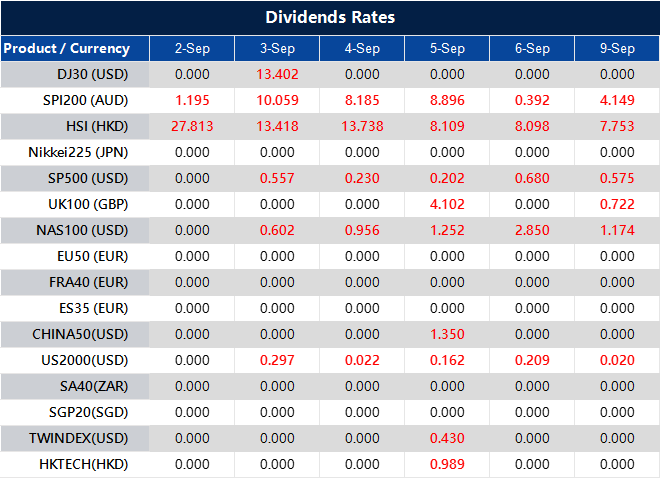
Please note that the dividends of the following products will be adjusted accordingly. Index dividends will be executed separately through a balance statement directly to your trading account, and the comment will be in the following format “Div & Product Name & Net Volume ”.
Please refer to the table below for more details:
The above data is for reference only, please refer to the MT4/MT5 software for specific data.
If you’d like more information, please don’t hesitate to contact info@vtmarkets.com.
Written on September 2, 2024 at 7:40 am, by anakin
This is particularly true if you are active in the financial markets.
Imagine you are just starting your day, coffee in hand, casually scrolling through the latest news on your phone. Suddenly, you see a headline.
“Jerome Powell, the Chair of the Federal Reserve, is set to deliver a speech.”
To many, this might seem like just another financial update, something for economists and bankers to worry about. But for a savvy CFD trader like you, these words could be a goldmine, or a trap.
Yes, you read that right. Jerome Powell’s words hold immense power, and if you are trading CFDs, paying attention to his speeches can be the difference between capitalising on market opportunities and watching your trades go south.
The power behind the chair
Jerome Powell isn’t just another high-ranking official in Washington. As the Chairman of the United States Federal Reserve, he is one of the most influential figures in global finance. His words have the power to move markets, alter economic outlooks and influence the direction of entire industries.
For CFD traders, this influence is particularly important, as CFDs allow you to speculate on the price movement of assets like forex, commodities, indices, and stocks without owning the underlying asset. This means you can profit from both rising and falling markets, but only if you know which way the market is headed. And that is where Powell comes in.
How Powell’s words move markets
When Jerome Powell speaks, the markets listen intently. His statements about interest rates, inflation and economic policy can send shockwaves through financial markets worldwide. A hint of a rate hike can lead to a surge in the US dollar, while a suggestion of economic slowdown might trigger a sell-off in stock markets.
For CFD traders, these market reactions are opportunities. But to seize them, you need to be able to anticipate how the markets will respond to Powell’s words. Here is how his statements can influence different aspects of CFD trading.
Interest rates and forex CFDs
Interest rates are a key factor in forex trading. When Powell hints at raising rates, it typically strengthens the US dollar because higher interest rates attract foreign investors seeking better returns. For CFD traders, this could mean adjusting positions on currency pairs, capitalising on the movement of the US dollar.
On the other hand, if Powell suggests a rate cut, the US dollar might weaken, creating opportunities to profit from pairs like EURUSD or GBPUSD. Understanding these signals and acting quickly can make all the difference in your trading outcomes.
Stock indices and Powell’s economic outlook
Powell’s speeches often touch on the broader economic outlook, which can have a significant impact on stock indices like the S&P 500 or the NASDAQ. Positive remarks about economic growth or controlled inflation might boost market sentiment, leading to a rally in stock indices. CFD traders can leverage this by taking long positions on these indices.
Conversely, if Powell expresses concerns about economic headwinds or hints at aggressive tightening of monetary policy, stock markets could tumble. CFD traders who are prepared can profit from these declines by shorting the indices.
Commodities and inflation signals
Powell’s comments on inflation are closely watched by commodity traders. Inflation affects the value of commodities like gold, silver, and oil. For example, if Powell indicates that inflation is rising faster than expected, it might push gold prices higher as investors seek safe-haven assets.
CFD traders who catch these cues early can take long positions on commodities, benefiting from the price surge. Similarly, if Powell’s tone suggests that inflation is under control, it could lead to a drop in commodity prices, presenting shorting opportunities.
Timing is everything
In CFD trading, timing is critical. Markets react almost instantly to Powell’s speeches, and by the time a news outlet distils his words, the initial market move might be over. This is why real-time analysis and quick decision-making are essential.
When trading CFDs, you are not just following market trends – you are predicting them. Powell’s speeches are often carefully worded to avoid spooking the markets, but even subtle shifts in tone can lead to significant price movements. As a CFD trader, being able to interpret these nuances gives you a competitive edge.
Staying ahead in the game
So, how can you effectively incorporate Powell’s insights into your CFD trading strategy? Here are a few tips:
Stay informed: Follow real-time updates and analyses from reliable financial news sources. The quicker you understand Powell’s statements, the faster you can act.
Understand the context: Powell’s words don’t exist in a vacuum. Consider what’s happening in the broader economy and how it might influence his decisions.
Align with your goals: Whether you’re trading forex, indices, or commodities, align Powell’s economic signals with your trading goals. Are you looking for short-term gains, or are you positioning for longer-term moves?
Don’t overreact: Markets can be volatile after Fed announcements. Make informed decisions based on a comprehensive view rather than reacting impulsively.
Powell’s words can determine your trading success
Jerome Powell’s words are more than just market-moving events – they are signals that can guide your CFD trading strategies. Whether you are navigating forex, commodities, or indices, understanding and anticipating the market reaction to Powell’s speeches can help you make more informed and profitable trades.
So, the next time Jerome Powell is set to speak, don’t just scroll past the headlines. Tune in, listen carefully, and use his insights to your trading advantage. In the world of CFD trading, staying ahead means paying attention to the words that matter, especially those from the Chair of the Federal Reserve.
The first week of September will mark a pivotal period in the financial markets, as investors navigated through a mix of economic data, corporate news, and global developments.
With summer officially behind us, the focus shifted to how the economy is shaping up heading into the final quarter of the year.
KEY ECONOMIC INDICATORS
Crude oil prices surge:
Crude oil prices surged during the week, driven by concerns over supply disruptions and tightening inventories. OPEC+ announced a continuation of production cuts, which pushed prices higher.
The energy sector benefited from this price increase, with energy stocks outperforming the broader market.
Looking ahead
With the Federal Reserve’s next meeting on the horizon, the strong job market data and rising oil prices may influence the central bank’s decisions on interest rates.
The mixed signals from various sectors and regions suggest that markets could remain volatile in the coming weeks.
U.S. job market shows resilience (NFP)
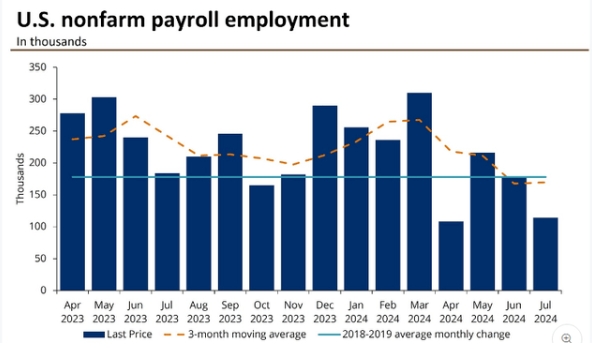
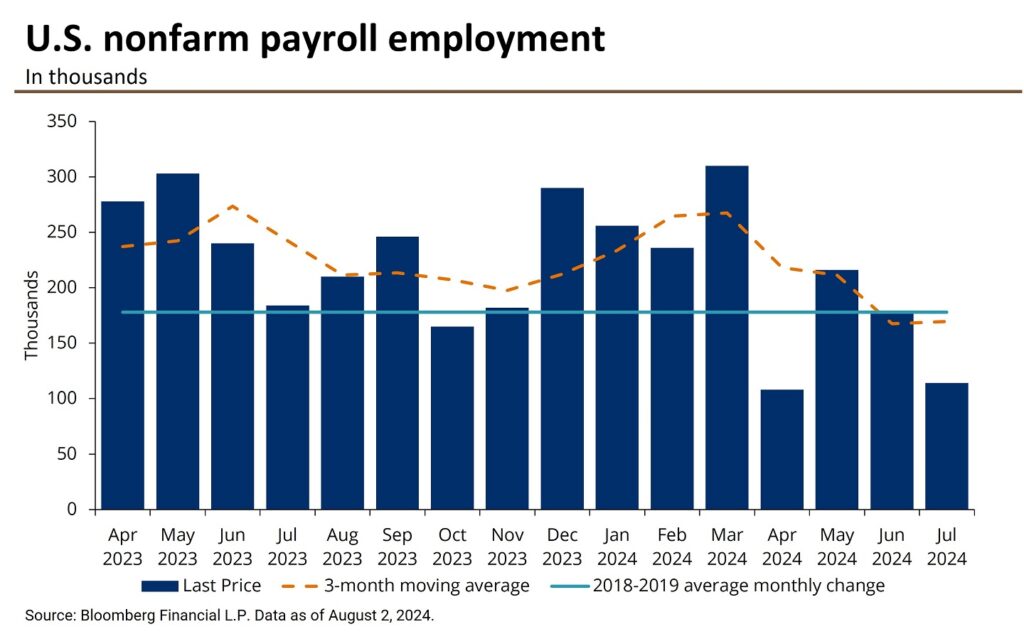
The US Bureau of Labor Statistics (BLS) reported on the First Friday in August that nonfarm payrolls (NFP) rose 114,000 in July.
This reading followed the 179,000 increase (revised from 206,000) recorded in June and fell short of the market expectation of 175,000.
It has become clear recently that the jobs market is slowing, as it was before the massive 818,000 downward jobs revision by the Bureau of Labor Statistics, or BLS, last week. Job openings fell to a three-year low in June of this year.
Then we got the dismal July BLS Jobs report on August 5th. It showed only 114,000 positions were created during the month of July. This was far below the consensus estimate of 174,000 jobs. In addition, the June jobs number was revised down by 27,000 positions to 179,000.
CURRENCIES
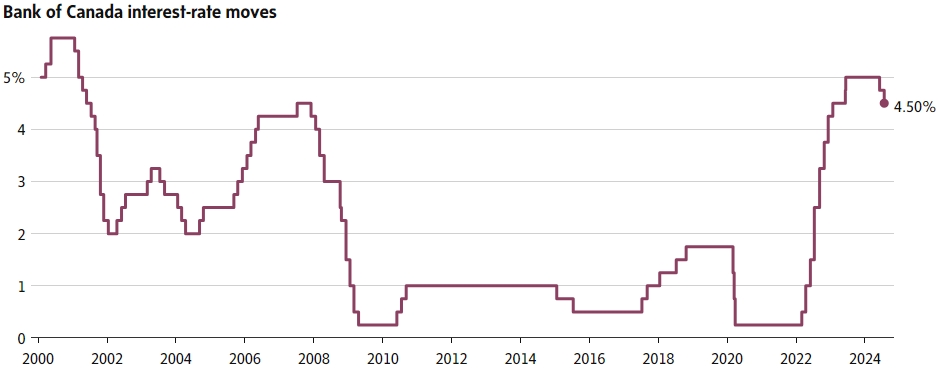
BoC (Bank of Canada) interest rate decision
Over the past three years, Canada – like many countries around the world – has experienced high inflation for the first time in decades.
The annual rate of CPI inflation started rising in the spring of 2021 and reached a peak of 8.1 per cent in June 2022. Inflation has fallen considerably over the past 18 months. The inflation rate rose to 2.9 per cent in March, slightly up from 2.8 per cent in February, but still within the bank’s 1 per cent to 3 per cent target range.
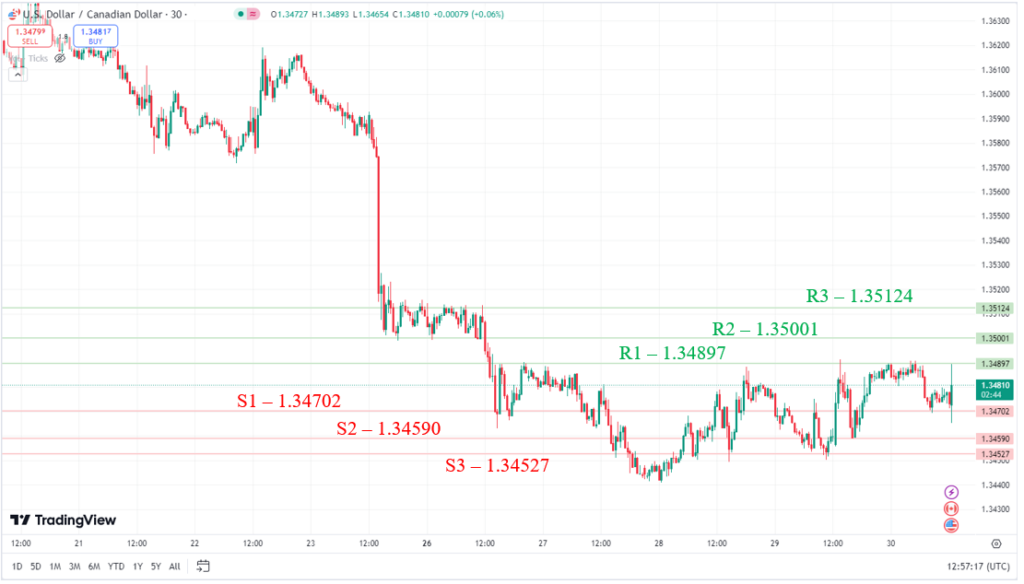
USD/CAD
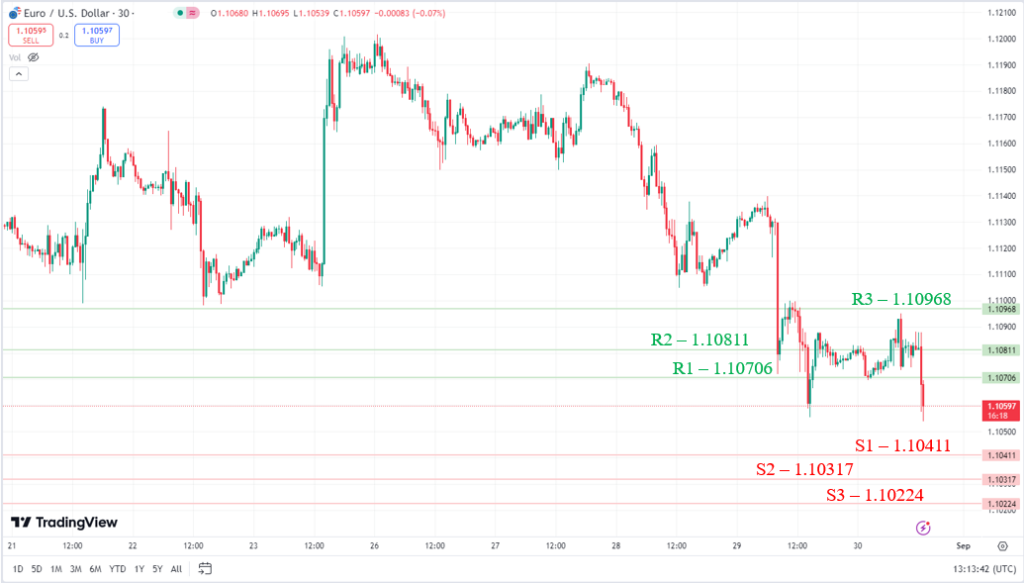
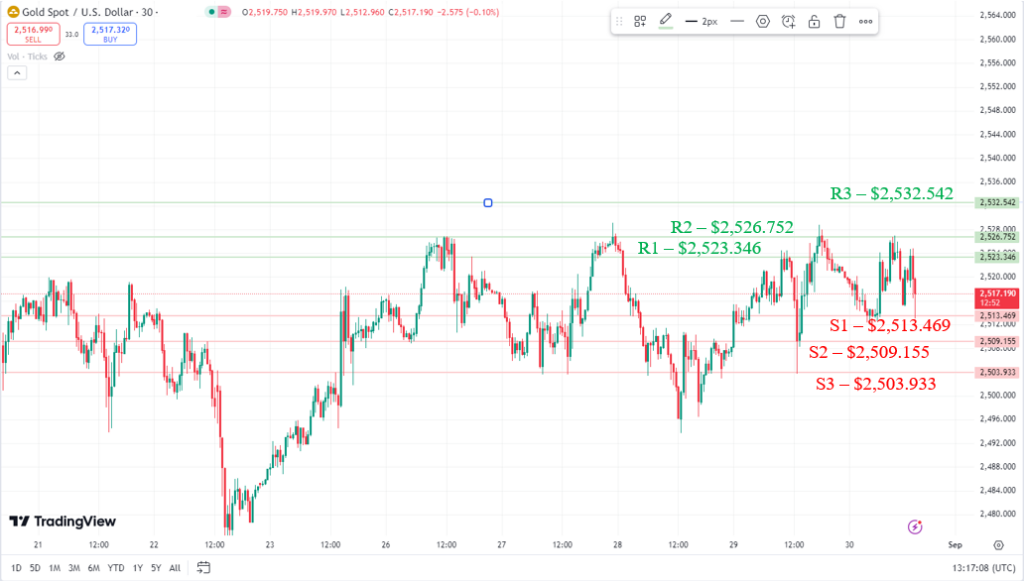
S1-S3 – Means potential Support points. If the market declines further, these are the potential levels it can reach.
R1-R3 – Means potential Resistance points. If the market starts to increase again, these are the potential levels it can reach.
NFP (Nonfarm Payroll)
The NFP Report is scheduled to be released this coming Friday, 06 September 2024.
Events since the last release of the Inventory Report:
US job growth revised down by 818,000
The Bureau of Labor Statistics’ recent revision showed that US job growth for the year ending in March 2024 was weaker than initially reported, with 818,000 fewer jobs added.
Upcoming BLS revisions could reveal slower US job growth
This new data might show that job growth was actually weaker than first reported. Economists think the number of jobs added could be revised down by 600,000 or more, meaning there were about 50,000 fewer jobs added each month on average.
US jobs growth slows sharply in July
The US economy added 114K jobs in July 2024, well below a downwardly revised 179K in June and forecasts of 175K. It is also the lowest level in three months, below the average monthly gain of 215K over the prior 12 months, signalling the labour market is in fact cooling off.
XAU/USD
Gold prices dip as PCE data looms; Set for strong August
Spot gold fell 0.3% to $2,514.55 an ounce
Gold futures expiring in December fell 0.5% to $2,547.80 an ounce by 01:08 ET (05:08 GMT).
Spot prices were set to gain about 2.8% in August after hitting a record high of $2,531.72 an ounce earlier in the month.
Among other precious metals, platinum and silver were mixed on Friday, but were vastly lagging gold through August.
Market instruments to look out for this week:
USD/CAD
EUR/USD
Nasdaq100
XAU/USD
S&P 500
NEWS HEADLINES
Annual PCE inflation unchanged at 2.5% in July – BEA
Overall annual U.S. inflation was unchanged in July, mainly cementing the U.S. Federal Reserve’s cut in interest rates in September.
According to data from the Bureau of Economic Analysis, the personal consumption expenditures (PCE) price index came in at 2.5% in July, unchanged from the prior month, and below the 2.6% expected.
Speaking at the Fed’s annual Jackson Hole symposium last week, Fed Chair Jerome Powell acknowledged recent progress on inflation and said that “the time has come for policy to adjust.”
Oil set for weekly gain on supply concerns
Brent crude futures for October delivery, which expire on Friday, were down 7 cents, or 0.09%, at $79.87 a barrel by 1041 GMT.
The more actively traded contract for November inched up 5 cents, or 0.06%, to $78.87.
U.S. West Texas Intermediate crude futures gained 6 cents, or 0.08%, to $75.97.
A day earlier, both benchmarks settled more than $1 higher and were up 1.1% and 1.6%, respectively, for the week so far.
Dollar set to snap 5-week losing run while yuan rallies
The dollar held steady near a one-week high versus major peers on Friday, on track to snap a five-week losing streak after robust economic data caused investors to pare bets on aggressive Federal Reserve interest rate cuts.
The U.S. dollar index was flat at 101.40 after rising 0.36% on Thursday and touching the highest since Aug. 22 at 101.58.
Traders see a September rate cut as a done deal but, after the data, laid only 34% odds of a 50-basis point cut, down from 38% a day earlier,
Spot yuan strengthened as far as 7.0825 per dollar before last changing hands at 7.0913, on track for a rise of around 2% for August.
Please note that the dividends of the following products will be adjusted accordingly. Index dividends will be executed separately through a balance statement directly to your trading account, and the comment will be in the following format “Div & Product Name & Net Volume ”.
Please refer to the table below for more details:
The above data is for reference only, please refer to the MT4/MT5 software for specific data.
If you’d like more information, please don’t hesitate to contact info@vtmarkets.com.
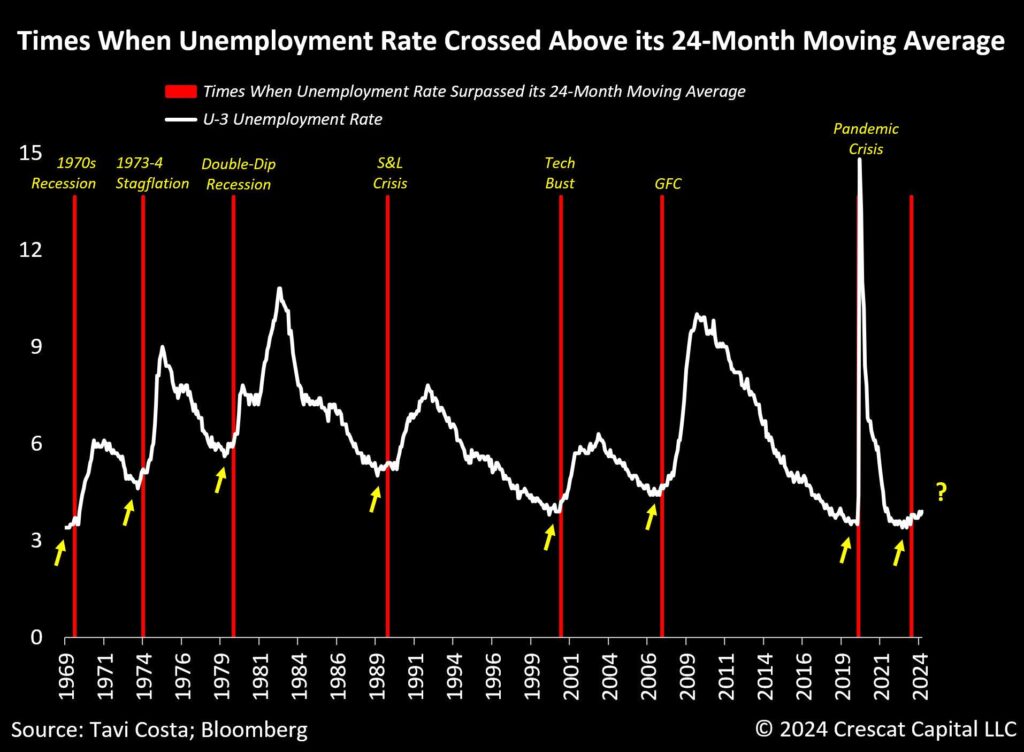
On 7 March 2024, the U.S. Bureau of Labor Statistics reported that the unemployment rate held steady at 3.9% in February, with 275,000 jobs added to the economy. As this news broke, the S&P 500 index jumped by 0.8% in early trading.
If you’ve ever wondered why stock markets react to employment figures, you’re not alone. The unemployment rate is a crucial economic indicator that can significantly impact financial markets. In this article, we will explore how unemployment rates influence various market sectors and asset classes, and what it means traders like you.
Understanding the unemployment rate
Before diving into its effects on the market, let’s clarify what the unemployment rate actually is. Simply put, it’s the percentage of the labour force that is jobless and actively seeking employment.
In the United States, the Bureau of Labor Statistics calculates this rate monthly, considering various factors to provide an accurate snapshot of the job market. In the UK, the Office for National Statistics performs a similar function.
There are three main types of unemployment:
1. Frictional: Short-term unemployment as people transition between jobs
2. Structural: Long-term unemployment due to shifts in the economy
3. Cyclical: Unemployment caused by economic downturns
The unemployment rate is a key economic indicator because it reflects the overall health of the economy. Low unemployment generally signals a strong economy, while high unemployment often indicates economic struggles.
The relationship between unemployment and market sectors
Different market sectors react uniquely to changes in unemployment rates. Let’s break down how some major sectors are affected:
Consumer discretionary
This sector, which includes retail, entertainment, and luxury goods, is highly sensitive to unemployment. When unemployment is low, people have more disposable income, boosting these companies’ performance. Conversely, high unemployment often leads to reduced consumer spending, negatively impacting this sector.
Financial
Banks and financial institutions tend to perform better when unemployment is low. With more people employed, there’s increased demand for loans and financial services. High unemployment can lead to loan defaults and reduced financial activity.
Technology
The tech sector’s response to unemployment can be mixed. While high unemployment may reduce consumer spending on tech products, it can also drive innovation as companies seek efficiency through technology.
Industrial
This sector, which includes manufacturing and construction, is closely tied to employment rates. Low unemployment often signals increased production and construction activity, benefiting industrial companies.
Impact on different asset classes
Unemployment rates don’t just affect individual sectors; they also influence various asset classes:
Stocks
Generally, low unemployment is positive for the stock market. It suggests a healthy economy with strong consumer spending and corporate profits. However, extremely low unemployment can lead to concerns about inflation and potential interest rate hikes, which may negatively impact stocks.
Bonds
The relationship between unemployment and bonds is complex. High unemployment often leads to lower interest rates, which can increase bond prices. Conversely, low unemployment might lead to higher interest rates, potentially decreasing bond values.
Commodities
Unemployment rates can indirectly affect commodities. Low unemployment usually indicates a strong economy, which can increase demand for commodities like oil and copper. However, this relationship can vary depending on the specific commodity and other economic factors.
Currencies
A country’s unemployment rate can influence its currency value. Low unemployment often strengthens a currency, as it suggests a robust economy. High unemployment may weaken a currency, as it could lead to lower interest rates and reduced foreign investment.
How traders can use unemployment data
For traders, understanding how to use unemployment data can be a valuable tool:
1. Timing market entries and exits: Major unemployment reports can cause market volatility. Traders might consider waiting for the market to digest this information before making significant moves.
2. Sector rotation strategies: As different sectors respond differently to unemployment changes; traders might rotate their investments accordingly. For example, shifting towards consumer discretionary stocks when unemployment is falling.
3. Risk management: High unemployment periods might warrant a more conservative approach, while low unemployment could allow for slightly more risk tolerance.
4. Long-term vs. short-term approaches: Short-term traders might focus on the immediate market reactions to unemployment data, while long-term investors should consider the broader economic trends indicated by unemployment rates.
Key unemployment reports to watch
Stay informed by keeping an eye on these crucial reports:
1. Monthly US Jobs Report (Non-Farm Payrolls): Released on the first Friday of each month, this comprehensive report provides the headline unemployment rate and other important employment data.
2. Weekly Initial Jobless Claims: This report, released every Thursday, shows the number of new unemployment insurance claims filed by individuals seeking unemployment benefits.
3. Regional and industry-specific reports: These can provide more detailed insights into employment trends in particular areas or sectors.
Practical tips for non-professional traders
To make the most of unemployment data in your trading strategy:
1. Don’t overreact to single reports. Look for trends over time.
2. Consider unemployment data alongside other economic indicators for a more complete picture.
3. Be aware of market expectations. Sometimes, the market reacts more to whether the unemployment rate met, exceeded, or fell short of expectations rather than the actual number.
5. Remember that while unemployment is important, it’s just one piece of the economic puzzle.
Conclusion
Understanding how unemployment rates affect markets is crucial for all traders. By grasping these concepts, you can make more informed investment decisions and navigate market complexities with confidence.
Ready to put this knowledge into action? Consider trading with VT Markets, where you can utilise expert tools and analysis to capitalise on economic indicators like unemployment rates. Remember, successful trading isn’t just about numbers—it’s about understanding the economic story they tell. Start your informed trading journey with VT Markets today.
Please note that the dividends of the following products will be adjusted accordingly. Index dividends will be executed separately through a balance statement directly to your trading account, and the comment will be in the following format “Div & Product Name & Net Volume ”.
Please refer to the table below for more details:
The above data is for reference only, please refer to the MT4/MT5 software for specific data.
If you’d like more information, please don’t hesitate to contact info@vtmarkets.com.
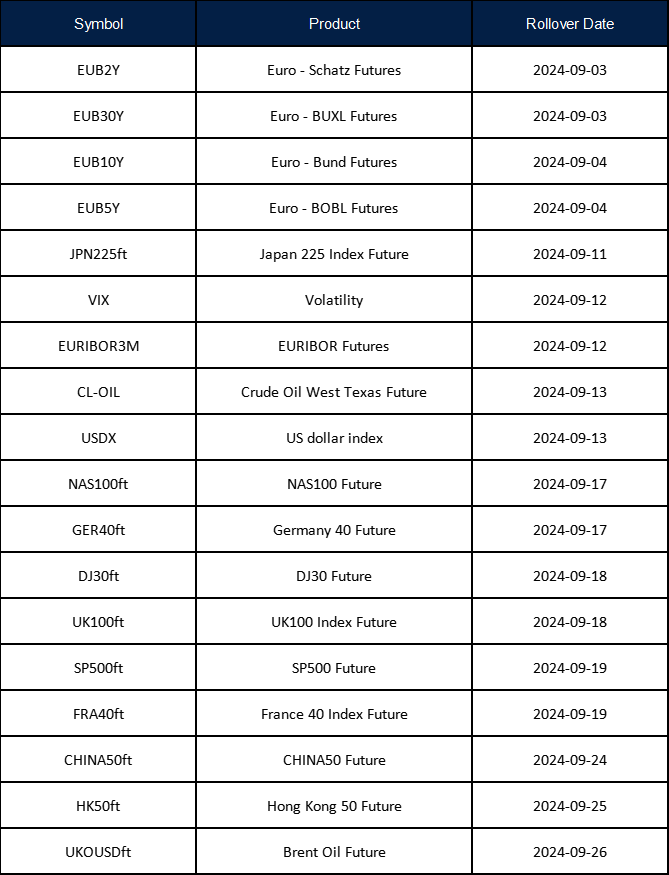
New contracts will automatically be rolled over as follows:
Please note:
• The rollover will be automatic, and any existing open positions will remain open.
• Positions that are open on the expiration date will be adjusted via a rollover charge or credit to reflect the price difference between the expiring and new contracts.
• To avoid CFD rollovers, clients can choose to close any open CFD positions prior to the expiration date.
• Please ensure that all take-profit and stop-loss settings are adjusted before the rollover occurs.
• All internal transfers for accounts under the same name will be prohibited during the first and last 30 minutes of the trading hours on the rollover dates.
If you’d like more information, please don’t hesitate to contact info@vtmarkets.com