Back

A Complete FAQ For VT Markets Swap-Free Account

VT Markets, a leading online trading platform, offers swap-free accounts tailored to meet the needs of traders who, due to their religious beliefs, cannot participate in trades that carry swap fees. This article delves into the specifics of VT Markets’ swap-free accounts, addressing common queries and highlighting the features that make these accounts both unique and accessible.


Does VT Markets Offer Swap-Free Accounts?

Yes, VT Markets provides swap-free accounts which operate as standard CFD trading accounts with one key difference: no swap fee is applied to trades held overnight. It’s important to note, however, that a small administrative fee is still applicable to these transactions.

Friendly Reminder: Swap-free accounts with zero admin fees are available only to traders in certain countries and regions. For more details, reaching out to our customer support team is recommended.


What Fees and Charges Apply?

Clients utilizing VT Markets’ swap-free accounts will be subject to Standard STP spreads. Additionally, an admin/agency (Wakeel) fee is levied, covering administration-related expenses.


Why Is There an Administration Fee?

The administration fee on swap-free accounts is necessary to cover the costs associated with maintaining open positions in the global markets. VT Markets passes on the fees charged by liquidity providers for keeping positions open, ensuring fair and transparent access to trading opportunities.


Who Can Use Swap-Free Accounts?

These accounts are specifically designed for Forex traders who, due to religious reasons, cannot receive or pay swaps. VT Markets aims to provide traders of the Muslim faith with equitable access to global markets through these specialized accounts.


Opening a VT Markets Swap-Free Account

Opening a swap-free account with VT Markets follows the regular account registration process, where you’ll have the option to select the swap-free account type. Remember, accounts with zero administrative fees are restricted to specific countries and regions, so consultation with customer support is advisable for clarity.


Does VT Markets Provide Loans for Trading on Swap-Free Accounts?

VT Markets does not offer loans to clients. The platform facilitates margin trading, where financing is provided by Liquidity Providers, who then charge an Administration Fee. This fee is communicated to clients via the MT4 platform.


Justification of Administration Fee and Spreads

The administration fee and spreads charged on swap-free accounts are legitimate and justified charges for the services provided by VT Markets. These fees are in place instead of the interest or swap charges found in conventional accounts, maintaining the Shariah compliance of these accounts.


Shariah Basis for Swap-Free Accounts

The operation of VT Markets’ swap-free accounts is grounded in Islamic financial principles. The relationship between VT Markets and its clients is that of Wakalah (agency), where VT Markets acts as the agent managing the accounts. The relationship with liquidity providers is defined as Qardh (loan), managed under a signed mandate by VT Markets, ensuring compliance with Shariah law.


Segregation and Protection of Funds

VT Markets ensures Shariah compliance by segregating Shariah funds from conventional funds, with all client funds held in segregated accounts with top reputable banks worldwide. This ensures the protection and integrity of your investments.


What Spreads Are Charged?

Clients with swap-free accounts are subject to Standard STP spreads or RAW ECN spreads, ensuring competitive pricing and transparency across all transactions.


Enquire Swap-Free Account With VT Markets

For further inquiries or to apply for a swap-free account, contacting VT Markets’ customer support team is the best course of action. Contact Us!
Learn more about VT Market swap-free account here.

Is VT Markets The Right Choice For Traders?

Is VT Market A Good Forex Broker?

In the ever-evolving landscape of online trading, finding a broker that aligns with your financial goals and trading style is crucial. VT Markets, a well-known entity in the Forex and CFD trading arena, often comes under scrutiny by prospective traders seeking reliability, transparency, and competitive trading conditions. This article delves into the core aspects of VT Markets to ascertain whether it stands as a prudent choice for traders.


Comprehensive Regulatory Framework

One of the primary considerations when evaluating a broker’s credibility is its regulatory compliance. VT Markets is regulated by reputable authorities, including The Financial Services Commission, Mauritius (FSC), ensuring a high level of operational integrity and client fund security. This regulatory backbone provides traders with peace of mind regarding the safety of their investments.


Diverse Trading Instruments and Account Types

VT Markets caters to a wide array of trading preferences with an extensive selection of instruments, including forex pairs, commodities, indices, and CFDs. The broker offers two main account types: the Standard STP and the Raw ECN, each designed to meet different trader requirements. The Standard STP account is ideal for beginners and those who prefer trading without commissions, while the Raw ECN account appeals to experienced traders looking for tighter spreads and a commission-based structure.


Cutting-edge Trading Platforms and Tools

Access to advanced trading platforms and tools is essential for effective market analysis and execution. VT Markets provides its clients with the industry-standard MetaTrader 4 and MetaTrader 5 platforms, renowned for their reliability, user-friendly interface, and comprehensive analytical tools. Additionally, traders benefit from VT Markets’ integration of advanced trading tools and indicators, enhancing their trading strategy and decision-making process.


Competitive Spreads and Transparent Pricing

VT Markets is known for its competitive spreads and transparent pricing structure. The broker’s Raw ECN account, in particular, offers tight spreads starting from 0.0 pips, coupled with a reasonable commission rate. This pricing model is advantageous for scalpers and high-volume traders who prioritize low transaction costs.


Client Support and Educational Resources

Effective client support and educational resources are indicators of a broker’s commitment to its clients’ success. VT Markets offers a robust support system with a knowledgeable customer service team accessible via live chat, email, and phone. The broker also provides an array of educational materials, including webinars, tutorials, and articles, catering to both novice and seasoned traders.


Conclusion: A Broker Worth Considering?

After scrutinizing the essential facets of VT Markets, it’s evident that the broker offers a compelling proposition for traders seeking a regulated, transparent, and client-focused trading environment. With its robust regulatory framework, diverse trading options, advanced platforms, competitive pricing, and dedicated support, VT Markets positions itself as a reputable choice in the crowded online brokerage space.

Whether VT Markets is the right broker for you ultimately depends on your specific trading needs and preferences. Prospective clients are encouraged to explore the broker’s offerings, perhaps starting with a demo account, to determine if VT Markets aligns with their trading objectives.

Explore Forex Trading with VT Markets now!

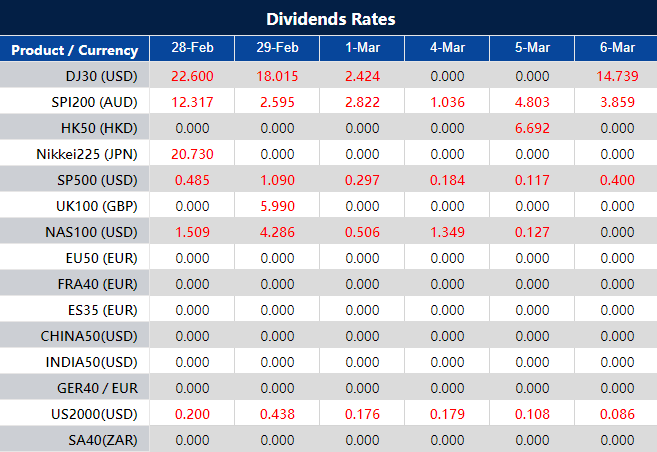
Dividend Adjustment Notice – February 28, 2024

Dear Client,

Please note that the dividends of the following products will be adjusted accordingly. Index dividends will be executed separately through a balance statement directly to your trading account, and the comment will be in the following format “Div & Product Name & Net Volume ”.

Please refer to the table below for more details:

The above data is for reference only, please refer to the MT4/MT5 software for specific data.

If you’d like more information, please don’t hesitate to contact info@vtmarkets.com.

Unlocking the power of correlations in forex trading 

Learn Forex Trading Correlations

In the realm of forex trading, correlations serve as invaluable indicators of how different currency pairs or financial instruments move in relation to each other. For instance, as the EUR/USD pair goes up, it’s common to observe a downturn in the USD/CHF pair, and conversely. 

These correlations offer profound insights into market movements, enabling traders to predict trends, mitigate risks, and make more informed decisions. Let’s delve into the world of correlations in forex trading and explore how they can be leveraged to enhance trading strategies. 

Understanding correlations

Correlation in forex denotes the statistical relationship between distinct currency pairs or financial instruments and their synchronized movements. This correlation coefficient is measured on a scale ranging from -1 to +1. A value of -1 signifies a perfect negative correlation (indicating inverse movements), while +1 denotes a perfect positive correlation (suggesting movements in the same direction). A correlation coefficient of 0 indicates no correlation, implying that movements are independent of each other.  

Grasping these correlations is pivotal for traders as it aids in anticipating the impact of one asset’s movement on another. 

Positive correlation: Positive correlation materializes when two currency pairs or assets tend to move in tandem. For instance, if the EUR/USD pair experiences an upward trajectory, it’s likely that the GBP/USD pair will also witness a rise. Traders often utilize positive correlations to diversify their portfolios by trading multiple currency pairs that move in sync, thereby potentially reducing overall risk exposure. 

Negative correlation: Conversely, negative correlation arises when two currency pairs or assets move in opposing directions. For instance, an increase in the USD/JPY pair might coincide with a decrease in the price of Gold. Traders employ negative correlations as a hedging strategy to offset potential losses in one position with gains in another, thereby mitigating risks during market fluctuations. 

Neutral correlation: Neutral correlation signifies a weak or non-existent relationship between currency pairs or assets. For instance, the EUR/USD and USD/CHF pairs may exhibit minimal correlation, implying that their movements have insignificant influence on each other. While neutral correlations might not present direct trading opportunities, they offer valuable insights into market dynamics, enabling traders to avoid making decisions based on erroneous correlation assumptions. 

How to Identify Correlations

For traders aiming to discern the correlation between two currency pairs, a systematic approach is essential: 

Select currency pairs: Choose the currency pairs you intend to analyse for correlation, such as EUR/USD and GBP/USD. 

Collect historical data: Gather historical price data for the selected currency pairs from reputable sources like trading platforms or financial websites. 

Calculate correlation coefficient: Utilize online correlation calculators, Excel spreadsheets with built-in functions like CORREL, or trading platforms such as MetaTrader 4 (MT4) and MetaTrader 5 (MT5) to compute correlation coefficients. 

Interpret results: Analyse the correlation coefficient to comprehend the relationship between the currency pairs. A coefficient close to +1 suggests a strong positive correlation, while a coefficient close to -1 indicates a strong negative correlation. A coefficient near 0 implies a weak or negligible correlation. 

Repeat for different timeframes: Consider calculating correlations over various timeframes (e.g., daily, weekly, monthly) to identify any fluctuations in correlation patterns, providing insights into the stability of the correlation relationship. 

Factors influencing correlations

Numerous factors influence the correlations between currency pairs in forex trading, including: 

Economic indicators: Indicators like Gross Domestic Product (GDP), growth rates, and inflation significantly influence currency correlations. Positive GDP figures in both the Eurozone and the US can bolster the correlation between EUR/USD and USD/CHF pairs. Divergent inflation rates may weaken correlations as traders adjust their strategies based on economic forecasts. 

Market sentiment: Market sentiment, reflecting traders’ attitudes towards currencies, impacts correlations. During periods of heightened risk appetite, currencies like the Australian dollar (AUD) and New Zealand dollar (NZD) tend to display positive correlations. Safe-haven currencies like the US dollar (USD) and Japanese yen (JPY) may strengthen during times of uncertainty, thereby weakening correlations with riskier currencies. 

Geopolitical events: Geopolitical events such as elections or trade negotiations can disrupt currency correlations. Major agreements may strengthen correlations between currencies, while heightened tensions can weaken them as traders seek refuge in safer assets. Increased geopolitical risks might diminish the correlation between USD/JPY and gold. 

Relationship between currencies and commodities: The correlation between currencies and commodities also influences currency correlations. For instance, the Canadian dollar (CAD) often correlates positively with oil prices due to Canada’s significant oil exports. Consequently, a surge in oil prices could reinforce the correlation between USD/CAD and oil. Conversely, a surge in gold prices may weaken the correlation between USD/JPY and gold, given the status of the Japanese yen as a safe-haven currency. 

Using correlations in trading

Leveraging correlations in forex trading provides traders with a strategic advantage, offering insights into market dynamics and aiding in risk management. By incorporating correlations into trading strategies, traders refine their approach, optimize trade timing, and enhance overall performance in the forex market. Strategies for leveraging correlations include: 

  • Strategy Development: Design strategies to capitalize on currency correlations, identify trends, and optimize trade timing. 
  • Risk Management: Utilize correlated pairs for hedging to mitigate losses and minimize risk exposure. Additionally, diversify risk across multiple currency pairs or asset classes to reduce volatility and enhance stability. 
  • Portfolio Diversification: Spread investments across various currency pairs or asset classes with low or negative correlations to minimize overall portfolio risk and enhance long-term stability. 
  • Identifying Opportunities: Utilize correlations to identify diversification opportunities by selecting currency pairs with low or negative correlations. 
  • Asset Class Monitoring: Monitor correlations between different asset classes to optimize portfolio allocation and achieve risk-adjusted returns. 

In conclusion, understanding how currency pairs interact is imperative for making informed decisions and managing risks in forex trading. Utilizing correlation analysis is highly recommended as it enables traders to identify optimal trading times, manage risks effectively, and maximize returns on investments. By unlocking the power of correlations, traders can navigate the complexities of the forex market with confidence and precision. 

Start leveraging currency correlations today with VT Markets and enhance your forex trading strategies for better results!

Mixed Stock Market Results as Investors Await Inflation Data; Currency Market Sees Nuanced Movements

On Tuesday, the stock market displayed mixed outcomes with the S&P 500 and Nasdaq Composite experiencing slight gains, while the Dow Jones Industrial Average faced a minor decline amidst anticipation for upcoming inflation data. Corporate earnings, particularly from Macy’s and Lowe’s, alongside economic indicators, played significant roles in market dynamics. Meanwhile, the currency market witnessed subtle shifts, with the Japanese yen strengthening against the dollar following Japan’s higher-than-expected core CPI report. Investor focus remains on key economic releases, including the personal consumption expenditure price index, with global monetary policy expectations influencing market sentiment.

Stock Market Updates

On Tuesday, the stock market saw mixed results as investors awaited crucial inflation data expected later in the week. The S&P 500 edged up by 0.17% to 5,078.18, while the Nasdaq Composite saw a modest increase of 0.37%, closing at 16,035.30. Contrarily, the Dow Jones Industrial Average experienced a slight downturn, dropping by 96.82 points, or 0.25%, to end at 38,972.41. Notable movements included Macy’s, which surged 3.4% after announcing plans to close approximately 150 underperforming stores due to a previous revenue shortfall. Additionally, Lowe’s shares increased by 1.7% following an earnings beat, with Zoom Video and Hims & Hers Health also making significant gains after surpassing Wall Street’s earnings expectations.

A mix of corporate earnings reports and economic indicators influenced the market’s dynamics. The utilities sector led the market with a 1.9% increase, while the communications services and technology sectors also saw gains. This activity followed a decline from record highs the previous week, spurred by Nvidia’s impressive earnings. Moreover, investor sentiment was affected by a drop in consumer confidence amid concerns over a potential labor market slowdown and a divisive political climate, as reported by the Conference Board. Additionally, a decrease in orders for long-lasting goods in January, particularly in transportation, underscored these economic uncertainties. As investors look ahead, the forthcoming release of the personal consumption expenditure price index and personal income data will be closely scrutinized for insights into economic health and monetary policy direction.

Data by Bloomberg

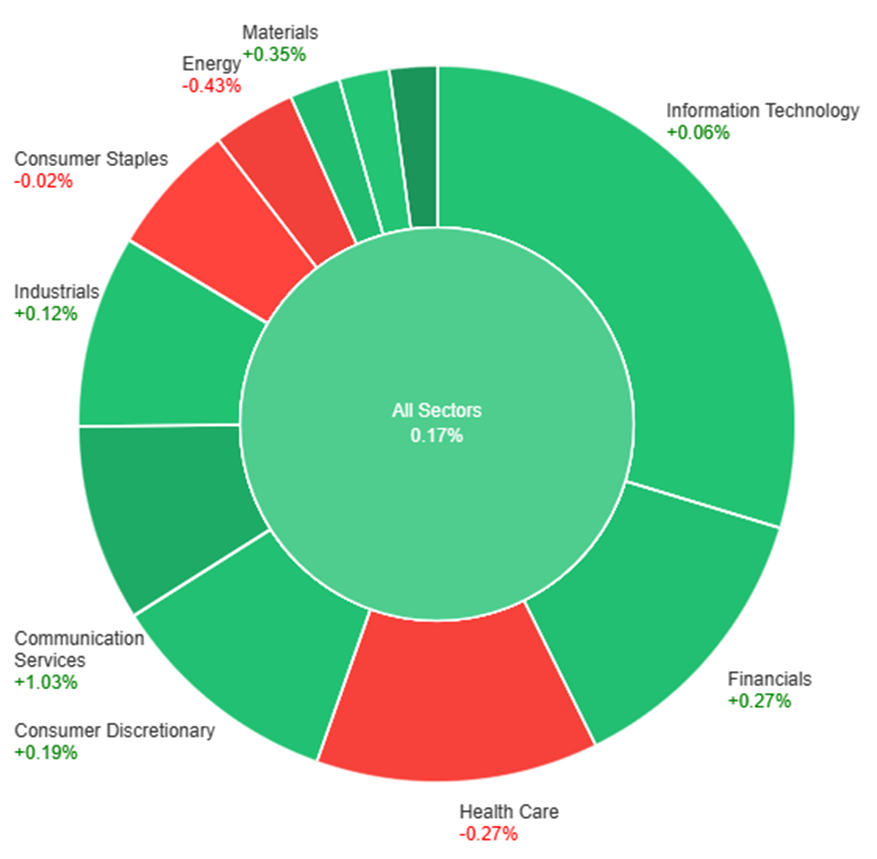
On Tuesdayday, the overall market saw modest gains, with all sectors collectively up by 0.17%. Utilities led the performance with a significant increase of 1.89%, followed by Communication Services and Materials, which rose by 1.03% and 0.35%, respectively. Financials, Consumer Discretionary, and Industrials also experienced gains, though more modest, ranging from 0.12% to 0.27%. Information Technology and Real Estate sectors saw minimal increases, whereas Consumer Staples, Health Care, and Energy sectors faced declines, with Energy recording the largest drop at -0.43%.

Currency Market Updates

The currency market saw nuanced movements with the dollar index slightly declining by 0.09%, influenced by a mix of supportive corporate month-end flows and weaker-than-expected U.S. economic data concerning durable goods and consumer confidence. The Japanese yen emerged as a notable performer, appreciating following a report that showed Japan’s core CPI rising above forecasts. This development came amidst static policy pricing from major central banks such as the Federal Reserve, European Central Bank, and the Bank of Japan, with the market participants keenly awaiting further key data releases scheduled for later in the week and the next.

The FX landscape was further characterized by the lingering weakness of the USD against the JPY, spurred by Japan’s inflation data, while the EUR/USD, GBP/USD, and other major currency pairs saw marginal gains. Despite some reasons to overlook the disappointing U.S. durable goods data, attributed partly to Boeing’s challenges, the misses in economic reports have heightened the anticipation for upcoming releases on core PCE, income, spending, and employment data. Market speculation regarding the Federal Reserve’s interest rate path remains a focal point, especially after Kansas City Fed President Jeffrey Schmid’s hawkish remarks, contrasting with the market’s reduced expectations for Fed rate cuts. The evolving monetary policy expectations for the ECB, BoE, and BoJ also play a critical role in shaping the currency market dynamics, with all eyes on the upcoming eurozone CPI and U.S. core PCE data to gauge potential shifts in monetary policy and currency valuations.

Picks of the Day Analysis
EUR/USD (4 Hours)

EUR/USD Stabilizes Amid Anticipation of Key Economic Data

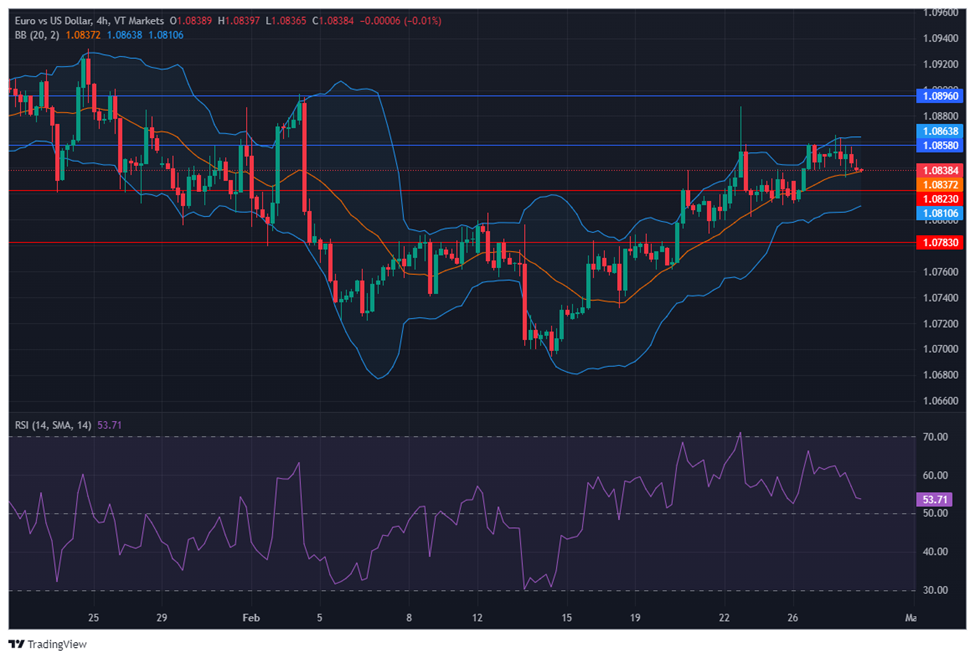
The EUR/USD pair has been hovering around the 1.0850 mark, showing little movement as traders await impactful economic releases. Following a more significant than expected decline in US Durable Goods Orders for January, market focus now shifts to upcoming US GDP figures, German Retail Sales, CPI data, and the US PCE inflation report. These forthcoming data points are crucial for gauging the economic health of both regions and could potentially influence the currency pair’s direction.

Chart EUR/USD by TradingView

On Tuesday, the EUR/USD moved slightly lower and was able to reach the middle band of the Bollinger Bands. Currently, the price is moving around the middle band, suggesting a potential downward movement to reach below the middle band. Notably, the Relative Strength Index (RSI) maintains its position at 53, signaling a neutral outlook for this currency pair.

Resistance: 1.0858, 1.0896

Support: 1.0823, 1.0783

XAU/USD (4 Hours)

XAU/USD See Modest Gains Amid Weakening Dollar and Anticipation for Key Economic Reports

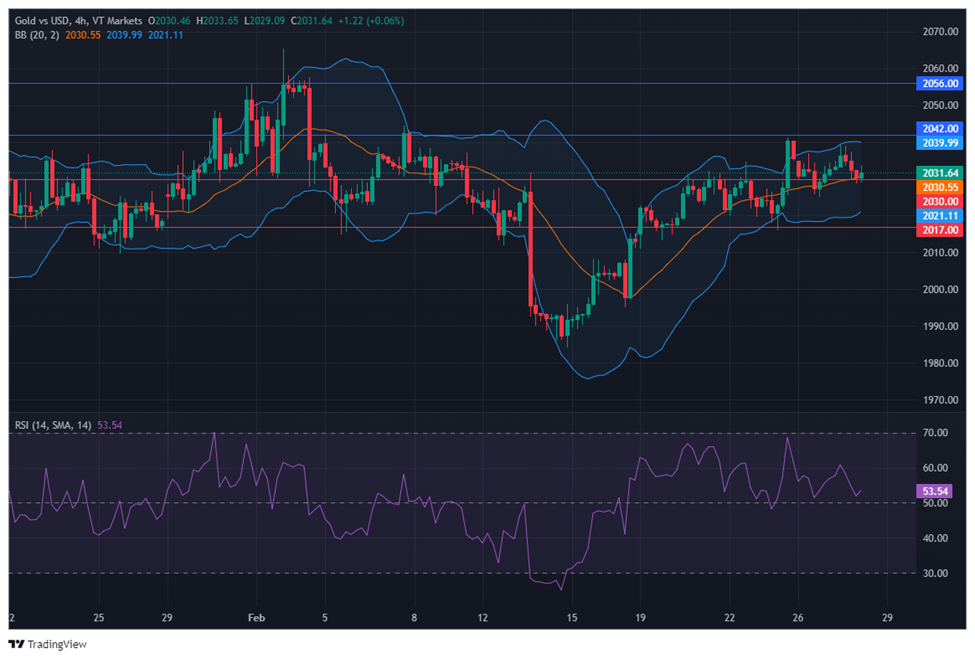
Gold (XAU/USD) experienced a slight increase in its price during Tuesday’s mid-North American session, trading at $2,034.88, a 0.18% gain, amid a backdrop of falling US Treasury bond yields and a weakening US Dollar, as indicated by a 0.05% drop in the US Dollar Index (DXY). This modest uptick occurs as the precious metal hovers around the 50-day Simple Moving Average, with investors keenly awaiting the Personal Consumption Expenditures (PCE) report and latest Gross Domestic Product (GDP) data, which are anticipated to be significant factors that could drive Gold out of its current $2,020-$2,050 trading range. The outlook is further clouded by the recent report on Durable Goods Orders for January, which fell more sharply than expected, and mixed Home Prices data, suggesting a potentially volatile period ahead for Gold prices.

Chart XAU/USD by TradingView

On Tuesday, XAU/USD moved lower to reach the middle band of the Bollinger Bands. Currently, the price is moving just above the middle band, suggesting a potential consolidation movement. The Relative Strength Index (RSI) stands at 53, signaling a neutral outlook for this pair.

Resistance: $2,042, $2,056

Support: $2,030, $2,017

Economic Data
CurrencyDataTime (GMT + 8)Forecast
AUDCPI y/y08:303.4% (Actual)
NZDOfficial Cash Rate09:005.50% (Actual)
NZDRBNZ Monetary Policy Statement09:00 
NZDRBNZ Rate Statement09:00 
USDPrelim GDP q/q21:303.3%

What account types does VT Markets offer?

What Account Types Does VT Markets Offer?

VT Markets caters to a diverse clientele by offering two main types of trading accounts: the Standard STP account and the Raw ECN account. Each account type is designed with different traders in mind, providing options to suit various trading strategies and preferences. For detailed information on each account type, please visit the following links: Standard STP and RAW ECN.


How do Standard STP and RAW ECN accounts differ?

The key difference between these accounts lies in the cost structure and how prices are presented. The Standard STP account does not charge a commission; instead, it includes a markup on spreads above the inter-bank rates received from pricing providers. Conversely, the Raw ECN account offers the raw spreads received directly from liquidity providers and applies a commission charge of $6 per standard lot round turn.


Which base currencies are accepted for trading accounts?

VT Markets accepts a range of base currencies for trading accounts, including the United States Dollar (USD), Australian Dollar (AUD), British Pound Sterling (GBP), Euro (EUR), Canadian Dollar (CAD), and Japanese Yen (JPY).


Can I change my account type?

At this time, VT Markets does not support direct changes to account types post-creation. However, clients wishing to trade under a different account type can apply for an additional account through the Client Portal by selecting Account > Open additional accounts. Upon completing the application, you’ll receive an email with the login details for your new account. For a comprehensive guide on applying for an additional trading account, click here. For further assistance, please contact our live chat customer service.


How can I change my account currency?

Once set, the account currency cannot be changed. If you wish to use a different currency, you’re encouraged to open an additional account in your desired currency. Instructions for opening an additional account can be found here.


How to open an additional account?

Applying for an additional account is straightforward. Log in to your Client Portal, navigate to Account > Open additional accounts, and follow the provided steps. An email containing the login information for your additional account will be sent upon application completion. Note: Additional account requests can be made once your ID and address verification have been fully verified.


Is it possible to change my trading account number?

No, trading account numbers are generated randomly and cannot be altered.


How can I close my trading account?

VT Markets does not currently offer a manual account closure service for MT4 and MT5 trading accounts. To close your account, ensure your balance is zero or less and refrain from logging in for 90 days. The account will then be automatically closed. Alternatively, you can use the “Hide” function in your Client Portal to hide your account.


How can I change the name on my VT Markets account?

The name on your VT Markets account is based on the Proof of Identity (POI) document you provided. The process for changing your account name varies depending on the verification status of your account. For unverified accounts, typographical errors in your name will be corrected during the verification process. For verified accounts, if you need to correct an error or have legally changed your name, please contact us through Live Chat or email info@vtmarkets.com with the necessary documentation.


How to change my residential address?

To change your residential address, the approach depends on the status of your account verification. If verification is pending, any address errors will be fixed during the process. If your address has already been verified and needs updating, please email a new Proof of Address document to info@vtmarkets.com with the appropriate subject line. The relevant department will then review and process your request.


Open Your Forex Trading Account With VT Markets

Open your Forex trading account with VT Markets today and take advantage of tailored trading options! Whether you prefer the commission-free Standard STP account with its inclusive spreads or the Raw ECN account with direct market access and low commissions, VT Markets has you covered.

Choose from a variety of base currencies and get started quickly through our easy online application process. Ready to dive into the world of Forex trading? Open your account now and join the global trading community with VT Markets!

Feel free to contact us if you require further assistance.

Enhancing portfolio diversity with ETF trading 

ETFs, short for Exchange-Traded Funds, are gaining popularity by investors for their accessibility and flexibility. These funds offer a straightforward approach to investing in a variety of assets, making them particularly appealing to non-professional traders. 

Imagine the convenience of investing in a diverse portfolio of stocks or bonds without the hassle of managing individual assets. ETFs make this possible, providing investors with the opportunity to access a broad range of securities through a single investment vehicle. 

In this article, we’ll delve into the significance of ETFs for forex traders, exploring their fundamentals, advantages, popular categories, and practical trading strategies. 

Understanding ETFs

ETFs are investment funds traded on stock exchanges, similar to individual stocks. However, they differ from mutual funds and individual stocks in several key aspects. 

  • Firstly, like mutual funds, ETFs pool investors’ money to invest in various assets such as stocks, bonds, or commodities. However, unlike mutual funds, which are traded at the end of the day, ETFs are traded throughout the day on stock exchanges at market prices, providing investors with real-time access to their investments. 
  • Secondly, ETFs offer investors exposure to a diversified mix of assets, rather than individual companies. When investors buy shares of an ETF, they are essentially purchasing a share in a fund that holds a diverse portfolio of securities. 

ETFs are designed to track specific benchmarks, such as stock market indices or bond indices, aiming to replicate their performance by holding similar assets. 

For forex traders, ETFs offer a convenient way to diversify their investment portfolios by providing exposure to a variety of securities within a single investment. This diversification helps spread risk, making ETFs an attractive option for investors with limited capital or those seeking to build a diversified portfolio without investing in multiple securities individually. 

Moreover, ETFs provide liquidity as they are traded on stock exchanges throughout the day at market prices, allowing investors to buy and sell them easily. This liquidity sets ETFs apart from mutual funds, which are typically traded once a day. 

Additionally, ETFs offer transparency by disclosing their holdings daily, providing investors with clear visibility into their investments. 

Popular ETF categories

ETFs are available in various categories, each offering unique investment opportunities for forex traders. Here’s an overview of the most common types: 

  • Equity ETFs: These ETFs invest in stocks, providing investors with exposure to specific markets, industries, or regions. They offer diversification across multiple companies within a single investment. 
  • Bond ETFs: Bond ETFs invest in fixed-income securities such as government bonds, corporate bonds, or municipal bonds. They provide investors with income generation and diversification, with varying levels of risk depending on the underlying bonds. 

  • Commodity ETFs: These ETFs track the performance of commodities such as gold, silver, oil, or agricultural products. They offer exposure to commodity prices without the need for direct commodity ownership. 
  • Sector ETFs: Sector ETFs focus on specific sectors or industries, such as technology, healthcare, or energy. They allow investors to target areas of the market they believe will outperform or diversify their portfolios. 

Each category of ETFs has its own characteristics and potential benefits, catering to different investment objectives and risk tolerances. 

Advantages of Trading ETF CFDs

Trading ETFs through CFDs (Contracts for Difference) involves entering into a contract with a broker to speculate on the price movement of the ETF without owning the underlying asset. 

When it comes to ETF CFDs trading, there are several advantages worth considering: 

  • Flexibility and leverage: CFDs provide traders with the flexibility to control larger positions with a smaller amount of capital, potentially amplifying gains or losses compared to traditional investing. 
  • Long and short positions: CFD trading allows traders to take both long (buy) and short (sell) positions on ETFs, enabling them to profit from both rising and falling markets. 

In summary, trading ETFs through CFDs offers forex traders flexibility, leverage, and the opportunity to profit from both upward and downward price movements in the market. 

Tips for successful ETF trading

To enhance your chances of success in ETF trading while managing risks effectively, consider the following tips: 

  • Have a well-defined trading plan: Establish a clear trading plan outlining your goals, risk tolerance, and strategies. Stick to your plan and avoid making impulsive decisions based on emotions or market fluctuations. 
  • Stay informed about market trends: Keep yourself updated on market trends and news that could affect ETF prices. This includes economic indicators, geopolitical events, and industry-specific developments. Being informed allows you to make informed decisions and adapt your trading strategy accordingly. 
  • Diversify your investments: Spread your risk by diversifying across multiple ETFs representing different sectors or asset classes. This helps mitigate the impact of volatility in any single investment and allows you to capture opportunities in various market segments. 

In conclusion, ETFs serve as versatile investment vehicles for forex traders, offering exposure to various asset classes like stocks, bonds, and commodities. Trading ETFs through CFDs provides flexibility, leverage, and profit opportunities. By following a well-defined trading plan, staying informed about market trends, and diversifying your investments, you can navigate the market confidently and responsibly, maximizing your potential for success. 

Start trading ETFs with VT Markets Today!

How To Deposit Trading Funds Into VT Markets

Depositing funds into your VT Markets trading account is a straightforward process, designed to get you trading as quickly as possible. Here’s a simple guide to making deposits, the methods you can use, and some tips to ensure a smooth transaction.

For detailed instructions on how to register your account with VT Markets, refer to our comprehensive FAQ titled “How To Register Your Account with VT Markets” to start your trading journey. Here is the FAQ for How To Deposit Trading Funds into VT Markets.


Making a Deposit: A Step-by-Step Guide

1. Access the Client Portal: Log into your VT Markets Client Portal to begin the process.

2. Navigate to Deposit Section: Select “Funds” followed by “Deposit”. Here, you’ll be able to choose your preferred payment method.

3. Follow On-Screen Instructions: Each deposit method comes with its specific instructions on the deposit page. Please follow these carefully to complete your deposit.


Deposit Methods Supported by VT Markets

VT Markets is committed to providing its clients with a variety of fast, safe, and convenient deposit options. Most deposits are credited within 30 to 60 minutes, ensuring you can start trading without unnecessary delays. Here are the deposit methods available:

  • Unionpay Transfer
  • Mobile Pay
  • Skrill
  • Neteller
  • Fasapay
  • Vietnam Instant Bank Wire Transfer (exclusively for clients from Vietnam)
  • EU Bank Transfer (exclusively for clients from the EU)
  • Thailand Instant Bank Transfer (exclusively for clients from Thailand)
  • Credit/Debit Card

For those opting for the International Bank Transfer method, please note that it might take 3 to 7 working days for the funds to arrive in your trading account.


Deposit Processing Times

While most deposits will reflect in your account within an hour, the processing time can vary based on the method used:

  • Credit/Debit Card Deposits: Should you not see your deposit within 30 minutes post a successful transaction status, email us at info@vtmarkets.com with your trading account number and transaction receipt from your registered email address.
  • E-Wallet Deposits: Similar to card deposits, if your e-wallet deposit isn’t reflected within 30 minutes of a successful transaction, please forward your trading account number, transaction receipt, Payment ID, and TXID to info@vtmarkets.com from your registered email.

Monitoring Your Deposit

To track your deposit’s progress or if you encounter any issues, you can always reach out to VT Markets by sending an email to info@vtmarkets.com. Ensure to include the transaction receipt detailing the sender, recipient, time, and amount, and mention your MT4 account in the email for quicker assistance.


Important Considerations for Deposits

  • Account Holder Deposits: In compliance with legal and regulatory standards, deposits must originate from the account holder’s own bank account.
  • Timely Transfers: Ensure to complete your transfer within the indicated timeframe on the deposit page. If a deposit fails due to timing out or other issues, restart the process rather than proceeding with a transfer to the previously indicated account, to guarantee the success of your deposit.

Depositing funds into your VT Markets account is designed to be a seamless part of your trading experience. By following these guidelines and utilizing the wide range of deposit methods available, you can fund your account effortlessly and focus on what’s important – trading the markets.


Are there any deposit fees charged by VT Markets?

VT Markets proudly offers zero handling fees on all deposits.

Please be aware, though, that transactions involving international banking institutions may be subject to intermediary transfer fees or exchange rate discrepancies. These costs are levied by the banks themselves and are not associated with VT Markets.


Start A Forex Account with VT Markets

Embarking on your live forex trading journey with VT Markets begins with a simple and secure deposit process. After completing the registration, accessing the vast opportunities of the forex market is just a few steps away. Our platform is designed to streamline your transition from registration to real-world trading, ensuring you can quickly capitalize on market movements.

Whether you’re a seasoned trader or just starting, VT Markets provides the tools, resources, and support needed to navigate the forex market successfully. Ready to unlock the full potential of forex trading? Open a live trading account with VT Markets and experience the difference in your trading journey.

For more information about VT Markets FAQ, please visit our FAQ page.

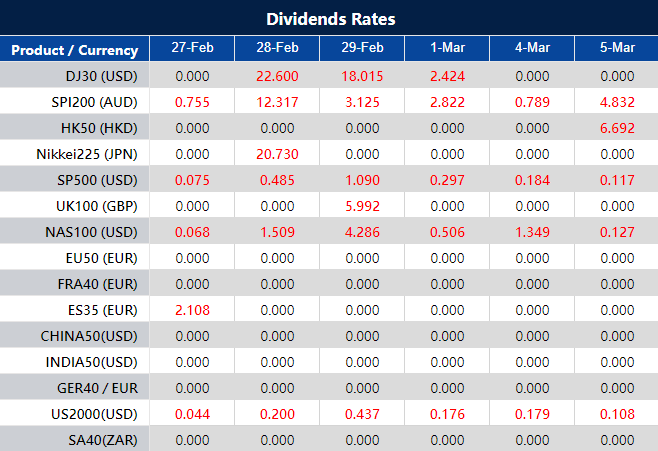
Dividend Adjustment Notice – February 27, 2024

Dear Client,

Please note that the dividends of the following products will be adjusted accordingly. Index dividends will be executed separately through a balance statement directly to your trading account, and the comment will be in the following format “Div & Product Name & Net Volume ”.

Please refer to the table below for more details:

The above data is for reference only, please refer to the MT4/MT5 software for specific data.

If you’d like more information, please don’t hesitate to contact info@vtmarkets.com.

How To Register Your Account with VT Markets

FAQ: Register Your Forex Trading Account with VT Markets

Registering for a live trading account with VT Markets is a straightforward process designed to get you up and trading as quickly as possible. Here’s everything you need to know to successfully open your account and start your trading journey.


Step-by-Step Registration Process

1. Start the Process: Begin by clicking on this link to access the registration page.

2. Fill in Your Details: Select your country of residence, enter your email address, choose a password, and, if you have one, include your referrer’s ID (this is optional).

3. Confirm Your Residency: Make sure to tick the box indicating that you are not a US resident.

4. Open Your Account: Click on “Open a live account” to finalize the registration process.


Frequently Asked Questions

Do you accept clients from the US?

Due to regulations by the Commodity Futures Trading Commission (CFTC), VT Markets cannot accept clients based in the US. However, traders from other countries are welcome.

How long does account activation take?

Completing the online forms and submitting the required proof of identity documentation will enable you to start trading within 24 hours.

Are there any fees associated with a live trading account?

No, VT Markets does not charge any account opening or maintenance fees for live trading accounts.

What documents are needed for account creation?

In compliance with Anti-Money Laundering (AML) and CFTC regulations, you must upload your Proof of Identity (POI) and Proof of Address (POA) during registration.

What if I don’t submit my ID and/or POA during registration?

You’ll receive login credentials for the Client Portal but won’t have full access until your documents are uploaded and verified. Depositing is possible immediately after registration, but trading and withdrawals are enabled only after document verification.

How can I resubmit registration documents?

If necessary, log into your Client Portal and navigate to Account > Live accounts > Account Verification to submit your documents.


Acceptable Documentation

Proof of Identity (POI):

A valid government-issued photo ID that clearly displays your name, photo, date of birth, issue date, and expiry date is required. This can be a photo ID or passport.

Proof of Address (POA):

Documents issued within the last 6 months, such as a bank statement, utility bill, tax document, certificate of citizenship, or residency proof, are acceptable. These documents must clearly display your name, issue date, and residential address.

Please note that VT Markets requires full-color, clear copies of these documents, and handwritten or hard-copy documents are not accepted.


Register Your Forex Trading Account with VT Markets

By following these steps and preparing the necessary documents, you can quickly and easily set up your live trading account with VT Markets. Start your trading journey with confidence, knowing you have the support and resources of VT Markets at your disposal.

Learn more about Forex in this page.

Back To Top
server

Hello there 👋

How can I help you?

Chat with our team instantly

Live Chat

Start a live conversation through...

  • Telegram
    hold On hold
  • Coming Soon...

Hello there 👋

How can I help you?

telegram

Scan the QR code with your smartphone to start a chat with us, or click here.

Don’t have the Telegram App or Desktop installed? Use Web Telegram instead.

QR code