Back

3M Inc. : A Turn of the Tide Choice for 2024?

Introduction To 3M Inc.

3M Inc. (NYSE: MMM) is a diversified technology company operating in industrial, safety and graphics, health care, and consumer sectors. Known for innovation, 3M has been a staple in the S&P 500 index for over 50 years. This article explores why 3M Inc. is a promising investment opportunity for 2024.

Company Snapshot

Founded in 1902 as Minnesota Mining and Manufacturing Company, 3M Inc. has grown into a global powerhouse with operations in over 70 countries. The company boasts a diverse portfolio of products including adhesives, abrasives, laminates, passive fire protection, personal protective equipment, dental and orthodontic products, and much more.

With over 100,000 patents, 3M is a leader in innovation. In 2023, 3M reported strong financial results, with revenue of $34.2 billion and net income of $5.8 billion.

Financial Performance

3M Inc. has a solid track record of financial performance. In 2023, the company reported revenue of $34.2 billion, a 1.2% increase from the previous year. Net income rose by 6.4% to $5.8 billion. The company’s operating margin was 19.1%, up from 18.9% the previous year. Additionally, 3M has a strong balance sheet, with a debt-to-equity ratio of 1.1. The company offers a dividend yield of 2.7% and has increased its dividend for 63 consecutive years.

Investment Opportunity

3M Inc. presents a promising investment opportunity for 2024. The company’s diverse product portfolio serves various industries, ensuring steady demand. 3M’s history of innovation and robust financial performance further solidify its potential. Recent financial results are strong, with increasing revenue and net income. Moreover, 3M’s solid balance sheet and consistent dividend yield make it attractive to investors.

The company’s competitive advantage lies in its extensive patent portfolio and ability to innovate, positioning it well to benefit from growing demand for products that enhance safety, health, and sustainability.

Risks and Considerations

Investing in 3M Inc. comes with certain risks. The company operates in a highly competitive industry and faces challenges such as rising raw material costs and supply chain disruptions. Additionally, 3M’s revenue growth has been relatively low in recent years, and there is no guarantee this trend will reverse. The company is also exposed to macroeconomic risks such as changes in interest rates and currency fluctuations.

Investors should conduct further research and consider diversification before investing in 3M Inc.

Conclusion For Trading 3M Inc. Shares CFD

In conclusion, 3M Inc. is a promising Shares CFD trading opportunity for 2024. The company’s diverse product portfolio, strong financial performance, and solid balance sheet highlight its potential. 3M’s competitive advantage stems from its extensive patent portfolio and continuous innovation. However, investors should be mindful of the risks and conduct thorough research before making any investment decisions.

FAQ

Q: What is 3M Inc.’s main business focus?

A: 3M Inc. operates in the industrial, safety and graphics, health care, and consumer sectors, offering a diverse range of products.

Q: How has 3M Inc.’s financial performance been recently?

A: In 2023, 3M reported revenue of $34.2 billion and net income of $5.8 billion, showing steady growth.

Q: What makes 3M Inc. a good investment?

A: 3M’s diverse product portfolio, history of innovation, strong financial performance, and solid balance sheet make it a promising investment.

Q: What are the risks of investing in 3M Inc.?

A: Risks include industry competition, rising raw material costs, supply chain disruptions, and macroeconomic factors like interest rate changes and currency fluctuations.

Q: What should investors consider before investing in 3M Inc.?

A: Investors should conduct thorough research, consider the company’s competitive landscape, and diversify their investments to mitigate risks.

Q: How does 3M Inc. maintain its competitive advantage?

A: 3M’s competitive advantage comes from its extensive patent portfolio and continuous innovation, allowing it to stay ahead in various industries.

Open a free FX demo account with VT Markets today and start trading with confidence. Benefit from advanced trading tools, comprehensive educational resources, and exceptional customer support. Visit VT Markets now and take your first step towards successful investing!
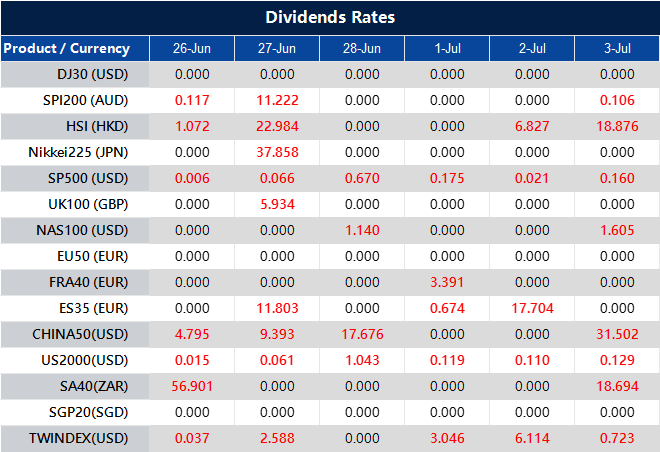
Dividend Adjustment Notice – June 26,2024

Dear Client,

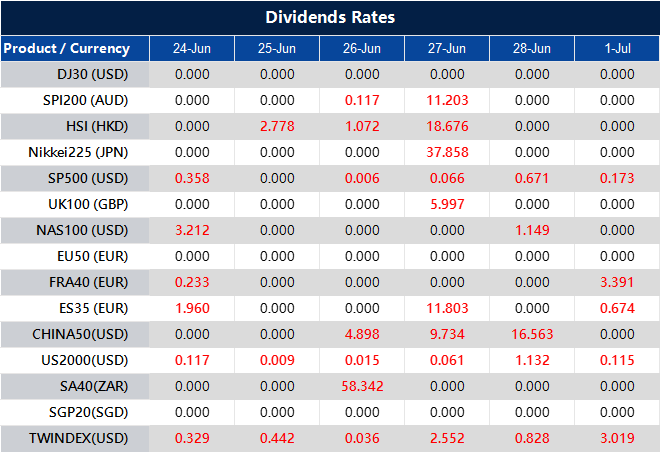
Please note that the dividends of the following products will be adjusted accordingly. Index dividends will be executed separately through a balance statement directly to your trading account, and the comment will be in the following format “Div & Product Name & Net Volume ”.

Please refer to the table below for more details:

The above data is for reference only, please refer to the MT4/MT5 software for specific data.

If you’d like more information, please don’t hesitate to contact info@vtmarkets.com.

A Complete Guide for Gold Trading Candlestick Chart

Understanding Candle Charts for Gold Trading

If you are interested in trading gold, you might have heard of candlestick charts. Candlestick charts are a type of graphical representation of price movements. They can help you identify trends, patterns, and signals for trading.

Let’s dive in and explore what candlestick charts are, how they work, and how you can use them to trade gold effectively.

What are Candlestick Charts?

First of all, candlestick charts are composed of individual candles that represent the price action of a certain period, such as a day, an hour, or a minute.

Each candle has four components: the open, the high, the low, and the close. Here’s what each term means:

  • The open is the price at the beginning of the period.
  • The high is the highest price reached during the period.
  • The low is the lowest price reached during the period.
  • The close is the price at the end of the period.

The body of the candle is the area between the open and the close. If the close is higher than the open, the body is coloured green (or white), indicating a bullish (upward) movement. On the other hand, if the close is lower than the open, the body is coloured red (or black), indicating a bearish (downward) movement. The size of the body reflects the strength of the price movement.

Additionally, the wicks of the candle are the thin lines that extend above and below the body. They represent the high and low prices of the period. The longer the wicks, the more volatile the price movement.

How to Use Candlestick Charts for Gold Trading

Candlestick Gold charts can help you analyze the price behaviour of gold and identify potential trading opportunities. Here are some tips on how to use candlestick charts for gold trading:

Look for Trends

To begin with, a trend is a general direction of the price movement over time. You can use candlestick charts to spot trends by looking at the direction and length of the candles.

A series of green candles indicates an uptrend, while a series of red candles indicates a downtrend. Furthermore, you can use trend lines or moving averages to confirm the direction and strength of a trend.6

Look for Patterns

Next, a pattern is a recognizable shape or formation of candles that indicates a possible future price movement. There are many types of patterns, such as reversal patterns, continuation patterns, and breakout patterns.

  • Reversal patterns signal a change in the direction of a trend, such as a head and shoulders or a double top/bottom.
  • Continuation patterns signal a pause or consolidation in a trend, such as a flag or a triangle.
  • Breakout patterns signal a breakout from a range or consolidation, such as a cup and handle or a rectangle.

Look for Signals

Finally, a signal is a specific candle or combination of candles that indicates a possible entry or exit point for trading. There are many types of signals, such as single-candle signals, multi-candle signals, and confirmation signals.

  • Single-candle signals are based on one candle, such as a hammer or a doji.
  • Multi-candle signals are based on two or more candles, such as an engulfing or a harami.
  • Confirmation signals are validated by another indicator or tool, such as volume or support/resistance levels.

Practice Trading

Before you start trading with real money, it’s a good idea to practice your gold trading skills risk-free by opening a free demo account with a reputable broker. This allows you to get comfortable with candlestick charting and develop your trading strategies without financial risk.

Conclusion For Gold Trading Candlestick Chart

In conclusion, candlestick charts are a powerful tool for gold trading, helping traders identify trends, patterns, and signals. By understanding how to read and use these charts, you can improve your trading decisions and increase your chances of success. Remember, success in gold trading comes with caution, knowledge, and a little daring. Happy trading!

FAQ

Q: What are candlestick charts used for?

A: Candlestick charts are used to represent price movements in financial markets, helping traders identify trends, patterns, and signals for trading.

Q: How can I spot trends using candlestick charts?

A: You can spot trends by looking at the direction and length of the candles. A series of green candles indicates an uptrend, while a series of red candles indicates a downtrend.

Q: What are reversal patterns in candlestick charts?

A: Reversal patterns signal a change in the direction of a trend. Examples include head and shoulders, and double top/bottom patterns.

Q: What should I look for in a single-candle signal?

A: Single-candle signals are based on one candle, such as a hammer or a doji, indicating possible entry or exit points for trading.

Q: Why is it important to practice trading with a demo account?

A: Practicing with a demo account helps you get comfortable with candlestick charting and develop your trading strategies without risking real money.

Ready to put your newfound knowledge into practice? Open a free demo account with VT Markets today and start trading gold with confidence. Benefit from our advanced trading tools, comprehensive educational resources, and exceptional customer support.

Visit VT Markets now and take your first step towards successful gold trading!

Share Reverse Split Notification – June 25,2024

Dear Client,

Shares product NKLA is about to conduct a share reverse split after the market closes on June 24, 2024. Starting from the market opening on June 25, 2024, NKLA expects to provide investor trading in divided contracts.

After the share reverse split, please be aware of the following:

1. The trading volume of NKLA open positions will become 1/30 of the original lot size.

2. The “opening price” and “take-profit/stop-loss setting price” of NKLA’s positions will become 30 times the original price.

3. NKLA’s price at the opening of the market on June 25 is expected to be approximately 30 times the closing price.

The above data is for reference only; please refer to the MT5 software for specific data.

If you’d like more information, please don’t hesitate to contact info@vtmarkets.com.

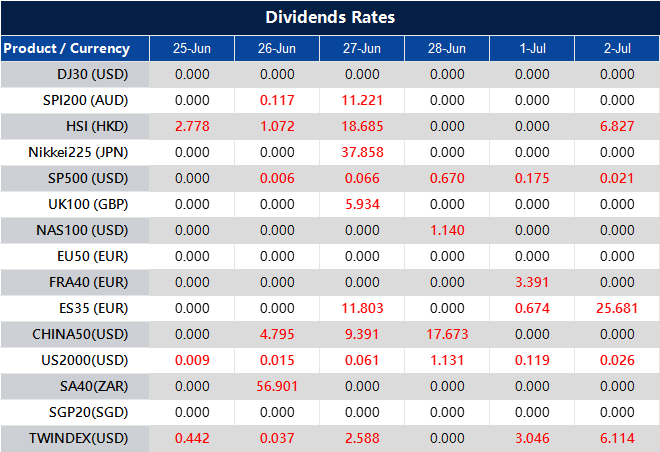
Dividend Adjustment Notice – June 25,2024

Dear Client,

Please note that the dividends of the following products will be adjusted accordingly. Index dividends will be executed separately through a balance statement directly to your trading account, and the comment will be in the following format “Div & Product Name & Net Volume ”.

Please refer to the table below for more details:

The above data is for reference only, please refer to the MT4/MT5 software for specific data.

If you’d like more information, please don’t hesitate to contact info@vtmarkets.com.

Dividend Adjustment Notice – June 24,2024

Dear Client,

Please note that the dividends of the following products will be adjusted accordingly. Index dividends will be executed separately through a balance statement directly to your trading account, and the comment will be in the following format “Div & Product Name & Net Volume ”.

Please refer to the table below for more details:

The above data is for reference only, please refer to the MT4/MT5 software for specific data.

If you’d like more information, please don’t hesitate to contact info@vtmarkets.com.

A Complete Beginners Forex Trading Guide For EUR/USD

A Beginners Forex Trading Guide For EUR/USD

Trading the EUR/USD currency pair can be a great starting point for beginners. Known as one of the most popular pairs in the Forex market, EUR/USD offers ample liquidity, tighter spreads, and frequent market movements. This guide will walk you through the basics, helping you understand the essentials of trading EUR/USD effectively.

What is EUR/USD?

EUR/USD represents the exchange rate between the Euro and the US Dollar. In this pair, the Euro (EUR) is the base currency, and the US Dollar (USD) is the quote currency. Essentially, the price of the pair shows how many US Dollars are needed to buy one Euro.

Why Trade EUR/USD?

High Liquidity

EUR/USD is the most traded currency pair in the Forex market. High liquidity means tighter spreads and more predictable price movements.

Economic Stability

Both the Eurozone and the United States have large, stable economies. This stability reduces the risk of unexpected market volatility.

Market Movements

EUR/USD is influenced by a wide range of economic indicators, providing many trading opportunities. Regular economic news from the Eurozone and the US can create predictable patterns.

Key Factors Influencing EUR/USD

Economic Data

Economic indicators like GDP growth, employment data, and inflation rates significantly impact the EUR/USD exchange rate.

Central Bank Policies

The European Central Bank (ECB) and the Federal Reserve (Fed) influence the currency pair through their monetary policies and interest rate decisions.

Political Events

Political stability and events, such as elections and policy changes, can cause fluctuations in the EUR/USD rate.

Market Sentiment

Traders’ perceptions and market sentiment also play a crucial role in driving the price movements of EUR/USD.

How to Start Trading EUR/USD

Choose a Reliable Broker

Select a broker that offers competitive spreads, reliable trading platforms, and strong regulatory oversight. VT Markets is a great option for beginners, offering user-friendly platforms and excellent customer support.

Open a Trading Account

Once you’ve chosen a broker, open a trading account. You can start with a demo account to practice your strategies without risking real money.

Fund Your Account

Deposit funds into your trading account. Most brokers offer various funding methods, including bank transfers, credit/debit cards, and e-wallets.

Learn to Use Trading Platforms

Familiarize yourself with the trading platforms offered by your broker. MetaTrader 4 (MT4) and MetaTrader 5 (MT5) are popular choices, known for their advanced charting tools and user-friendly interfaces.

Basic Trading Strategies for EUR/USD

Trend Following

Identify and follow the market trends. Use moving averages and trend lines to spot upward or downward trends and trade in the direction of the trend.

Breakout Trading

Look for key support and resistance levels. When the price breaks through these levels, it often leads to significant price movements. Use this strategy to enter trades at the beginning of a new trend.

Range Trading

When EUR/USD is trading within a range, buy at the support level and sell at the resistance level. This strategy works best in stable markets without strong trends.

Technical Analysis Tools

Moving Averages

Moving averages help smooth out price data, making it easier to identify trends. The 50-day and 200-day moving averages are commonly used by traders.

Relative Strength Index (RSI)

RSI measures the speed and change of price movements. It helps identify overbought or oversold conditions, signaling potential reversals.

Fibonacci Retracement

Fibonacci retracement levels help identify potential support and resistance levels based on historical price movements.

Risk Management Tips

Set Stop-Loss Orders

Always use stop-loss orders to limit potential losses. Determine your risk tolerance and set your stop-loss accordingly.

Manage Your Leverage

Leverage can amplify both gains and losses. Use leverage wisely and avoid over-leveraging your positions.

Diversify Your Trades

Don’t put all your capital into a single trade. Diversify your trades to spread risk and reduce potential losses.

Common Mistakes to Avoid

Overtrading

Trading too frequently can lead to unnecessary losses. Stick to your trading plan and avoid impulsive trades.

Ignoring Economic Data

Economic indicators have a significant impact on EUR/USD. Always keep an eye on the economic calendar and be aware of upcoming data releases.

Failing to Adapt

Market conditions can change rapidly. Be flexible and ready to adapt your trading strategy as needed.

FAQs

Is EUR/USD suitable for beginners?

Yes, EUR/USD is an excellent choice for beginners due to its high liquidity, tighter spreads, and frequent market movements.

What are the best times to trade EUR/USD?

The best times to trade EUR/USD are during the overlap of the London and New York trading sessions (8:00 AM to 12:00 PM EST). This period sees the highest trading volume and volatility.

How much capital do I need to start trading EUR/USD?

The amount of capital you need depends on your risk tolerance and trading strategy. It’s possible to start with as little as £100, but having at least £500 to £1,000 allows for better risk management and diversification.

Can I trade EUR/USD with a demo account?

Yes, most brokers, including VT Markets, offer demo accounts. These allow you to practice trading strategies with virtual money before committing real funds.

What factors should I monitor when trading EUR/USD?

Monitor economic data releases, central bank policies, political events, and market sentiment. These factors significantly impact the EUR/USD exchange rate.

Conclusion Forex Trading Beginners’ Guide For EUR/USD

Trading EUR/USD can be a rewarding experience for beginners and experienced traders alike. By understanding the key factors influencing the pair, using effective trading strategies, and managing risks, you can enhance your chances of success.

Start by choosing a reliable broker like VT Markets, open a demo account to practice, and then transition to a live account when you’re ready. Happy trading!

Coca-Cola Inc: Is It A Refreshing Investment for 2024?

2024 Outlook for Coca-Cola Inc Shares

Coca-Cola Inc. (KO) is a renowned beverage company with over a century of history. Known globally, Coca-Cola boasts a strong brand presence and is a household name in many countries. Hence, this article reviews Coca-Cola’s performance in 2023 and explores why it presents an attractive investment opportunity for 2024.

Company Snapshot

The Company is a multinational beverage company producing and selling a wide range of non-alcoholic beverages. Founded in 1892, it is headquartered in Atlanta, Georgia. Coca-Cola’s products are sold in over 200 countries and territories worldwide. The company’s diverse portfolio includes well-known brands such as Coca-Cola, Sprite, Fanta, and Minute Maid. In 2023, Coca-Cola celebrated its 100th anniversary of being listed on the New York Stock Exchange.

Coca-Cola’s Financial Performance

Financial performance for Coca-Cola in 2023 was impressive. The company reported net revenues of $38.9 billion, a 7% increase from the previous year. Coca-Cola’s operating income was $10.2 billion, marking a 10% increase from the previous year. The company’s gross profit margin stood at 60.8%, up by 0.5% from the previous year. Earnings per share (EPS) were $2.57, a 12% increase from the previous year. Additionally, Coca-Cola paid out a dividend of $1.76 per share in 2023.

Investment Opportunity

Coca-Cola is an attractive investment opportunity for 2024 due to its strong brand presence, diverse portfolio of brands, and impressive financial performance. The company has a long history of paying dividends to its shareholders, increasing its dividend payout for 60 consecutive years. Coca-Cola’s dividend yield is currently 3.1%, higher than the S&P 500’s average dividend yield of 1.3%. The company’s robust financial performance and consistent dividend payouts make it an appealing investment for income investors.

Risks and Considerations

While Coca-Cola is a robust company with a long history of success, there are risks associated with investing in its stock. The beverage industry is highly competitive, with Coca-Cola facing competition from other beverage companies. Additionally, the company’s financial performance is subject to macroeconomic factors such as inflation and currency fluctuations. Investors should also consider diversifying their portfolios to mitigate risk.

FAQs For Coca-Cola Shares Trading

Is Coca-Cola a Good Share to Trade for Beginners?

Yes, Coca-Cola can be a good share for beginners. It has a stable market presence and strong financial performance. However, beginners should be aware of risks in the beverage industry and start with a smaller investment to manage potential losses. Using educational resources and seeking advice from financial advisors is also advisable.

How Much Capital to Prepare to Start Trading Coca-Cola Shares?

The capital needed to start trading Coca-Cola shares depends on your financial situation and risk tolerance. Generally, starting with at least £1,000 to £2,000 provides a good foundation. This amount allows for diversification and helps manage risks. Ensure you are comfortable with the amount you invest and never invest more than you can afford to lose.

What Other Factors to Look At Before Trading Coca-Cola Shares?

Before trading Coca-Cola shares, consider factors such as market volatility, global economic conditions, and the company’s financial health. Additionally, look at industry trends and any upcoming regulatory changes. Thorough research and staying informed about the market will help you make better trading decisions.

Conclusion For Trading Coca-Cola Inc

Coca-Cola Inc. remains a strong contender for investment in 2024, given its impressive financial performance, strong brand presence, and consistent dividend payouts. However, potential investors should remain aware of the inherent risks and market competition. For those looking to add a reliable, income-generating stock to their portfolios, Coca-Cola offers a promising opportunity.

Ready to trade the potential of Coca-Cola Shares CFD and other top stocks? Open an account with VT Markets today and start trading with confidence. Visit VT Markets for more information.

Risk management: Your guide to long term survival as a forex trader 

A forex trader analyzes multiple charts on computer screens, demonstrating effective risk management strategies in a dimly lit trading room. This image illustrates the importance of continuous monitoring and strategic planning in long-term survival as a forex trader. Hosted by VT Markets, a forex CFDs brokerage, for the article titled 'Risk management: Your guide to long-term survival as a forex trader.

Making thousands of dollars within a few clicks? Yes please! 

That is the social appeal of forex trading. The instant gratification and the adrenalin rush can often blur the line between strategically trading the markets and gambling.  

To sustain as a profitable forex trader long term, however, is beyond clicking the “trade” button in seeking the jackpot trade to financial freedom. The reality is successful traders maintain the discipline in risk management every single trade they take.  

Only trade when the odds are in your favour 

As a start, it is important to understand the dynamics of the market being traded. Every asset class has its own patterns and psychological price trigger points. But in general, most traders analyse the market with two common approaches: Technical analysis and fundamental analysis. 

Technical analysis 

Primarily, technical analysis is chart reading. By relying on past data in the form of indicators and price actions, one can plan a trade with the belief that the buying and selling actions of the market reflect the sentiment tied to a particular financial instrument. Indicators such as chart patterns, support and resistance levels, price trends, moving averages as well as volume and momentum indicators all fall under technical analysis. 

Read more about technical analysis

Fundamental analysis 

Another aspect of analysing a market is by looking at the intrinsic value of an underlying asset via related economic and financial factors. These include macroeconomic factors, such as the state of the economy and industry conditions; to microeconomic factors, like the effectiveness of the management of a company.  

Fundamental analysis tends to point to the long-term direction of an asset class. However, majority of CFD trading are short term in nature, and as such fundamental analysis tends to receive less attention. 

Developing your own trading plan, and sticking to it 

A trader can decide based on technical and/or fundamental analysis whether the odds favour opening a trade position in the market. However, a trading strategy must entail the level of risk exposure undertaken, and the trader must psychologically accept the risk level as planned.  

Without a proper risk management strategy, opening any position in the financial markets is no different from gambling. This is how most traders have their accounts wiped out and never trade again in their lives. 

The 2% rule 

A good way to start is by looking at the trading capital of any given account. The common practice among traders is to risk no more than 2% of trading capital per transaction. This is also known as “the 2% rule”. 

For example, in a $500 account, the maximum loss should be limited to: 

2% x $500 = $10 per trade 

The rationale behind this rule is founded in the possibility that a trader can be wrong fifty (50) times in a row before the account is wiped out. This greatly improves the chances of survival for a trader in the long run. 

To make the execution of a trading strategy more effective, a trader can use the Stop Loss and Take Profit feature to ensure that the risk level initially planned will be adhered to. By setting a stop loss or take profit order, not only a trader can relax without staring at the screen all the time, but also remove the possibility of making an emotional decision.  

Is the risk worth the reward? 

The risk to reward ratio marks the potential profit a trader can earn for every dollar risked on a trade. This is used to justify if the risk is worth taking for the reward one can potential. A trade with a risk to reward ratio of 1:7 would mean that that a trader is risking $1 for the chance of earning $7.  

Obviously, the higher the reward makes a trade more attractive to take, and this is how traders often plan which trades to take. The more experienced a trader is, the more he knows being selective in opening trade positions would help in surviving the markets. 

Leverage: The double-edge sword 

Put simply, leverage is the use of money of the broker rather than the strict use of your own, which is very common in the CFD trading industry. A trader could put down a deposit of just $500 to open trade positions up to $250,000 with 500:1 leverage.  

What does that mean?  

With every $1 profit you make using your own money, you can make up to 500 times of that. However, the reverse also holds true.

With every $1 profit paper loss you are holding, you will also be holding 500 times of that if your position has not been closed yet.  

This is why it is important to balance the use of leverage against the 2% rule. While maxing out on leverage can lead you to the Lambo dream, it often wipes trading account out fast. 

Staying cool and calm is the trick 

Of all the risks, the hardest risk to manage is the emotion of the trader himself. Learning the details of how to plan a trade is nowhere as challenging as executing the trade without emotion. Often, traders stray away when the market move in a certain direction, not taking profits or stopping losses as planned.  

All traders must take responsibility for their own decisions, whether this is a result of failure to plan, unexpected event or just because the trader got emotional himself.

While automation can help to negate emotional decision making, the best way to objectify this is to maintain a trading journal, jotting down the details leading to the success or failure of each trade. 

Copy how others manage trading risk 

If you are unsure how to manage your trading risk, consider using the Copy trading feature for a start. Copy trading is a form of social trading where new traders can replicate the trades from the seasoned traders. By doing so, you can benefit from the expertise of others as you keep learning about the financial markets. 

Profits will follow if risk is managed well 

Risk management is one of the most overlooked areas in trading. With a disciplined approach and good trading habits, losses can stay under control and any trader will have a chance of being profitable. Explore 1000+ assets being offered by VT Markets and tart your financial trading journey today! 

Open a live account 

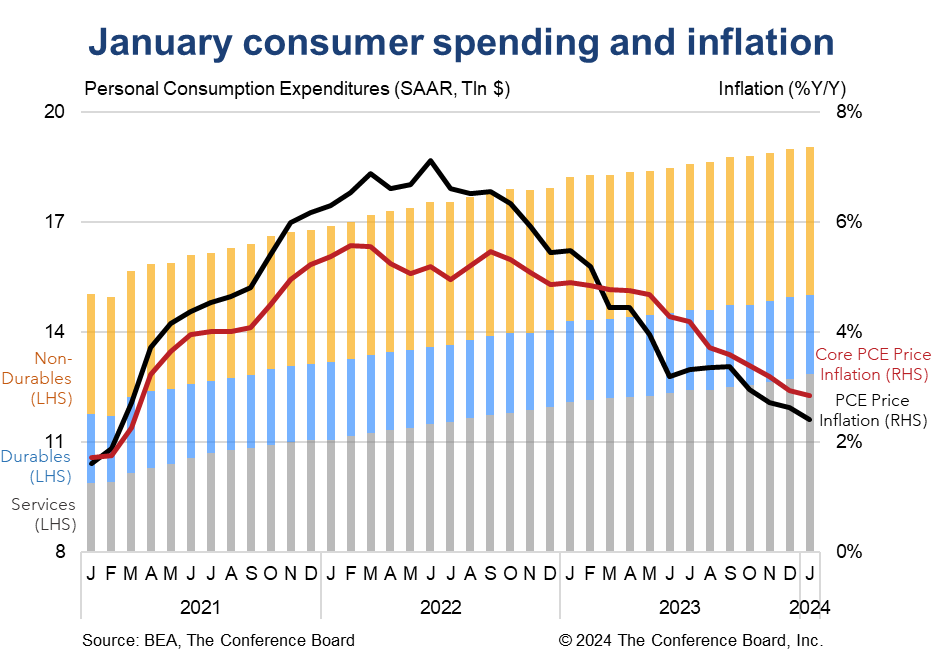
Understanding the PCE Price Index: A trader’s guide

A Guide To Understand PCE Price Index

Imagine you are at the grocery store, and you notice that the prices of many items have increased compared to your last visit. While this might be a frustrating experience for you as a consumer, it’s also a valuable data point for traders and investors who closely monitor inflation trends.

One of the key indicators they rely on is the Personal Consumption Expenditures (PCE) Price Index, a measure of the prices paid by consumers for goods and services in the United States.

As a forex trader, you are constantly on the lookout for economic indicators that can influence market movements and provide trading opportunities. One such indicator is the PCE Price Index, closely watched by the Federal Reserve as a gauge of inflation.

Grasping the nuances of this index can give you valuable insights into the central bank’s monetary policy decisions and their potential impact on currency and commodity markets.

What is the PCE Price Index?

The PCE Price Index is a measure of the prices paid by consumers for goods and services. It is calculated and published by the Bureau of Economic Analysis (BEA), and it serves as one of the key inflation indicators closely monitored by the Federal Reserve.

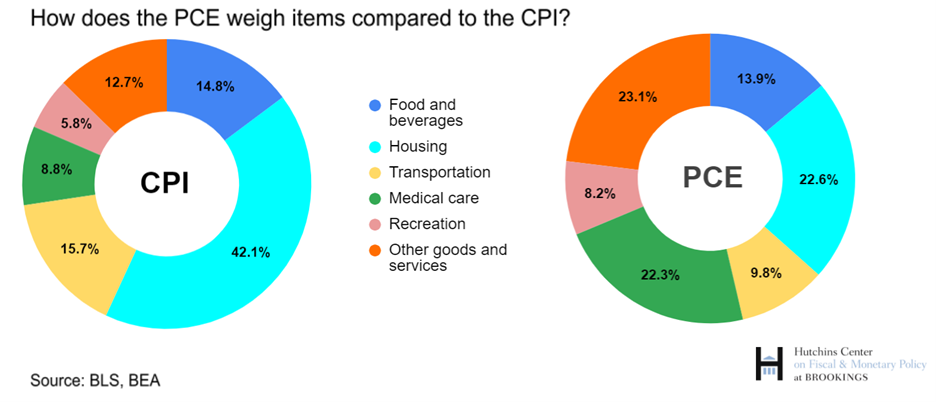
Unlike the more widely known Consumer Price Index (CPI), the PCE Price Index includes a broader range of consumer spending, including healthcare and housing services.

The PCE Price Index is used to calculate inflation by tracking the percentage change in the prices of the basket of goods and services over time.

Specifically, the BEA compares the cost of this basket in the current period to the cost of the same basket in a base period. The percentage change in the cost represents the rate of inflation or deflation.

For example, if the basket costs USD 100 in the base period and USD 102 in the current period, the PCE Price Index would show a 2% increase, indicating an annual inflation rate of 2%.

This inflation rate is then used by policymakers and investors to gauge the overall price level changes in the economy.

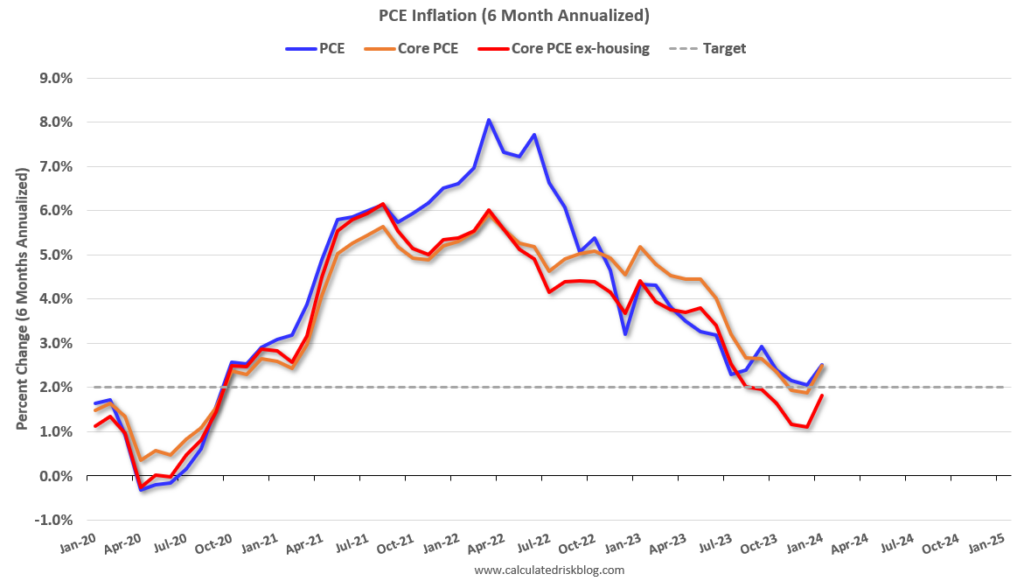
The PCE Price Index is also divided into headline and core measures. The headline index includes all goods and services, while the core index excludes volatile food and energy prices.

The core PCE is often considered a better measure of underlying inflation trends, as it filters out temporary price fluctuations caused by factors such as changes in energy prices.

PCE vs CPI: Key differences and advantages

There are several important indices used to measure inflation in the United States, each with its own methodology and focus.

Some of the commonly cited inflation measures include the Producer Price Index (PPI), which tracks prices at the wholesale level, the Import Price Index, monitoring inflation for imported goods, and the Employment Cost Index, focusing on changes in labour costs.

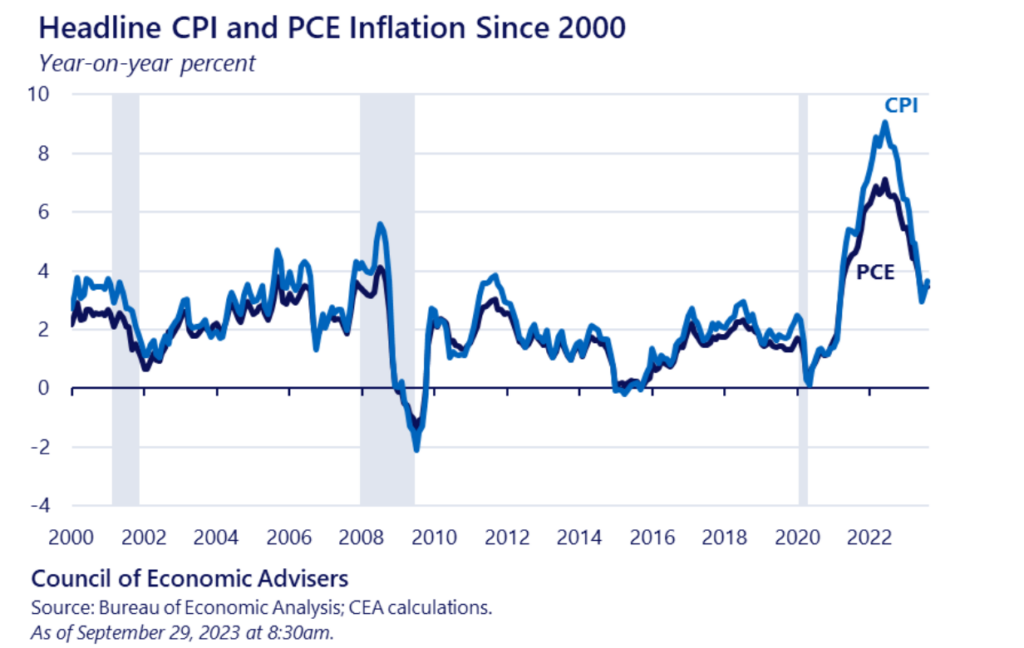
However, the two most widely followed and influential inflation gauges are the Personal Consumption Expenditures Price Index and the Consumer Price Index. While both the PCE and CPI indices measure inflation, there are several key differences between the two.

The CPI is based on a different basket of goods and services, uses different weightings, and does not account for substitution effects, where consumers switch to cheaper alternatives when prices rise.

In contrast, the PCE Price Index is preferred by the Federal Reserve as its primary inflation gauge due to its broader coverage of consumer spending, including services like healthcare and housing. Additionally, the PCE Price Index captures substitution effects, reflecting how consumers adapt their spending patterns as prices change.

Furthermore, the PCE Price Index’s methodology is designed to account for changes in consumer preferences over time. The index is adjusted to reflect shifts in consumer behaviour, ensuring that it remains an accurate measure of inflation as spending patterns evolve.

This dynamic approach enhances the index’s relevance and reliability in capturing the true cost of living.

Using the PCE Price Index for trading

As a forex trader, you can use the PCE Price Index to anticipate potential changes in monetary policy by the Federal Reserve.

The Fed closely monitors the PCE Price Index as part of its dual mandate of maintaining price stability and maximising employment.

If the PCE Price Index shows that inflation is rising above the Fed’s target rate (typically around 2%), it may signal that the central bank will tighten monetary policy by raising interest rates. Conversely, if inflation remains persistently low, the Fed may consider lowering interest rates or implementing other stimulative measures.

Changes in interest rates can have a significant impact on currency and commodity markets. Higher interest rates tend to strengthen a currency, making it more attractive for foreign investors, while lower rates can weaken a currency’s value.

Similarly, changes in interest rates can influence the demand for commodities, as they affect the cost of carrying inventories and the overall level of economic activity.

By closely monitoring the PCE Price Index and its implications for monetary policy, traders can position themselves to take advantage of potential market movements. For example, if the PCE Price Index data suggests that the Fed is likely to raise interest rates, traders may consider going long on the U.S. dollar or shorting commodity positions.

Conclusion For Understanding PCE Price Index

The PCE Price Index is a crucial inflation indicator that provides valuable insights into the Federal Reserve’s monetary policy decisions. By understanding how the index is calculated, its advantages over other measures, and its impact on interest rates and market movements, forex and CFD traders can incorporate this information into their trading strategies.

Staying up-to-date with PCE Price Index data releases and analysing the potential implications for monetary policy can help traders identify potential trading opportunities and manage their risk more effectively. As with any economic indicator, it’s essential to combine the PCE Price Index analysis with other technical and fundamental factors to make informed trading decisions.

FAQ: Understanding the PCE Price Index for Trading

Is the PCE Price Index Suitable for Beginners?

Yes, the PCE Price Index is suitable for beginners. It offers a clear measure of inflation, which is key for economic analysis. Understanding how inflation affects monetary policy and markets can help beginners make informed decisions.

What Currencies Does the PCE Price Index Affect?

The PCE Price Index mainly affects the U.S. dollar (USD). Changes in U.S. inflation and Federal Reserve decisions impact the USD’s value against other currencies. Thus, currency pairs like EUR/USD, GBP/USD, and USD/JPY are significantly influenced by the PCE Price Index.

What are the Best Strategies for Trading Based on the PCE Price Index?

Here are some effective strategies:

  • Monitor Data Releases: Keep track of monthly PCE data releases and analyze the results.
  • Anticipate Interest Rates: Use PCE data to predict Federal Reserve interest rate changes.
  • Focus on USD Pairs: Trade USD currency pairs to capitalize on market movements.
  • Combine Indicators: Use the PCE Price Index with other technical and fundamental indicators.

How Often is the PCE Price Index Updated?

The PCE Price Index is updated monthly. Mark your calendar for these releases and be ready to adjust your trading strategies.

How Does the PCE Price Index Compare to Other Inflation Indicators?

The PCE Price Index is more comprehensive than the Consumer Price Index (CPI) because it covers a broader range of expenditures and adjusts for consumer behavior. The Federal Reserve prefers the PCE as its inflation measure.

What Tools Help in Analyzing the PCE Price Index?

Economic calendars for tracking release dates, charting tools for technical analysis, and up-to-date market news can help traders analyze and use the PCE Price Index effectively.

Can the PCE Price Index Be Used for Long-Term Trading?

Yes, it can. Understanding long-term inflation trends and potential shifts in monetary policy helps traders make informed decisions about holding or adjusting positions over extended periods.

Ready to incorporate the PCE Price Index into your trading strategy? Stay informed and take advantage of market opportunities. Open a demo account with VT Markets today and practice your strategies risk-free!

Back To Top
server

Hello there 👋

How can I help you?

Chat with our team instantly

Live Chat

Start a live conversation through...

  • Telegram
    hold On hold
  • Coming Soon...

Hello there 👋

How can I help you?

telegram

Scan the QR code with your smartphone to start a chat with us, or click here.

Don’t have the Telegram App or Desktop installed? Use Web Telegram instead.

QR code