Back

IBM in 2024: A Beacon of Resilience in the Tech Sector

A Look At IBM Shares in 2024

International Business Machines (IBM), a stalwart in the technology sector, continues to command attention in the stock market. With its robust performance and strategic initiatives, IBM is a stock that investors should keep on their radar.

Company Snapshot

IBM, a multinational technology company, has been at the forefront of innovation for over a century. Recently, IBM has made significant strides in the realms of hybrid cloud and artificial intelligence (AI). This is evidenced by its AI offerings, WatsonX and Generative AI, which saw business double from Q3 to Q4 in 2023.

IBM’s commitment to innovation is also seen in its partnerships and acquisitions. The company has been collaborating with leading firms to enhance its AI and cloud capabilities. These strategic moves aim to provide integrated solutions that meet the evolving needs of businesses.

IBM Financial Performance

IBM’s financial performance in 2023 was commendable. The company reported a revenue of $17.4 billion in Q4, marking a 4% increase. This growth was reflected across all segments, including software and consulting. Profit margins also saw an uptick, with a gross profit margin at 59.1%.

In addition to revenue growth, IBM’s cost management strategies have improved its profitability. For 2024, IBM expects revenue performance in line with its mid-single digit model and about $12 billion in free cash flow. This financial outlook underscores IBM’s ability to generate steady returns for its investors.

IBM’s strategic focus on high-growth areas like AI and hybrid cloud has been pivotal. These segments are expected to drive future revenue and profitability, making IBM a solid choice for long-term investors.

Investment Opportunity

IBM presents a compelling investment opportunity. Its focus on hybrid cloud and AI solutions positions it well to capitalize on the accelerating demand for these technologies. Moreover, IBM’s stock has shown resilience, soaring by 12.3% in January 2024.

IBM’s innovation extends to its product offerings, which include cutting-edge solutions designed to enhance business operations. The company’s AI solutions, such as WatsonX, are tailored to improve decision-making processes across various industries. This adaptability makes IBM a versatile player in the tech market.

Additionally, IBM’s strong financial health and consistent dividend payouts make it an attractive option for income-focused investors. The company’s ability to maintain a steady dividend stream highlights its commitment to returning value to shareholders.

Risks and Considerations

Investing in IBM, like any stock, comes with potential risks. Market volatility and industry-specific challenges could impact the stock’s performance. However, IBM’s diverse portfolio and long-standing reputation in the tech sector provide some level of stability.

It’s important to note that technological advancements and competitive pressures could pose challenges. IBM must continue to innovate and adapt to stay ahead in a rapidly changing industry. Moreover, global economic uncertainties and regulatory changes can also influence market dynamics and affect IBM’s operations.

Investors are encouraged to conduct further research and consider diversification as part of their investment strategy. Diversifying across different sectors and asset classes can help mitigate potential risks associated with investing in a single company.

Future Outlook

Looking ahead, IBM’s strategic initiatives in AI and hybrid cloud are expected to drive growth. The company’s focus on expanding its cloud infrastructure and enhancing AI capabilities aligns with market trends. As businesses increasingly adopt digital solutions, IBM is well-positioned to benefit from this shift.

IBM’s commitment to sustainability and corporate responsibility also adds to its appeal. The company has been actively working towards reducing its carbon footprint and promoting sustainable practices. These efforts not only contribute to environmental goals but also enhance IBM’s brand reputation.

FAQ

Q: Can Beginners Trade IBM Shares CFD?

A: Yes, beginners can trade IBM shares CFD. Trading CFDs allows you to speculate on the price movements of IBM shares without owning the actual shares. Platforms like VT Markets provide educational resources and demo accounts to help beginners learn the basics of CFD trading before investing real money.

Q: How Much Capital is Needed to Start Trading IBM Shares CFD?

A: The amount of capital needed to start trading IBM shares CFD can vary. A good starting amount might be around $500 to $1,000. This allows for sufficient margin and the ability to manage risk effectively. Always ensure you have enough funds to cover potential losses and consider starting with a demo account to practice.

Q: What Other Factors Affect the Share Price of IBM?

A: Several factors can affect the share price of IBM, including:

  • Financial Performance: Quarterly earnings reports, revenue growth, and profit margins.
  • Industry Trends: Developments in the technology sector, particularly in AI and cloud computing.
  • Economic Conditions: Overall economic health, interest rates, and global market trends.
  • Competitive Landscape: Innovations and strategies from competitors in the tech industry.
  • Regulatory Changes: Government policies and regulations affecting the tech sector.

Q: What Will Be IBM’s Direction in 5 – 10 Years? And Is It Worth Trading It Long-Term?

A: IBM’s direction in the next 5 to 10 years is expected to focus heavily on AI and hybrid cloud solutions. The company’s investments in these high-growth areas position it well for future success. Trading IBM long-term can be worthwhile due to its robust financial health, consistent dividend payouts, and strategic initiatives. However, it’s essential to stay informed about industry trends and potential risks to make well-informed investment decisions.

Q: How does IBM’s dividend policy benefit investors?

A: IBM’s consistent dividend payouts provide a steady income stream for investors. This commitment to returning value to shareholders makes IBM an attractive option for income-focused investors.

Ready to start trading IBM shares CFD? Open a demo account with VT Markets today to practice trading without any financial risk.
A Full Guide to Pros and Cons of Long Term Investing in ETFs

Long Term Investing in ETFs

Exchange-traded funds (ETFs) are popular investment vehicles that allow investors to buy and sell a basket of securities, such as stocks, bonds, commodities, or currencies, on an exchange. ETFs offer many benefits, such as diversification, low costs, tax efficiency, and liquidity. However, they also have some drawbacks, such as tracking error, market risk, and trading fees.

Let’s explore the pros and cons of investing in ETFs in the long term with some simple examples to explain the concepts.

Pros of Investing in ETFs in the Long Term

Diversification:

Diversification means spreading your money across different types of assets or sectors, which can reduce your overall risk and volatility. For example, if you invest in a broad-market ETF that tracks the S&P 500 index, you will own a small piece of 500 large-cap US companies from various industries. This way, you can avoid putting all your eggs in one basket and expose yourself to the performance of a single company or sector.

Low Cost:

Another benefit of investing in ETFs in the long term is low costs. ETFs typically have lower expense ratios than mutual funds, which means they charge lower fees for managing the fund. For example, the average expense ratio for US equity ETFs is 0.44%, while the average expense ratio for US equity mutual funds is 1.25%, according to Morningstar data as of December 2020.

This means that if you invest $10,000 in an ETF with a 0.44% expense ratio, you will pay $44 per year in fees. In contrast, if you invest the same amount in a mutual fund with a 1.25% expense ratio, you will pay $125 per year in fees.

Tax Efficiency:

A third advantage of investing in ETFs in the long term is tax efficiency. ETFs are generally more tax-efficient than mutual funds because they generate fewer capital gains distributions. Capital gains distributions are taxable events that occur when a fund sells some of its holdings at a profit. ETFs tend to have lower turnover than mutual funds, meaning they trade less frequently and trigger fewer capital gains distributions.

For example, the average turnover rate for US equity ETFs is 40%, while the average turnover rate for US equity mutual funds is 63%, according to Morningstar data as of December 2020. This means that ETFs are less likely to incur capital gains taxes than mutual funds.

Cons of Investing in ETFs in the Long Term

Tracking Error:

The first drawback of investing in ETFs for the long run is tracking error. Tracking error is the difference between the performance of an ETF and its underlying index or benchmark. Tracking error can occur due to various factors, such as fees, rebalancing, market conditions, or fund structure.

For example, if an ETF that tracks the S&P 500 index returns 10% in a year, while the S&P 500 index returns 11% in the same period, the tracking error is 1%. This means that the ETF underperformed its benchmark by 1%.

Market Risk:

This is another drawback of investing in ETFs for the long term. Market risk is the risk of losing money due to fluctuations in the market prices of the securities held by an ETF. Market risk can be affected by various factors, such as economic conditions, political events, or natural disasters. For example, if an ETF that invests in emerging markets suffers a loss due to a currency crisis or political turmoil in one of its countries, this is an example of market risk.

Trading Fees:

The third drawback of investing in ETFs in the long term is trading fees. Trading fees are the costs associated with buying and selling an ETF on an exchange. Trading fees can include commissions charged by brokers, bid-ask spreads charged by market makers, and premiums or discounts charged by fund providers.

For example, if you buy an ETF with a $5 commission fee and a 0.1% bid-ask spread, and sell it with another $5 commission fee and a 0.1% bid-ask spread, you will pay $20 in total trading fees.

Additional Considerations for Long-Term ETF Investments

VT Markets Platform Benefits:

Investing in ETFs through a reputable platform like VT Markets provides additional advantages:

  • Advanced Trading Tools: VT Markets offers a suite of advanced trading tools to help you make informed investment decisions.
  • Educational Resources: Access comprehensive educational materials to enhance your understanding of ETF investing.
  • Demo Accounts: Practice trading with virtual funds to get comfortable with the platform and refine your strategies without financial risk.

Key Points to Remember:

  • Long-Term Perspective: Investing in ETFs requires patience and a long-term perspective. Understand that market fluctuations are normal.
  • Regular Reviews: Periodically review your ETF portfolio to ensure it aligns with your investment goals and risk tolerance.
  • Diversified Approach: Maintain a diversified portfolio to mitigate risks and take advantage of different market opportunities.

FAQ

Q: Is ETF Trading Suitable for Beginners?

A: Yes, ETF trading is suitable for beginners. ETFs offer diversification, lower costs, and ease of trading. This helps new investors build a balanced portfolio without picking individual stocks. Additionally, VT Markets provides educational resources and demo accounts to help beginners learn before investing real money.

Q: What is a Good Starting Amount for ETF Trading?

A: A good starting amount for ETF trading is around $500 to $1,000. This allows for diversification across several ETFs and keeps trading fees low. Ensure you have enough funds to cover potential losses.

Q: What is the Best Strategy for ETF Trading?

A: The best strategy for ETF trading includes:

  • Regular Contributions: Add to your investments over time to smooth out market volatility.
  • Rebalancing: Periodically review and adjust your portfolio to maintain your desired asset allocation.
  • Research: Stay informed about market trends and economic conditions that might affect your ETFs.
  • Utilize Tools: Use advanced trading tools and educational resources from platforms like VT Markets to enhance your strategy.

Q: What are the main benefits of investing in ETFs?

A: The main benefits include diversification, low costs, tax efficiency, and liquidity.

Q: What is tracking error in ETFs?

A: Tracking error is the difference between the performance of an ETF and its underlying index or benchmark.

Q: How does VT Markets enhance ETF investing?

A: VT Markets provides advanced trading tools, educational resources, and demo accounts to help investors make informed decisions and practice trading without financial risk.

Q: Are there any risks associated with investing in ETFs?

A: Yes, risks include market risk, tracking error, and trading fees.

Q: How can I practice trading ETFs without risking money?

A: Open a demo account with VT Markets to practice trading with virtual funds and get a feel for the market.

Ready to start trading ETFs? Open a demo account with VT Markets today to practice trading without any money.

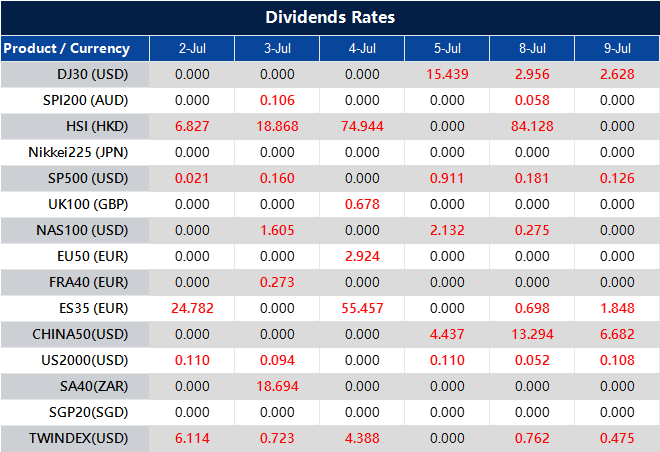
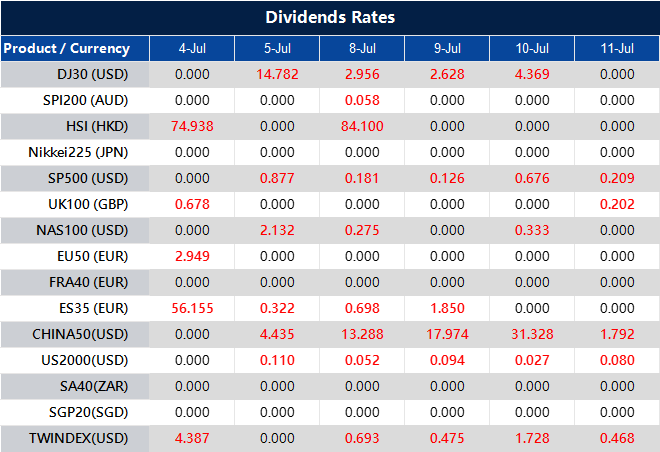
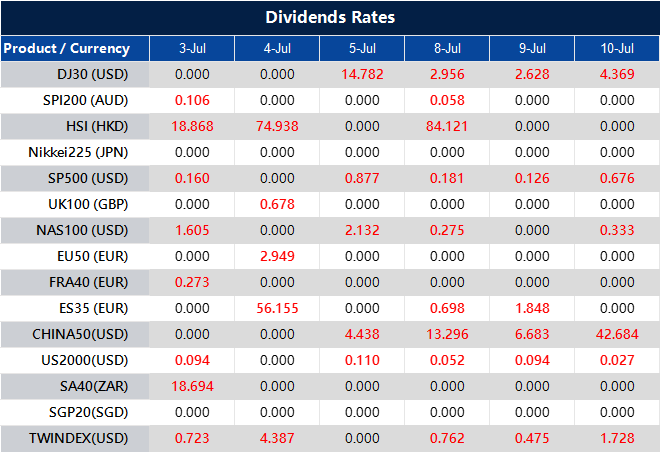
Dividend Adjustment Notice – July 4,2024

Dear Client,

Please note that the dividends of the following products will be adjusted accordingly. Index dividends will be executed separately through a balance statement directly to your trading account, and the comment will be in the following format “Div & Product Name & Net Volume ”.

Please refer to the table below for more details:

The above data is for reference only, please refer to the MT4/MT5 software for specific data.

If you’d like more information, please don’t hesitate to contact info@vtmarkets.com.

Step-by-Step Guide to Choosing the Best Indices to Day Trade

Choosing The Best Indices To Day Trade

If you’re interested in trading the stock market, you might have heard of stock indices. But what are they, and how can you trade them?

Let’s read further as we explain what stock indices are, how they are calculated, and what are the best indices to day trade. We’ll also give you some tips on how to choose the most traded indices in the world and how to open a demo account to practice trading without any money.

What are Stock Indices?

First, let’s break down what a stock index is. Simply put, it’s a measurement of a section of the stock market. It’s computed from the prices of selected stocks, typically representing a particular market or a type of stock.

For example, the S&P 500 index tracks the performance of 500 large companies in the US. The Dow Jones Industrial Average (DJIA) tracks the performance of 30 blue-chip companies in the US. The FTSE 100 index tracks the performance of 100 large companies in the UK.

Globally Most Traded Indices

Choosing the most traded indices in the world involves analyzing several factors.

  • Liquidity: Highly traded indices like the S&P 500, Dow Jones, and NASDAQ have high liquidity, making them attractive to investors.
  • Diversification: Indices that cover a broad range of sectors provide a good hedge against sector-specific risks.
  • Economic Stability: Indices from stable economies tend to be less volatile.
  • Historical Performance: While past performance doesn’t guarantee future results, it can provide insights into the index’s potential returns.
  • Investment Goals and Risk Tolerance: Some indices are more volatile than others, offering higher potential returns but also higher risk. Emerging market indices can be more volatile than those from developed markets.

Always remember, thorough research and understanding of the index are crucial before making an investment decision.

Best Indices to Day Trade

Day trading involves opening and closing positions within the same day, using technical analysis, charts, and indicators. Day traders aim to take advantage of short-term price fluctuations and capture small profits frequently.

To choose the best indices to day trade, consider these factors:

  • Volatility: Higher volatility means more opportunities for profit but also more risk.
  • Liquidity: Higher liquidity means lower spreads and lower transaction costs.
  • Trading Hours: Trade during high activity and volume times, usually the opening and closing hours of major exchanges.
  • Correlation: Avoid trading highly correlated indices to maintain diversification.

Based on these criteria, some of the best indices to day trade are:

  • S&P 500: High volatility, liquidity, and trading hours. Covers the largest and most active market in the world.
  • Nasdaq 100: Focuses on technology and innovation. Higher volatility than the S&P 500.
  • DAX 30: Represents Europe’s largest economy. High volatility and liquidity.
  • Nikkei 225: Reflects Japan’s economy. High volatility and trading hours.

Taking the Plunge

Step 1: Understand Your Options

The world of indices is vast. The most traded indices globally include the Dow Jones Industrial Average (DJIA), the S&P 500, and the Nasdaq Composite in the United States. Across the pond, there’s the FTSE 100 in the UK and the DAX in Germany. Asia offers the Nikkei 225 in Japan and the Shanghai Composite in China. Each of these indices has its characteristics and is influenced by different economic factors.

Step 2: Match the Index to Your Trading Style

Consider your trading style. Are you a quick in-and-out trader, or do you prefer to hold positions longer? Indices like the Nasdaq Composite, known for its tech-heavy listing, might appeal to those looking for high volatility. In contrast, the DJIA, with its long-standing companies, might suit traders preferring less volatility.

Step 3: Analyze the Market Conditions

Market conditions play a vital role. If the tech sector is booming, the Nasdaq Composite might present more opportunities. During economic uncertainty, broader indices like the S&P 500 can provide a safer bet due to their diversified nature.

Step 4: Consider the Trading Hours

Different indices operate in different time zones. The Nikkei 225 in Japan, for example, trades during Asian business hours. If you’re based in New York, this means early morning trading. Consider your availability and how active you want to be during these hours.

Step 5: Use a Demo Account for Practice

Before diving in with real money, open a demo account to practice trading. This will allow you to get a feel for how different indices behave without any financial risk.
In a Nutshell

Choosing the right stock index to trade is a balancing act of:

  • Understanding market trends,
  • Matching them with your trading style,
  • Considering logistical aspects like trading hours.

Whether you opt for the high-octane Nasdaq Composite or the steadier DJIA, the key is to stay informed and adaptable.

FAQ

Q: What is a stock index?

A: A stock index is a measurement of a section of the stock market, computed from the prices of selected stocks. Examples include the S&P 500, DJIA, and FTSE 100.

Q: Why is liquidity important in choosing indices to trade?

A: High liquidity ensures that you can buy or sell an index easily without significantly affecting its price, resulting in lower spreads and transaction costs.

Q: How do trading hours affect day trading indices?

A: Trading during high activity and volume times, usually the opening and closing hours of major exchanges, can provide more trading opportunities and better pricing.

Q: What role does volatility play in day trading indices?

A: Higher volatility means more price movements, offering more opportunities for profit but also increasing risk.

Q: Why should I use a demo account for practice?

A: A demo account allows you to practice trading with virtual funds, helping you understand how different indices behave without any financial risk.
Q: How do I choose the best index for my trading style?

A: Match the index to your trading style by considering factors like volatility, liquidity, market conditions, and trading hours to find the best fit.

Q: What are some of the best indices to day trade?

A: Some of the best indices to day trade include the S&P 500, Nasdaq 100, DAX 30, and Nikkei 225, due to their high volatility, liquidity, and active trading hours.

Open a demo account with VT Markets today and start trading the best indices to day trade and the most traded indices in the world, risk-free. Our advanced trading platforms MT4, comprehensive educational resources, and exceptional customer support will guide you every step of the way.

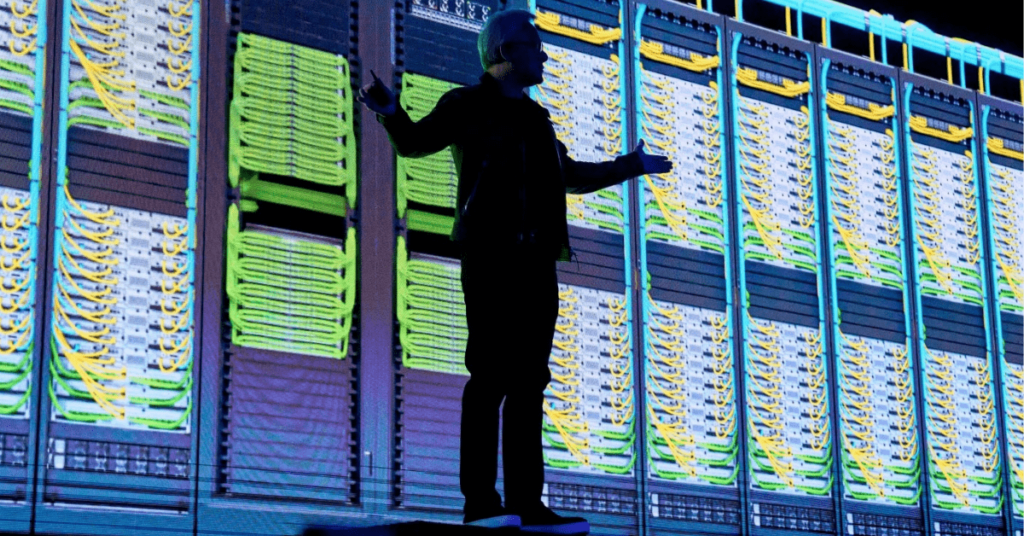
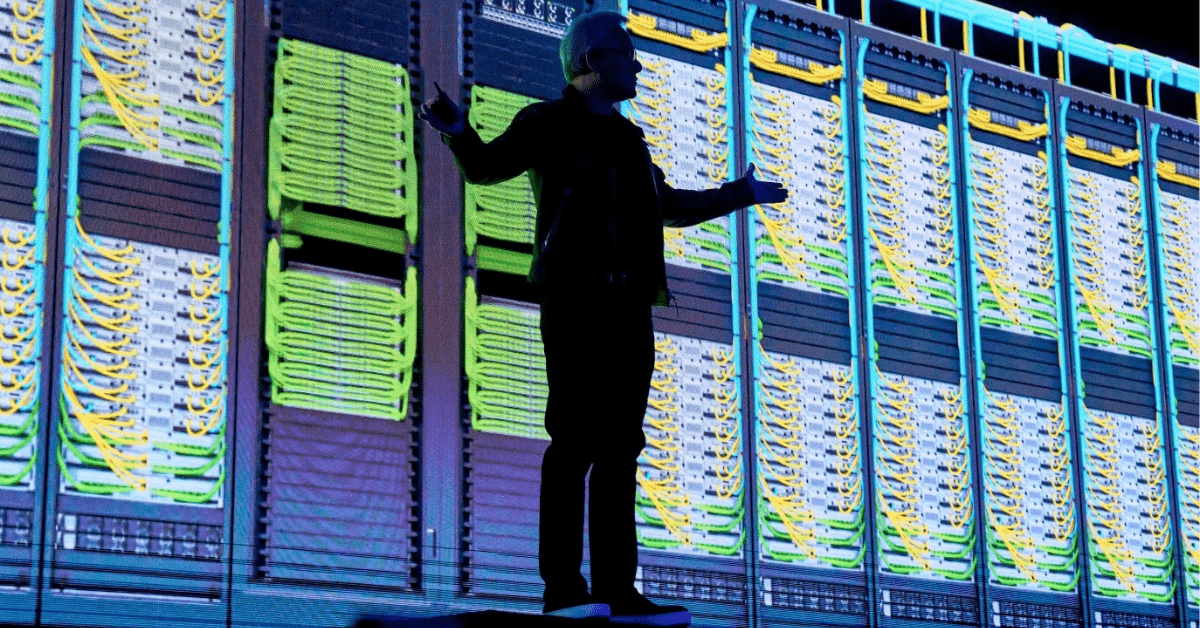
Why is Nvidia’s stock price soaring?

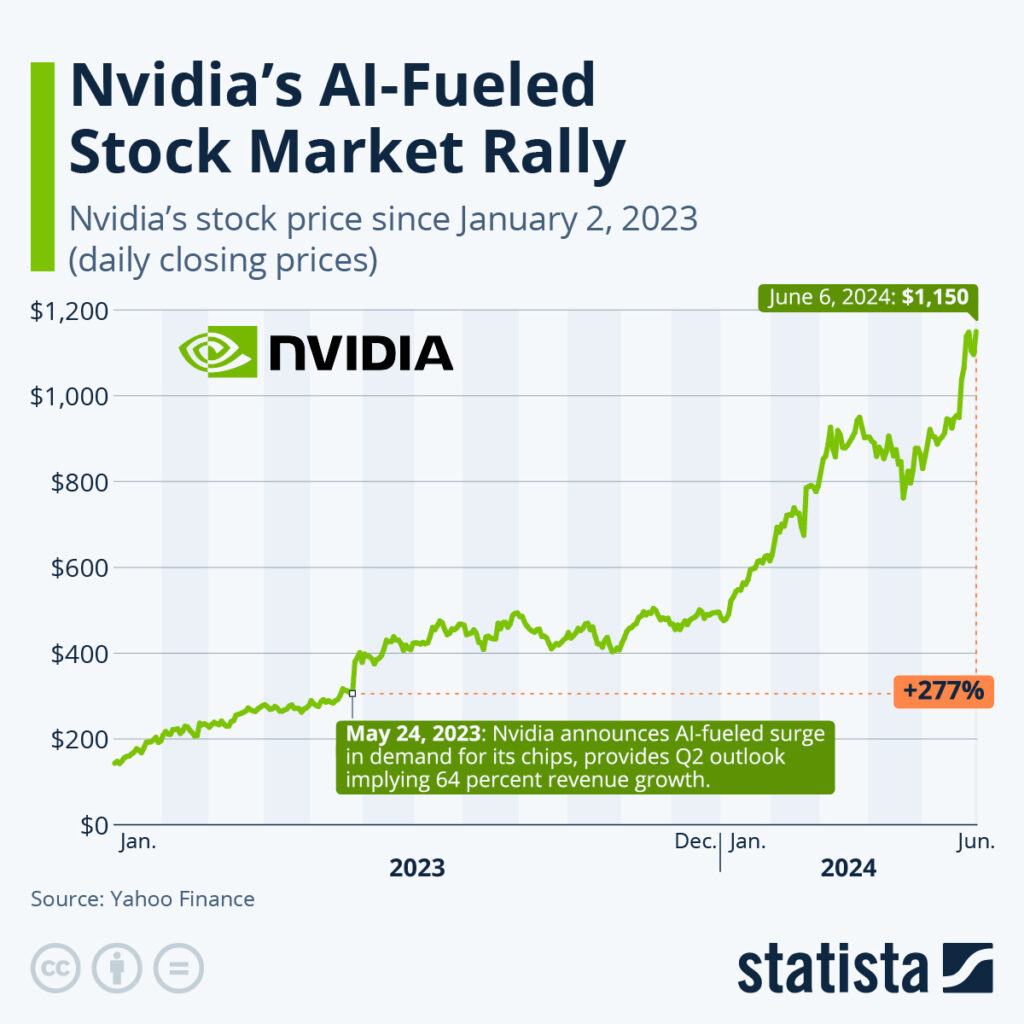
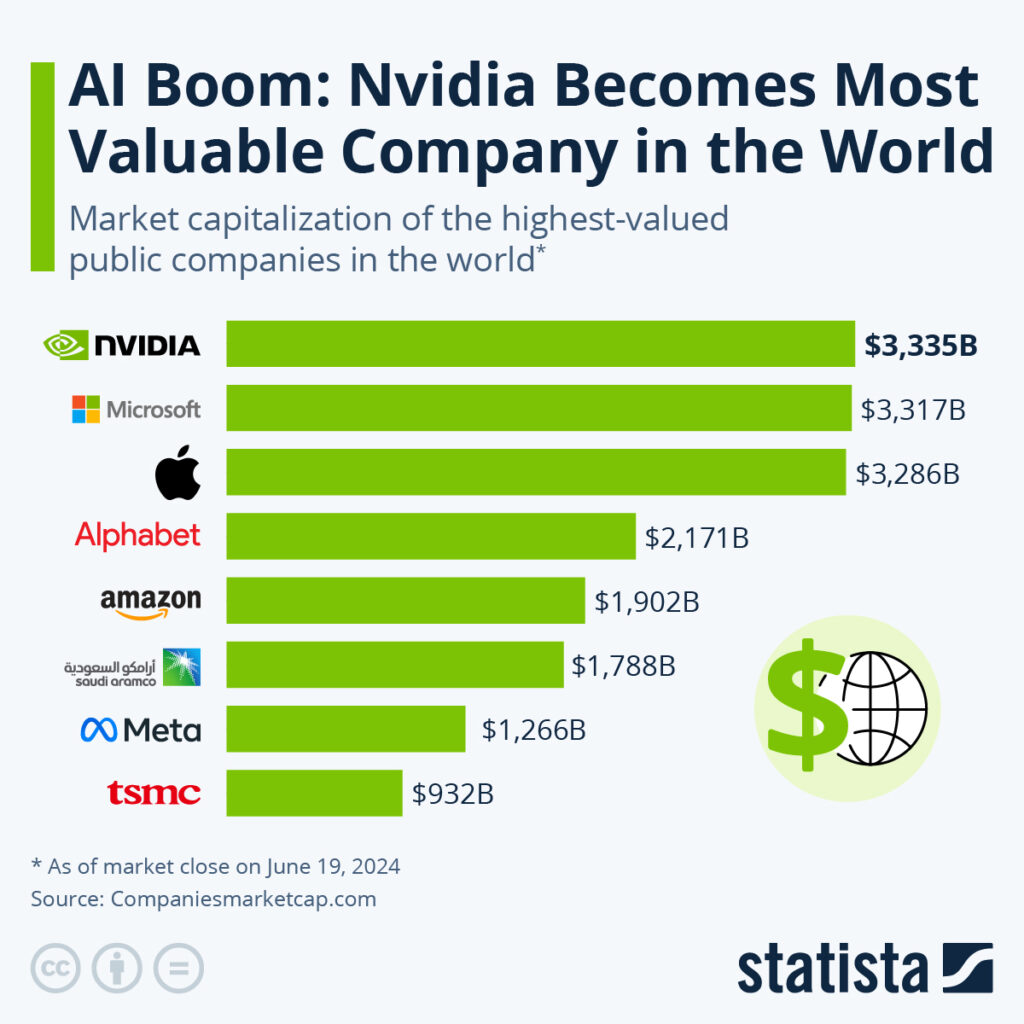
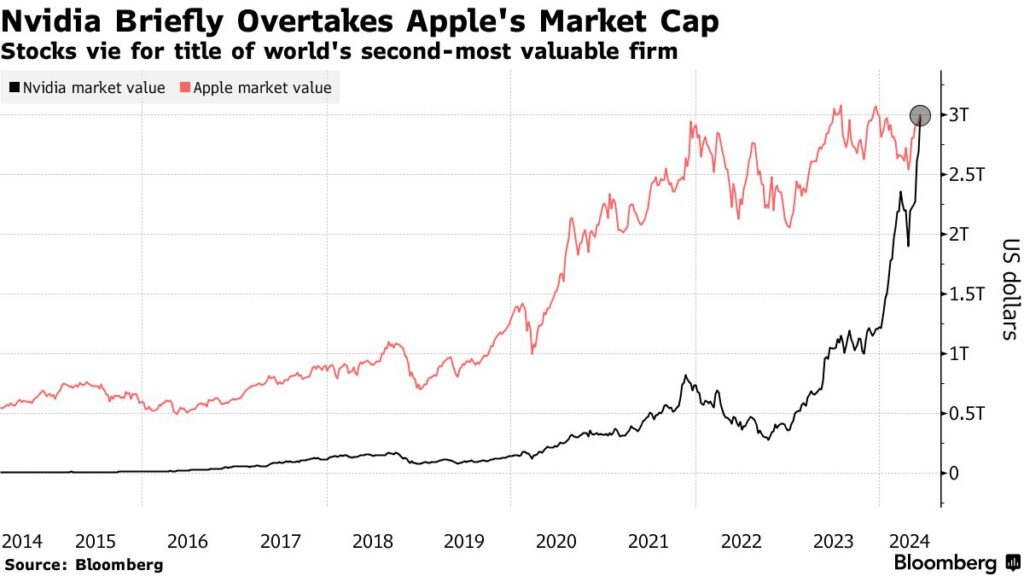
Nvidia’s stock price has been on a tear recently, surpassing the coveted USD 3 trillion market cap. This meteoric rise has captivated investors worldwide, particularly those interested in the chipmaking and artificial intelligence (AI) sectors. But what’s propelling Nvidia to such dizzying heights? Let’s delve deeper into the key factors driving this impressive rally.

Dominating demand: A force across established and emerging markets

At the core of Nvidia’s success lies its dominance in the Graphics Processing Unit (GPU) market.  GPUs are the workhorses behind powerful gaming PCs, enabling smooth and immersive visuals. However, Nvidia’s reach extends far beyond the realm of gamers.

Data centres are a major driver of demand for Nvidia’s GPUs. These massive computing facilities require immense processing power to handle complex tasks like scientific simulations, financial modelling, and large-scale data analysis.

Nvidia’s GPUs excel in these computationally intensive workloads, making them the preferred choice for leading data centre operators. According to Grand View Research, the global data centre GPU market is expected to reach a staggering USD 71 billion by 2030. This growth signifies the continued reliance established markets have on Nvidia’s technology.

Artificial intelligence is another significant factor propelling Nvidia’s growth. Training complex AI models requires immense computational power, and Nvidia’s GPUs have become the gold standard for this task. These models, used in everything from facial recognition software to self-driving cars, demand immense processing capabilities that traditional CPUs struggle to provide.

A report by Precedence Research predicts the global AI business will reach a staggering USD 2.6 trillion by 2032. This vast potential in the AI sector fuels significant demand for Nvidia’s GPUs.

Expanding horizons: New markets beckon

Nvidia isn’t resting on its laurels; it’s actively expanding into exciting new markets with immense potential.

The nascent Metaverse, a virtual world where users can interact and conduct business, heavily relies on Nvidia’s technology for rendering realistic and immersive environments. As the Metaverse evolves and adoption increases, the demand for Nvidia’s GPUs is expected to climb steadily.

The development of self-driving cars hinges on real-time decision-making and processing massive amounts of data. Nvidia’s GPUs provide the cutting-edge processing power needed for these complex algorithms, positioning them as a key player in the autonomous vehicle revolution.

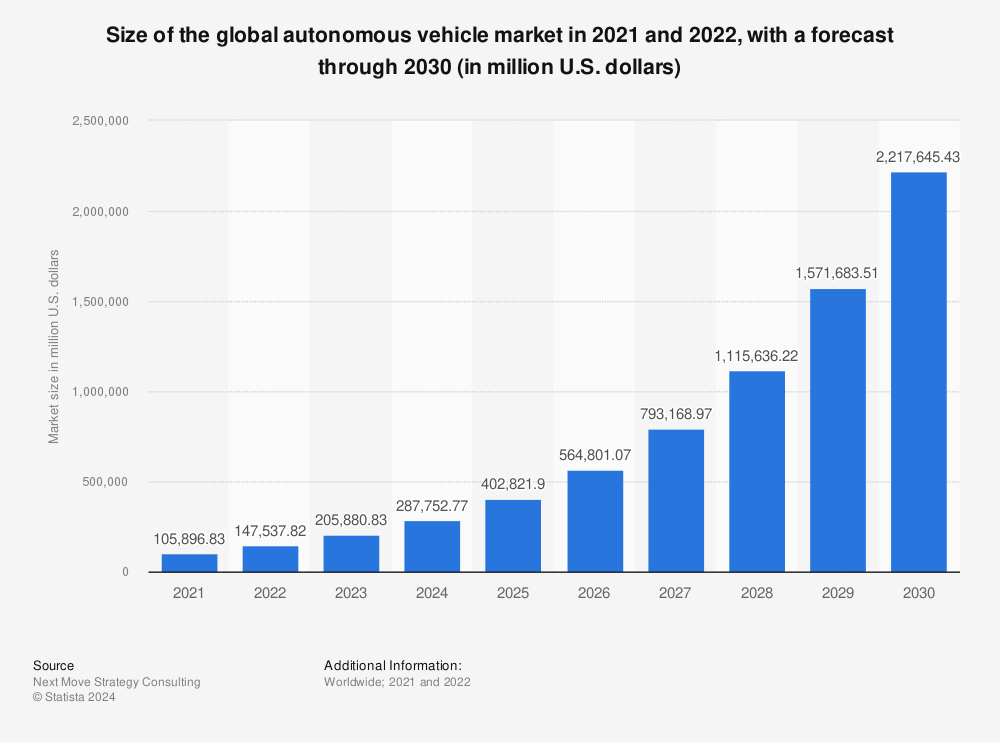
According to Next Move Strategy Consulting, the global autonomous vehicle market is projected to reach a value of USD 2.2 trillion by 2030. This projected growth signifies a significant opportunity for Nvidia in this emerging market.

Nvidia’s recent deal with Ooredoo, a telecom company in the Middle East, to bring its AI expertise to the region exemplifies its commitment to global expansion. This move not only opens new markets but also fosters wider adoption of AI technology on a global scale.

Financial strength breeds confidence

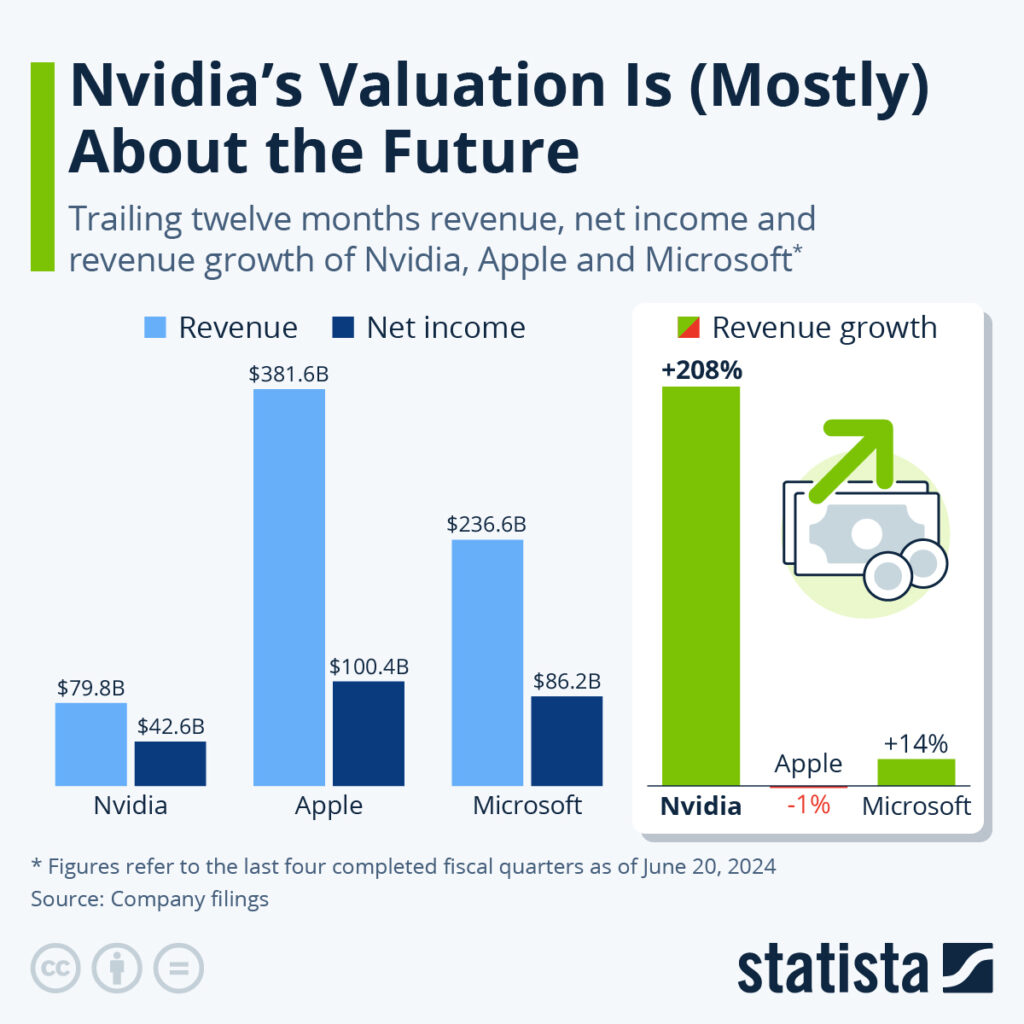
Nvidia’s financial performance has been extraordinary, with its annual revenue soaring by nearly 500% over the past five years.

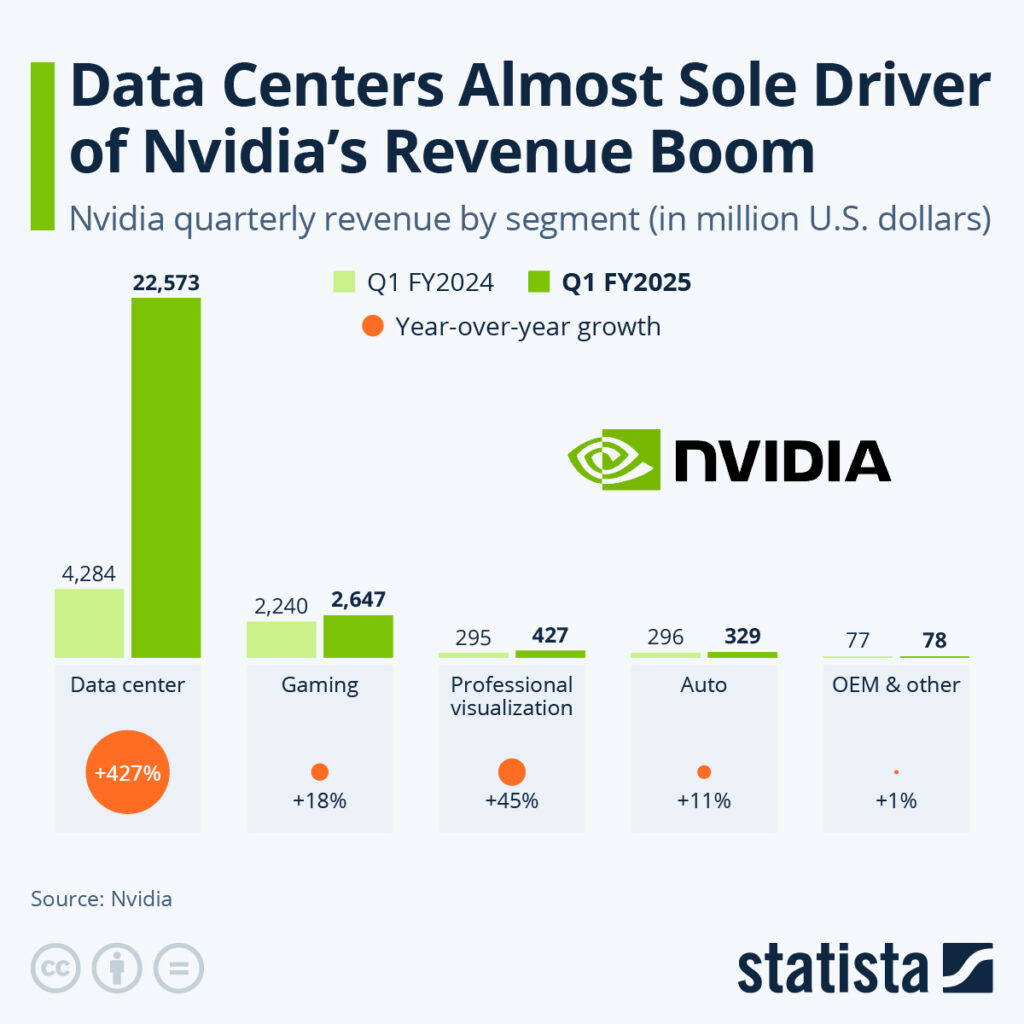
The company’s data centre business has been the primary driver of this growth, now accounting for an impressive 83% of total revenue. In Nvidia’s fiscal 2024 fourth quarter, this segment experienced a staggering 409% year-on-year increase.

Looking ahead, management’s projections remain bullish, forecasting a 234% rise in total revenue for the first quarter of fiscal 2025.

This exceptional growth is fuelled by the anticipated surge in enterprise spending on data centres, as cloud service providers ramp up their infrastructure investments to meet the escalating demand for AI-related services.

Technological edge: Maintaining the advantage

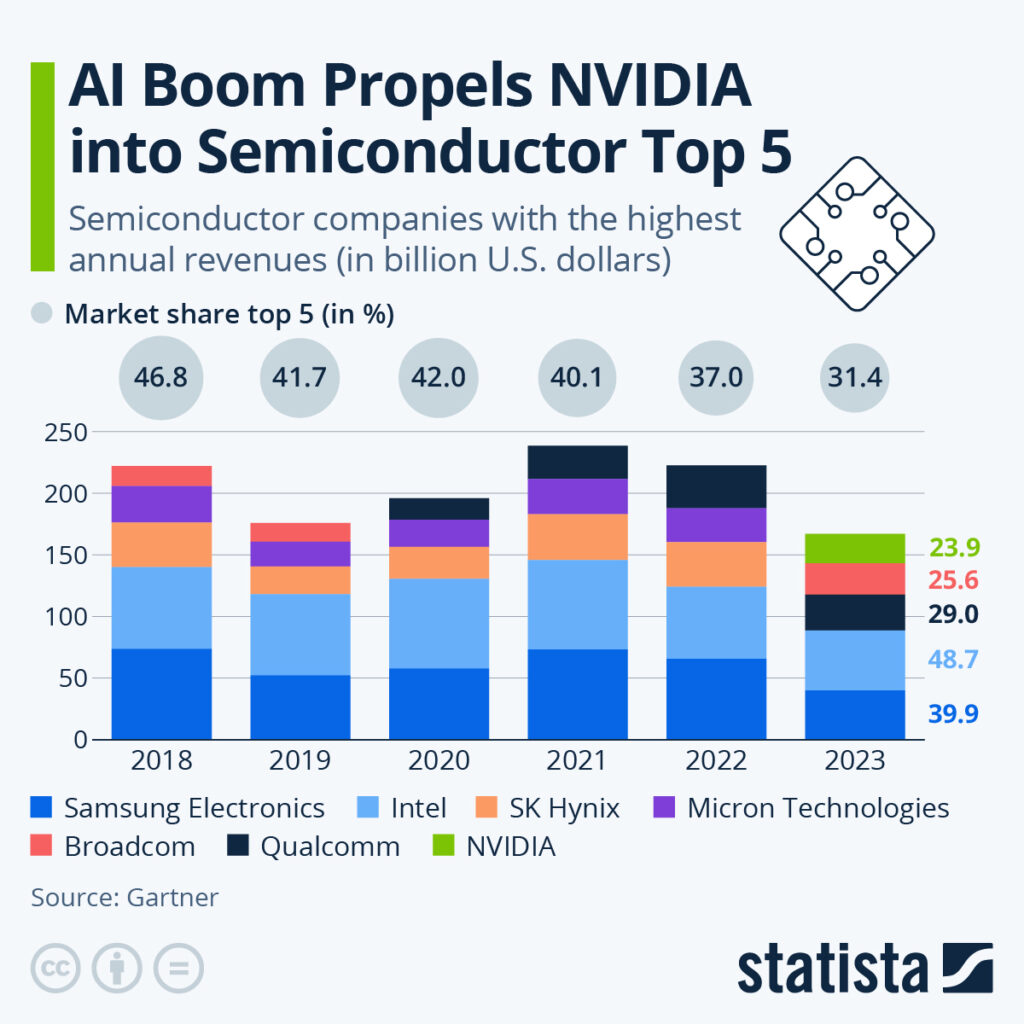
Nvidia enjoys a dominant position in the GPU market with limited competition. While rivals like AMD exist, Nvidia maintains a significant technological edge. This edge translates to higher performance and efficiency for their GPUs, making them a more attractive choice for demanding applications.

Furthermore, Nvidia’s strong research and development capabilities ensure they remain at the forefront of GPU technology.  This technological lead allows them to command higher profit margins, further enhancing their financial appeal to investors.

Currently, Nvidia holds a market share of over 80% in the discrete GPU market, according to Jon Peddie Research. This dominant position allows them to dictate the pace of innovation and maintain their leadership in the GPU market.

The road ahead: Potential risks and considerations

It’s important to acknowledge that even the most promising investments carry some level of risk. While Nvidia’s future appears bright, several factors could potentially impact its stock price:

Global economic slowdown: A global economic slowdown could dampen consumer spending on electronics, impacting the demand for Nvidia’s GPUs, particularly in the gaming segment. Lower consumer spending could lead to a decrease in revenue and potentially affect the company’s growth trajectory.

Increased competition: The chipmaking industry is highly competitive, and established players like AMD are constantly innovating. Additionally, new entrants could emerge, potentially eroding Nvidia’s market share. A more competitive landscape could put pressure on Nvidia’s pricing and profitability.

Supply chain disruptions: The global supply chain continues to face challenges, and shortages of critical components could hinder Nvidia’s production capacity. This could lead to product delays, limited availability, and potentially missed revenue opportunities.

Geopolitical tensions: Trade wars, sanctions, and export restrictions can disrupt Nvidia’s global supply chain and limit its ability to reach certain markets. Geopolitical tensions can also impact investor sentiment, leading to market volatility and affecting the stock price.

In conclusion, Nvidia stands at a crossroads of immense opportunity. Powerful forces – surging demand across established and emerging markets, particularly in AI, exceptional financial performance, and a clear technological edge – have propelled them to new heights.

However, potential economic downturns, increased competition, and geopolitical uncertainties necessitate careful consideration. Will they navigate these headwinds and continue their remarkable growth trajectory? The future remains to be written. For savvy investors seeking exposure to the cutting edge of technology, Nvidia presents a compelling case. Conduct your own thorough research and consider whether Nvidia aligns with your investment goals. VT Markets offers a platform to explore potential trading opportunities in Nvidia stocks.

Why is Nvidia’s stock price soaring?

Nvidia’s stock price has been on a tear recently, surpassing the coveted USD 3 trillion market cap. This meteoric rise has captivated investors worldwide, particularly those interested in the chipmaking and artificial intelligence (AI) sectors. But what’s propelling Nvidia to such dizzying heights? Let’s delve deeper into the key factors driving this impressive rally.

Dominating demand: A force across established and emerging markets

At the core of Nvidia’s success lies its dominance in the Graphics Processing Unit (GPU) market.  GPUs are the workhorses behind powerful gaming PCs, enabling smooth and immersive visuals. However, Nvidia’s reach extends far beyond the realm of gamers.

Data centres are a major driver of demand for Nvidia’s GPUs. These massive computing facilities require immense processing power to handle complex tasks like scientific simulations, financial modelling, and large-scale data analysis.

Nvidia’s GPUs excel in these computationally intensive workloads, making them the preferred choice for leading data centre operators. According to Grand View Research, the global data centre GPU market is expected to reach a staggering USD 71 billion by 2030. This growth signifies the continued reliance established markets have on Nvidia’s technology.

Artificial intelligence is another significant factor propelling Nvidia’s growth. Training complex AI models requires immense computational power, and Nvidia’s GPUs have become the gold standard for this task. These models, used in everything from facial recognition software to self-driving cars, demand immense processing capabilities that traditional CPUs struggle to provide.

A report by Precedence Research predicts the global AI business will reach a staggering USD 2.6 trillion by 2032. This vast potential in the AI sector fuels significant demand for Nvidia’s GPUs.

Expanding horizons: New markets beckon

Nvidia isn’t resting on its laurels; it’s actively expanding into exciting new markets with immense potential.

The nascent Metaverse, a virtual world where users can interact and conduct business, heavily relies on Nvidia’s technology for rendering realistic and immersive environments. As the Metaverse evolves and adoption increases, the demand for Nvidia’s GPUs is expected to climb steadily.

The development of self-driving cars hinges on real-time decision-making and processing massive amounts of data. Nvidia’s GPUs provide the cutting-edge processing power needed for these complex algorithms, positioning them as a key player in the autonomous vehicle revolution.

According to Next Move Strategy Consulting, the global autonomous vehicle market is projected to reach a value of USD 2.2 trillion by 2030. This projected growth signifies a significant opportunity for Nvidia in this emerging market.

Nvidia’s recent deal with Ooredoo, a telecom company in the Middle East, to bring its AI expertise to the region exemplifies its commitment to global expansion. This move not only opens new markets but also fosters wider adoption of AI technology on a global scale.

Financial strength breeds confidence

Nvidia’s financial performance has been extraordinary, with its annual revenue soaring by nearly 500% over the past five years.

The company’s data centre business has been the primary driver of this growth, now accounting for an impressive 83% of total revenue. In Nvidia’s fiscal 2024 fourth quarter, this segment experienced a staggering 409% year-on-year increase.

Looking ahead, management’s projections remain bullish, forecasting a 234% rise in total revenue for the first quarter of fiscal 2025.

This exceptional growth is fuelled by the anticipated surge in enterprise spending on data centres, as cloud service providers ramp up their infrastructure investments to meet the escalating demand for AI-related services.

Technological edge: Maintaining the advantage

Nvidia enjoys a dominant position in the GPU market with limited competition. While rivals like AMD exist, Nvidia maintains a significant technological edge. This edge translates to higher performance and efficiency for their GPUs, making them a more attractive choice for demanding applications.

Furthermore, Nvidia’s strong research and development capabilities ensure they remain at the forefront of GPU technology.  This technological lead allows them to command higher profit margins, further enhancing their financial appeal to investors.

Currently, Nvidia holds a market share of over 80% in the discrete GPU market, according to Jon Peddie Research. This dominant position allows them to dictate the pace of innovation and maintain their leadership in the GPU market.

The road ahead: Potential risks and considerations

It’s important to acknowledge that even the most promising investments carry some level of risk. While Nvidia’s future appears bright, several factors could potentially impact its stock price:

Global economic slowdown: A global economic slowdown could dampen consumer spending on electronics, impacting the demand for Nvidia’s GPUs, particularly in the gaming segment. Lower consumer spending could lead to a decrease in revenue and potentially affect the company’s growth trajectory.

Increased competition: The chipmaking industry is highly competitive, and established players like AMD are constantly innovating. Additionally, new entrants could emerge, potentially eroding Nvidia’s market share. A more competitive landscape could put pressure on Nvidia’s pricing and profitability.

Supply chain disruptions: The global supply chain continues to face challenges, and shortages of critical components could hinder Nvidia’s production capacity. This could lead to product delays, limited availability, and potentially missed revenue opportunities.

Geopolitical tensions: Trade wars, sanctions, and export restrictions can disrupt Nvidia’s global supply chain and limit its ability to reach certain markets. Geopolitical tensions can also impact investor sentiment, leading to market volatility and affecting the stock price.

In conclusion, Nvidia stands at a crossroads of immense opportunity. Powerful forces – surging demand across established and emerging markets, particularly in AI, exceptional financial performance, and a clear technological edge – have propelled them to new heights.

However, potential economic downturns, increased competition, and geopolitical uncertainties necessitate careful consideration. Will they navigate these headwinds and continue their remarkable growth trajectory? The future remains to be written. For savvy investors seeking exposure to the cutting edge of technology, Nvidia presents a compelling case. Conduct your own thorough research and consider whether Nvidia aligns with your investment goals. VT Markets offers a platform to explore potential trading opportunities in Nvidia stocks.

Dividend Adjustment Notice – July 3,2024

Dear Client,

Please note that the dividends of the following products will be adjusted accordingly. Index dividends will be executed separately through a balance statement directly to your trading account, and the comment will be in the following format “Div & Product Name & Net Volume ”.

Please refer to the table below for more details:

The above data is for reference only, please refer to the MT4/MT5 software for specific data.

If you’d like more information, please don’t hesitate to contact info@vtmarkets.com.

How to Trade Global Stock Indices for Beginners

Trading Stock Indices For Beginners

If you are interested in trading the stock market, you might have heard of the term “stock market index.” But what exactly is a stock market index, and how can you trade it? Let’s read further and discover the basics of stock market indices, how they are calculated, and how you can trade global stock indices today using online platforms.

What is a Stock Market Index?

To begin with, a stock market index is a number that represents the performance of a group of stocks. For instance, the S&P 500 index tracks the performance of 500 large companies listed on the US stock exchanges. Meanwhile, the Dow Jones Industrial Average (DJIA) tracks the performance of 30 blue-chip companies in the US, and the FTSE 100 index tracks 100 large companies listed on the London Stock Exchange.

A stock market index is calculated by adding up the market capitalisation (the total value of all shares) of all the companies in the index and then dividing it by a divisor. The divisor is a number that adjusts for changes in the index, such as stock splits, mergers, or dividends. This ensures that the index reflects only the changes in the prices of the stocks, not the changes in the number or value of the shares.

Why Trade Global Stock Indices?

There are several reasons why trading global stock indices can be beneficial:

  • Diversification: Firstly, trading global stock indices allows you to gain exposure to different markets and sectors without having to buy individual stocks. This can reduce your risk and increase your potential returns.
  • Liquidity: Additionally, global stock indices are very popular among traders and investors. This means that there is a high volume of trading activity and low spreads (the difference between the buy and sell prices). This makes it easier to enter and exit trades at favourable prices.
  • Leverage: Furthermore, trading global stock indices allows you to use leverage, which means that you can trade with more money than you have in your account. For example, if you have $1,000 in your account and use leverage of 10:1, you can trade with $10,000. This can amplify your profits but also your losses, so you need to be careful and use risk management tools.
  • Opportunities: Lastly, trading global stock indices allows you to take advantage of various opportunities in different markets and time zones. You can trade global stock indices 24 hours a day, five days a week, and benefit from price movements caused by economic events, news, or trends.

How to Trade Global Stock Indices Today

To trade global stock indices today, follow these steps:

  • Choose an online trading platform: First, select an online trading platform that offers global stock indices. Ensure the platform is regulated, secure, and reliable. Also, compare their fees, features, and customer service.
  • Open an account: Next, sign up with the platform and deposit funds. You can usually choose from various payment methods, such as credit cards, bank transfers, or e-wallets. Additionally, verify your identity and provide some personal information.
  • Find a stock index: Then, choose a global stock index that you want to trade. You can find a list of available indices on the platform’s website or app. Use charts, indicators, and analysis tools to help you decide which index to trade.
  • Place a trade order: You can either buy (go long) or sell (go short) a global stock index. Buying means you expect the index to rise in value, while selling means you expect it to fall. Specify the amount of money you want to trade and set stop-loss and take-profit orders to limit your risk and lock in profits.
  • Monitor your trade and close it: Finally, watch your trade and close your position when you are satisfied with the outcome. Use various tools to track your trade’s performance, such as alerts, notifications, or reports. You can also modify or cancel your order at any time.
  • Always use a Demo Trading Account: By trading with virtual funds, you can become familiar with the platform, understand how the market works, and develop your trading skills. This step is crucial for building confidence and improving your chances of success when you switch to a live account.

FAQ

Q: Are Stock Indices Suitable for Beginners?

A: Yes, stock indices can be suitable for beginners as they provide exposure to a broad range of stocks, reducing the risk associated with individual stocks. Indices also tend to be less volatile than single stocks, making them a good starting point for new traders.

Q: What is the Starting Capital for Stock Indices?

A: The starting capital for trading stock indices can vary depending on the platform and the level of leverage you use. However, it is generally advisable to start with at least £500 to £1,000 to ensure you have enough funds to manage risk effectively and take advantage of trading opportunities.

Q: Is VT Markets a Reliable Platform?

A: Yes, VT Markets is a reliable platform for trading stock indices. It is regulated, secure, and offers a wide range of trading tools and educational resources. The platform also provides excellent customer support to assist traders at all levels.

Q: How to Have the Best Trading Strategies for Stock Indices?

A: To develop the best trading strategies for stock indices, start by conducting thorough research and analysis. Use charts, indicators, and analysis tools to understand market trends. Practice with a demo account to test your strategies without risk. Additionally, stay informed about economic events and news that can impact the indices. Effective risk management, including the use of stop-loss and take-profit orders, is also crucial for successful trading.

Q: Can I trade global stock indices 24/7?

A: You can trade global stock indices 24 hours a day, five days a week. This allows you to take advantage of price movements caused by economic events, news, or trends in different time zones.

Ready to start trading global stock indices? Join VT Markets today and take advantage of our advanced trading platforms, comprehensive educational resources, and exceptional customer support. Open your account now and begin your trading journey with confidence!

Dividend Adjustment Notice – July 2,2024

Dear Client,

Please note that the dividends of the following products will be adjusted accordingly. Index dividends will be executed separately through a balance statement directly to your trading account, and the comment will be in the following format “Div & Product Name & Net Volume ”.

Please refer to the table below for more details:

The above data is for reference only, please refer to the MT4/MT5 software for specific data.

If you’d like more information, please don’t hesitate to contact info@vtmarkets.com.

Explore Do’s and Don’ts of Gold Trading for Beginners

Beginners Do’s and Don’ts for Forex Gold Trading

Gold is one of the most popular and valuable commodities in the world. It has a long history of being used as a store of wealth, a hedge against inflation, and a safe haven in times of uncertainty. But how can you trade gold online as a beginner? What are some of the dos and don’ts of a gold trading strategy?

Let’s explore more as we answer these questions and more. We will cover the basics of gold trading, the benefits and risks of trading gold, and some of the best practices and common mistakes to avoid when trading gold online. By the end of this post, you will have a better understanding of how to trade gold successfully and safely.

What is Gold Trading?

Gold trading is the act of buying and selling gold in various forms, such as physical gold, gold futures contracts, gold exchange-traded funds (ETFs), gold options, or gold CFDs (contracts for difference). Gold trading can be done on different platforms, such as online brokers, exchanges, or banks.

The price of gold is determined by supply and demand in the market, as well as other factors such as geopolitical events, economic data, monetary policy, and market sentiment. Gold is often quoted in US dollars per ounce, but it can also be quoted in other currencies or units.

Why Trade Gold?

There are many reasons why people trade gold, such as:

  • Diversification: Gold can help diversify your portfolio and reduce your exposure to other assets that may be correlated or volatile.
  • Hedging: Gold can protect your portfolio from inflation, currency devaluation, or market crashes. Gold tends to perform well when other assets perform poorly.
  • Speculation: Gold offers opportunities to profit from price movements in both directions, depending on your market view and trading strategy.
  • Liquidity: Gold is one of the most liquid markets in the world, with high trading volume and low transaction costs.
  • Accessibility: Gold is easy to trade online with a variety of instruments and platforms.

Dos and Don’ts of Gold Trading for Beginners

Here are some of the dos and don’ts of gold trading for beginners:

Dos:

  • Do your research: Before you start trading gold, learn about the fundamentals and technicals of the gold market, the different types of gold instruments, and the factors that affect the price of gold. Familiarise yourself with the platform you are using and the fees and risks involved.
  • Do have a plan: Have a clear goal and strategy for your gold trading. Decide how much capital you are willing to risk, what entry and exit points you will use, what risk-reward ratio you are aiming for, and what indicators or signals you will follow. Also, have a contingency plan in case things go wrong.
  • Do practice: Before trading with real money, practice with a demo account. A demo account allows you to trade with virtual money and test your strategy without any risk. Learn from your mistakes and improve your skills and confidence.
  • Do manage your risk: Always use proper risk management techniques when trading gold. Never risk more than you can afford to lose, use stop-loss orders to limit your losses, adjust your position size according to your risk tolerance, and avoid overleveraging or overtrading.

Don’ts:

  • Don’t trade on emotions: Never let your emotions influence your trading decisions. Avoid trading when you are angry, greedy, fearful, or impatient. Don’t chase losses or profits, as this can lead to irrational behaviour and poor results.
  • Don’t trade on news: Avoid trading based on rumours, headlines, or opinions. Verify the source and validity of the information you receive and analyse how it affects the market. Avoid trading during high-impact news events, as they can cause sudden spikes or drops in volatility and liquidity.
  • Don’t trade against the trend: Always follow the direction of the dominant trend in the market. Trading against the trend can be risky and costly, as you may end up fighting market forces. Look for opportunities to join the trend or wait for a reversal confirmation before entering a trade.
  • Don’t forget to review: Regularly review your trades and performance. Keep a trading journal where you record your entries, exits, profits, losses, reasons, emotions, and lessons learned. Analyse your strengths and weaknesses and identify areas for improvement.

Wrapping Up

Gold trading can be a rewarding and exciting activity for beginners if done correctly. By following these dos and don’ts of gold trading strategy, you can increase your chances of success and avoid common pitfalls.

If you want to start trading gold online today, you can open a demo account with us and practice trading without any money. You can also access our educational resources and market analysis to help you learn and improve your skills. Happy trading!

FAQ

Q: What are the best practices for beginners in gold trading?

A: Beginners should research the gold market, have a clear trading plan, practice with a demo account, and use proper risk management techniques.

Q: Why is it important to avoid trading on emotions?

A: Trading on emotions can lead to irrational decisions and poor results. It’s essential to remain objective and disciplined in your trading approach.

Q: How can a demo account help in gold trading?

A: A demo account allows you to trade with virtual money, test your strategies, learn from mistakes, and build confidence without risking real capital.

Q: What should be included in a trading journal?

A: A trading journal should record entries, exits, profits, losses, reasons for trades, emotions experienced, and lessons learned. Regular review helps identify strengths and weaknesses.

Q: Why is it risky to trade against the trend?

A: Trading against the trend can be costly as it involves fighting market forces. It’s safer to follow the dominant trend or wait for a confirmed reversal.

Q: How can gold trading diversify a portfolio?

A: Gold can diversify a portfolio by reducing exposure to correlated or volatile assets. It often performs well when other assets underperform, providing a hedge against market downturns.

]Join VT Markets today and start your Forex Gold Trading Journey. Open your account now and take the first step towards smarter trading!

Back To Top
server

Hello there 👋

How can I help you?

Chat with our team instantly

Live Chat

Start a live conversation through...

  • Telegram
    hold On hold
  • Coming Soon...

Hello there 👋

How can I help you?

telegram

Scan the QR code with your smartphone to start a chat with us, or click here.

Don’t have the Telegram App or Desktop installed? Use Web Telegram instead.

QR code