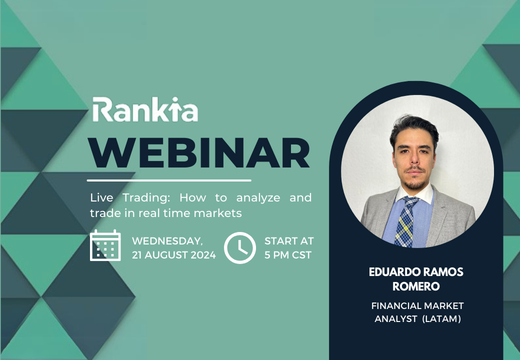
Join us for an informative webinar on Wednesday, 21 July, 5 pm (GMT-6)!
The Rankia Markets Experience unites financial experts, investors, traders, and enthusiasts for high-value educational conferences. It offers up-to-date knowledge on financial markets, technical analysis, investment strategies, financial products, and finance technologies. Suitable for both experienced investors and beginners, the event promotes financial education with practical tools and strategies, providing a unique opportunity to learn from top experts and network with peers.
In the upcoming webinar titled “Live Trading: How to analyze and trade in real time markets” presented by Eduardo Ramos Romero, the Financial Market Analyst for VT Markets LATAM. You will discover:
– Market Analysis techniques
– Reading and interpreting real-time data feeds
– Tools and platforms for real-time treading
– Risk Management techniques
– Short-term Trading strategies
Speaker Background: Eduardo Ramos Romero
– Financial Market Analyst for the LATAM region.
– 7 years of experience in the financial market.
– Held significant roles as the Director of Market Analysis and Senior Market Strategist at two prominent CFD brands.
– A respected speaker and educator, sharing his expertise through courses and media outlets such as El Economista, El Financiero, Bloomberg Middle East, Forbes Colombia, and Expansión.
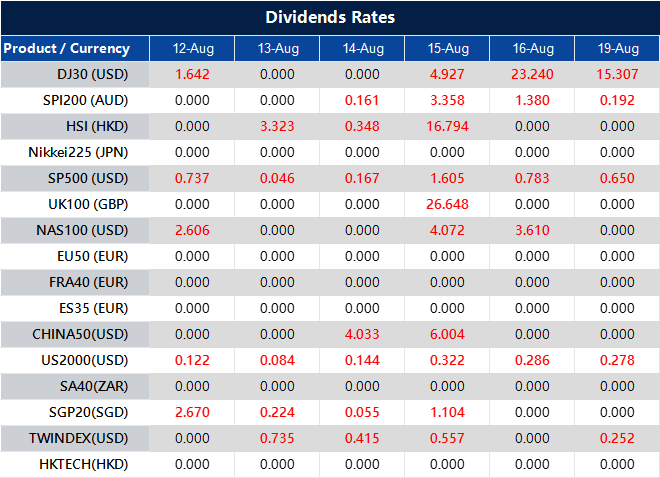
Please note that the dividends of the following products will be adjusted accordingly. Index dividends will be executed separately through a balance statement directly to your trading account, and the comment will be in the following format “Div & Product Name & Net Volume ”.
Please refer to the table below for more details:
The above data is for reference only, please refer to the MT4/MT5 software for specific data.
If you’d like more information, please don’t hesitate to contact info@vtmarkets.com.
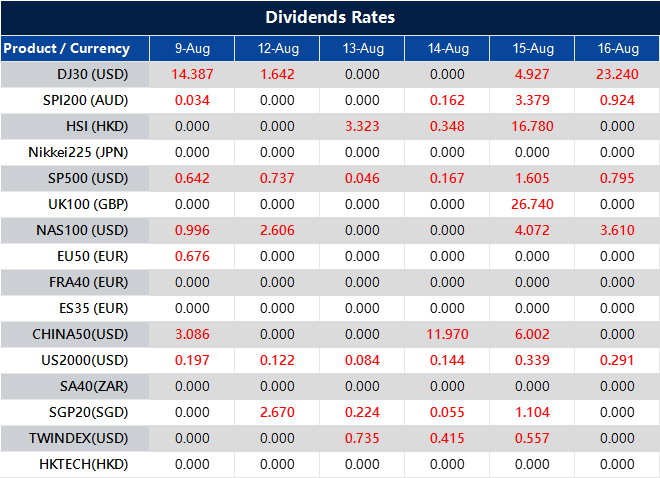
Please note that the dividends of the following products will be adjusted accordingly. Index dividends will be executed separately through a balance statement directly to your trading account, and the comment will be in the following format “Div & Product Name & Net Volume ”.
Please refer to the table below for more details:
The above data is for reference only, please refer to the MT4/MT5 software for specific data.
If you’d like more information, please don’t hesitate to contact info@vtmarkets.com.
Global oil demand is forecasted to increase by 1.1 mb/d in 2024 and 1.2 mb/d in 2025, with supply expected to grow by 580 kb/d in 2024 and 1.8 mb/d in 2025.
Brent crude futures dropped from $91 to $83 per barrel, influenced by easing geopolitical concerns and a softer economic outlook.
Refinery margins have declined across all regions, and global oil inventories surged by 34.6 million barrels (mb) in March, with further increases anticipated.
The OPEC+ meeting in June will address production policies, with a balanced market expected in 2025, driven by supply growth from non-OPEC+ countries.
As we approach the end of 2024, the oil market remains dynamic, influenced by various factors including supply-demand dynamics, geopolitical developments, and economic conditions. This report provides an in-depth analysis of the current state of the oil market.
Global Oil Demand and Supply Dynamics
Global oil demand is forecasted to rise by 1.1 million barrels per day (mb/d) in 2024, a decrease of 140 thousand barrels per day (kb/d) from previous estimates, primarily due to weaker-than-expected deliveries in Europe, causing a contraction in OECD demand in the first quarter. In 2025, the growth rate is anticipated to remain steady, with an increase of 1.8 mb/d, slightly exceeding the 2024 growth rate.
Meanwhile, global oil supply in 2024 is expected to increase by 580 thousand barrels per day (kb/d), reaching a record 102.7 million barrels per day (mb/d). This growth is fueled by a 1.4 mb/d rise in non-OPEC+ output, while OPEC+ production is predicted to decrease by 840 kb/d due to voluntary cuts.
In 2025, global oil supply is projected to grow by 1.8 mb/d, with non-OPEC+ countries contributing an additional 1.4 mb/d. This marks a reversal from the current year’s decline in OPEC+ output, which is expected to increase by 330 kb/d next year.
Market Conditions and Price Trends
Refinery margins and inventory levels:
Global refinery margins have decreased across all regions due to weaker-than-expected demand growth, leading to a prominent drop in middle distillate cracks and reduced throughput levels. In March, global oil inventories surged by 34.6 million barrels (mb), primarily driven by an increase in oil on water.
However, land stocks fell by 5.1 mb, reaching their lowest level since at least 2016. Preliminary data indicates that global oil stocks continued to rise in April.
Price movement and trends:
Brent crude futures have decreased from a six-month high of over $91 per barrel in early April to approximately $83 per barrel. This decline is primarily due to easing concerns about a broader Middle East conflict and a softer macroeconomic outlook.
Furthermore, benchmark oil prices experienced a sharp correction in April and early May, driven by worries about the global economy and oil demand, as well as progress towards a truce in Gaza.
This sell-off was particularly severe in middle distillate markets, where diesel and jet fuel cracks collapsed.
European Diesel Market Faces Decline and Market Impact
The European diesel market has faced a notable decline due to weak industrial activity and a mild winter, leading to a substantial drop in gasoil consumption.
In 2023, European gasoil demand decreased by 210 kb/d and further declined by 140 kb/d year-over-year in the first quarter of 2024.
This reduction in diesel deliveries, combined with weak demand in the United States, tipped OECD oil demand into contraction for the first quarter. Consequently, global oil demand projections have been revised downward.
OPEC+ Production Policy and Future Outlook
OPEC+ ministers scheduled to meet in Vienna on June 1 to discuss production policy for the remainder of the year.
Despite recent demand weakness, current balances indicate a call on OPEC+ crude oil at around 42 mb/d in the second half of the year, which is approximately 700 kb/d above its April output.
Looking ahead to 2025, the market is expected to be more balanced. Even if OPEC+ maintains voluntary production cuts, global oil supply could increase by 1.8 mb/d, driven by non-OPEC+ output expansions in the United States, Guyana, Canada, and Brazil. Understanding these dynamics is vital for anticipating market shifts in the coming years.
Inventory Management
Global oil inventories and their management will be crucial in maintaining market stability. Preliminary data shows further stock builds in April, indicating a need for careful monitoring to avoid renewed market volatility.
Effective inventory management will help balance supply and demand, ensuring that any sudden changes in production or consumption do not lead to key disruptions in the market.
As global dynamics shift, close attention to inventory levels will be essential in supporting steady market conditions and preventing unexpected fluctuations.
2024-2025 Oil Market Balances Supply with Geopolitical Uncertainties
The oil market outlook for the remainder of 2024 and into 2025 suggests a cautious yet optimistic scenario. While demand growth has been revised downward for 2024, supply adjustments and inventory management are expected to balance the market.
Key factors to watch include OPEC+ production decisions, geopolitical developments, and economic conditions that could influence both demand and prices.
Traders and investors should remain vigilant, leveraging detailed market data and forecasts to navigate this complex landscape effectively.
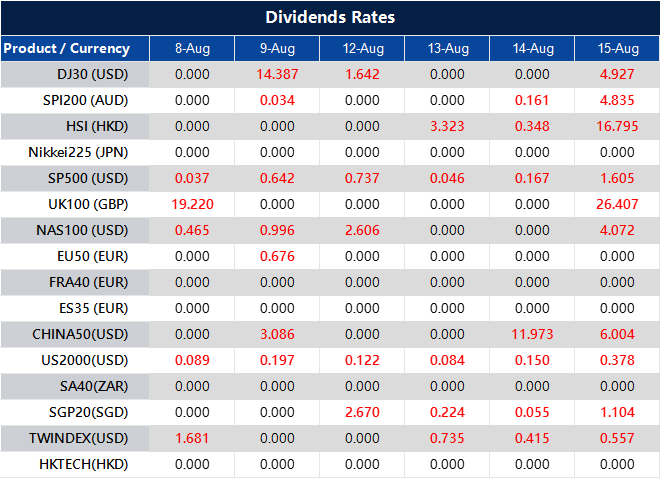
Please note that the dividends of the following products will be adjusted accordingly. Index dividends will be executed separately through a balance statement directly to your trading account, and the comment will be in the following format “Div & Product Name & Net Volume ”.
Please refer to the table below for more details:
The above data is for reference only, please refer to the MT4/MT5 software for specific data.
If you’d like more information, please don’t hesitate to contact info@vtmarkets.com.
Currencies are the backbone of the global financial market, forming the basis of Forex trading. Moreover, they represent a country’s economic stability and are traded in pairs on the foreign exchange market. Therefore, for new traders, understanding how currencies work and their role in Forex trading is crucial.
What is a Currency?
A currency is a system of money used in a particular country or economic region. Therefore, it facilitates trade, investment, and economic stability. For example, the US Dollar (USD), Euro (EUR), Japanese Yen (JPY), and British Pound (GBP) are widely used currencies. Additionally, each currency has its unique code, usually three letters, like USD for the US Dollar.
The Role of Currency Pairs
In Forex trading, currencies are always traded in pairs. Consequently, one currency is bought while the other is sold. The first currency in the pair is called the base currency, and the second is the quote currency. For instance, in the EUR/USD pair, EUR is the base currency, and USD is the quote currency. The price of a currency pair indicates how much of the quote currency is needed to buy one unit of the base currency.
Major, Minor, and Exotic Pairs
Currency pairs are categorized into three main types:
Major Pairs: These pairs include the most traded currencies and have high liquidity. Examples are EUR/USD, GBP/USD, and USD/JPY.
Minor Pairs: These are less traded than major pairs and usually involve currencies like EUR, GBP, and JPY, excluding USD. Examples are EUR/GBP and GBP/JPY.
Exotic Pairs: These pairs involve a major currency and a currency from a developing or smaller economy. Examples are USD/TRY (US Dollar/Turkish Lira) and EUR/HKD (Euro/Hong Kong Dollar).
Factors Influencing Currency Value
Several factors influence a currency’s value, affecting Forex trading decisions. These include:
Economic Indicators: Data like GDP, employment rates, and inflation impact a currency’s strength.
Political Stability: Countries with stable political environments tend to have stronger currencies.
Market Sentiment: Traders’ perceptions and reactions to global events influence currency values.
Understanding Exchange Rates
Exchange rates indicate how much one currency is worth in terms of another. They fluctuate based on supply and demand dynamics in the Forex market. For instance, if demand for the Euro increases relative to the US Dollar, the EUR/USD exchange rate will rise, meaning it takes more USD to buy one Euro.
Technical and Fundamental Analysis
Technical Analysis: This method involves analyzing historical price data and using charts to predict future movements. Tools like moving averages, trend lines, and indicators are used.
Fundamental Analysis: This involves evaluating economic indicators, interest rates, and geopolitical events to predict currency movements.
Common Mistakes in Currency Trading
Lack of Knowledge: Entering trades without understanding the market can lead to losses.
Overleveraging: Using too much leverage can amplify losses.
Ignoring Risk Management: Failing to set stop-loss orders and diversify can result in significant losses.
Emotional Trading: Decisions based on emotions rather than analysis can lead to poor outcomes.
Tips for Successful Currency Trading
Educate Yourself: Continuously learn about Forex trading and market analysis.
Develop a Strategy: Have a clear trading plan with defined entry and exit points.
Manage Risks: Use stop-loss orders and diversify your trades.
Stay Updated: Keep informed about global economic events and market news.
FAQs
Q: What is a currency pair in Forex trading?
A: A currency pair consists of two currencies, the base currency and the quote currency. The pair shows how much of the quote currency is needed to buy one unit of the base currency.
Q: How do interest rates affect currency values?
A: Higher interest rates attract foreign investment, increasing demand for the currency, thus strengthening its value. Conversely, lower rates can weaken a currency.
Q: What is the difference between major, minor, and exotic pairs?
A: Major pairs involve the most traded currencies and have high liquidity. Minor pairs exclude the USD and involve less traded currencies. Exotic pairs involve a major currency and one from a smaller or developing economy.
Q: Why is it important to manage risk in Forex trading?
A: Managing risk helps protect your capital from significant losses, ensuring sustainable trading.
Q: What role does technical analysis play in Forex trading?
A: Technical analysis helps predict future price movements by analyzing historical data and using charts and indicators.
Q: How can I stay updated with Forex market news?
A: Follow financial news websites, central bank releases, and use Forex analysis apps to stay informed about market developments.
Q: What are some common mistakes to avoid in Forex trading?
A: Avoid trading without knowledge, overleveraging, ignoring risk management, and making emotional decisions.
Conclusion For Understanding Currencies in FX Trading
Understanding currencies is fundamental to successful Forex trading. By grasping the basics of currency pairs, exchange rates, and the factors influencing currency values, traders can make informed decisions. Moreover, avoiding common mistakes and employing effective strategies can enhance trading performance. Therefore, for a secure and comprehensive trading experience, consider trading with VT Markets, a regulated multi-asset broker. Open a demo account today and start practicing your trading strategies with virtual funds.
Ready to dive into Forex trading? Open a demo account with VT Markets today and start practicing with virtual funds. Master your trading strategies and trade confidently with VT Markets.
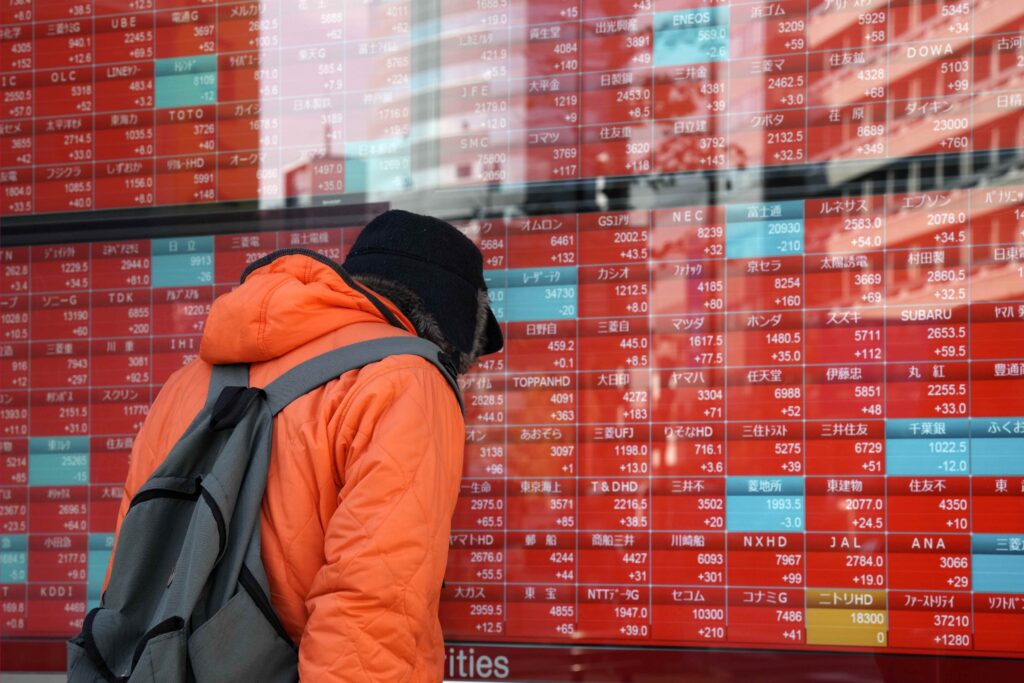
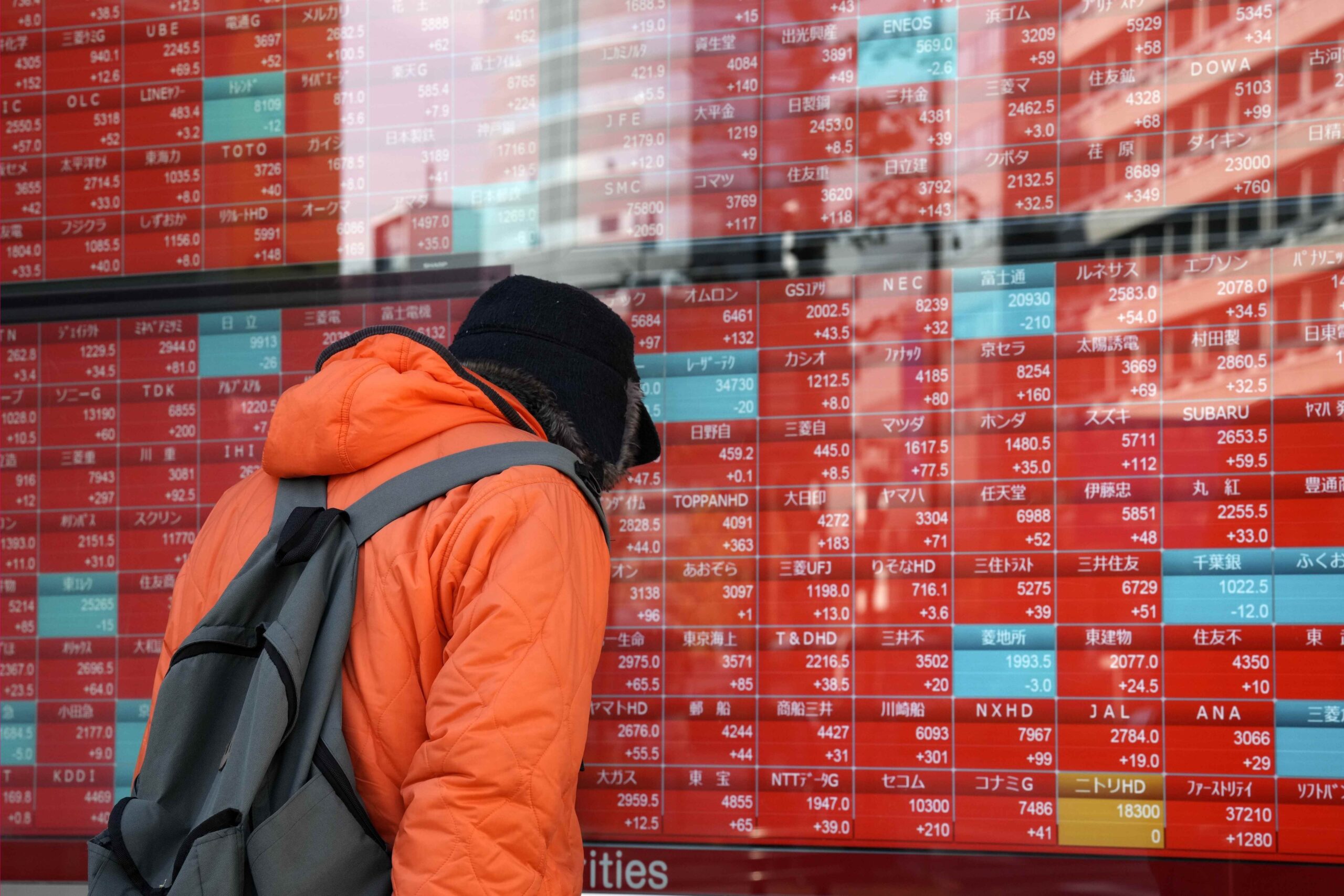
The 2024 global stock market downturn has sent shockwaves through financial circles worldwide. In just three weeks, approximately USD 6.4 trillion has been wiped off, and Monday’s decline stunned even the most experienced traders.
With major indices like the Nasdaq and Nikkei 225 experiencing significant drops, understanding what led to this downturn is crucial. This article aims to demystify the events of the market downturn, providing clear and practical insights to help everyday investors navigate these turbulent times.
What happened?
In early August 2024, global stock markets experienced a significant crash driven by fears of an impending recession.
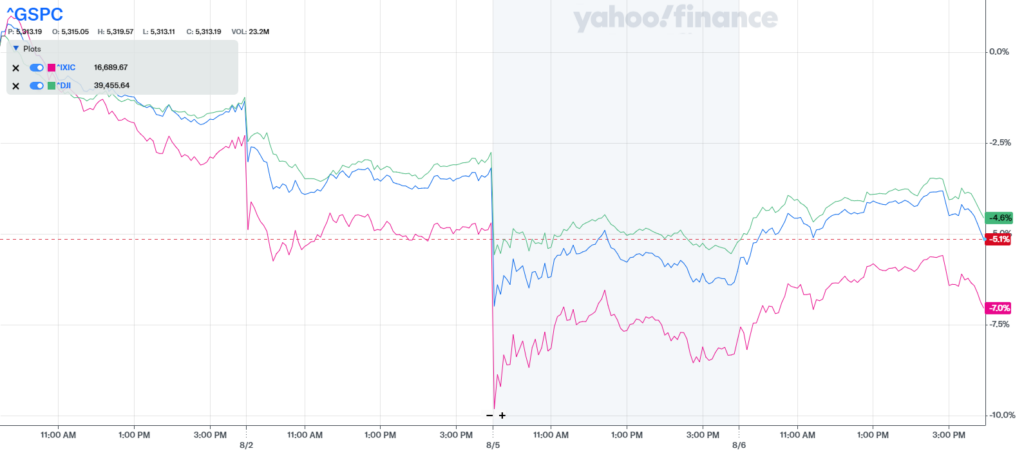
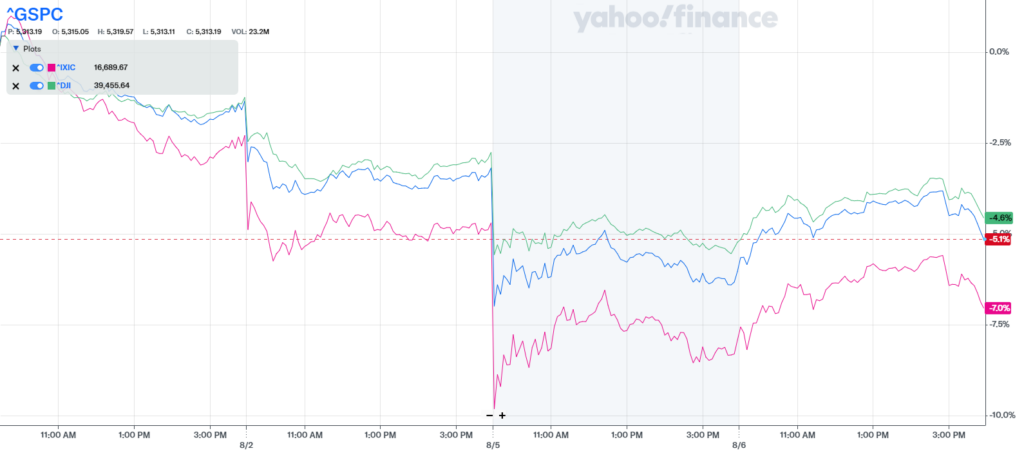
The downturn began on Monday, August 5, triggered by disappointing earnings reports and a weak July jobs report. Major indices fell sharply: the S&P 500 dropped 2.9%, the Nasdaq 4.5%, and the Euro Stoxx 2.7%.
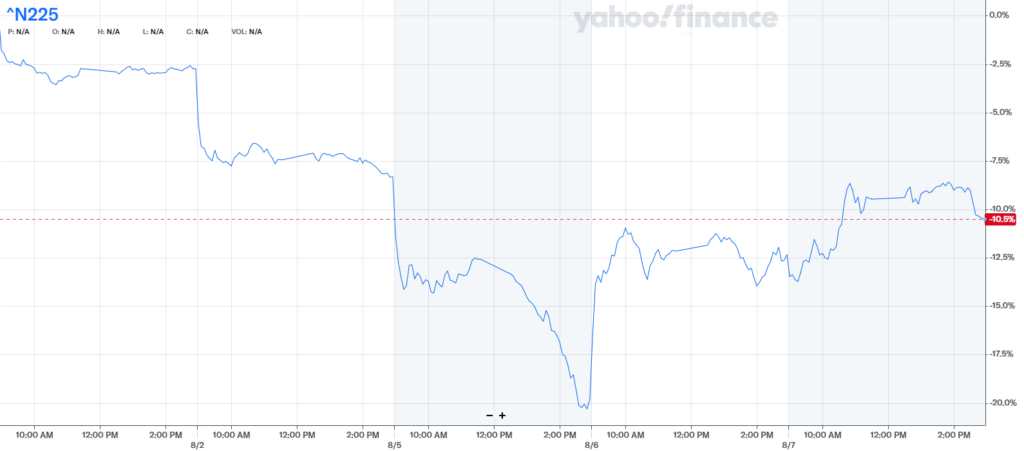
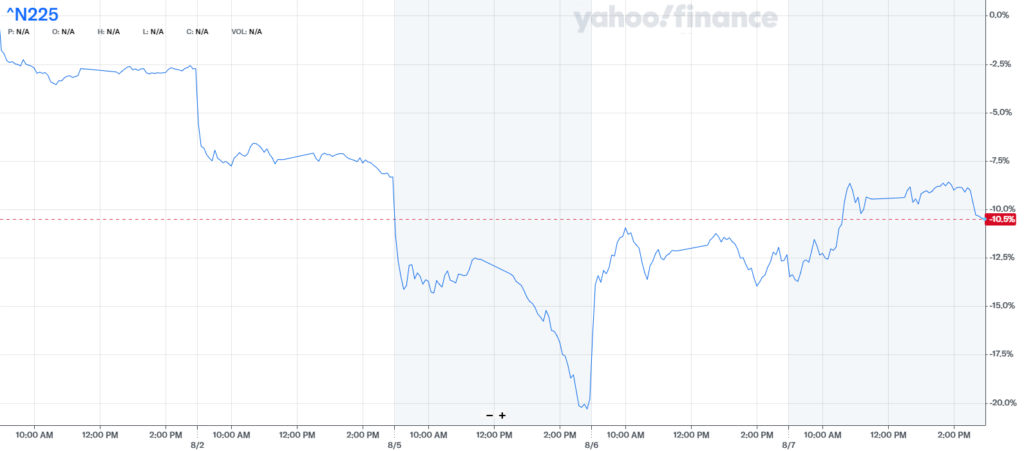
Asian markets fared even worse, with the Nikkei plummeting 12.4%, Taiwan’s TAIEX falling 8.4%, and South Korea’s KOSPI decreasing 8.8%. Australia’s ASX 200 closed 3.7% lower, marking its largest one-day drop since May 2020.
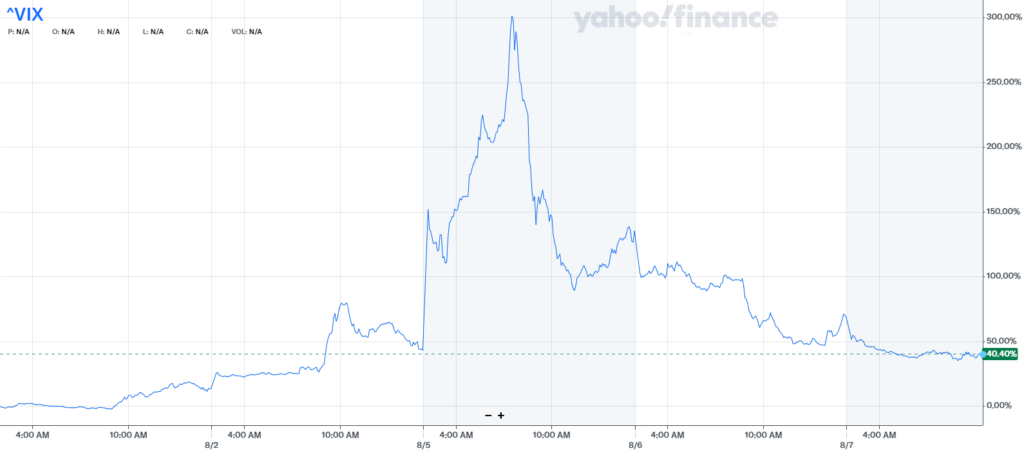
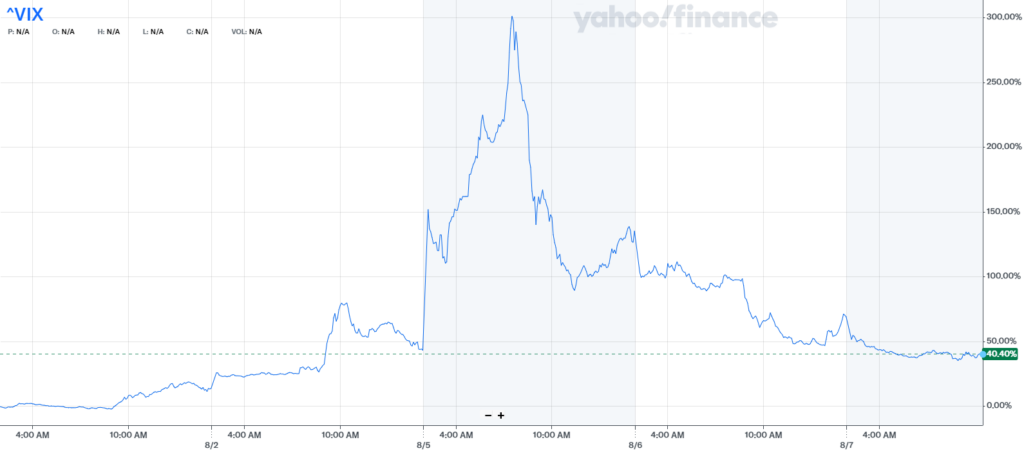
The VIX index, which measures market volatility, surged to multi-year highs of 65.7, only surpassed by the peaks of 96.4 during the 2008 financial crisis and 85.5 during the COVID-19 pandemic.
Key catalysts
Several factors combined to create this perfect storm in the global markets:
1. Poor earnings reports
The collapse was partly triggered by disappointing earnings reports from major companies like Amazon, which missed revenue estimates by USD 1 billion, and Intel, whose earnings per share plummeted by 30% compared to the previous quarter. These reports not only fell short of market expectations but also highlighted broader economic weaknesses.
2. Weak economic indicators
A weak July jobs report further fuelled recession fears. Nonfarm payrolls grew by just 114,000 in July, significantly below the downwardly revised 179,000 in June and the Dow Jones estimate for 185,000. The unemployment rate edged higher to 4.3%, its highest since October 2021, triggering an economic rule on recessions. This suggests that the economy might be cooling down faster than anticipated.
3. Interest rate changes
Japan’s surprise interest rate hike played a crucial role in the market turmoil. The Bank of Japan raised rates by 15 basis points, which led to the unwinding of the popular yen carry trade. This move sent shockwaves through the global financial markets, contributing significantly to the sell-off. The sell-off in Japanese markets intensified on Friday, 2 August, with the TOPIX index dropping by 6.14% and falling 13.4% from its peak on 11 July. Foreign investors pulled nearly USD 5 billion out of Japanese stocks over the last two weeks of July, and domestic funds also became net sellers of their own market.
4. Major stake adjustments
Berkshire Hathaway’s decision to drastically reduce its massive Apple stake by approximately 50% sent shockwaves through the market. This move by Warren Buffett’s conglomerate, which now boasts a record-breaking cash hoard of USD 277 billion, sparked concerns among investors. Many interpreted this as a potential loss of confidence in the overall stock market, even from the legendary investor himself.
Regional impacts
The impact of the market collapse varied across different regions, each experiencing its own set of challenges:
Asia
Japan’s Nikkei 225 experienced a dramatic fall, wiping out all of its gains for the year. The Bank of Japan’s interest rate hike not only affected the Nikkei but also led to significant declines in other Asian markets. South Korea’s Kospi and Taiwan’s TAIEX saw some of their worst performances in decades, driven by substantial drops in semiconductor stocks like Samsung Electronics and TSMC.
Australia
The ASX 200’s decline was led by losses in IT stocks, although the country’s strong commodity sector helped cushion the blow somewhat. Major mining companies like BHP and Rio Tinto saw relatively smaller declines, indicating a degree of resilience in the face of broader market turmoil.
Cryptocurrencies
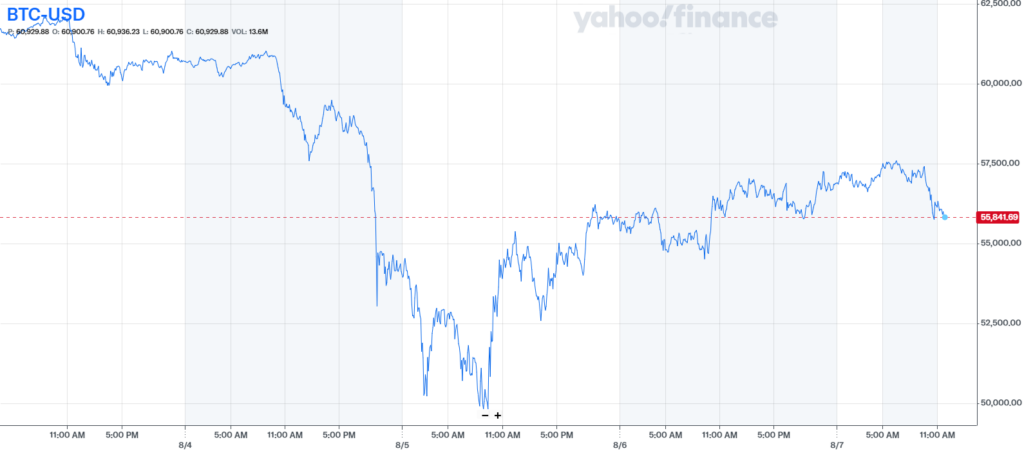
Bitcoin and other major cryptocurrencies also took a hit. Bitcoin lost 19% of its value since Friday, crashing below USD 50,000. This decline reflected a broader risk-off sentiment gripping the markets, as investors moved away from volatile assets.
Broader economic concerns
The market collapse has reignited fears of a global recession, driven by differing central bank strategies. The Bank of Japan raised interest rates by 0.25% to 0.75% to tackle inflation, while the Federal Reserve chose not to cut rates, adding to global uncertainty and volatility.
Geopolitical tensions have also heightened investor anxiety. Increased conflicts in the Middle East, particularly between Iran and its neighbours, have disrupted oil supplies and spiked crude oil prices. Additionally, the U.S. presidential election cycle has become increasingly unpredictable, with key candidates presenting conflicting economic policies. These factors, combined with existing economic weaknesses, have created a turbulent environment for the markets.
What it means for traders
For traders, the market downturn can be both daunting and confusing. Here are some practical steps to navigate these uncertain times:
1. Immediate actions: Avoid panic selling. It’s important not to make hasty decisions based on short-term market movements. Instead, reassess your portfolio and consider whether your current investments align with your long-term financial goals.
2. Long-term strategies: Diversification is key. Ensure that your portfolio is diversified across different asset classes to spread risk. Focus on value investments and maintain a balanced portfolio to withstand market volatility.
3. Opportunities and risks: Market downturns can present buying opportunities. If you have a long-term investment horizon, consider taking advantage of lower prices to buy quality stocks at a discount. Be cautious and conduct thorough research before making any investment decisions. For up-to-date insights and analysis that can help you navigate these market conditions, consult VT Markets’ daily market reports.
Conclusion
The 2024 global stock market downturn has undoubtedly created a challenging environment for investors. However, by understanding the factors that led to this downturn and adopting a strategic approach, traders can navigate these turbulent times. Stay informed, remain patient, and focus on long-term investment strategies to weather the storm and potentially benefit from the eventual market recovery.
The 2024 global stock market downturn has sent shockwaves through financial circles worldwide. In just three weeks, approximately USD 6.4 trillion has been wiped off, and Monday’s decline stunned even the most experienced traders.
With major indices like the Nasdaq and Nikkei 225 experiencing significant drops, understanding what led to this downturn is crucial. This article aims to demystify the events of the market downturn, providing clear and practical insights to help everyday investors navigate these turbulent times.
What happened?
In early August 2024, global stock markets experienced a significant crash driven by fears of an impending recession.
The downturn began on Monday, August 5, triggered by disappointing earnings reports and a weak July jobs report. Major indices fell sharply: the S&P 500 dropped 2.9%, the Nasdaq 4.5%, and the Euro Stoxx 2.7%.
Asian markets fared even worse, with the Nikkei plummeting 12.4%, Taiwan’s TAIEX falling 8.4%, and South Korea’s KOSPI decreasing 8.8%. Australia’s ASX 200 closed 3.7% lower, marking its largest one-day drop since May 2020.
The VIX index, which measures market volatility, surged to multi-year highs of 65.7, only surpassed by the peaks of 96.4 during the 2008 financial crisis and 85.5 during the COVID-19 pandemic.
Key catalysts
Several factors combined to create this perfect storm in the global markets:
1. Poor earnings reports
The collapse was partly triggered by disappointing earnings reports from major companies like Amazon, which missed revenue estimates by USD 1 billion, and Intel, whose earnings per share plummeted by 30% compared to the previous quarter. These reports not only fell short of market expectations but also highlighted broader economic weaknesses.
2. Weak economic indicators
A weak July jobs report further fuelled recession fears. Nonfarm payrolls grew by just 114,000 in July, significantly below the downwardly revised 179,000 in June and the Dow Jones estimate for 185,000. The unemployment rate edged higher to 4.3%, its highest since October 2021, triggering an economic rule on recessions. This suggests that the economy might be cooling down faster than anticipated.
3. Interest rate changes
Japan’s surprise interest rate hike played a crucial role in the market turmoil. The Bank of Japan raised rates by 15 basis points, which led to the unwinding of the popular yen carry trade. This move sent shockwaves through the global financial markets, contributing significantly to the sell-off. The sell-off in Japanese markets intensified on Friday, 2 August, with the TOPIX index dropping by 6.14% and falling 13.4% from its peak on 11 July. Foreign investors pulled nearly USD 5 billion out of Japanese stocks over the last two weeks of July, and domestic funds also became net sellers of their own market.
4. Major stake adjustments
Berkshire Hathaway’s decision to drastically reduce its massive Apple stake by approximately 50% sent shockwaves through the market. This move by Warren Buffett’s conglomerate, which now boasts a record-breaking cash hoard of USD 277 billion, sparked concerns among investors. Many interpreted this as a potential loss of confidence in the overall stock market, even from the legendary investor himself.
Regional impacts
The impact of the market collapse varied across different regions, each experiencing its own set of challenges:
Asia
Japan’s Nikkei 225 experienced a dramatic fall, wiping out all of its gains for the year. The Bank of Japan’s interest rate hike not only affected the Nikkei but also led to significant declines in other Asian markets. South Korea’s Kospi and Taiwan’s TAIEX saw some of their worst performances in decades, driven by substantial drops in semiconductor stocks like Samsung Electronics and TSMC.
Australia
The ASX 200’s decline was led by losses in IT stocks, although the country’s strong commodity sector helped cushion the blow somewhat. Major mining companies like BHP and Rio Tinto saw relatively smaller declines, indicating a degree of resilience in the face of broader market turmoil.
Cryptocurrencies
Bitcoin and other major cryptocurrencies also took a hit. Bitcoin lost 19% of its value since Friday, crashing below USD 50,000. This decline reflected a broader risk-off sentiment gripping the markets, as investors moved away from volatile assets.
Broader economic concerns
The market collapse has reignited fears of a global recession, driven by differing central bank strategies. The Bank of Japan raised interest rates by 0.25% to 0.75% to tackle inflation, while the Federal Reserve chose not to cut rates, adding to global uncertainty and volatility.
Geopolitical tensions have also heightened investor anxiety. Increased conflicts in the Middle East, particularly between Iran and its neighbours, have disrupted oil supplies and spiked crude oil prices. Additionally, the U.S. presidential election cycle has become increasingly unpredictable, with key candidates presenting conflicting economic policies. These factors, combined with existing economic weaknesses, have created a turbulent environment for the markets.
What it means for traders
For traders, the market downturn can be both daunting and confusing. Here are some practical steps to navigate these uncertain times:
1. Immediate actions: Avoid panic selling. It’s important not to make hasty decisions based on short-term market movements. Instead, reassess your portfolio and consider whether your current investments align with your long-term financial goals.
2. Long-term strategies: Diversification is key. Ensure that your portfolio is diversified across different asset classes to spread risk. Focus on value investments and maintain a balanced portfolio to withstand market volatility.
3. Opportunities and risks: Market downturns can present buying opportunities. If you have a long-term investment horizon, consider taking advantage of lower prices to buy quality stocks at a discount. Be cautious and conduct thorough research before making any investment decisions. For up-to-date insights and analysis that can help you navigate these market conditions, consult VT Markets’ daily market reports.
Conclusion
The 2024 global stock market downturn has undoubtedly created a challenging environment for investors. However, by understanding the factors that led to this downturn and adopting a strategic approach, traders can navigate these turbulent times. Stay informed, remain patient, and focus on long-term investment strategies to weather the storm and potentially benefit from the eventual market recovery.
Discover the future of finance at WikiEXPO 2024, an event established in 2019 by the authoritative financial media outlets WikiFX and WikiBit. WikiEXPO is dedicated to fostering professional knowledge sharing and business exchange platforms for investors, brokers, and partners.
Having successfully hosted over 75 large-scale offline events, WikiEXPO has facilitated tens of thousands of cooperation opportunities for thousands of brokers and hundreds of thousands of investors. Today, WikiEXPO stands as a leading international financial exhibition brand worldwide.
Key Topics at WikiEXPO 2024:
– Global Trends in Regulatory and Legal Framework
– Future of Digital Assets and Regulation
– Financial Regulation and Market Risk in 2024
– Reimagining Financial Services with Generative AI: Opportunities and Challenges
– Digital Innovation Applied in ESG Criteria
– Web3: Innovative Trends and New Opportunities in Upcoming Markets
– Hyper-Personalisation in Client Acquisition: The Convergence of Technology Mega-Trends
– Digital Economy in Financial Crisis: Prospects and Challenges of Web3
– Exploring the Future of Financial Technology
– Co-Designing the Future of Digital Finance
– Fintech Innovation and Green Finance
– AI’s Impact on the Future of Healthcare and Augmenting Human Intelligence
Venue: Venue: Bangkok Marriott Marquis Queen’s Park
Find us at BelAir Unique, Dakota 95, Nápoles, Benito Juárez, Ciudad de México, CDMX, México
Hotel Room: México y Collection
Time: 9:00 to 17:00 (GMT-5)
The Rankia Markets Experience unites financial experts, investors, traders, and enthusiasts for high-value educational conferences. It offers up-to-date knowledge on financial markets, technical analysis, investment strategies, financial products, and finance technologies. Suitable for both experienced investors and beginners, the event promotes financial education with practical tools and strategies, providing a unique opportunity to learn from top experts and network with peers.