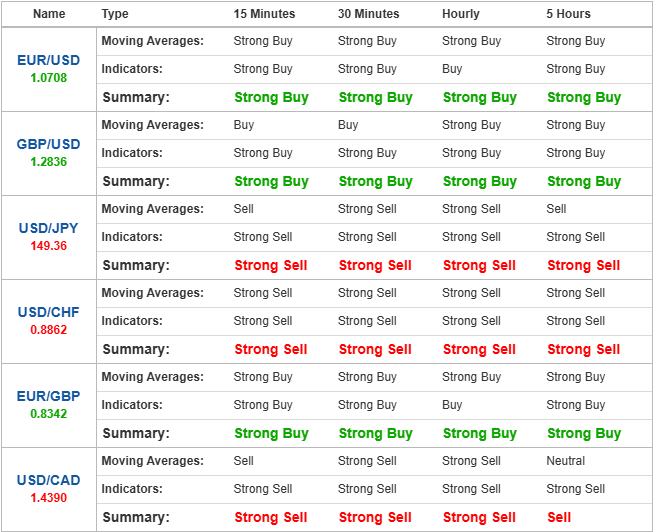
Midweek trading on Wednesday, 5 March 2025, will be driven by key economic data, central bank signals, and corporate developments. Investors will closely watch inflation trends, labour market conditions, and global economic indicators for clues on market direction.
KEY INDICATORS
Eurozone retail sales (January)
A key indicator of consumer spending, this data will help gauge economic activity in the Eurozone amid ongoing monetary policy adjustments by the European Central Bank (ECB).
Federal Reserve commentary
Several Fed officials are expected to speak, and their views on inflation, labour market strength, and interest rates could impact market expectations for future policy moves.
US services PMI (February final reading)
The latest reading of the ISM services PMI will provide insights into the strength of the US services sector.
A strong report could reinforce expectations of economic resilience, while a weaker reading may raise slowdown concerns.
MARKET MOVERS
GBP/USD
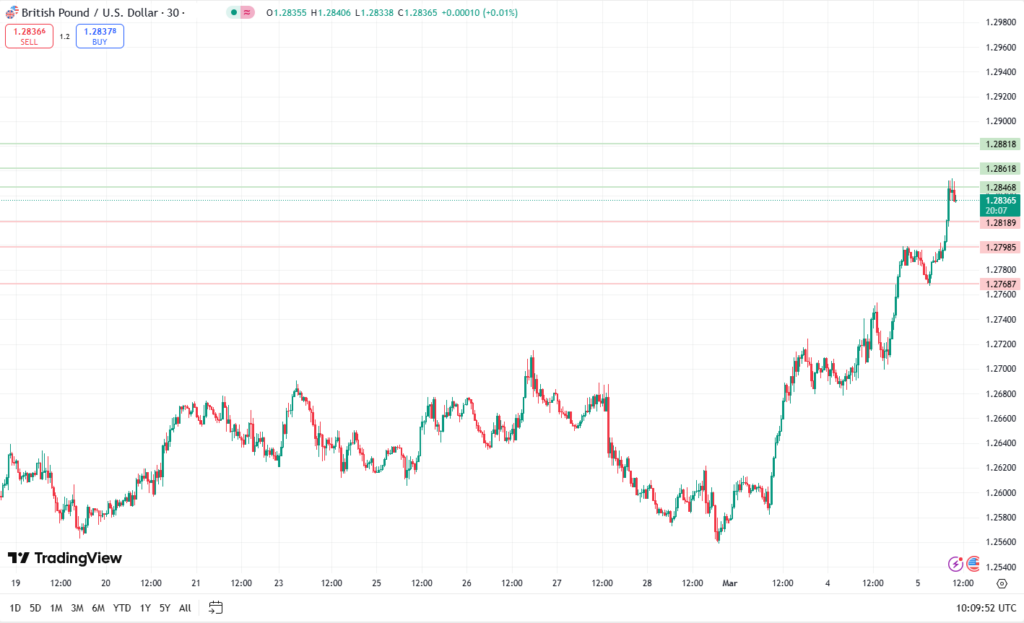
Possible long preference Long positions above 1.28468 with targets at 1.28618 & 1.28818 in extension. Alternative scenario Below 1.28189 look for further downside with 1.27985 & 1.27687 as targets. The immediate trend remains up and the momentum is strong.
European stocks rebound from sharp selloff; tariffs compromise possible?
European stock markets rose on Wednesday, rebounding after the previous session’s rout amid hopes for a compromise on US trade tariffs on Mexico and Canada, even after President Donald Trump touted the moves during an address to Congress.
At 8:05 AM GMT, the DAX index in Germany climbed 2.2%.
The CAC 40 in France gained 1.4%.
The FTSE 100 in the UK rose 0.4%.
President Trump’s decision to impose fresh US tariffs of 25% on Canada and Mexico, as well as an additional 10% tariff on Chinese goods, has rattled global market sentiment amid concerns that they will reignite inflation and escalate a global trade war.
Japan stocks drop 1.2%, leading declines in Asia as trump tariffs dent sentiment
Japanese stocks led declines in Asia-Pacific markets after US President Donald Trump made it clear that tariffs on Mexico and Canada would go into effect as planned.
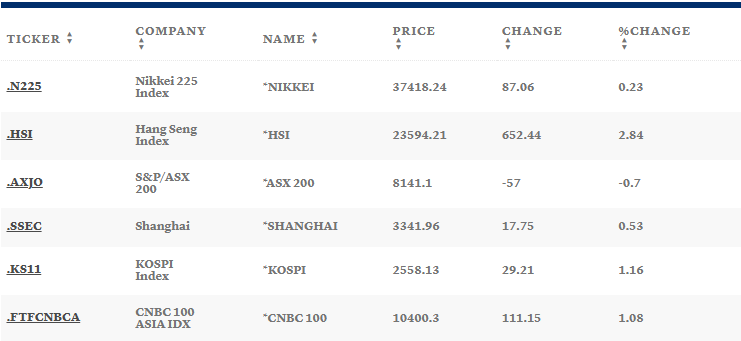
The benchmark Nikkei 225 index plunged 1.20% to end the day at 37,331.18, while the broader Topix index lost 0.71% to close at 2,710.18.
Japan’s unemployment rate for January came in at 2.5%, slightly higher than Reuters’ estimate of 2.4%.
South Korea’s Kospi index ended the day 0.15% lower at 2,528.92, while the small-cap Kosdaq retreated 0.81% to 737.90.
USD/JPY
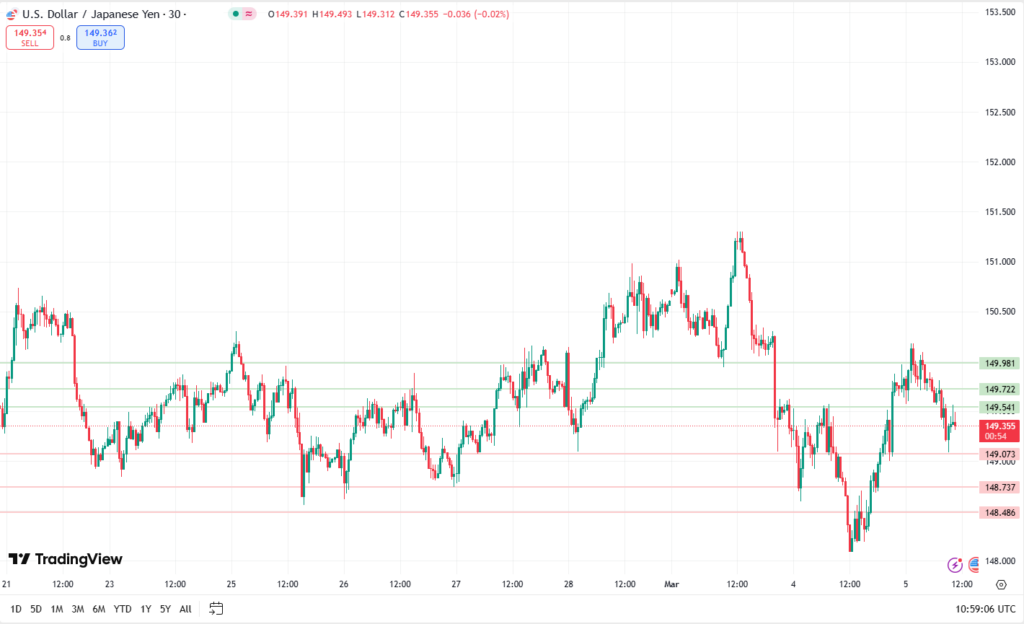
Possible long preference Long positions above 149.541 with targets at 149.722 & 149.981 in extension. Alternative scenario Below 149.073 look for further downside with 148.737 & 148.486 as targets. Even though a continuation of the consolidation cannot be ruled out, its extent should be limited.
TODAY’S NEWS HEADLINES
Dollar falls further on trade jitters; euro helped by stimulus talks
The US dollar fell further on Wednesday, dropping to a three-month low amid concerns that a trade war triggered by US President Donald Trump will impact the world’s largest economy, while the euro soared on the prospects of major fiscal stimulus.
At 9:00 AM GMT, the Dollar Index, which tracks the greenback against a basket of six other currencies, traded 0.6% lower at 105.060, near its weakest level since early December.
GBP/USD rose 0.4% to 1.2848, climbing to a three-month high, boosted by dollar weakness.
Oil drops for third day on OPEC+ output increase, Trump tariffs
Oil prices declined for a third consecutive session on Wednesday, as investors worried about OPEC+ plans to proceed with output increases in April, while US President Donald Trump’s tariffs on Canada, China, and Mexico escalated trade tensions.
Brent futures fell 45 cents (0.63%) to USD 70.59 a barrel at 9:53 AM GMT.
US West Texas Intermediate (WTI) crude declined 74 cents (1.08%) to USD 67.52 a barrel.
Meanwhile, the Organisation of the Petroleum Exporting Countries and its allies, including Russia—a group known as OPEC+—decided on Monday to increase output for the first time since 2022, further pressuring crude prices.
Gold prices tick down on firmer dollar, tariff tensions limit losses
Gold prices edged lower in Asian trading on Wednesday as the US dollar ticked up, though escalating trade tensions following President Donald Trump’s tariff announcements kept losses in check due to sustained safe-haven demand.
Spot gold inched 0.2% lower to USD 2,912.00 per ounce.
Gold futures expiring in April gained 0.1% to USD 2,922.72 an ounce by 4:28 AM GMT.
Platinum futures edged up 0.2% to USD 973.35 an ounce.
In this article, we’ll explore penny stocks, their advantages and risks, and how traders can successfully invest or trade them in the UK. You’ll learn how penny stocks work, why they are highly volatile, and the best strategies to trade them safely. Whether you’re new to penny stocks or looking to refine your approach, this guide will provide valuable insights, real-life examples, and key steps to help you navigate this exciting yet unpredictable market.
What Are Penny Stocks?
Penny stocks are low-priced shares of small, emerging companies that typically trade outside major stock exchanges. In the UK, these stocks are usually priced below £1 per share, while in the US, they are defined as stocks trading under $5 per share. Due to their low cost and association with smaller businesses, penny stocks often trade on over-the-counter (OTC) markets or less prominent exchanges instead of major platforms like the London Stock Exchange (LSE) or the New York Stock Exchange (NYSE).
Why are penny stocks attractive to traders? Their low price point allows traders to buy a large number of shares with minimal capital, creating opportunities for high returns if the stock experiences even a small price increase. However, they are also known for high volatility, meaning prices can fluctuate rapidly within short time frames. This makes penny stocks an appealing option for speculative traders but also presents significant risks due to their unpredictable nature.
Penny stocks are typically issued by small companies with limited financial track records. Due to their low price and market size, they tend to experience sharp price swings, making them both an opportunity and a risk for traders. Unlike established companies, these stocks often have less liquidity, meaning they can be harder to buy or sell quickly at a favorable price.
Traders are drawn to penny stocks because of their potential for rapid gains—a stock moving from £0.50 to £1 already represents a 100% increase. However, this same volatility can result in quick losses, so careful research and risk management are essential before entering the market.
Advantages of Penny Stocks
Despite the risks, there are several reasons why traders consider investing in penny stocks, especially those looking for high-reward opportunities at a lower cost. While these stocks come with volatility, their unique characteristics make them an appealing choice for certain types of traders.
Low Entry Cost: Since penny stocks trade at a much lower price than regular stocks, traders can purchase a larger number of shares with a relatively small investment. This makes them accessible for traders who may not have significant capital but want exposure to the stock market.
High Growth Potential: Many small companies behind penny stocks are in their early growth stages. If the business succeeds or attracts attention, the stock price can increase dramatically, offering significant returns in a short period. However, it’s important to research a company’s fundamentals before investing.
Diversification Opportunity: Penny stocks allow traders to spread their investments across different industries and sectors. Since they require less capital, traders can build a diverse portfolio without committing large amounts of money to a single stock, helping to manage risk.
Example: Monster Beverage started as a penny stock before experiencing explosive growth. Today, it is a billion-dollar company, proving that some small-cap stocks have the potential to turn into market leaders.
Disadvantages of Penny Stocks
While penny stocks in the UK offer high growth potential, they also come with significant risks that traders need to be aware of. Their volatility and market structure can make them challenging to trade, especially for beginners.
High Volatility: Penny stocks often experience sharp price swings within a short period. While this can create quick profit opportunities, it also increases the likelihood of substantial losses, sometimes within hours or days.
Low Liquidity: Many penny stocks have fewer buyers and sellers, making it difficult to enter or exit a trade at the desired price. This can lead to wider bid-ask spreads and potential losses when selling.
Limited Information & Regulation: Since many penny stocks belong to smaller companies, they often lack detailed financial reports and transparency. Some trade on less regulated platforms, increasing the risk of misinformation and poor governance.
Below are the key steps to consider when investing or trading penny stocks in the UK:
Step 1: Conduct Research
Before investing in penny stocks in the UK, it’s essential to analyze the company’s financial reports, trading volume, and market trends. Since these stocks belong to smaller companies with limited track records, thorough research helps identify promising opportunities while avoiding high-risk stocks.
Step 2: Choose a Reliable Broker
Trading with a regulated broker like VT Markets ensures a secure and transparent trading experience. A trustworthy broker provides fair pricing, proper execution, and risk protection, preventing traders from falling into scams or market manipulations.
Step 3: Start Small
Given the high volatility of penny stocks, it’s wise to start with a small investment and increase exposure gradually. This approach helps manage risk while allowing traders to test different strategies before committing larger amounts.
Step 4: Use Risk Management Tools
Setting stop-loss and take-profit orders is crucial when trading penny stocks, as they help lock in profits and limit losses. Avoiding excessive leverage also reduces the risk of substantial financial setbacks.
Step 5: Monitor and Stay Informed with Market Trends
Keeping up with market news, industry developments, and economic events helps traders anticipate potential price movements. Since penny stocks can be influenced by speculation, staying informed allows for smarter and more strategic trading decisions.
Investing or trading in penny stocks in the UK presents both high-risk and high-reward opportunities, making it essential for traders to approach the market with a well-defined strategy and strong risk management. Due to their low cost, volatility, and growth potential, penny stocks attract traders looking for speculative opportunities. However, the lack of liquidity, limited financial data, and susceptibility to market manipulation mean that careful research and cautious investment practices are crucial.
Start Trading Penny Stocks with VT Markets
Trading penny stocks in the UK requires a secure and reliable platform, and VT Markets provides the perfect environment for traders looking to navigate this high-potential market. With advanced trading tools, real-time market data, and competitive spreads, VT Markets ensures a seamless trading experience while helping traders manage the risks associated with penny stocks.
Whether you’re a beginner or an experienced trader, VT Markets offers a user-friendly interface, fast execution, and robust risk management features to support your trading journey. Take advantage of a regulated and transparent trading environment and start trading penny stocks with confidence.
1. What are penny stocks, and why do traders invest in them?
Penny stocks are low-priced shares of small companies that offer high growth potential but come with increased risks. Traders invest in them for speculative gains and diversification.
2. Are penny stocks more volatile?
Yes, penny stocks are significantly more volatile than large-cap stocks. Because they belong to small companies with uncertain financials, they are highly sensitive to market sentiment and speculation. External factors like economic news, industry trends, and even social media hype can trigger sharp price swings.
3. Are penny stocks in the UK different from penny stocks in the US?
Yes, in the UK, penny stocks typically refer to stocks trading under £1, while in the US, penny stocks are defined as those trading below $5.
4. How can I avoid scams in penny stock trading?
Avoid unregulated brokers, conduct thorough research, and beware of stocks promoted through unsolicited emails or social media.
5. What is the best strategy for investing in penny stocks?
Using stop-loss orders, diversifying across different sectors, and monitoring news and financial reports are effective strategies.
6. Can I trade penny stocks with VT Markets?
Yes, VT Markets offers access to penny stock trading with robust tools, security, and real-time market analysis.
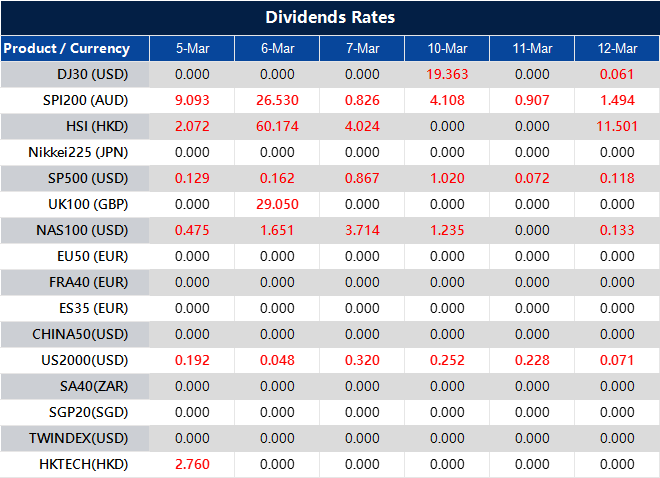
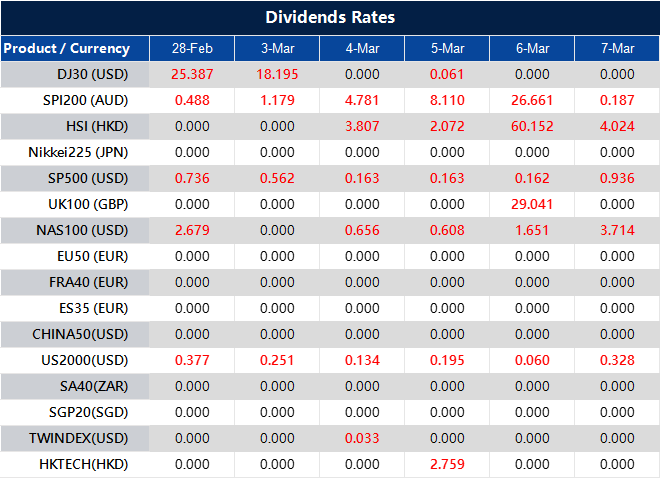
Please note that the dividends of the following products will be adjusted accordingly. Index dividends will be executed separately through a balance statement directly to your trading account, and the comment will be in the following format “Div & Product Name & Net Volume ”.
Please refer to the table below for more details:
The above data is for reference only, please refer to the MT4/MT5 software for specific data.
If you’d like more information, please don’t hesitate to contact info@vtmarkets.com.
Mexico City, Mexico, February 2025 – Markets today are volatile in a more complex and protectionist trading environment, which alters the mood of investors. In this context, effective strategies and advanced decision-making tools are essential to operate successfully and adapt to the new market dynamics.
In its participation in Money Expo Mexico 2025, VT Markets reaffirmed its commitment to traders, sharing practical approaches to optimise their performance in these markets. The multi-award winning broker consolidated its commitment to education and technology as fundamental pillars to help both experienced traders and those new to trading.
Following this vision, VT Markets was present at Money Expo Mexico 2025, the most important financial event in Latin America, which brought together more than 5,000 attendees, 150 financial brokers and 50 exhibitors on 26 and 27 February at the Centro Citibanamex. Strategies for more accurate trading As a multi-asset broker, VT Markets provided a space where attendees could interact with its team and learn about strategies designed to improve their trading in a competitive environment. One of the highlights of the event was the conference given by Eduardo Ramos, senior analyst at VT Markets, who shared strategies for trading the financial markets with a focus on gold trading (XAUUSD). During his presentation, Ramos addressed:
– Fundamental principles of risk management in gold trading.
– How to effectively capitalise on gold price movements.
– Tools and strategies to improve accuracy in decision making.
“The key to success in financial markets is not predicting the future, but knowing how to react with precision and control when volatility strikes. Smart investing is not a matter of luck, but of preparation, discipline and the ability to remain calm under pressure. That is the difference between those who survive and those who thrive”, Ramos stressed during his participation.
Enriching experiences for traders
Attendees had the opportunity to explore advanced trading tools, receive personalised advice and learn about financial solutions designed for both novice and experienced traders. In addition, VT Markets organised exclusive prize draws, adding to the attractiveness of the experience.
On Day 2 of the Money Expo Mexico, VT Markets was proudly recognized as the “Top Broker for Partnership Programme”. This accolade marks a successful conclusion to the company’s participation, reinforcing its leadership and strong foothold in the LATAM trading and brokerage sector.
Money Expo: A benchmark for the financial sector
Beyond being an exhibition space, Money Expo Mexico 2025 established itself as a key event for the exchange of knowledge and strategies in the financial industry. Companies such as VT Markets stood out for their focus on innovation and commitment to the region’s community of traders and investors. With its participation in the event, VT Markets reinforces its mission to support traders with cutting-edge resources, consolidating itself as a strategic ally for those seeking to remain competitive in the constantly evolving financial markets.
VT Markets is a regulated multi-asset broker with a presence in over 160 countries as of today. It has earned numerous international accolades including Best Online Trading and Fastest Growing Broker. In line with its mission to make trading accessible to all, VT Markets offers comprehensive access to over 1,000 financial instruments and clients benefit from a seamless trading experience via its award-winning mobile application.
As part of our commitment to providing the most reliable service to our clients, VT Markets will have the following adjustment of CopyTrading (Vtrade) service on 8th March 2025:
1. “Management fee” will be removed from the Offer’s Performance setting.
2. Trading accounts that have previously set management fees will not be affected.
The adjustments are intended to enhance our server quality and provide you with an improved trading environment. Thank you for your understanding about this important initiative.
If you’d like more information, please don’t hesitate to contact info@vtmarkets.com.
Oil prices are falling as market expectations clash with reality. Many traders expected OPEC+ to delay increasing supply, but the group’s decision to proceed has shifted the outlook. With growing concerns about demand and oversupply, crude oil remains vulnerable to further declines unless market conditions improve.
Oil slips as OPEC+ maintains output increase
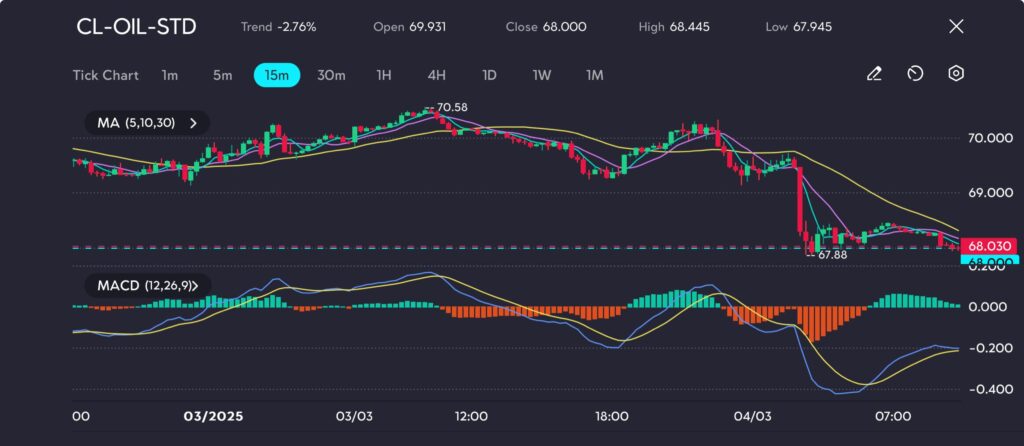
CL-OIL (WTI Crude) declined to USD 68.000 on Monday, extending its downturn after OPEC+ confirmed plans to proceed with its scheduled production increases from April.
This decision will reinstate 2.2 million barrels per day of voluntary supply cuts that had been in effect for over two years, adding to the current oversupply concerns.
Market participants had largely anticipated that OPEC+ would postpone the output hike. However, the cartel’s decision to push ahead applied additional downward pressure on prices.
Technical analysis: Bearish momentum persists
CL-OIL fell by 2.76%, settling at 68.000 after opening at 69.931. The session’s high reached 68.445, while the low touched 67.945, reinforcing a strong bearish trend.
CL-OIL declines to 68.000, testing support at 67.88 amid strong bearish momentum, as seen on the VT Markets app.
Moving averages (MA 5,10,30) indicate a sustained downtrend, with short-term MAs crossing beneath the long-term average. The MACD (12,26,9) remains in negative territory, with the histogram reflecting heightened selling pressure.
Key support is positioned at 67.88, while resistance is near 70.58. A breakdown below support could lead to further declines, whereas a rebound could test resistance levels.
Market outlook
WTI crude is likely to remain under selling pressure unless demand prospects improve. If bearish sentiment continues, the next support level to monitor is USD 67.50. Conversely, a recovery beyond USD 69.00 is required to ease the current downward momentum.
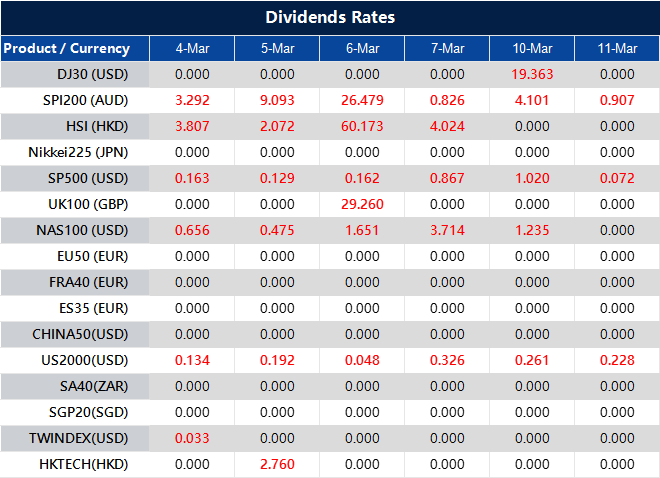
Please note that the dividends of the following products will be adjusted accordingly. Index dividends will be executed separately through a balance statement directly to your trading account, and the comment will be in the following format “Div & Product Name & Net Volume ”.
Please refer to the table below for more details:
The above data is for reference only, please refer to the MT4/MT5 software for specific data.
If you’d like more information, please don’t hesitate to contact info@vtmarkets.com.
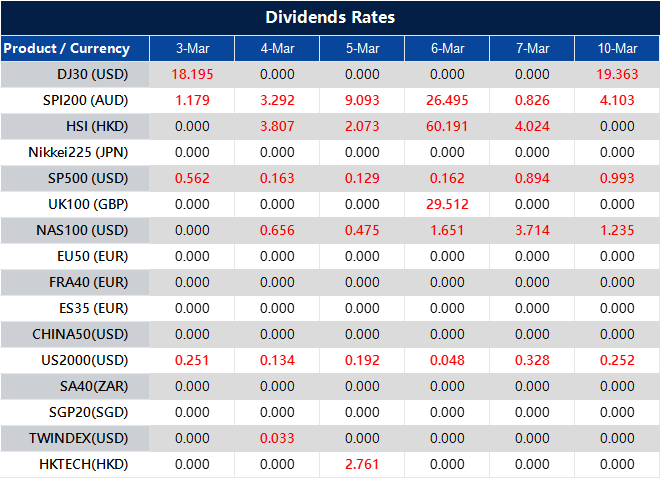
Please note that the dividends of the following products will be adjusted accordingly. Index dividends will be executed separately through a balance statement directly to your trading account, and the comment will be in the following format “Div & Product Name & Net Volume ”.
Please refer to the table below for more details:
The above data is for reference only, please refer to the MT4/MT5 software for specific data.
If you’d like more information, please don’t hesitate to contact info@vtmarkets.com.
Understanding the 10 Largest Companies in the World by Market Cap
Market capitalization (market cap) is a crucial measure of a company’s financial strength and investor confidence. It represents the total value of a company’s outstanding shares and is widely used to determine the largest companies in the world.
In 2025, global economic shifts, rapid technological advancements, and evolving market trends have significantly influenced the rankings of the 10 largest companies in the world by market cap. With artificial intelligence (AI), cloud computing, and energy transition driving valuations, companies at the top of the list have leveraged these trends to maintain their dominance.
This article will explore the largest companies in the world by market cap in 2025, factors influencing their growth, and how traders can take advantage of market opportunities.
Top 10 Largest Companies in the World by Market Cap in 2025
The largest companies in the world by market cap in 2025 reflect the rapid technological advancements, energy market fluctuations, and evolving consumer demands that have shaped the global economy. Companies leading in artificial intelligence (AI), cloud computing, and clean energy have seen significant market valuation growth, while traditional industries like oil and pharmaceuticals continue to maintain a strong presence.
Company
Market Capitalization (Approximately)
Industry
Key Strength
Apple Inc. (AAPL)
3.2 Trillion
Technology
Ecosystem of devices & services
Microsoft Corp. (MSFT)
3 Trillion
Technology
Enterprise software & cloud computing
Saudi Aramco (2222.SR)
2.2 Trillion
Oil & Gas
Largest oil producer with low costs
Nvidia Corp. (NVDA)
2 Trillion
Semiconductors
Leading AI & GPU chipmaker
Alphabet Inc. (GOOGL)
1.9 Trillion
Technology
Dominant in AI-powered search & ads
Amazon.com Inc. (AMZN)
1.8 Trillion
E-commerce/ Cloud
E-commerce & cloud computing
Berkshire Hathaway (BRK.A)
900 Billion
Investments
Long-term value investment strategy
Meta Platforms Inc. (META)
850 Billion
Social Media
Largest social media & ad platform
Tesla Inc. (TSLA)
800 Billion
EV/ AI
EV & AI-powered self-driving tech
Eli Lilly & Co. (LLY)
750 Billion
Pharmaceuticals
AI-driven drug discovery & biotech
Here’s an in-depth look at the top 10 companies that dominate the global market in 2025, with insights into their business strategies, key revenue drivers, and future growth prospects.
1. Apple Inc. (AAPL) – The Tech Titan
Market Capitalization: Approximately $3.2 trillion
Industry: Technology
Apple is a global leader in consumer electronics, software, and services. It manufactures devices such as iPhones, MacBooks, iPads, and Apple Watches while also offering services like Apple Music, iCloud, the App Store, and Apple Pay. Apple has also entered the AI and wearable health tech space, introducing AI-powered tools in its devices and expanding into healthcare solutions.
Uniqueness: Apple’s ecosystem of interconnected devices and premium brand loyalty sets it apart from competitors. Its focus on AI-driven user experience has strengthened its market position.
Interesting Fact: Apple’s AI-powered Siri 2.0 is one of the most advanced virtual assistants, integrating deeply into its device ecosystem.
2. Microsoft Corp. (MSFT) – AI & Cloud Leader
Market Capitalization: Approximately $3.0 trillion
Industry: Technology
Microsoft is a global technology leader specializing in operating systems, software, AI, and cloud computing. Its products include Windows OS, Microsoft 365 (formerly Office), Xbox gaming, and Azure cloud services. Microsoft has expanded its AI capabilities through its partnership with OpenAI, integrating AI into business solutions like Microsoft Copilot and AI-driven cybersecurity.
Uniqueness: Microsoft’s dominance in enterprise software and AI-driven cloud computing sets it apart, with Azure competing head-to-head with AWS.
Interesting Fact: Over 70% of Fortune 500 companies rely on Microsoft Azure for their cloud computing needs.
3. Saudi Aramco (2222.SR) – Energy Giant
Market Capitalization: Approximately $2.2 trillion
Industry: Oil & Gas
Saudi Aramco is the largest oil and energy producer in the world, responsible for a significant portion of global crude oil and gas production. It plays a major role in energy exports, with a focus on hydrocarbons, refining, and petrochemicals. The company has also invested in renewable energy, particularly hydrogen energy and carbon capture technology, as part of its sustainability initiatives.
Uniqueness: Saudi Aramco has the world’s lowest-cost oil production, making it highly profitable even during price fluctuations.
Interesting Fact: Saudi Aramco produces over 10 million barrels of oil per day, making it the largest oil exporter globally.
4. Nvidia Corp. (NVDA) – AI & Semiconductor Powerhouse
Market Capitalization: Approximately $2 trillion
Industry: Technology/Semiconductors
Nvidia is the world’s leading semiconductor company, specializing in high-performance GPUs (graphics processing units) for AI research, cloud computing, gaming, and autonomous vehicles. Its chips are widely used in data centers, AI-driven applications, and scientific computing.
Uniqueness: Nvidia dominates the AI chip market, with its GPUs powering over 80% of AI models globally. Its cutting-edge technology is essential for deep learning, machine learning, and self-driving cars.
Interesting Fact: Nvidia’s AI chips are used by OpenAI, Tesla, and major tech firms to train advanced AI models.
5. Alphabet Inc. (GOOGL) – Search & AI Leader
Market Capitalization: Approximately $1.9 trillion
Industry: Technology
Alphabet is the parent company of Google, YouTube, and Google Cloud, specializing in internet services, digital advertising, and AI-driven search technology. Its core business revolves around Google Search, YouTube video streaming, and cloud computing solutions.
Uniqueness: Google’s AI-powered search algorithms and targeted ad system make it the dominant force in digital advertising. It also leads in AI development through DeepMind and Google Bard.
Interesting Fact: Google processes over 8.5 billion searches per day, generating billions in ad revenue.
6. Amazon.com Inc. (AMZN) – E-commerce & Cloud Giant
Market Capitalization: Approximately $1.8 trillion
Industry: E-commerce/Cloud Computing
Amazon is the largest online retailer and a dominant force in cloud computing through Amazon Web Services (AWS). It also operates Prime Video, Kindle, and Alexa-powered smart devices.
Uniqueness: AWS is the leading cloud service provider, powering major corporations, governments, and startups worldwide. Its AI-driven logistics and same-day delivery network set it apart in e-commerce.
Interesting Fact: AWS generates over 70% of Amazon’s total profits, making it the company’s most valuable business segment.
Berkshire Hathaway is a multinational holding company that owns and invests in insurance, banking, energy, and consumer brands. Led by Warren Buffett, it has stakes in major corporations like Apple, Coca-Cola, and American Express.
Uniqueness: Berkshire follows a long-term value investing strategy, focusing on stable, high-performing businesses rather than short-term market trends.
Interesting Fact: Warren Buffett’s investment philosophy has made Berkshire Hathaway one of the most successful and resilient companies in history.
8. Meta Platforms Inc. (META) – Social Media & AI Innovator
Market Capitalization: Approximately $850 billion
Industry: Technology/Social Media
Meta is a global leader in social media, digital advertising, and AI-driven content platforms. It owns Facebook, Instagram, WhatsApp, and Threads, connecting billions of users worldwide.
Uniqueness: Meta’s AI-powered advertising system personalizes content, maximizing user engagement and ad revenue. It is also investing in virtual and augmented reality to shape the future of digital interaction.
Interesting Fact: Meta platforms have over 3.5 billion active users, making it the world’s largest social media ecosystem.
9. Tesla Inc. (TSLA) – EV & AI Mobility Leader
Market Capitalization: Approximately $800 billion
Industry: Electric Vehicles (EV)/AI
Tesla is a leading manufacturer of electric vehicles (EVs), autonomous driving technology, and renewable energy solutions. It produces popular models like the Model 3, Model Y, and Cybertruck, while also offering solar panels and battery storage systems for clean energy solutions.
Uniqueness: Tesla’s Full Self-Driving (FSD) system is one of the most advanced AI-powered autonomous driving technologies. It continues to lead the EV market with long-range batteries, energy efficiency, and AI integration.
Interesting Fact: Tesla produces over 2 million EVs annually, making it the world’s largest electric car manufacturer.
Eli Lilly is a global pharmaceutical company specializing in diabetes, obesity, Alzheimer’s, and autoimmune disease treatments. It develops and distributes prescription drugs and biotechnology-based therapies, operating in over 120 countries.
Uniqueness: Eli Lilly is a leader in AI-driven drug discovery, using machine learning to accelerate medical research. Its diabetes and obesity drug, Mounjaro, has driven record sales, making it a top innovator in the healthcare sector.
Interesting Fact: Mounjaro became the fastest-selling diabetes drug in history, generating over $15 billion in 2024.
The largest companies in the world by market cap in 2025 showcase the dominance of technology, energy, and healthcare. Apple, Microsoft, Nvidia, and Alphabet lead with AI and cloud innovations, while Saudi Aramco remains strong in energy. Amazon, Tesla, and Eli Lilly continue to grow through e-commerce, EVs, and biotech advancements. As market trends shift, AI, renewable energy, and healthcare innovation will shape future valuations. Traders looking to capitalize on stock market trends can explore investment opportunities in these industry leaders through platforms like VT Markets, gaining access to real-time market insights and trading tools.
Trade on the Stock Market with VT Markets
Trading the largest companies in the world by market cap requires a reliable platform to navigate market trends. VT Markets offers real-time insights, competitive spreads, and seamless access to global stocks like Apple, Microsoft, Nvidia, and Tesla. Whether in tech, energy, or healthcare, VT Markets provides the tools needed to trade with confidence and stay ahead of the market.
1. What is the largest company in the world by market cap in 2025?
As of 2025, Apple Inc. holds the highest market cap, exceeding $3.2 trillion, making it the most valuable company globally.
2. What is the largest company in the world by revenue in 2025?
As of 2025, Walmart holds the title of the largest company in the world by revenue, with annual sales reaching approximately $681 billion.
3. What is the largest company in the world by profit in 2025?
In 2025, Saudi Aramco (2222.SR) is the most profitable company globally, with net income exceeding $100 billion.
4. What is the largest company in the world by number of employees in 2025?
As of 2025, Walmart remains the world’s largest employer, with an estimated 2 million employees worldwide.
5. Why do market capitalizations change over time?
Market caps fluctuate due to stock price movements, economic conditions, industry trends, and market sentiment. Factors like technological advancements, earnings reports, and geopolitical events can significantly impact valuations.
6. How can I trade the top 10 largest companies in the world?
You can trade leading global companies through VT Markets, which provides access to stocks from top industries, real-time market insights, and advanced trading tools.
7. Which industries dominate the largest companies in the world by market cap?
Technology, energy, pharmaceuticals, and e-commerce lead the rankings, with AI, cloud computing, and sustainable energy innovations driving market growth.
Please note that the dividends of the following products will be adjusted accordingly. Index dividends will be executed separately through a balance statement directly to your trading account, and the comment will be in the following format “Div & Product Name & Net Volume ”.
Please refer to the table below for more details:
The above data is for reference only, please refer to the MT4/MT5 software for specific data.
If you’d like more information, please don’t hesitate to contact info@vtmarkets.com.
Written on February 28, 2025 at 8:36 am, by anakin