Back

Increased optimism sees US stock indices expected to rise despite ongoing trade uncertainty and inflation concerns

US stocks are poised for an upward start as US and China prepare to meet in Switzerland. President Trump has suggested an 80% tariff, reduced from 145%, which could still lead to inflation and unemployment as small businesses may suffer.

The futures indicate potential gains: Dow up 112 points, S&P up 21 points, and NASDAQ up 95 points. Entering today, the S&P and NASDAQ are slightly lower by 0.40% and 0.28%, respectively. However, both remain above their 50-day moving averages at session lows. For the S&P, this average is 5555.65, while the 200-day moving average target is 5747.76.

Premarket Performance

The Dow industrial average is up 0.12% heading into Friday. In premarket trading: Nvidia shares are up 0.34% and 2.51% for the week. Alphabet is down 0.34% today and 5.94% for the week. Microsoft shares rose 0.36% today and 0.66% this week. Meta increased by 1.01% today and 0.16% this week. Apple gained 0.66% today but is down 3.83% weekly. Amazon shares rose by 0.53% today and 1.11% this week. Tesla gained 1.82% today but dropped 0.83% by yesterday’s close.

What we’re seeing here is an early signal of improved sentiment ahead of diplomatic talks in Switzerland. Markets have latched onto the idea that Washington may soften its previous stance on trade penalties, especially that sharp drop from a proposed 145% tariff to 80%. While 80% remains steep by historical standards, the reduction from prior expectations has cooled some of the harsher inflationary concerns that traders had priced in.

However, the backdrop remains tricky. Tariffs of that size, whether or not they go through, can weigh on small enterprises with thinner margins, often the first to feel the pinch of higher input costs. Inflation then becomes less a question of energy or labour, and more about imported intermediate goods, which can cascade through to consumer prices. Weakness in employment growth could follow, especially if firms begin cutting costs in response.

Now, looking at the broader picture through the futures market, there’s clear interest in buying into strength. The Dow pointing higher by over 100 points reflects a confidence that any policy developments out of Switzerland will err towards a cooling of recent hostilities—although traders should be mindful that no agreement has yet been signed. The early moves in the S&P and NASDAQ, too, bring them back above pullback levels seen earlier in the week. Their holding above the 50-day averages means short-term momentum hasn’t broken down entirely. However, the next resistance level, particularly the 200-day average in the S&P noted at 5747.76, will act as a technical marker for mean-reversion strategies.

Market Rotation and Strategies

We’re also following a noticeable rotation beneath the surface. Walmsley’s gains today, even if modest, demonstrate defensive buying, though a 5.94% slide over the week suggests deeper profit-taking or reallocation might be underway. Meanwhile, the movement in Pichai’s and Musk’s firms, though going in opposite weekly directions, points to shorter-term positioning over longer macro sentiment. The pickup in Bezos’s equity is also worth noting since a consolidation of strength there could pull broader consumer-related sectors slightly higher, given its spillover effect.

Derivatives traders should be watching volatility closely now—this mix of diplomatic uncertainty and technical support suggests a window for intermediate-range positioning but with readiness to unwind quickly. We should be treating support levels as tactical entry zones but not relying on them long-term. Option premiums could move sharply around the tariff decision, and spreads tied to mega-cap tech need adjusting in line with these week-to-date patterns. This includes careful hedging around weekly expiries that overlap with policy updates.

As Powell’s index continues to stabilise above 5555, daily closes and volume around that level may act as a short-term barometer. Algorithmic models may already be recalibrating, so discretionary traders will need to keep firm stops in place. Watching inputs from Geneva, and how quickly bond markets react to any signs of economic weakening, should guide us on whether to lean heavier into growth exposure or reduce it further.

In short, pricing risk correctly over the next week relies on staying close to data, keeping risk lean, and following through on rotations that look durable and not just reactionary.


Create your live VT Markets account and start trading now.

In April, actual employment change in Canada exceeded forecasts by 4.9K, reaching 7.4K

Canada’s net change in employment for April showed an increase of 7.4K, exceeding expectations set at 2.5K. This data reflects a better-than-anticipated outcome, providing insights into the country’s labour market conditions.

In the foreign exchange market, EUR/USD remains above 1.1250, suggesting a potential weekly loss despite recent stability. Meanwhile, GBP/USD is advancing towards 1.3300, recovering as traders focus on upcoming US-China trade discussions this weekend.

Gold prices maintain strength above $3,300 amid heightened geopolitical tensions impacting global perceptions of risk. Safe-haven demand has surged due to ongoing conflicts involving Russia-Ukraine, the Middle East, and India-Pakistan situations.

Focus on Economic Events

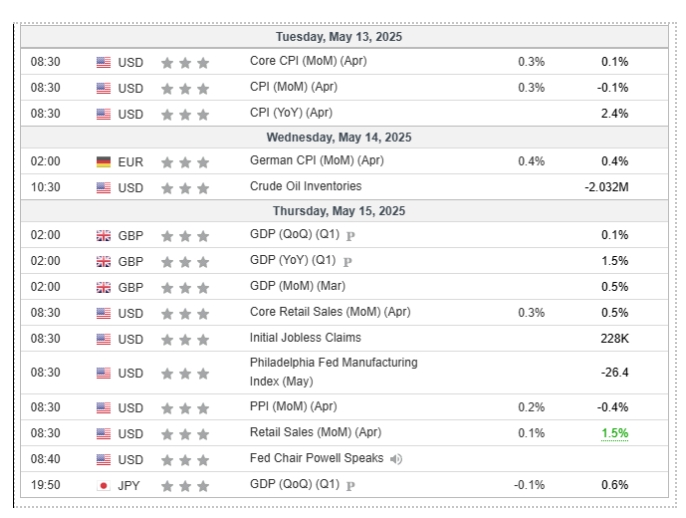
Several other economic events are also capturing attention, such as US Consumer Price Index reports and trade negotiations progress with China. Additionally, Retail Sales data from the US, and GDP figures from the UK and Japan remain in focus.

The complexity of foreign exchange trading is high, with significant leverage and risk involved. Thorough consideration of investment goals, experience, and risk tolerance is vital before engaging in such activities. Professional advice may be beneficial for those uncertain about the suitability of forex trading.

The stronger-than-expected change in Canadian employment figures for April — a gain of 7.4K jobs versus the anticipated 2.5K — points to ongoing resilience in the labour market that many had not fully priced in. These numbers signal continued hiring momentum, especially important as inflation expectations and prospective rate paths remain sensitive to jobs data. A tighter labour market could add weight to arguments for firmer policy stances in the near term if inflationary pressures persist, even if growth indicators remain mixed.

Currency and Commodity Market Analysis

In currency markets, although EUR/USD remains above the 1.1250 mark, its weekly trend hints at underlying weakness. We’ve noticed some rebalancing behaviour around key support levels, which may be more telling than the spot price alone. Traders possibly remain cautious due to looming macro releases, hesitant to take on exposure into the weekend. Meanwhile, GBP/USD’s move higher towards 1.3300 signals short-term optimism. While some of the momentum appears to be correction-driven, especially after earlier softness, attention is clearly shifting towards bilateral developments between Washington and Beijing, which hold implications beyond just tariffs and immediate trade flows. Any outcomes from the talks over the weekend could quickly move implied volatility curves, particularly in sterling and Asian currencies.

Gold continues to act as a barometer for geopolitical anxiety. Sustaining prices above $3,300 per ounce signals not just a short-term reaction, but persistent market concern over global instability. Beyond the widely reported Russia-Ukraine front, other areas like the Middle East and South Asia are generalising that worry across different asset classes. Demand for safety is affecting behaviour in options pricing as well, particularly around shorter-term hedges. There’s also been a quiet uptick in open interest in derivative contracts with out-of-the-money strikes, which suggests positioning for tail-risk events rather than ordinary fluctuations.

Turning back to macro data, upcoming US CPI reports are set to influence rate trajectories again. The bond markets, which have been unusually reactive to core inflation surprises, could inject higher volatility into FX pairs closely tied to US yields. UK GDP numbers are similarly impactful this time around, considering present speculation about when the Bank of England may opt to ease. We’re also eyeing Japanese economic output data, which may shape the narrative around the yen, particularly if the growth rebound fails to materialise as strongly as consensus expects.

From our perspective, the coming weeks are likely to demand a more dynamic approach when managing portfolio delta. Monitoring implied volatility in key US and UK pairs, as well as directional momentum in short-tenor futures contracts, seems essential. While some of the macro thematics appear long-standing, their interaction with short-dated options pricing or skew positioning can abruptly change as headline risk unfolds. As ever, understanding position book sensitivity and where gamma exposure lies in the week’s expiry profile will be telling when erratic market behaviour emerges. We see opportunity in spread strategies on narrower crosses and neutral gamma trades around headline events — low convexity profiles that can be managed actively without reliance on binary outcomes.

Create your live VT Markets account and start trading now.

Increased production led Diamondback Energy to surpass earnings expectations, reporting $4.54 per share for Q1

Diamondback Energy reported first-quarter 2025 adjusted earnings per share of $4.54, surpassing expectations and last year’s $4.50. Revenues reached $4 billion, an increase of 82% from the prior year, beating estimates by 8.1%.

The company repurchased $575 million in shares initially and a further $255 million later. It declared a quarterly dividend of $1 per share, payable on May 22.

Production And Pricing

Diamondback’s production averaged 850,656 barrels of oil equivalent per day, primarily oil, up 84.5% year-over-year. The average realised oil price was $70.95 per barrel, a 5.5% decrease from the previous year.

Diamondback’s cash operating cost was reduced to $10.48 per BOE from the previous year’s $11.52. Production and ad valorem taxes increased to $2.98 per BOE.

The company logged $942 million in capital expenditure, focusing on drilling and infrastructure. Adjusted free cash flow was $1.6 billion.

As of March 31, it held $1.8 billion in cash and $13 billion in long-term debt.

The company revised its guidance to reflect recent acquisitions, projecting oil volumes and a capital spending budget lower than previously forecasted.

Strong Earnings Among Energy Companies

Other energy companies also reported strong earnings due to increased production.

Diamondback’s latest quarterly update gave the kind of clarity markets like. EPS came in above both consensus and its own performance from the same period a year earlier. That shows both discipline and consistency, which is rare against such a volatile pricing backdrop. At $4.54 per share, there’s little doubt the firm is operating efficiently, even with slight headwinds in pricing.

Revenue grew strongly, with $4 billion marked—a sharp 82% improvement compared with the same stretch last year. It’s not just growth for growth’s sake either. Markets priced in something lower, so that 8.1% beat backed by fundamentals offers solid justification for the move higher. Importantly, this wasn’t just pricing driving earnings upward. Output was a central factor. A daily average of more than 850,000 BOE means the company completed more wells and got more out of each one.

However, while production increased nearly 85%, oil prices didn’t cooperate in quite the same way. Realised oil came in at $70.95 per barrel, a decent level in context, but down from last year’s numbers. That minor drag hasn’t derailed anything major, but it is worth noting. Margins were preserved in part because costs were cut—cash operating expenses per BOE trimmed by over $1. This likely reflects efficiency from scale and tighter field-level performance.

Additional share buybacks, totalling over $800 million across two tranches, send a direct signal on capital allocation priorities. The dividend at $1 per share on top reaffirms this. For those watching balance sheets, the $1.8 billion of cash and $13 billion in debt speak to a company still deploying capital, but not recklessly. The majority of the $942 million capex went where it should—drilling and infrastructure. That’s what powered the production boost, not one-off inventory sales or accounting quirks.

Guidance has been revised lower for spending and oil volumes, reflecting recent consolidation activity. At first glance, this may seem cautious. But less capital now, following acquisitions, suggests integrated assets are being deployed with restraint rather than overextension. Management isn’t chasing volume for its own sake. Lower activity forecasts plausibly reflect optimisation efforts post-acquisition—integrating rather than speeding up.

Other producers also reported stronger performance, driven largely by output gains. So, we’re seeing more supply, not necessarily reliant on price spikes to maintain profitability. That matters, because supply discipline is one of the few things stabilising derivative markets at the moment.

For now, the tighter rein on spending—paired with robust production and better-than-expected revenue—shapes a backdrop of stable operating leverage. As spread curves shift, and implied volatility reacts to production data and inventory builds, we should focus on how production trends may influence underlying price range expectations.

If production continues to climb while realisation levels soften slightly, it creates a narrower but more stable pricing environment. That may compress tails in near expiries. Both horizontal rig counts and completion efficiency should be monitored. Those will signal whether recent cost improvements can hold, and whether free cash flow projected near $1.6 billion can be sustained, or even bettered, without price support.

With valuation underpinned by buybacks and durable production, pricing sensitivities are unlikely to spike sharply in either direction near term. That means ranges may stay tighter—though extremes still hinge on inventory surprises and macroeconomic shifts. This is a backdrop where structure matters.

Create your live VT Markets account and start trading now.

Week ahead: Global economic turbulence as Trump sets the tone

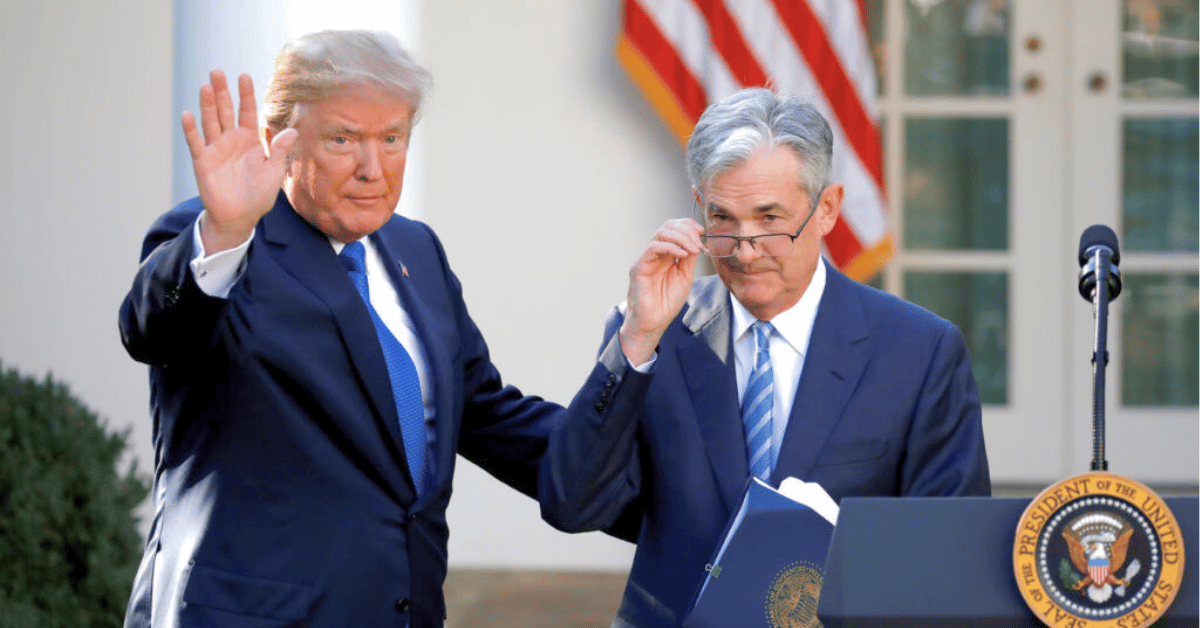
As the financial markets brace for another week of uncertainty, President Donald Trump has once again stirred debate with a series of bold moves. His renewed criticism of Federal Reserve Chair Jerome Powell – calling him “Mr. Too Late” and a “fool” – has put monetary policy back in the spotlight, while his direct call for Americans to buy stocks raises questions about market sentiment.

Beyond the economy, Trump’s push to raise taxes on individuals earning over $2.5 million to 39.6% marks a notable shift in fiscal policy discussions. Meanwhile, his call for a 30-day unconditional ceasefire between Russia and Ukraine introduces a new dimension to geopolitical conversations. As the week unfolds, investors, policymakers, and global leaders alike will be watching closely to see how these developments play out.

KEY ECONOMIC INDICATORS

Trade & Tariffs: Trade deal between the U.S. and the U.K.

  • The U.S. keeps a 10% base tariff on U.K. goods, expands market access, removes tariffs on U.K. steel/aluminum, applies 0% tariffs on U.S. agricultural exports and introduces tiered tariffs on U.K. car imports.
  • The U.S. Trade Representative may enforce actions on imported services.
  • Trump announced a $10 billion Boeing aircraft deal with the U.K.
  • The U.S. Commerce Secretary aims to strike a trade deal with a major Asian country.
  • The E.U. may impose extra tariffs on $95 billion worth of U.S. goods if talks fail.

U.K. Interest Rate

  • The Bank of England cut rates by 25 basis points, but the decision was divided.

Energy

  • U.S. and Russia are reportedly exploring ways to resume natural gas supplies to Europe.
key-economic-events

MARKET MOVERS

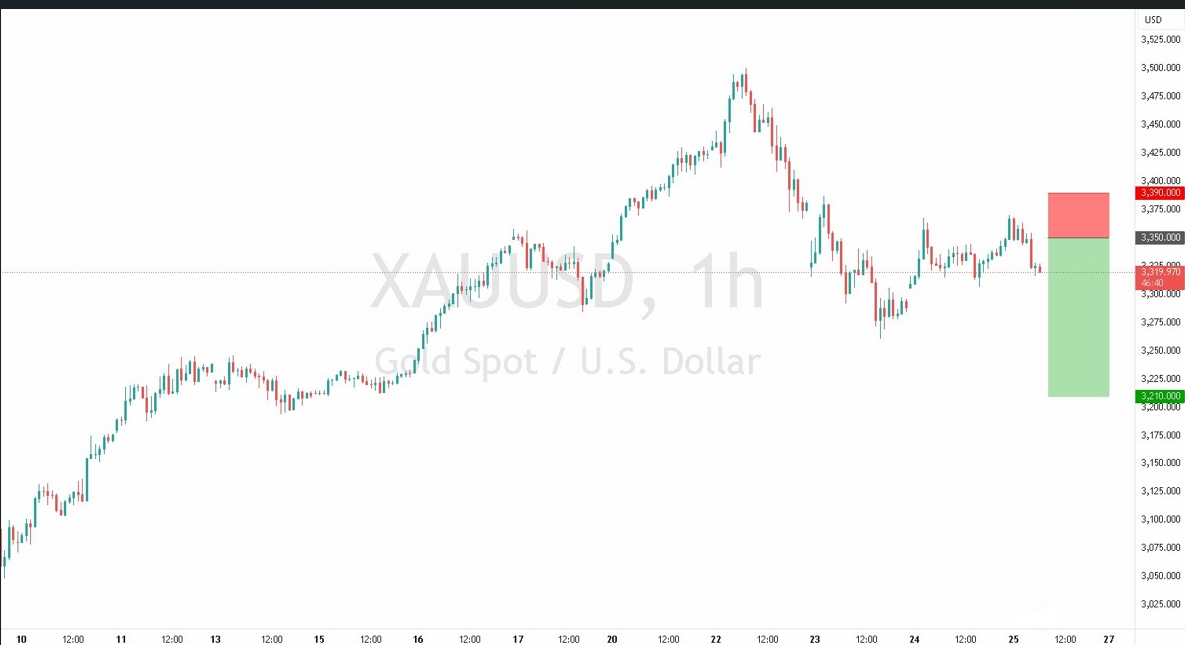
XAU/USD

xauusd-gold
  • Although the bulls are in control, the stalling positive momentum indicates a potential reversal.
  • While a corrective move lower is anticipated, a short-term bounce may occur before the next leg down.
  • Preference to sell into the trend.

Trade Opportunity: Target 1: 3,210 / Target 2: 3,200

DAX40

dax-40-vt-markets
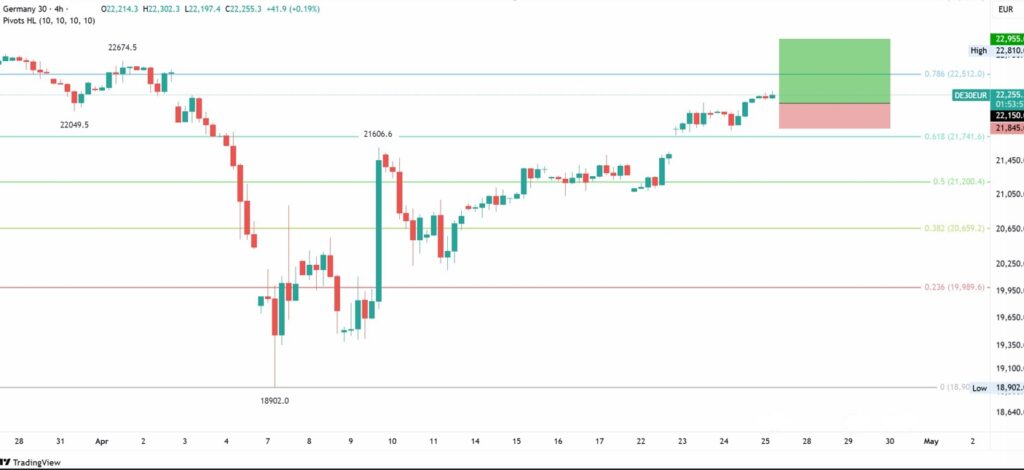
  • Short-term bias has shifted to the upside.
  • Market has posted four consecutive daily gains.
  • No clear signs of exhaustion in the current uptrend.
  • Attractive risk to reward setup for initiating long positions at market.
  • The 20-period 1-hour EMA is currently positioned at 22,150.

Trade Opportunity: Target 1: 22,955 / Target 2: 23,055

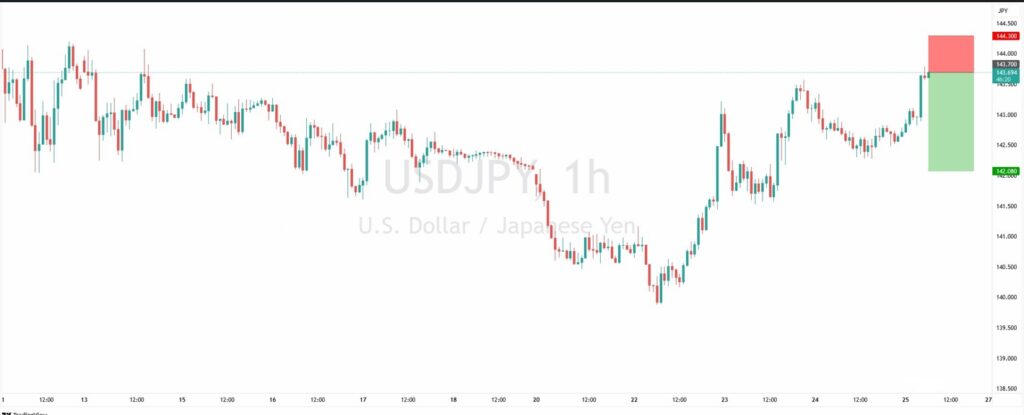
USDJPY

usdjpy-vt-markets
  • Registered modest daily gains, though price action remained within the range of the prior trading day – a sign showing indecision in the market.
  • Resistance is seen at 143.83, aligning with the 261.8% Fibonacci extension at 143.71.
  • While the expected move lower is corrective in nature, it presents a compelling risk to reward opportunity.
  • Medium-term bias remains neutral.

Trade Opportunity: Target 1: 142.08 / Target 2: 141.5

NEWS HEADLINES

Washington’s power play: Trade, treasury and the Dollar

  • U.S.-U.K. trade deal: President Trump announced a “breakthrough” trade agreement with the U.K., aiming to strengthen economic ties and reduce tariffs.
  • Dollar index: The U.S. Dollar Index rose 0.76% to 99.86, the highest level since April 10, signaling strong investor confidence.
  • Treasury Yields: The 10-year yield closed at 4.2740%, reflecting long-term market sentiment, while the 2-year yield settled at 3.7870%, which is more in-line with monetary policies.

Crypto frenzy: Bitcoin breaks $100K, Ethereum soars

  • Bitcoin surged over $5,000 to briefly touch $104,000 for the first time since early February. It was last traded at $102,773.
  • Ethereum jumped 20% on the day, now at $2,172.

Precious metals under pressure

  • Gold dipped 1.79% to close at $3,304.98/oz after touching a low of $3,290.
  • Silver fell slightly by 0.15% to $32.45/oz.

Oil spikes: Trade deal and sanctions fuel market rally

  • Oil prices jumped over 3% due to the U.K.-U.S. trade deal and U.S. sanctions on Iranian oil companies.
  • WTI crude rose 3.99% to $60.22/barrel.
  • Brent crude gained 3.69% to $63.17/barrel.

The Surge in the stock markets: Crypto plays shine, tech giants climb

  • Major U.S. stock indices posted gains, with the Dow Jones up 0.6%, the S&P 500 rising 0.58%, and the Nasdaq climbing 1.07%.
  • Crypto-related stocks led the rally, as Canaan surged 9%, Robinhood advanced 8%, and MicroStrategy gained 5%.
  • Tech giants performed well, with Google (GOOGL) increasing 2% and Tesla (TSLA) rising 3%.
  • The Nasdaq Golden Dragon China Index gained nearly 1%, driven by a 2% rise in Alibaba (BABA).
  • European markets saw solid gains, with the German index DAX up 1.02% and the Euro Stoxx 50 climbing 1.12%.
  • The U.K. FTSE 100 stood out as the exception, slipping 0.32%.

Click here to open account and start trading.

USDCAD rises against resistance; maintaining upward momentum requires breaking and holding key levels.

The Canadian jobs report for April 2025 revealed an employment increase of 7.4K, surpassing the forecast of 2.5K but following a previous decline of 32.6K. The unemployment rate rose to 6.9%, higher than expected, partially due to an increase in labour force participation. Full-time employment climbed by 31.5K, whereas part-time roles dropped by 24.2K. Manufacturing jobs saw a reduction of 31K, and average wages maintained a 3.5% year-over-year growth.

Amid these figures, USDCAD showed minimal immediate price volatility. The pair continued its upward trajectory after earlier stagnation, breaking previous resistance at 1.38917–1.3904, which has now turned into support. Maintaining momentum above this level is vital to sustain a bullish trend, with any drop below posing a setback for the buyers.

Key Resistance Areas

Attention now turns to the 1.3924–1.3933 resistance area. The pair briefly moved beyond this range but failed to sustain its trajectory. To confirm continued bullish momentum, a stable breakout above this zone is essential. Bulls aim for targets at 1.3977 and further at 1.4000, where significant technical metrics align. Successful groundwork above 1.3933 is needed to pave the way for these targets.

What the earlier section tells us is fairly clear—employment numbers in Canada were slightly better than forecast, but not wildly so. That said, the unemployment rate still ticked up more than anticipated. For us, that signals not weakness per se, but a shifting dynamic in the labour market, with more people entering the workforce than jobs could accommodate in that moment. Full-time roles are on the rise, which is typically a firmer indicator of employer confidence, while the contraction in part-time work may hint at companies pulling back on more flexible arrangements. The materials sector saw a distinct thinning out in manufacturing roles, subtracting volume from an area that’s historically sensitive to growth fluctuations. Wages remain steady, showing that upward inflationary pressure—at least from pay packets—hasn’t flared.

Price action in the currency pair didn’t flinch much upon the release. That itself is telling. When the macro data doesn’t trigger sharp moves, it often means the positioning was well-prepared or focus lay elsewhere. In this case, the technical backdrop held more sway. Price had been rangebound for a period and then decisively pushed above a previously firm ceiling. Once it cleared the resistance between 1.38917 and 1.3904, that area flipped and now serves as a foundation. If price spends time in that band and doesn’t fall back through it with velocity, then there’s likely continued appetite on the buy side.

Preparing For The Next Move

Now the eye shifts to the next overhead test between 1.3924 and 1.3933. There was an upward flick beyond this area—but it lacked the staying power to hold, suggesting that owed more to a short supply of sellers than to committed buyers stepping in. What we look for now is a convincing consolidation above that zone. That would show energy being mustered for another leg up, especially with prior resistance levels now offering structural support underneath.

The upper boundaries of 1.3977 and 1.4000 are not just round numbers; they’re commonly referenced chart points, and we can expect a batch of triggers and conditional orders to be stacked there. Those targeting these levels don’t need to rush, but watching how price behaves near 1.3933 could offer a relatively clear read. If we hold higher lows and start to see volume tilt up, expectations firm. However, should the pair fall back beneath prior pivots and show hesitance to retest them, it may be safer to step aside and reassess.

In short, the approach over the next fortnight should be methodical. Look for signs of commitment—not just reaction. Broken resistance needs to show itself as firm support, and transient breaches without follow-through should be treated with scepticism. We are in a price structure that leans to the upside, but only as long as the base levels do not give way with force.

Create your live VT Markets account and start trading now.

Following Trump’s comments about tariffs, gold rises nearly 1% to surpass $3,335 currently

Gold prices have rebounded, trading above $3,335, following initial losses. Despite a perceived lack of substance in the new US-UK trade agreement, gold has seen a recovery due to market concerns about the forthcoming China-US meeting.

Gold (XAU/USD) saw a near 1.0% increase, climbing above $3,335. President Trump suggested an 80% tariff on Chinese goods, adding uncertainty ahead of the trade discussions in Switzerland.

Saturday’s talks in Geneva, led by US Treasury Secretary Scott Bessent and Chinese Vice Premier He Lifeng, target reducing tariffs to below 60%. Expected progress could lead to tariff reductions as early as next week.

Technical Analysis

On the technical side, resistance points are at $3,336, $3,384, and $3,462, while support is at $3,258, $3,245, and $3,210. These levels indicate key areas for price movements.

Interest rates, determined by central banks, influence currencies and gold prices. Higher rates strengthen currencies but generally decrease gold prices, increasing the opportunity cost of holding gold. The Fed funds rate influences monetary policy decisions, impacting market behaviour and interest rate expectations.

The rebound in gold – now trading just above $3,335 – reflects how investor sentiment can swiftly turn when geopolitical concerns regain focus. Despite early declines, uncertainty surrounding the upcoming China-US talks in Switzerland has provided meaningful support to precious metal prices. One might have expected gold to lag after a rather unremarkable US-UK trade announcement failed to inspire markets. Instead, this recovery highlights how quickly risk appetite can shift on potential shocks from major economies.

It’s worth noting that renewed tensions were sparked by Trump’s mention of an 80% tariff on Chinese exports. While this wasn’t accompanied by policy detail, it unsettled traders enough to increase safe-haven bids. Consequently, attention turns to Saturday’s high-level discussions in Geneva, where Bessent and He aim to bring tariffs below 60%. The possibility – not mere hope – of reductions being confirmed within days adds an element of timing pressure that has likely supported gold’s near 1% rally.

Monitoring Market Reactions

We’ll need to monitor Treasury statements and soundbites post-Geneva very closely. If diplomatic tone softens or a procedural roadmap emerges, markets may start repositioning even before tariffs officially change. Price action in gold will reflect those shifts quickly. In particular, it would be prudent to watch for moves through the resistance at $3,336 – which, in recent sessions, has behaved as a key ceiling. Should trading volumes support a daily close above that level, the next upside targets come at $3,384 and $3,462. Each of these thresholds corresponds to past reaction highs and visible chart congestion.

On the other hand, retracements shouldn’t be dismissed if talks falter. In that case, support around $3,258 becomes the first area of interest, followed closely by $3,245. Only a move to $3,210 would suggest deeper pullbacks and possibly a return to pre-rebound levels. These should not be brushed aside as isolated markers – wide interest from large funds can often cluster around these technical areas, amplifying volatility.

Interest rate expectations remain the key macro driver in the background. The Federal Reserve’s current cycle has seen rates elevated in an attempt to contain inflation; and while that’s generally pressure for gold, shifts in rate forecasts can override the broader directional pull. If market belief begins to solidify around a policy shift – perhaps even in response to weaker inflation prints or stronger-than-expected jobless claims – then gold may find renewed inflows from yield-sensitive traders.

Remember, holding gold yields nothing in terms of coupons or dividends. As such, when central banks raise rates, the opportunity cost of parking funds in non-yielding assets rises. But if there’s even a whiff that the Fed will pivot, or that forward curves soften, we’ve historically seen gold find buyers almost immediately. Traders are positioning portfolios around not just where rates are — but where they’re expected to go.

At this point, it makes sense to stay nimble, especially as volatility around these meetings and rate decisions can spike. Use technical zones to assess potential entries and monitor rate expectations via Fed funds futures and swaps pricing. What happens in Geneva won’t stay in Geneva – markets are listening.

Create your live VT Markets account and start trading now.

Forex market analysis: 9 May 2025

The Japanese stock market index, Nikkei 225, closed at its highest level since 27 March 2025, gaining 1.56% on Friday to end the session at 37,503.33. The move capped a strong week, with the index climbing 1.83% over the shortened holiday stretch and marking four straight weeks of advances.

The broader Topix index surged 1.29% to 2,733.49, logging an 11-session winning streak and marking its longest run since October 2017.

Nikkei rallies as US-UK deal lifts risk mood

Renewed risk appetite drove the rally, following the announcement of a limited trade agreement between the United States and the United Kingdom on Thursday.

Although U.S. President Donald Trump confirmed that existing 10% tariffs on British exports would remain in place, markets welcomed the agreement as a signal of easing protectionist pressure. Optimism extended toward the upcoming U.S.-China trade negotiations in Switzerland, where Trump suggested punitive tariffs on Chinese goods could be reduced from the current 145%.

More positivity in the Japanese financial markets

Traders took the developments as a turning point from the April slump. “The environment not just for equities but for bonds is only getting better as more compromises on trade talks could be possible,” said Hiroyuki Ueno, chief strategist at Sumitomo Mitsui Trust Asset Management.

Japanese equities also found relief in improving earnings sentiment. Despite tariff concerns, firms like Toyota appear insulated from worst-case scenarios, easing investor fears of corporate damage.

Nikkei 225 Technical Analysis

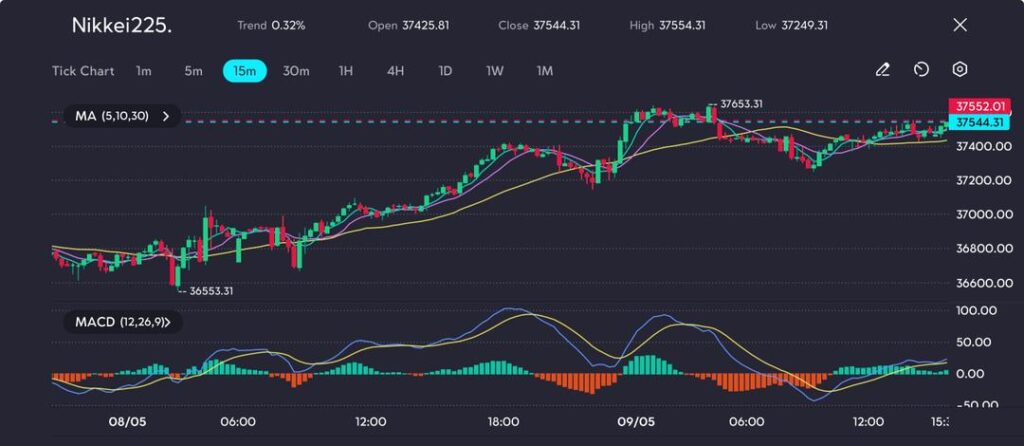
The Nikkei225 has extended its upward momentum after rebounding from the low of 36,553, climbing steadily to challenge the 37,653 resistance level. The index is now consolidating just below that key high, with short-term moving averages (5, 10, and 30) trending upward and providing dynamic support. Price action remains bullish overall, with higher lows forming on each intraday dip.

nikkei-225-vt-markets

Picture: Nikkei225 edges toward 37,653 peak as momentum firms, as seen on the VT Markets app

The MACD histogram has flipped back to green after a brief contraction, and a bullish crossover appears to be forming again above the zero line, which could strengthen the case for another test of the recent high. However, unless 37,653 is broken decisively, the current rangebound pattern between 37,250 and 37,650 may continue to dominate the near-term.

Market outlook

Markets will turn their attention to the U.S.-China talks for confirmation of trade thaw this Saturday. A positive outcome could fuel further gains for equities in Asia and globally. However, traders should brace for volatility if talks stall or fail to deliver concrete tariff relief. The next hurdle for Nikkei lies near 38,000, with short-term support forming around the 36,800 – 36,900 zone.

Click here to open account and start trading.

Barkin remarked on the robustness of consumer spending and business investment, despite declines in restaurant spending and job openings

Consumer spending and business investment remain robust, according to recent observations. Despite this strength, certain indicators show a decrease in activity.

Weekly restaurant spending in Washington DC has declined, reflecting a potential shift in consumer behaviour. Additionally, job openings have decreased, possibly indicating changes in the labour market dynamics.

Observations From Fed’s Barkin

These observations come from Fed’s Barkin, who is not a voting member until 2027.

The current state of consumer resilience, paired with steady business investment, paints a picture of a reasonably healthy economy on the surface. Yet, the recent drop in weekly restaurant spending in the Washington DC area hints at early signs of more cautious behaviour by households. This is not an isolated metric—it often acts as an immediate response barometer to shifting economic sentiment. When dining out slows, it may signal pressure on disposable incomes or an uptick in risk aversion, particularly around discretionary spending.

At the same time, the observed reduction in job openings supports the notion that the hiring momentum seen in previous quarters might be tapering off. A less active labour market, while still far from distressing, may start to soften wage growth expectations. That would feed back into inflation dynamics over the coming months, especially without the push from aggressive consumer demand.

What we’re seeing from Barkin’s comments offers an interpretation rather than a policy guidance, given his current non-voting status. Still, when a regional president with access to local economic data notes these types of subtle shifts, it warrants attention.

Reassessment Of Developments

For our part, these developments suggest a reassessment may be needed. While headline numbers remain broadly supportive, undercurrents are surfacing that deserve consideration. In particular, indicators tied to short-term consumer behaviour and employment data should now be watched more closely.

Short-dated volatilities could encounter pressure if markets begin reacting to weak spots in the broader data cycle. We think pricing models that rely heavily on strength in consumption may need to incorporate new inputs, not just to account for shifting macro themes but also to reflect how swiftly sentiment can change at the ground level—even before it appears in national averages.

There could be more value in week-over-week or intra-month datasets moving forward, rather than backward-looking aggregates. Pricing momentum may lean more heavily on interim indicators instead of historic correlations, especially if the broader market starts to internalise these subtle shifts in real-time behaviour.

As investors digest mixed signals, positioning will require more agility. Those tied too tightly to direct economic proxies without accounting for lag risk or behavioural adjustments may find performance diverging from expectations.

Relative value strategies, particularly those keyed to consumer-sensitive sectors, may also need repositioning as potential recalibrations flow through different corners of the market. We will watch for signs in consumption-linked derivatives and options volume shifts as potential early clues.

Create your live VT Markets account and start trading now.

Despite a corrective wave IV, Lam Research (LRCX) shows continued bullish potential with wave V approaching

Lam Research (LRCX) is maintaining a bullish trend despite a corrective wave IV, according to Elliott Wave analysis. The long-term chart identifies a strong impulsive structure beginning in the early 2000s, indicating further upside potential as wave V nears.

Wave III concluded with a distinct five-wave pattern from the 2009 low, demonstrating strong momentum. Currently, the stock is experiencing a wave IV correction, characterised by a double zigzag pattern denoted as ((W))-((X))-((Y)). Support is at $0.6604, and the bullish outlook remains valid above this level.

The correction presents an opportunity for entry at more favourable prices, rather than suggesting exit. Once wave IV concludes, wave V is anticipated to initiate, potentially achieving new all-time highs, though the timeline remains uncertain.

In the wider market, the EUR/USD holds above 1.1250 but is set to record small weekly losses. GBP/USD is recovering towards 1.3300 amid a stalled USD and US-China trade talks. Gold maintains gains above $3,300, buoyed by geopolitical tensions. Upcoming events include the US CPI report and ongoing trade discussions, with broader market focus on trade negotiations and economic data releases.

What we’re seeing in Lam Research’s structure is a textbook application of Elliott Wave Theory, and it’s unfolding in a manner that aligns with longer-term projections. The prior wave III showed strong extension, and it did so with high clarity—five clear legs from the 2009 low suggest momentum carried by more than just sentiment. That momentum, historically, has not dissipated overnight. Now that the share price has entered a wave IV correction, we expect short-term softness to continue—but that’s structurally needed before a trend can resume.

This wave IV isn’t a deep collapse. Its double zigzag shape ((W))-((X))-((Y)) tells us that the decline is more likely to be a temporary rebalancing rather than a structural top. That support at $0.6604 essentially outlines the boundary—if we stay above that, the bullish model stands. It’s important to monitor how price behaves around that level; a clean bounce or a sideways veer would provide added confirmation. The alternative—breaking sharply below—would compel a reassessment of wave labelling, though that seems limited at present.

Traders focused on derivatives built around Lam’s movement may find more use in timing this correction with long entries instead of avoiding it. Corrections in wave IVs tend to unnerve short-term participants, but that mispricing often provides the edge. If the current shape unfolds fully within expectations, then wave V could begin with considerable energy—wave Vs often mirror or exceed prior wave I extensions when momentum returns.

Elsewhere, the foreign exchange tape has been erratic, though not without form. The euro-dollar holding above 1.1250 underlines strength on dips; however, weekly softness indicates hesitancy ahead of U.S. prints. Sterling is edging back to 1.3300—not on its own strength, though—but on a drifting US dollar, partly influenced by renewed ambiguity over U.S.-China trade developments.

On the metals front, gold above $3,300 gives us a reading of risk sensitivity in the system. A price holding that level during tense geopolitical cycles isn’t unusual; it reinforces gold’s use as a secondary hedge. Notably, it means that the current buyers are not short-term chasers. They’re position-holders awaiting either inflation surprises or unexpected volatility from global data.

In the context of macro signals and order flows, next week’s U.S. CPI release needs to be tracked closely. The expected figure will anchor rate expectations more firmly ahead of the next policy window. Trade developments, especially in response to ongoing tariffs and negotiation frameworks, will also feed directional cues across asset classes.

These are not environments for directionless plays. Implied volatility metrics in rates, FX, and equities remain elevated. That suggests hedging activity is far from neutral, and it means they’ll respond swiftly to data disappointment or surprise.

We’ll need to keep pattern integrity in mind while watching for early signs that wave V in Lam may be preparing to ignite. That would come through strong impulsive moves off support, preferably with volume confirmation. Until then, measured entries on weakness offer favourable reward-risk profiles—not passive holdings.

Hassett believes the UK trade agreement will inspire numerous upcoming deals, maintaining market stability and collaboration

The White House economic advisor, Kevin Hassett, shared insights on new potential trade deals. He mentioned being briefed on approximately 24 deals nearing completion.

Hassett expressed confidence that these deals won’t disrupt markets. He also referenced positive developments in Switzerland, noting mutual respect between parties.

The UK Trade Deal

The UK trade deal is viewed as the model others aim to replicate. Hassett predicted an increase in deals similar to the UK’s in the near future.

Additionally, US President Trump insists on policies such as ‘no tax on tips’, ‘no tax on overtime’, and promoting ‘interest-free auto loans’. Market reactions included slight bids in stocks and USD/JPY.

So far, what’s been conveyed is that Hassett, speaking from the White House, has been optimistic regarding a wave of around two dozen trade agreements that are apparently approaching finalisation. From his remarks, the implication is that these agreements are unlikely to stir any sudden turbulence in market pricing. The reference to Switzerland suggests a productive diplomatic tone, one that likely reassures those watching for frictions rather than progress. His comments about the UK deal, particularly calling it a benchmark for others, underline a desire for continuity and replication in future arrangements.

The President has also reiterated a suite of tax-related proposals pointed directly at consumer incomes and affordability – things like exempting tips and overtime pay from taxation, and supporting borrowing through interest-free vehicle financing options. This signalled a general positioning toward demand support, ideally stimulating spending behaviour through a reduction in household cost burdens.

Market Reactions and Expectations

From markets, the initial takeaway was relatively restrained: steady buying into equities, along with moderate movement in USD/JPY. It wasn’t a full-scale rally, but enough to show that positioning was slightly adjusting in response.

In the near term, we may want to pay close attention to how thin liquidity conditions react to the prospect of broader trade accord announcements. They don’t need to cause immediate repricing, but they’ll lean into sentiment during hours of low volume.

If one or more of those 20-plus trade deals enters the headlines with actual numbers, we ought to see stronger directional bids as models refresh assumptions on GDP and cross-border revenue flows. In particular, market makers are likely to sharpen their hedging profiles quickly if fiscal execution begins to affect consumer channels more directly. Where OTC options markets are concerned, skew may flatten on pairs and equities most exposed to trade-sensitive sectors, particularly where tariffs have dominated pricing for the past two quarters.

Markets in the options space should also mind the endpoints of short-dated IV. There’s a decent chance that long gamma remains supported in light of ongoing policy risk. A surprise statement at an off-hour could be enough to inject temporary vol spikes into already compressed curves. Positioning ahead of US data releases will require sharper timing, particularly on days forecasted for rhetoric from administration officials. It’s not just about whether a deal happens – it’s now instruments reacting to the manner and sequencing in which details become publicly known.

Short puts on industrials, as well as dollar-linked calls on Pacific crosses, have scope for rapid re-pricing if just one of the euro-area negotiations shortcut resistance and gets formalised. Traders should remain aware of the headlines, but structurally exploit backwardation near hedging zones, especially where policy timelines are both compressed and hinge on high-frequency statements.

The preference for non-taxable income ideas, such as what’s been laid out, may see flows tilt toward consumer-driven equities. That could very well shift demand for cheap upside, particularly in sectors like discretionary retail and auto manufacturing. If that narrative sticks, premiums on three-week calls in that space will be squeezed by crowding.

We’ve already picked up on appetite building in low delta expressions for spot-following moves in high-beta banks, most of which trail policy adjustments by one or two earnings cycles. That lag can be helpful when selecting entry points, especially if the catalyst is driven by proposed taxation shifts rather than rate expectation adjustments.

Where bond proxies are concerned, muted inflation fears suggest limited upside to defensive longs in the near term. Instead, sharp exposure to credit products with currency-linked triggers could be timed against statements like the ones we’ve just seen, which hint at demand-tailored support without coordinated rate tightening.

The wider market may appear calm on the surface, but depth is still missing on many options chains. There’s more movement coming as soon as two or three of those deals actually land in final text, particularly if they affect shipping’s regulatory framework or relax holding constraints on foreign capital.

We should not pass over the signals baked into swaps either – the assumption that volatility will remain tame may not hold if something with firm metrics shows up. In trailing markets, where activity is driven by policy paths and bilateral trade revisions, timing is often more influential than even the size of the deal itself.

Better to stay pointed toward the instruments that react first – equities with tight geopolitical exposure, rates at the front of the curve, and cross-exchange currency options that flex under fiscal rotation. More deals are en route. We don’t need to guess when. Just remain aligned with where they’ll most likely hit.

Create your live VT Markets account and start trading now.

Back To Top
server

Hello there 👋

How can I help you?

Chat with our team instantly

Live Chat

Start a live conversation through...

  • Telegram
    hold On hold
  • Coming Soon...

Hello there 👋

How can I help you?

telegram

Scan the QR code with your smartphone to start a chat with us, or click here.

Don’t have the Telegram App or Desktop installed? Use Web Telegram instead.

QR code