How to Manage Market Volatility in the US Elections

We get it. The presidential elections are always the talk of the town when they roll in. The stakes are always high, and markets are already toeing the line with stirring volatility.

But what is it about a presidential election that gets the world in a tizzy? The United States has had a long history of influence on the global economy, from policies passed to shifting sectors.

It’s all old hat to the wolves of Wall Street by now, but it’s always good practice to look back at the past to make better decisions for the future.

Election Volatility and the Market

The months leading up to U.S. elections have been prime time for market swings.

The influence of the presidential election is very clearly seen on the VIX (Chicago Board Options Exchange Volatility Index). Colloquially known as the “fear gauge”, the VIX often displays a spike before election season, signalling a surge in hedging and the anticipation of rapid market moves.

For now, the VIX remains fairly stable ahead of the presidential race, but a contested election or results uncertainties could turn it on its head in a blink.

Picture: The daily VIX chart, as seen on the VT Markets app

Let’s take a look at some major volatility highlights from past elections:

2000 Bush-Gore Election

The 2000 election between George W. Bush and Al Gore was like a political roller coaster that Americans couldn’t get off of—especially once the results in Florida started swinging back and forth.

While Gore won the popular vote by a hair’s breadth, the fate of the election came down to Florida’s 25 electoral votes. “Hanging chads” and “butterfly ballots” became household terms as everyone struggled to understand what had gone wrong with the vote-counting process.

As tensions rose, the S&P 500 slid nearly 5%, and the VIX jumped over 40%.

After a dramatic 5-4 decision by the Supreme Court in Bush v. Gore, the recount was stopped, essentially handing the presidency to Bush.

2008 Financial Crisis and Obama-McCain

When the financial crisis hit in 2008, it was like watching dominoes fall, each one representing jobs, homes, and financial security for millions of Americans. The economy felt like it was teetering on the edge, and people were desperate for a leader who could step up with a vision of stability.

Image source: The Balance

The VIX hit 89.53—an all-time high—as markets were gripped by uncertainty over which candidate’s policies would steer the recovery.

2016 Trump-Clinton Election

The 2016 election brought America into a whole new kind of campaign, one that was messy, loud, and deeply divided.

Clinton won the popular vote by nearly 3 million, but Trump clinched the Electoral College in key states like Pennsylvania and Michigan, which were seen as Democrats’ strongholds.

Trump’s win came out of left field for many, including the markets.

Dow futures dropping more than 800 points overnight. However, the whiplash rebound saw the S&P 500 ending the year up 9.5%.

2020 Trump-Biden Election

The 2020 election was like no other in recent memory, taking place against the backdrop of a global pandemic, economic uncertainty, and heightened racial tensions. Joe Biden, with his “Build Back Better” message, positioned himself as a calm, empathetic counter to President Trump, who was criticised for his handling of COVID-19 and his combative approach to social issues.

Biden ultimately won both the popular vote by over 7 million and the Electoral College, but the transition was anything but smooth. The VIX surged to 40 as concerns over potential delays or contested results kept traders on edge.

Picture: The CBOE VIX movement in 2020 as seen on the VT Markets app.

Why Does the Market Get So Jumpy?

Like the rest of the world, markets do not like uncertainty. The U.S. Elections deliver it in spades, especially in such closely fought elections as we are seeing at the moment, where the winning candidate is still very much in balance. Predicting which candidate’s policies will come into play, and what they’ll mean for trade, taxes, and industry regulation, makes markets skittish.

Add in media speculation and poll shifts, and it’s no wonder we see such volatility.

Policies of each candidate can shake specific sectors differently, like green energy or healthcare, leading traders to hedge their bets or rotate sectors to manage the risk.

How Traders Hedge Against Election Volatility

With elections ramping up volatility, traders employ various strategies to protect their portfolios or benefit from market moves:

Options

Options are a great tool to let traders hedge against downside risks, with many buying put options on indices like the S&P 500. They can also provide

The VIX

The VIX itself is a popular hedge, as it rises during periods of uncertainty.

Currency Hedges

U.S. Elections can send shockwaves through global currencies, affecting pairs like USD/JPY or EUR/USD. Traders might shift into other currencies if the dollar weakens, capitalising on global market reactions.

Sector Rotations

During election cycles, traders rotate between sectors that may fare better under each candidate. For example, green energy stocks surged in 2020, while healthcare stocks saw volatility due to opposing reform views.

Safe-Haven Assets

Gold, U.S. Treasuries, and the Swiss franc (USD/CHF) are classic go-tos when things get rocky, offering a sense of security when markets turn turbulent. This can be seen particularly with the surge in the price of Gold in recent months due to an increase in geopolitical tension and the uncertainty of the US Presidential elections

Picture: Daily gold chart, as seen on the VT Markets app.

Turning Volatility into Opportunity

While some traders play defence, others see volatility as an opportunity for profit. Election-driven price swings can be ideal, especially for short-term trading.

Swing Trading

Elections offer ripe conditions for swing traders, who can capitalise on short-term moves driven by breaking news, polls, and debates.

Technical Analysis

Key technical indicators such support and resistance levels help traders navigate volatility. Following such technical cues allows traders to adapt to sudden price swings as the market reacts and digests news driven events

Futures Trading

Futures contracts, especially on indices, commodities, and currencies, are heavily traded during elections. Contracts on crude oil, gold, and the S&P 500 see considerable action as traders leverage rapid market shifts.

Post-Election Adjustments

After the election, markets may reassess the implications of the results, leading to further price swings, creating additional opportunities.

We know that the markets will tend to perform better in years where the incumbent president is re-elected, as it provides more consistency.

Likewise, a change in the administration can lead to short term turbulence as the new policies take their time to be adopted and the impacts assessed.

Navigating the Election Volatility Storm

With each U.S. election comes a wave of volatility, but traders can navigate it with smart hedging or by riding the price swings.

Options, safe-haven assets, and sector shifts can provide protection for portfolios, while swing and futures trading can turn uncertainty into opportunity.

Election-driven volatility brings risk, but for the prepared trader, it also brings potential rewards.
Open a live account

Notification of Server Upgrade – Oct 31,2024

Dear Client,

As part of our commitment to provide the most reliable service to our clients, there will be MT4 & MT5 server maintenance this weekend.

MT4 & MT5 Maintenance Hours:
November 3rd, 2024 (Sunday) 07:00 – 14:00 (GMT+3)

Please note that the following aspects might be affected during the maintenance:
1. The price quote and trading management will be temporarily disabled during the maintenance. You will not be able to open new positions, close open positions, or make any adjustments to the trades.
2. There might be a gap between the original price and the price after maintenance. The gaps between Pending Orders, Stop Loss and Take Profit will be filled at the market price once the maintenance is completed. It is suggested that you manage the account properly.
3. After server maintenance, server hours will be adjusted from GMT+3 to GMT+2.

Please refer to the MT4 & MT5 software for the specific maintenance completion and marketing opening time.

Thank you for your patience and understanding about this important initiative.

If you’d like more information, please don’t hesitate to contact info@vtmarkets.com

Dividend Adjustment Notice – Oct 31,2024

Dear Client,

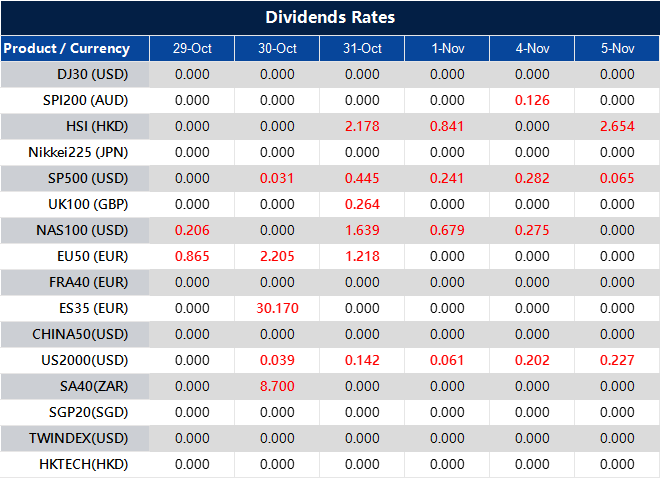
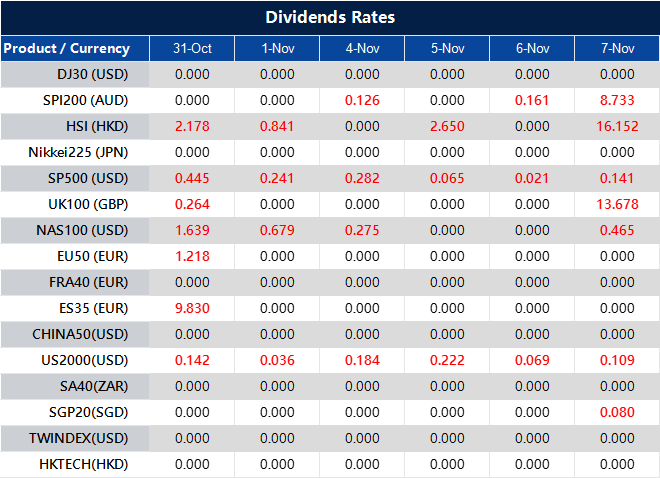
Please note that the dividends of the following products will be adjusted accordingly. Index dividends will be executed separately through a balance statement directly to your trading account, and the comment will be in the following format “Div & Product Name & Net Volume ”.

Please refer to the table below for more details:

The above data is for reference only, please refer to the MT4/MT5 software for specific data.

If you’d like more information, please don’t hesitate to contact info@vtmarkets.com.

Important Notice of Market Risk During US Election – Oct 30,2024

Dear Client,

With the upcoming U.S. Election on November 5th, increased market volatility is expected. Our top priority at VT Markets is to protect our clients and ensure a positive trading experience. We would like to remind all investors of the following market risks:

Spreads:
During the election period, market spreads may experience more significant fluctuations than usual. Please trade cautiously and manage your positions and funds appropriately.
Liquidity:
Due to market sentiment and uncertainty, some liquidity providers and banks may reduce or withdraw their support, which may lead to significant differences between the order execution price and the intended price, increasing the risk of slippage.
Volatility:
Frequent news events and market updates may trigger sharp market movements, resulting in extreme market conditions.

As your trusted broker, VT Markets will implement various risk management measures to effectively address market volatility and ensure trading safety. Specific adjustments may include lowering leverage ratios and increasing margin requirements to double their original level. Please be advised that leverage adjustments may directly lead to higher or lower margin requirements. We recommend that you add funds to your account in advance to ensure sufficient margin coverage.

If you’d like more information, please don’t hesitate to contact info@vtmarkets.com.

Dividend Adjustment Notice – Oct 30,2024

Dear Client,

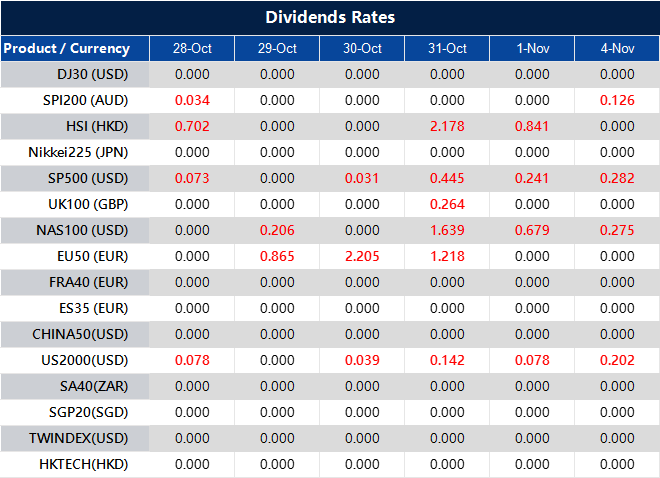
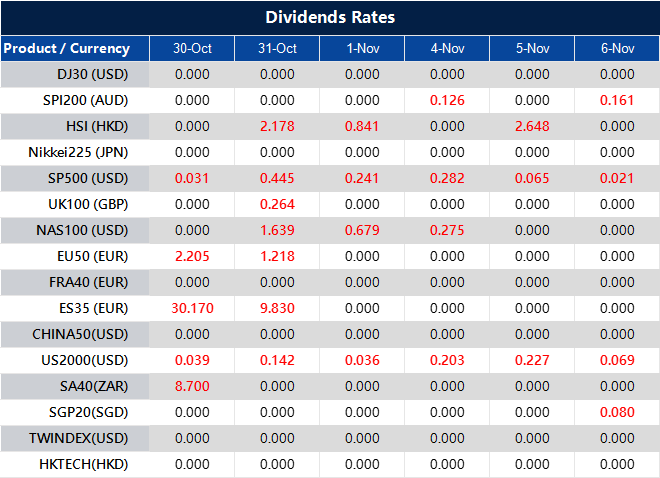
Please note that the dividends of the following products will be adjusted accordingly. Index dividends will be executed separately through a balance statement directly to your trading account, and the comment will be in the following format “Div & Product Name & Net Volume ”.

Please refer to the table below for more details:

The above data is for reference only, please refer to the MT4/MT5 software for specific data.

If you’d like more information, please don’t hesitate to contact info@vtmarkets.com.

Notification of Trading Adjustment in Holiday – Oct 30,2024

Dear Client,

Affected by international holidays, the trading hours of some VT Markets products will be adjusted.

Please check the following link for the affected products:

Notification of Trading Adjustment in Holiday

Note: The dash sign (-) indicates normal trading hours.

Friendly Reminder:
The above data is for reference only, please refer to the MT4/MT5 software for specific data.

If you’d like more information, please don’t hesitate to contact info@vtmarkets.com.

Dividend Adjustment Notice – Oct 29,2024

Dear Client,

Please note that the dividends of the following products will be adjusted accordingly. Index dividends will be executed separately through a balance statement directly to your trading account, and the comment will be in the following format “Div & Product Name & Net Volume ”.

Please refer to the table below for more details:

The above data is for reference only, please refer to the MT4/MT5 software for specific data.

If you’d like more information, please don’t hesitate to contact info@vtmarkets.com.

Dividend Adjustment Notice – Oct 28,2024

Dear Client,

Please note that the dividends of the following products will be adjusted accordingly. Index dividends will be executed separately through a balance statement directly to your trading account, and the comment will be in the following format “Div & Product Name & Net Volume ”.

Please refer to the table below for more details:

The above data is for reference only, please refer to the MT4/MT5 software for specific data.

If you’d like more information, please don’t hesitate to contact info@vtmarkets.com.

New Products Launch – Oct 28, 2024

Dear Client,

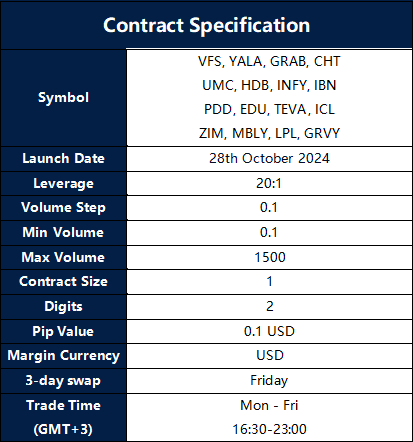
To provide you with more diverse trading options, VT Markets has launched 16 new US stock ADRs products on MT5 on 28th October 2024.

You can trade the world’s popular products on Meta Trader 5 with the following specifications:

The above data is for reference only, please refer to the MT5 platforms for the updated data.

Friendly reminders:
1. Please refer to the MT5 platforms for the specific swap rate.

If you’d like more information, please don’t hesitate to contact info@vtmarkets.com.

Guida Completa agli Spread nel Trading Forex

Introduzione agli Spread nel Forex

Nel trading forex, lo spread rappresenta la differenza tra il prezzo di acquisto (ask) e il prezzo di vendita (bid) di una coppia di valute. È uno dei concetti fondamentali per chiunque desideri operare in questo mercato e costituisce una delle principali fonti di profitto per i broker. Capire come funzionano gli spread e come influenzano il trading è essenziale per migliorare la propria strategia e gestire efficacemente i costi.

Questa guida offre un quadro completo sugli spread, esaminando le diverse tipologie, i fattori che li influenzano e le strategie per minimizzarli. Che tu sia un principiante o un trader esperto, conoscere gli spread ti aiuterà a migliorare i tuoi risultati nel forex.

1. Cos’è lo Spread e Come Influisce sul Trading?

Lo spread viene calcolato in pip, una misura standard di variazione del prezzo nelle coppie di valute. Ad esempio, se il prezzo di acquisto per EUR/USD è 1,1050 e il prezzo di vendita è 1,1048, lo spread sarà di 2 pip. Lo spread rappresenta quindi un costo di transazione: per guadagnare, il prezzo di mercato deve muoversi a favore del trader per coprire lo spread iniziale.

Perché lo Spread è Importante?

Lo spread influisce direttamente sulla redditività delle operazioni. Un costo di spread più elevato significa che il mercato deve muoversi di più a favore del trader per compensare tale costo. Questo è particolarmente rilevante per strategie come lo scalping e il day trading, dove i trader mirano a realizzare profitti da piccoli movimenti di mercato.

2. Tipologie di Spread nel Trading Forex

Nel forex, esistono principalmente due tipi di spread: spread fissi e spread variabili. La scelta tra i due dipende dalla tua strategia e dalle condizioni di mercato.

Spread Fissi

Gli spread fissi rimangono costanti indipendentemente dalle condizioni di mercato. Sono ideali per i trader che vogliono prevedere con precisione i loro costi di transazione, poiché non sono influenzati dalla volatilità del mercato. Tuttavia, gli spread fissi possono essere generalmente più alti rispetto a quelli variabili, soprattutto nei momenti di bassa volatilità.

  • Vantaggi: Costi prevedibili, protezione durante la volatilità.
  • Svantaggi: Gli spread fissi possono essere più alti rispetto agli spread variabili durante le ore di mercato meno attive.

Spread Variabili

Gli spread variabili cambiano in base alle condizioni di mercato. Durante i periodi di alta volatilità o di liquidità ridotta, come durante l’apertura delle borse o i rilasci di dati economici, gli spread possono allargarsi. Questo tipo di spread è popolare tra i broker ECN (Electronic Communication Network) e spesso è più basso durante le ore di mercato calme.

  • Vantaggi: Spread generalmente più bassi in condizioni di mercato normali.
  • Svantaggi: Rischio di spread elevati durante le fasi di volatilità.

3. Fattori che Influenzano lo Spread

Comprendere i fattori che influenzano gli spread può aiutare i trader a scegliere il momento giusto per entrare o uscire dal mercato, oltre a minimizzare i costi.

Liquidità del Mercato

Le coppie di valute più scambiate, come EUR/USD e USD/JPY, tendono ad avere spread più bassi rispetto alle coppie esotiche, dove la liquidità è minore e il rischio di volatilità è più alto. La liquidità è uno dei principali determinanti degli spread.

Orari di Trading

Gli spread variano anche in base agli orari di trading. Durante le sessioni principali, come quella di Londra e di New York, la maggiore attività di mercato riduce gli spread. Al contrario, durante le ore di mercato meno attive, come la sessione asiatica, gli spread possono aumentare.

Eventi Economici

Le notizie economiche e gli eventi globali, come il rilascio di dati economici (inflazione, disoccupazione) o eventi geopolitici, possono generare alta volatilità, aumentando temporaneamente gli spread. I trader che operano su notizie devono considerare questa possibilità.

4. Spread e Strategie di Trading

Diversi tipi di strategie di trading possono essere influenzati dagli spread, e comprendere come ridurre al minimo i costi di spread può fare la differenza nei risultati.

Scalping

Lo scalping è una strategia in cui i trader mirano a ottenere piccoli profitti su molte operazioni nell’arco di breve tempo. Poiché ogni operazione comporta un costo di spread, gli spread bassi sono essenziali per il successo di questa strategia. I trader che fanno scalping scelgono spesso broker con spread variabili e bassi.

Day Trading

Il day trading comporta l’apertura e la chiusura di posizioni all’interno della stessa giornata di trading. Anche in questo caso, gli spread bassi sono importanti, poiché i trader puntano a profitti derivanti da piccoli movimenti di prezzo.

Trading a Lungo Termine

Per i trader a lungo termine, gli spread non hanno un impatto significativo sui risultati, poiché il costo viene ammortizzato nel tempo. Tuttavia, anche in questo caso, è consigliabile optare per broker con spread competitivi per evitare spese eccessive.

5. Come Minimizzare i Costi degli Spread

Ridurre i costi di spread può aumentare la redditività complessiva del trading. Ecco alcuni suggerimenti utili per minimizzare questi costi:

  • Scegliere Broker Competitivi: Confronta i broker e seleziona quelli che offrono spread bassi e trasparenti. Broker ECN e STP tendono a offrire spread variabili con costi ridotti.
  • Operare Durante le Ore di Mercato Attive: Pianifica le operazioni durante le ore di maggiore attività di mercato, come la sessione di Londra e quella di New York, per ottenere spread più stretti.
  • Evitare di Operare Durante Eventi Importanti: Gli eventi economici possono allargare gli spread, quindi considera di evitare l’entrata in posizioni immediatamente prima di annunci economici.

FAQ

1. Perché lo spread varia a seconda del broker?

Ogni broker adotta una politica di prezzo diversa basata su fattori come il modello di esecuzione, la piattaforma di trading e le fonti di liquidità. Broker ECN, ad esempio, offrono spread variabili e più stretti durante periodi di alta liquidità, mentre broker di tipo market maker tendono a offrire spread fissi. È utile confrontare le offerte dei broker per scegliere quello che si adatta meglio alla tua strategia di trading.

2. Qual è il miglior momento per fare trading e ridurre i costi di spread?

I momenti migliori per fare trading con spread ridotti coincidono generalmente con le ore di apertura delle principali borse, come quelle di Londra e New York, quando la liquidità è maggiore e gli spread tendono a restringersi. Questo consente di ridurre i costi delle transazioni e ottenere condizioni di mercato più favorevoli.

3. Lo spread è l’unico costo nel trading forex?

No, oltre agli spread, i trader possono sostenere commissioni, swap e altre spese a seconda del broker e del tipo di conto scelto. È importante verificare tutti i costi collegati al conto di trading e includerli nella tua strategia, poiché possono influire significativamente sui profitti a lungo termine.

4. Gli spread influenzano solo i trader a breve termine?

Non solo. Sebbene gli spread abbiano un impatto maggiore per i trader a breve termine come gli scalper, anche i trader a lungo termine possono beneficiare di spread bassi, poiché riducono i costi iniziali di ogni operazione. Optare per un broker con spread bassi aiuta a massimizzare i profitti complessivi, indipendentemente dalla strategia.

5. Gli spread possono essere negoziati con il broker?

Alcuni broker offrono conti personalizzati per trader con volumi elevati o clienti istituzionali, consentendo spread ridotti o commissioni agevolate. Se hai intenzione di fare trading con volumi elevati, vale la pena chiedere al broker se sono disponibili condizioni speciali per ridurre i costi operativi.

Conclusione: Ottimizzare i Costi degli Spread per un Trading di Successo

Comprendere il funzionamento degli spread e come questi influenzano le diverse strategie di trading è fondamentale per diventare un trader forex efficace. Riducendo i costi degli spread e scegliendo le giuste condizioni di mercato, puoi migliorare significativamente la tua redditività. Ricorda che una scelta consapevole del broker e delle condizioni di trading può fare la differenza nei risultati.

Pronto a fare trading in modo efficiente? Con VT Markets, esplora il forex con spread competitivi e una piattaforma intuitiva. Apri un conto demo o reale per iniziare il tuo viaggio di trading oggi stesso!

Back To Top
server

Ciao 👋

Come posso aiutarti?

Chatta subito con il nostro team

Chat dal vivo

Avvia una chat dal vivo tramite...

  • Telegram
    hold In attesa
  • In arrivo...

Ciao 👋

Come posso aiutarti?

telegram

Scansiona il codice QR con il tuo smartphone per iniziare a chattare con noi, oppure clicca qui.

Non hai installato l’app o la versione desktop de Telegram? Usa invece Web Telegram .

QR code