



Key Points
- AMD stock has gained fresh momentum after stronger Q1 2026 earnings and upbeat Q2 guidance.
- Data centre revenue is now the main driver, supported by EPYC server processors and AMD Instinct GPU demand.
- AI partnerships with OpenAI and Meta strengthen AMD’s case as a serious infrastructure supplier.
- The next test is valuation, margin strength, and whether AMD can keep closing the gap with NVIDIA.
AMD Stock Moves Higher As AI Demand Shows Up In The Numbers
AMD has done the hard part. The earnings beat, the data centre acceleration, the OpenAI and Meta deals — these are the things bulls were asking for two years ago, and AMD has now delivered them. The stock has responded accordingly.
The harder part starts now, and it is far less exciting. AMD has to prove that AI revenue can carry margin with it, that headline partnerships translate into repeat orders, and that a data centre business growing 57% year on year can keep growing without giving back the valuation premium it has earned. None of that is guaranteed, and most of it cannot be judged for another twelve months.
That gap is where AMD stock lives right now. It is a more interesting setup than the rally suggests.
AMD reported Q1 2026 revenue of $10.3 billion, up 38% year on year, with non-GAAP earnings per share of $1.37. Data centre revenue reached $5.8 billion, up 57% year on year, driven by strong demand for AMD EPYC processors and continued growth in AMD Instinct GPU shipments.
That matters for AMD stock because the company’s growth engine has changed. AMD is no longer trading only as a PC recovery stock or a cyclical semiconductor name. The market is now valuing it as a data centre and AI infrastructure company, which raises both the opportunity and the pressure.
The company also guided Q2 revenue to around $11.2 billion, plus or minus $300 million, while Reuters reported that analysts had expected about $10.52 billion. AMD also expects an adjusted gross margin of about 56%, above analyst expectations of 55.4%.
That combination gives the stock a strong near-term narrative. Revenue is beating forecasts, guidance is improving, and AI demand is starting to move through the income statement. The harder question is whether the share price has already priced in too much of that progress.
Looking for more U.S. stock opportunities beyond AMD? Explore global share CFDs with VT Markets and follow daily equity market updates as earnings season unfolds.
The AI Catch-Up Trade Is Getting Stronger
AMD stock works best as an AI catch-up trade, not as a direct NVIDIA replacement story.
NVIDIA still dominates the AI accelerator market, and AMD has not removed that lead. But AMD does not need to beat NVIDIA outright for the stock to work. It needs to win enough share in a market that continues to grow, especially as hyperscalers look for more supplier diversity, better pricing power, and long-term capacity outside one dominant vendor.
That is where AMD’s data centre performance becomes important. The company’s Q1 growth was not narrow. Its data centre segment benefited from EPYC server CPUs and the ramp of AMD Instinct GPUs, while client and gaming revenue rose 23% to $3.6 billion. Embedded revenue also increased 6% to $873 million.
This gives AMD a wider platform than a single-product AI chip story. CPUs, GPUs, rack-scale systems, and software support all feed into the next phase of AI infrastructure. Training demand remains important, but inference and enterprise AI workloads could expand the market beyond the largest cloud players.
For traders, that makes AMD stock more than a momentum trade. It is a test of whether the company can turn AI credibility into repeatable revenue growth, better margins, and a stronger long-term multiple.
OpenAI And Meta Give AMD A Bigger AI Story
AMD’s AI story became more credible after major strategic partnerships with OpenAI and Meta.
In October 2025, AMD and OpenAI announced a 6-gigawatt agreement to power next-generation AI infrastructure across multiple generations of AMD Instinct GPUs. The first 1-gigawatt deployment of AMD Instinct MI450 GPUs is set to begin in the second half of 2026.
Meta also expanded its AMD partnership in February 2026. AMD said shipments for the first gigawatt deployment are scheduled to begin in the second half of 2026, powered by a custom AMD Instinct MI450-based GPU, 6th Gen AMD EPYC CPUs, ROCm software, and the AMD Helios rack-scale architecture.
These deals matter because they give investors proof that large AI customers are willing to deploy AMD at scale. That does not erase NVIDIA’s lead, but it does validate AMD as a second major supplier in an AI market that needs more compute, more capacity, and more negotiating leverage.
The OpenAI and Meta agreements also help AMD build a longer runway. If those deployments scale smoothly, investors may become more willing to value AMD on future AI infrastructure demand rather than only near-term quarterly results.
Still, the execution bar is high. Large AI partnerships are powerful headlines, but the market will eventually judge them by shipment timing, revenue contribution, gross margin, and customer expansion.
Valuation is Now the Harder Part of the Trade
The risk for AMD stock is not that the AI story lacks momentum. The risk is that the stock may already be pricing in a large amount of future success.
After a strong run, AMD trades more like a high-growth AI infrastructure leader than a discounted challenger. That creates a tighter setup. Strong earnings can support the rally, but any delay in AI GPU adoption, weaker margin guidance, or softer data centre growth could trigger a sharper pullback.
This is where the valuation test becomes central. AMD’s non-GAAP gross margin was 55% in Q1, up from 54% a year earlier but down from 57% in Q4 2025. Non-GAAP operating expenses rose 42% year on year to $3.1 billion, while non-GAAP operating income rose 43% to $2.5 billion.
The margin picture is not weak, but it is no longer enough for AMD to show strong revenue growth alone. Investors need to see that AI growth can support higher profitability, especially as the company invests heavily in product development, software, and large-scale customer deployments.
If gross margin expands while data centre revenue keeps accelerating, AMD stock can defend a higher valuation. If revenue grows but margin quality disappoints, the market may become more selective.
AMD vs NVIDIA: The Right Comparison
The AMD versus NVIDIA debate remains useful, but only if investors frame it properly.
NVIDIA has a stronger AI ecosystem, a deeper software advantage, and a wider installed base. AMD is still building credibility in that market. But hyperscalers do not need AMD to replace NVIDIA. They need AMD to become a reliable second source at scale.
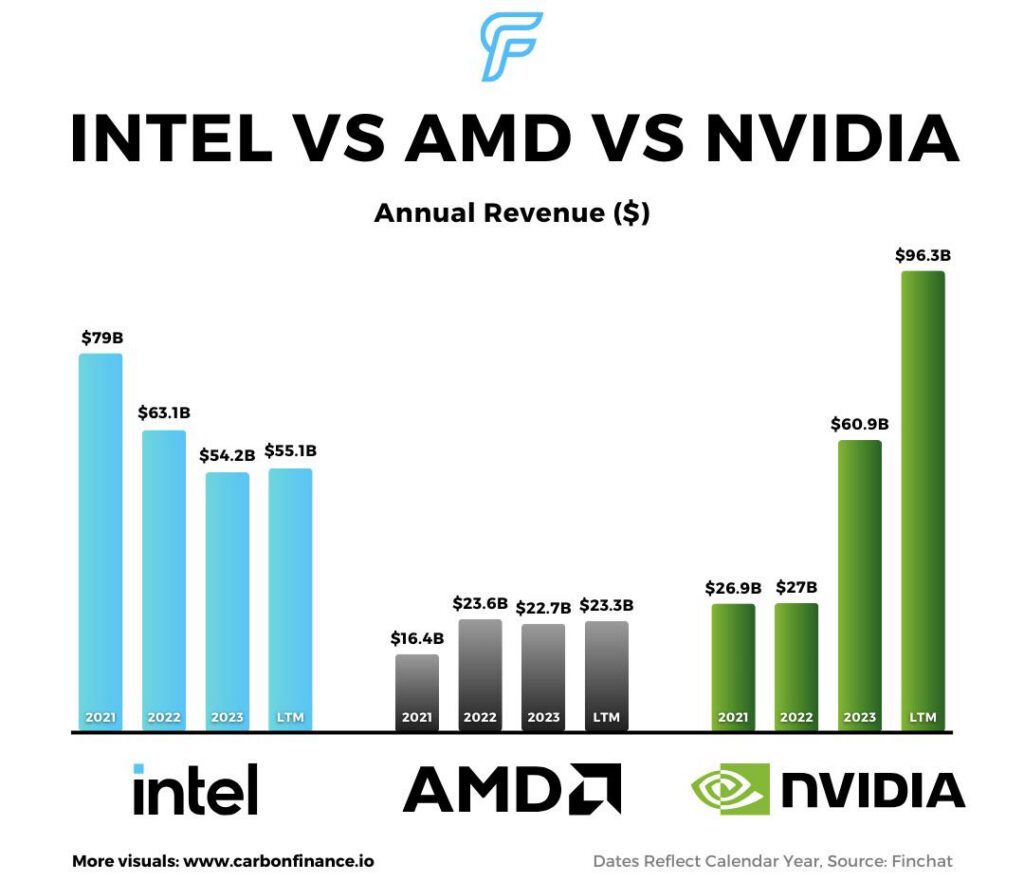
That distinction changes the investment case. AMD stock can rise if the company gains share in a market where total demand keeps expanding. It does not need to win the whole market to create value.
This is also why supplier diversity matters. Large AI customers want more options as compute demand expands. If AMD can offer competitive performance, better availability, or better cost efficiency, it can secure meaningful demand even in a market where NVIDIA remains the leader.
The key question is whether AMD can keep closing the gap in performance, software maturity, and deployment speed. The partnerships are promising. The revenue acceleration is promising. But investors will need more evidence that AMD can convert those advantages into durable share gains.
What Could Drive The Next Move In AMD Stock
The next move in AMD stock will likely depend on three factors: data centre growth, gross margin, and AI shipment visibility.
Data centre growth remains the cleanest signal. If AMD continues to deliver strong revenue from EPYC CPUs and Instinct GPUs, investors may keep rewarding the stock even if valuation looks stretched.
Gross margin is the second test. AMD’s Q2 margin outlook of around 56% gives the market something to track closely. A stronger margin profile would suggest AI demand is not only boosting revenue, but also improving earnings quality.
Shipment visibility is the third test. OpenAI and Meta deployments are expected to ramp from the second half of 2026, which means investors will want clearer signs that large AI deals are moving from announcements into revenue.
The stock could also react to broader AI sector sentiment. If investors stay confident in AI infrastructure spending, AMD may continue to attract buyers on dips. If the market starts to question AI capital expenditure or cloud profitability, high-valuation chip stocks may face pressure together.
AMD Stock Forecast: Constructive, But Stretched
The near-term outlook for AMD stock remains constructive while data centre growth stays strong and guidance continues to beat expectations. The company has shown that AI demand is no longer just a future promise. It is already helping drive revenue, earnings, and investor confidence.
The base case is that AMD remains a key AI catch-up trade. Data centre revenue should keep supporting sentiment, while OpenAI and Meta partnerships strengthen the long-term growth narrative. If gross margin improves and AI deployments scale on time, the stock could continue to hold a premium valuation.
The cautious case is that expectations are now high. AMD stock may struggle if data centre growth slows, Q2 guidance fails to rise again, gross margin disappoints, or investors decide the valuation has moved ahead of earnings. Competition from NVIDIA also remains a core risk.
The bull case for AMD no longer depends on AI demand being real. That argument is over. The bull case now depends on margin discipline, deployment timing, and whether hyperscalers actually want a durable second source or just a negotiating tool against NVIDIA. Those are quieter questions, and the answers will not arrive in a single earnings release.
AMD has earned the rally. Defending it is a different job.
Want to track major AI-linked stocks such as AMD, NVIDIA, Microsoft, and Meta? Use VT Markets’ market insights to follow earnings, sector rotation, and cross-asset risk sentiment.
What Traders Should Watch Next
Traders should watch whether AMD can keep data centre revenue growing at a strong pace. This is the clearest signal that the AI infrastructure story remains intact.
They should also track gross margin. A move above the current guidance range would make the rally feel more durable, while weaker margin quality could expose valuation risk.
The third signal is customer deployment progress. OpenAI and Meta have given AMD a stronger AI roadmap, but the market will want evidence that these deployments are turning into shipments, revenue, and repeat orders.
AMD stock has earned a stronger AI narrative. The next test is whether the company can justify the valuation that now comes with it.
FAQs
Why Is AMD Stock Rising?
AMD stock is rising because the company reported stronger Q1 2026 earnings, faster data centre growth, and better-than-expected Q2 revenue guidance. AI demand is now showing up more clearly in revenue and investor expectations.
Is AMD An AI Stock?
Yes. AMD is increasingly trading as an AI infrastructure stock because of its data centre CPUs, Instinct GPUs, rack-scale systems, and major partnerships with OpenAI and Meta. Its traditional PC and gaming businesses still matter, but data centre growth now drives the main investor narrative.
Can AMD Compete With NVIDIA?
AMD can compete with NVIDIA, but it does not need to overtake NVIDIA for the stock to work. The stronger case is that AMD becomes a reliable second supplier for hyperscalers that want more AI chip capacity and supplier diversity.
What Is The Main Risk For AMD Stock?
The main risk is valuation. AMD has strong growth, but the stock already reflects high expectations. Any slowdown in data centre revenue, margin weakness, or delay in AI GPU deployments could pressure the share price.
What Should Investors Watch In AMD Earnings?
Investors should monitor data centre revenue, gross margin, Q2 and full-year guidance, Instinct GPU shipments, EPYC CPU demand, and updates on deployments by OpenAI and Meta. These areas will show whether AMD’s AI story is gaining depth or only trading on momentum.
Start trading now – Click here to create your real VT Markets account