Week Ahead: OPEC, Non-farm payrolls and ISM Services PMI

This week will bring several major economic indicators to watch out for, including the release of the US Non-Farm Employment Change, Unemployment Rate, and Average Hourly Earnings. 

The US JOLTS report for August and ISM Manufacturing PMI and ISM Services PMI will also be released.

Other crucial data releases include Switzerland’s Consumer Price Index and Canada’s Employment figures.

  • Swiss Consumer Price Index data (3 October)

The Consumer Price Index in Switzerland increased 0.30% in August 2022 over the previous month. Economists are predicting that the index will increase by 0.2% in September.

  • US ISM Manufacturing PMI (3 October)

The ISM Manufacturing PMI, a gauge of the health of the manufacturing sector in the US, held steady in August of 2022 at 52.8—the same level it registered in July. It is expected to remain around the same level in September at 52.8.

  • RBA Rate Statement (4 October)

The Reserve Bank of Australia (RBA) has raised the cash rate by 50bps to its highest level since January 2015. It was the board’s fourth consecutive rate hike since May, with analysts predicting another increase this month. The move is aimed at bringing inflation down to the 2-3% range while keeping the economy stable. Analysts anticipate that the RBA will raise its benchmark interest rate by another 50bps at this month’s meeting.

  • US JOLTS report (4 October)

The US Department of Labor and Statistics report on Job Openings and Labor Turnover Survey (JOLTS) stated that job openings increased by 199,000 to 11.2 million in July 2022. Analysts expect that job openings will remain at around the same level as forecasted.

  • OPEC Meetings (5 October)

Oil prices have fallen since June 2022, and OPEC countries have been seeking ways to raise the cost. This month, talks on supply cuts will be a key topic at the organisation’s meetings.

  • RBNZ Rate Statement (5 October)

In its August meeting, the Reserve Bank of New Zealand increased its official cash rate to 3.0%, which marks the highest level in seven years. The decision was based on forecasts that inflation would fall as fuel prices stabilised, with the bank estimating that inflation will only return to the target range by mid-2024 at the earliest. It also noted that monetary tightening would be necessary. Analysts are forecasting another 50bps interest rate hike.

  • US ADP Non-farm Employment Change (5 October)

The US ADP Non-Farm Employment Change came in at 132,000 for August, down from 268,000 in July. Analysts expect the ADP Non-Farm Employment Change to rise by 135,000 for September.

  • US ISM Services PMI (5 October)

The Institute for Supply Management’s Services Purchasing Managers’ Index unexpectedly jumped to 56.9 in August of 2022 from 56.7 in July, indicating a revival in services activity in the US. Analysts expect the ISM Services PMI to be around 56.5 this month.

  • Canada Employment Data (7 October)

Canada’s unemployment rate increased to 5.4% in August of 2022 from the record-low of 4.9%, as the economy lost 39,700 jobs in the month. According to analysts’ forecasts, another 15,000 jobs will be lost in September, bringing the unemployment rate to 5.3%.

  • US Non-farm Employment Change (7 October)

US average hourly earnings rose 0.3% in August, adding 315,000 jobs and increasing the unemployment rate to 3.7%, its highest level since February. According to the latest projections, this month’s average hourly earnings will rise by 0.3%, with 250,000 additional jobs and a 3.7% unemployment rate.

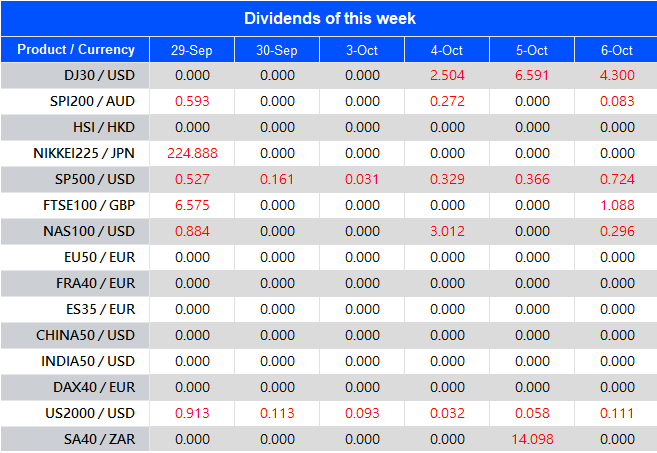
VT Markets The Adjustment Of Weekly Dividend Notification

Dear Client,

Warmly reminds you that the component stocks in the stock index spot generate dividends. When dividends are distributed, VT Markets will make dividends and deductions for the clients who hold the trading products after the close of the day before the ex-dividend date.

Indices dividends will not be paid/charged as an inclusion along with the swap component. It will be executed separately through a balance statement directly to your trading account, the comment for which will be in the following format “Div & Product Name & Net Volume ”.

Please note the specific adjustments as follows:

The above data is for reference only, please refer to the MT4/MT5 software for specific data.

If you’d like more information, please don’t hesitate to contact cs@vtmarkets.com.

VT Markets Launches 51 New ETFs Trading Options

Sydney, Australia, September 28, 2022  – VT Markets, an international multi-asset broker, is pleased to announce the addition of 51 ETF (exchange-traded fund) symbols to its multi-asset trading options. The addition allows its clients to track the performance of technology, energy, and mining sectors via popular symbols such as BKCH, BLOK, GLD, XLF, XOP, and more.

“We are truly excited to bring this new offer to our clients worldwide. Over the past months, we have seen an increasing demand for investment assets with relatively lower risks, lower cost and more exposure,” says Christopher Nelson-Smith, Director of VT Markets.

The newly added ETFs include a variety of trading instruments like stocks, bonds, and indices across multiple industries from different global exchanges. For instance, the ETFs for the technology sector include iShares U.S. Technology ETF (IYW) and Vanguard Information Technology ETF (VGT). The bond ETFs gives traders exposure to a wide selection of bonds diversified by type, issuer, maturity and region, including iShares Core U.S. Aggregate Bond ETF (AGG) and Vanguard Total Bond Market ETF (BND). 

“We welcome all traders, regardless of where you are in your trading journey, to join us and experience ETF trading on our world-class trading platform. We also offer a leverage of up to 33:1 for some of the key ETF symbols, providing traders with more opportunities to grow their accounts. In the near future, we are planning to add even more symbols to meet this popular demand,” he concluded.

About the Company:

VT Markets is a regulated multi-asset broker with over ten years of experience in global financial markets. The broker has a presence in over 160 countries and won multiple international accolades including Best Customer Service 2021 and Best Affiliate Program 2022. They aim to make trading an easy, accessible, and seamless experience for everyone.

Week Ahead: US Initial Jobless Claims, CB Consumer Confidence, Canadian GDP

This week will see a much lighter schedule of data releases compared to last week.

Some significant releases to watch out for include the CB Consumer Confidence and Core PCE Price Index in the US and the Gross Domestic Product in Canada.

US CB Consumer Confidence | 27 September 2022

The US Consumer Confidence Index rose to 103.2 in August 2022, up from 95.3 in July. According to recent forecasts, Consumer Confidence in the US will increase more to 104, indicating that consumers are confident in the stability of their income and thus may be more inclined to spend.

Canadian Gross Domestic Product | 29 September 2022

According to Statistics Canada, the Canadian economy expanded by 0.1% in June. The agency’s latest estimate for July has the economy contracting 0.1% m/m from the previous month.

US Core PCE Price Index m/m | 30 September 2022

The Federal Reserve Board’s monthly report on consumer prices states that the CPI for Core PCE in the US, which excludes food and energy, rose 0.1% in July from a 0.6% increase in June.

Core PCE prices are projected to increase 0.3% in August.

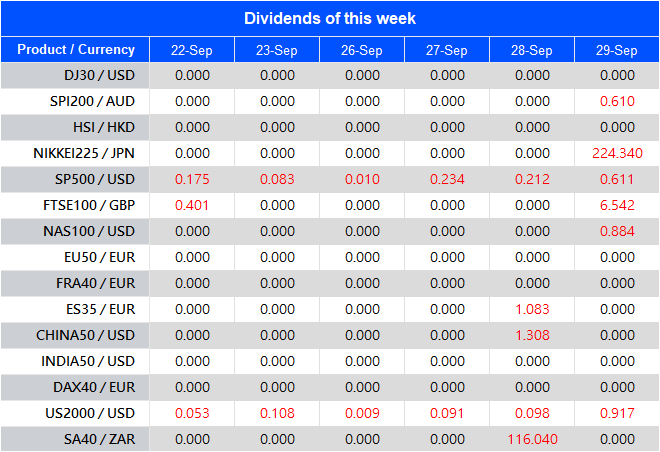
VT Markets The Adjustment Of Weekly Dividend Notification

Dear Client,

Warmly reminds you that the component stocks in the stock index spot generate dividends. When dividends are distributed, VT Markets will make dividends and deductions for the clients who hold the trading products after the close of the day before the ex-dividend date.

Indices dividends will not be paid/charged as an inclusion along with the swap component. It will be executed separately through a balance statement directly to your trading account, the comment for which will be in the following format “Div & Product Name & Net Volume ”.

Please note the specific adjustments as follows:

The above data is for reference only, please refer to the MT4/MT5 software for specific data.

If you’d like more information, please don’t hesitate to contact cs@vtmarkets.com.

VT Markets continues rapid global expansion

Sydney, Australia, September 21, 2022 — VT Markets, an international award-winning broker, was one of the exhibitors at the recently concluded iFX EXPO 2022 that took place in Bangkok from 13-15 September. 

The prestigious event was attended by industry leaders and top financial institutions who are looking to grow their businesses, network with clients and engage with people from different parts of the globe.

“We are honoured to be one of the exhibitors of iFX EXPO, the largest financial B2B exhibition in the world,” said Christopher Nelson-Smith, Director of VT Markets.

“VT Markets is one of the fastest growing brokers in the region and we have strategic plans to rapidly continue our global expansion. A huge financial event like this is a great opportunity for brokers like VT markets to share about our services and products, while also exchanging ideas with other top players in the industry,” added Nelson-Smith. 

Aside from being visible in multiple financial events, VT Markets is committed to bringing more new promotions and solutions to both institutional and retail clients. The fast-growing brokerage is currently offering over 1000 tradeable assets on its cutting-edge app and web trading platforms to better serve its global clientele.

About the Company:

VT Markets is a regulated multi-asset broker with over ten years of experience in global financial markets. The broker has a presence in over 160 countries and won multiple international accolades including Best Customer Service 2021 and Best Affiliate Program 2022. They aim to make trading an easy, accessible, and seamless experience for everyone.

Week Ahead: Central Banks in Focus as Markets Await Next Steps

Four central banks will announce their interest rate decisions this week, with the Fed’s decision and its monetary policy the main focus.

Data releases from the US, Australia, Canada, Germany, the UK, and France will also take place this week.

Australia Monetary Policy Meeting Minutes | 20 September 2022

The Reserve Bank of Australia raised the cash rate by 50bps to 2.35% during its September 2022 meeting in line with market expectations.

The central bank said it aimed to keep inflation from 2% to 3% while maintaining economic growth. It announced that it would continue to raise interest rates gradually but that these hikes would not be performed according to any pre-set timetable, as the data received from incoming economic reports would influence the size and timing of these hikes.

Canada Consumer Price Index | 20 September 2022

According to Statistics Canada, Canada’s consumer price index rose 0.1% in July over the previous month. It was the third consecutive monthly gain and followed a 0.1% increase in June. Analysts predicted that the index would rise by another 0.1%.

US FOMC Statement and Fed Funds Rate | 22 September 2022

In its July 2022 meeting, the Fed raised the target range for the fed funds rate by 75bps to 2.25%-2.5%, the central bank’s fourth consecutive rate hike.

Investors were pricing in a more than 81% chance of another large 75bps hike in Fed funds futures by September.

Bank of Japan Outlook Report | 22 September 2022

The Bank of Japan voted 8-1 to maintain its key short-term interest rate at -0.1% for 10-year bond yields at around 0% during its July meeting.

In addition, the bank cut its 2022 GDP growth forecast to 2.4% from 2.9% in April, citing a slowdown in overseas economies and persistent supply chain issues due to the prolonged war in Ukraine.

Swiss National Bank Policy Rate and Monetary Policy | 22 September 2022

In its June meeting, the Swiss National Bank increased its policy rate by 50bps to -0.25%, surprising financial markets that had expected the central bank to leave its policy rate unchanged.

Analysts expect another 75bps rate hike.

Bank of England Official Bank Rate and Monetary Policy | 22 September 2022

The Bank of England raised its main rate by 50bps to 1.75% during its August 2022 meeting, the sixth consecutive rate hike, pushing borrowing costs to the highest since 2009.

Analysts expect another 50bps rate hike.

French Flash Services PMI | 23 September 2022

In August 2022, France’s Services PMI fell to 51.2 from 53.2 in July. This marked the fourth consecutive month of slowing growth in the services sector and its weakest expansion since April 2021.

Confidence among businesses sank to its lowest level since November 2020. The report cited concerns about the impact of still-elevated inflationary pressures on demand.

German Flash Manufacturing and Services PMI | 23 September 2022

Germany’s Manufacturing PMI fell to 49.1 in August of 2022, indicating that factory activity continued to decline for the second month and hit its lowest level since June 2020.

Flash Services PMI declined to 47.7 in August of 2022, indicating that services activity contracted for the second consecutive month and at the fastest pace since February 2021.

Analysts expect Germany’s Manufacturing PMI to fall to 47.1 and its Flash Services PMI reading to improve to 49.5.

UK Flash Manufacturing and Services PMI | 23 September 2022

The UK Manufacturing Purchasing Managers Index (PMI) fell to 47.3 in August, indicating that factory activity had contracted for the first time since May 2020. The UK Services PMI decreased to 50.9 in August 2022 after recording expansion for 18 months. The slowdown reflected higher inflationary pressures and a cost-of-living squeeze that instilled economic uncertainty and reduced client confidence.

Analysts expect the UK’s Manufacturing PMI to go above 50.2 and the Flash Services PMI to decline below 50.

US Flash Services PMI | 23 September 2022

The August US Services PMI declined to 43.7, its lowest reading since May 2020, from 47.3 in July. This pointed to the sharpest contraction in the services sector since May 2020.

The US Flash Services reading is expected to be better at 45.0.

VT Markets Offers Over 1000 Assets on Its Multi-Asset Trading Platform

Sydney, Australia, September 15, 2022 – VT Markets, an international award-winning broker, announced the addition of US, UK, and EU shares CFDs (contract for differences) to help traders diversify their portfolios. These newly added assets bring the total number of tradeable instruments to over 1000 on its trading platform.

This move is in line with the broker’s mission to make trading easier and more accessible for everyone. Christopher Nelson-Smith, Director of VT Markets shared, “We have been seeing an increase of requests from our clients to have more diversified products on our platforms, especially shares CFDs. I’m pleased to announce that our clients now have access to the CFDs of the biggest listed companies in the world.”

The broker now offers over 500 leveraged US shares CFDs, including Amazon, Apple, Google, Visa and many more giants across different industries. For UK shares CFDs, traders have access to over 100 top companies in the country such as Barclays, Vodafone Group, Lloyds Bank, and Unilever. For EU shares CFDs, its new addition includes ING Groep N.V., SAP, and L’Oreal.

“Our clients can choose from over 500 global giants in different regions, and trade on our intuitive trading platforms and mobile app. As always, they get to enjoy low trading cost, lightning speed execution, and the ability to go long or short. We are confident that this addition will offer more opportunities for traders to better manage their portfolio and meet their trading goals,” added Nelson-Smith.

About the Company:

VT Markets LLC is a global and multi-asset broker regulated by the Cayman Islands Monetary Authority (CIMA).

With over ten years of experience in global financial markets, the broker has a presence in over 160 countries and won multiple international accolades including Best Customer Service 2021 and Best Affiliate Program 2022. They aim to make trading an easy, accessible and seamless experience for everyone.

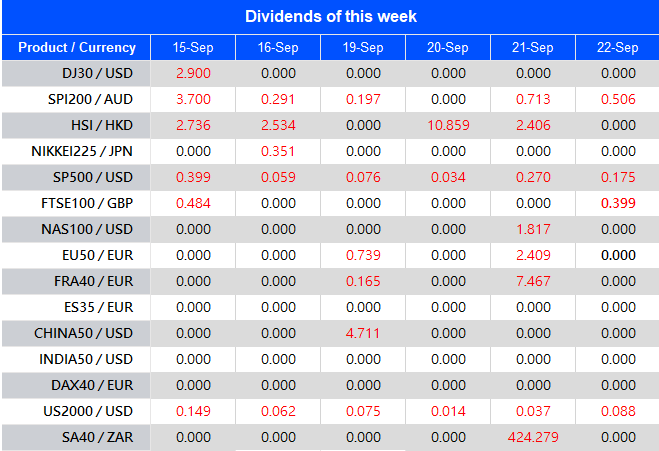
VT Markets The Adjustment Of Weekly Dividend Notification

Dear Client,

Warmly reminds you that the component stocks in the stock index spot generate dividends. When dividends are distributed, VT Markets will make dividends and deductions for the clients who hold the trading products after the close of the day before the ex-dividend date.

Indices dividends will not be paid/charged as an inclusion along with the swap component. It will be executed separately through a balance statement directly to your trading account, the comment for which will be in the following format “Div & Product Name & Net Volume ”.

Please note the specific adjustments as follows:

The above data is for reference only, please refer to the MT4/MT5 software for specific data.

If you’d like more information, please don’t hesitate to contact cs@vtmarkets.com.

Spreads en forex

¿Qué son los spreads en forex?

Ya sea que estés aprendiendo a operar en forex por primera vez o que lleves años perfeccionando tu estrategia de trading, comprender los spreads es fundamental. Estos datos importantes te brindan información sobre el costo de tus posiciones, así como otras indicaciones sobre las condiciones del mercado.

Pero esto es solo una visión general básica. Entonces, ¿qué es exactamente un spread en forex y qué significa para los traders? ¿Cómo se interpretan y analizan los datos de spread que encuentras en el mercado FX? Aquí tienes todo lo que necesitas saber.

Comprender los spreads en forex

¿Qué son los spreads en el trading de forex? Un spread en forex está relacionado con un par de divisas o una correlación de divisas y representa la diferencia entre el precio de compra y el precio de venta de ese par en el mercado FX. El precio de compra se conoce a menudo como el precio de oferta (bid), mientras que el precio de venta se llama precio de demanda (ask). Los spreads no son exclusivos del forex, y los traders en otros mercados financieros — incluido el mercado de acciones — deben estar al tanto del valor del spread y su significado.

Para calcular el spread en forex, debes restar el precio de venta del par de divisas (precio ask) del precio de compra (precio bid).

Veamos el par de divisas USD/AUD como ejemplo. Si el precio de compra es 1.46268 y el precio de venta es 1.46262, la diferencia entre ambos es 0.00006. Esta es la magnitud del spread.

Recuerda que el spread se representa en pips — para el par USD/AUD, un pip es un movimiento en el cuarto decimal. Esto significa que el spread sería de 0.6 pips.

Spreads en forex y costos de trading

El valor del spread en forex cumple una función importante: indica a los traders cuánto deberán pagar al abrir una posición en el mercado FX. Por esta razón, es fundamental comprender cómo calcular el costo del spread en forex.

Para realizar este cálculo, debes conocer el tamaño de la posición que planeas abrir y el valor del spread en pips.

En el ejemplo anterior, el spread era de 0.6 pips o $0.00006.

Supongamos que estás operando un lote estándar de la divisa en cuestión, lo que equivale a 100,000 unidades.

0.00006 x 100,000 = 6

El costo para el trader es de $6.

Cuanto mayor sea el spread, mayor será el costo para el trader al abrir una posición en el mercado. Por este motivo, los traders generalmente buscan spreads más estrechos y de menor costo antes de decidir abrir posiciones.

Spreads y apalancamiento

El uso del apalancamiento en forex es una técnica popular entre los traders que desean aumentar su exposición a las fuerzas del mercado. Generalmente, los traders solo tienen suficiente capital disponible para abrir posiciones pequeñas en el mercado, lo que significa niveles de exposición relativamente bajos. Esto implica que sus posibles ganancias — así como sus posibles pérdidas — están limitadas. Para obtener un retorno significativo, tendrían que lograr éxito en un gran número de operaciones o mantener su posición abierta durante un período prolongado. Ninguna de estas estrategias garantiza que el trader obtendrá beneficios.

Para aumentar la exposición al riesgo y la volatilidad, los traders suelen recurrir al apalancamiento. Cuando utilizas apalancamiento, estás tomando prestado capital para abrir tu posición. Por ejemplo, si utilizas un apalancamiento de 20:1, estarás tomando prestados $20 por cada $1 de tu saldo de cuenta. Esto incrementa los posibles beneficios de una operación de forex, pero también aumenta el riesgo para el trader. Básicamente, en el ejemplo anterior, los posibles beneficios se multiplican por 20, pero recuerda que también tendrás que devolver el dinero apalancado después de la transacción, por lo que debes actuar con precaución.

Lamentablemente, el spread también se verá amplificado cuando elijas apalancar una posición, al igual que los costos de trading. En el ejemplo anterior, pagarás 20 veces más para abrir tu posición de lo que pagarías sin apalancamiento. Nuevamente, esto es una razón para utilizar el apalancamiento con un enfoque cuidadoso y respaldado por una investigación adecuada.

Spreads y llamadas de margen

En algunos casos, un cambio en el spread puede provocar una llamada de margen. Los movimientos y cambios en el volumen del spread son comunes y pueden ser causados por variaciones en la volatilidad o la liquidez, así como por una variedad de factores económicos y geopolíticos globales. Sin embargo, movimientos significativos también pueden generar problemas y pueden llevar al cierre y liquidación de la posición.

Las llamadas de margen ocurren cuando los traders ya no pueden mantener sus posiciones abiertas.

Esto puede suceder por diversas razones: el uso de apalancamiento y pérdidas excesivas son las principales causas de las llamadas de margen, ya que los traders pueden encontrarse rápidamente fuera de su capacidad si el mercado se mueve en una dirección inesperada. Los cambios en los spreads del mercado de divisas también pueden activar estas llamadas si el costo de mantener la posición abierta supera los fondos disponibles en la cuenta. Puedes agregar fondos a tu cuenta para mantener la posición abierta, o puedes decidir que el spread se ha vuelto demasiado desfavorable para continuar, aceptando así la liquidación.

Amplía tu comprensión sobre los spreads y comienza a operar en forex con VT Markets

En VT Markets, estamos orgullosos de ofrecer una de las plataformas de forex líderes en el mercado. Contamos con una variedad de herramientas para ayudar tanto a los traders principiantes como a los más experimentados a abrir posiciones y realizar operaciones. Usa nuestra cuenta demo para aumentar tu confianza y descubrir más sobre aspectos importantes del trading como los spreads. Incluso si has operado en otras plataformas antes, vale la pena utilizar esta cuenta demo para familiarizarte con el funcionamiento de VT Markets. Luego, puedes empezar a operar en una cuenta real.

¿Quieres obtener más información sobre nuestra plataforma o sobre los spreads en forex? Ponte en contacto con nuestro equipo hoy mismo.

Preguntas frecuentes

1. ¿Importan los spreads en forex?

Sí, los spreads son importantes en el mercado de divisas (FX), y cualquier persona que quiera aprender a operar en forex necesita conocerlos. Cuanto mayor sea el spread, mayor será el costo que los traders deberán asumir al abrir una posición en un par de divisas determinado. Los traders deben prestar especial atención a los spreads de los pares de divisas que desean operar e incluir este factor en su estrategia.

2. ¿Los spreads en forex son lo mismo que los pips?

No, los spreads en forex no son lo mismo que los pips. Los pips en forex son unidades de medida incrementales que ayudan a los traders a comprender la dirección del mercado, representando un movimiento en la cuarta posición decimal del valor de la divisa en la mayoría de los casos, o en la segunda posición decimal para las monedas de menor denominación.

Sin embargo, los pips y los spreads están relacionados. Esto se debe a que los pips se utilizan para medir el tamaño del spread. Los precios de compra y venta de las dos divisas en un par se miden en pips, y la diferencia entre estos valores representa el spread.

3. ¿Por qué los spreads en forex son tan altos?

Los spreads en forex varían significativamente, y hay varios factores que pueden hacer que se amplíen más allá de los niveles normales o esperados.

Los períodos de baja liquidez provocan spreads más altos — cuando los mercados cierran al final de la semana de negociación, los spreads tienden a ampliarse.

La alta volatilidad del mercado también resulta en spreads elevados, ya que las plataformas de trading y los brokers buscan mitigar algunos de los riesgos asociados a este entorno de negociación.

Los spreads pueden aumentar antes de un evento económico o geopolítico importante que afecte las tasas de cambio en forex, debido a la incertidumbre del mercado.

Los spreads altos también pueden ser causados por un impacto significativo en el mercado, como una crisis financiera en alguna parte del mundo.

4. ¿Qué significa un spread alto en forex?

Un spread alto significa que hay una diferencia significativa entre los valores de compra y venta de un par de divisas. Si se realizan operaciones cuando los spreads son altos, el costo para el trader es mayor, por lo que los traders generalmente buscan spreads más bajos cuando abordan posiciones en pares de divisas.

Un spread alto también puede ser un indicio de las condiciones del mercado. Los spreads más altos suelen indicar que la volatilidad es elevada y que la liquidez es baja para un par de divisas en particular.

5. ¿Cuál es un buen spread en forex?

Es difícil determinar exactamente qué constituye un buen spread en forex, ya que las diferentes estrategias de trading tienen distintos requisitos. El scalping, por ejemplo, puede beneficiarse de períodos de alta volatilidad y de los rápidos movimientos de precios que esto genera.

Sin embargo, en términos generales, los traders prefieren spreads lo más bajos posible, lo que indica una baja volatilidad y altos niveles de liquidez. Esto se debe a que los costos de transacción serán menores.

Los spreads varían según los pares de divisas y las condiciones del mercado. Por ejemplo, el spread promedio para el par de divisas USD/CAD suele ser de alrededor de 2.0, mientras que el promedio para el par EUR/JPY es de aproximadamente 1.8. Cualquier valor por debajo de estos niveles puede considerarse un buen spread. Analizar el mercado a través de tu plataforma de trading te ayudará a comprender mejor qué spreads son buenos o malos para mercados específicos.

¡COMIENZA AHORA!

Mejora tu experiencia en el trading de forex con VT Markets. Abre una cuenta demo hoy mismo para practicar tus estrategias sin riesgo y haz la transición a una cuenta real cuando estés listo para operar en el mercado.


Back To Top
server

Hola 👋

¿Cómo puedo ayudarte?

Chatea con nuestro equipo al instante

Chat en vivo

Inicia una conversación en vivo por...

  • Telegram
    hold En espera
  • Próximamente...

Hola 👋

¿Cómo puedo ayudarte?

telegram

Escanea el código QR con tu teléfono para iniciar un chat con nosotros, o haz clic aquí.

¿No tienes instalada la aplicación o la versión de escritorio de Telegram? Usa Telegram Web .

QR code