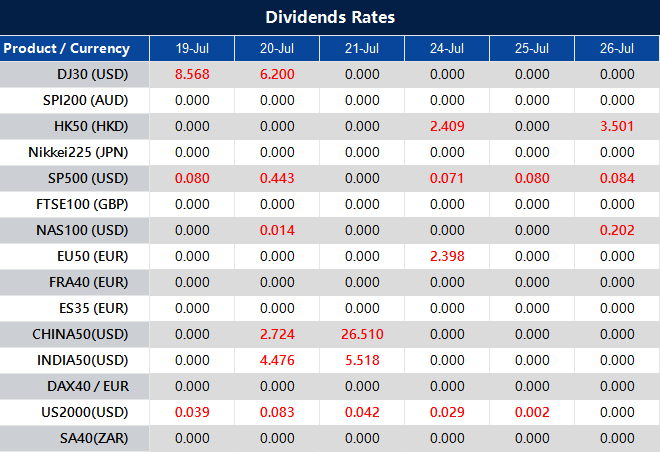
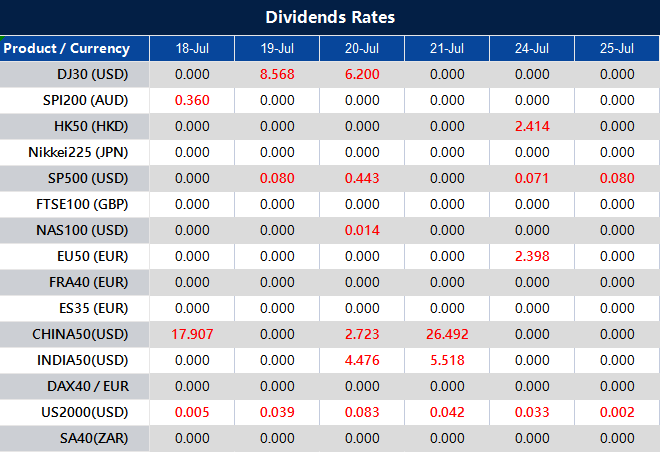
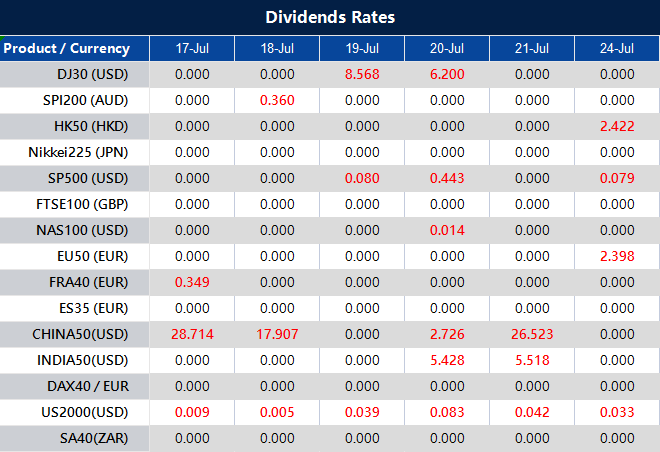
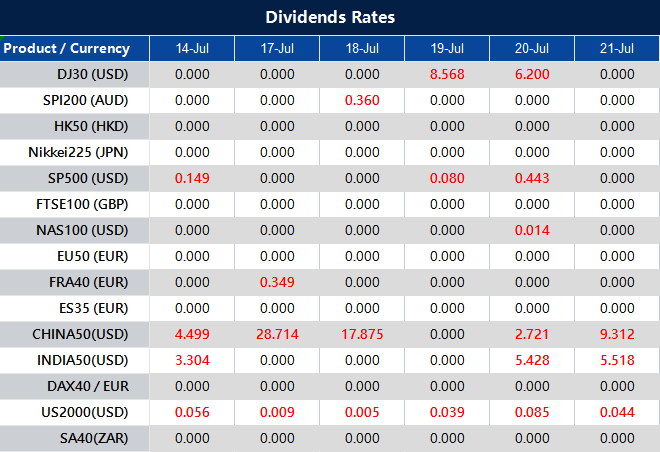
Please note that the dividends of the following products will be adjusted accordingly. Index dividends will be executed separately through a balance statement directly to your trading account, and the comment will be in the following format “Div & Product Name & Net Volume ”.
Please refer to the table below for more details:
The above data is for reference only, please refer to the MT4/MT5 software for specific data.
If you’d like more information, please don’t hesitate to contact info@vtmarkets.com.
The coffee industry, valued at over 100 billion US dollars annually, boasts a thriving global market and is regarded as one of the most highly traded and consumed soft commodities worldwide. Coffee trading presents lucrative opportunities for traders, as it can be influenced by various external factors, including the prices of other commodities.
In this article, we will explore the process of trading coffee, delve into its historical significance as a soft commodity, and analyse the factors that impact its price, while also discussing the available trading options.
The Historical Background of Coffee Trading
Coffee, classified as a soft commodity, is an agricultural product that shares similarities with other crops. Unlike hard commodities, which are extracted or mined, coffee is grown naturally.
It has been an essential part of diets across the globe for centuries. Originating in the Middle East, coffee gained popularity as a beverage in the 15th century.
European merchants discovered the flavourful bean in the 17th century, leading to the emergence of coffee trading. Merchants often gathered in coffee houses, which served as meeting places for trade discussions.
Over time, coffee plantations established by European colonists transformed into modern coffee suppliers. Today, the industry produces approximately 170 million bags of coffee beans each year, offering significant potential for traders.
Distinct Coffee Varieties
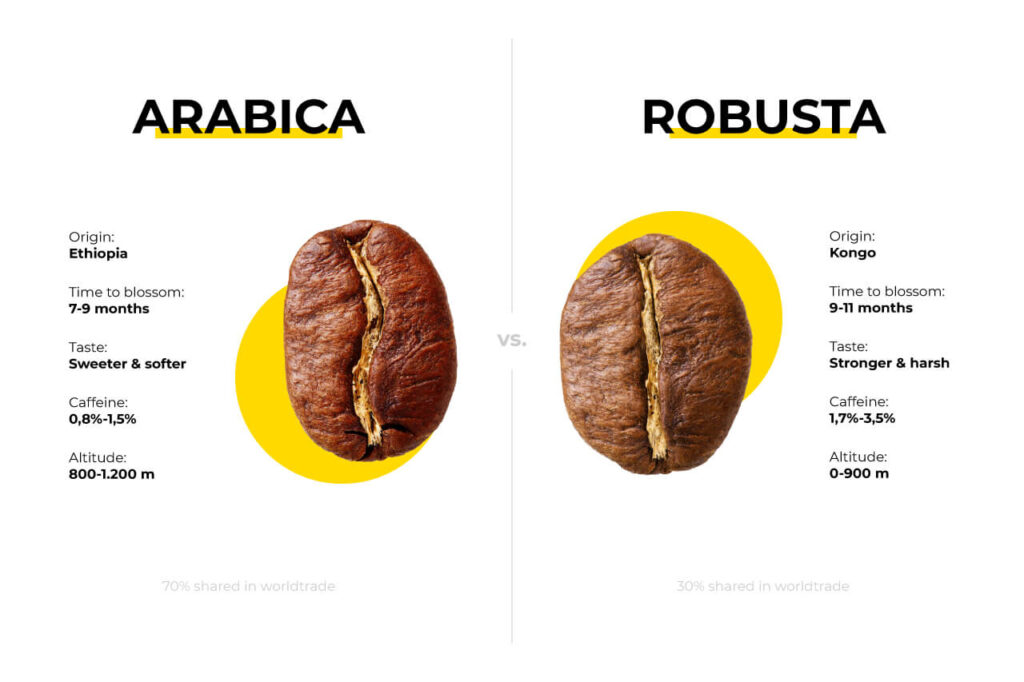
The global coffee trade primarily revolves around two main types of coffee: Arabica and Robusta. These varieties possess unique flavours and are influenced by external factors that impact their respective prices. To determine which type of coffee to trade, it is crucial to comprehend the factors that affect the price of each variety.
source: coffeefriend.co.uk
Arabica coffee, renowned for its superior quality, is favoured by cafe chains and features prominently in high-quality roasted coffee blends. Despite the common perception that Arabica is consistently more expensive than Robusta, this is not always the case. Arabica beans account for 60-70% of the world’s coffee supply and are predominantly sourced from Brazil and Colombia. Arabica coffee tends to exhibit more stable price fluctuations.
Robusta coffee, distinguished by its higher caffeine content, thrives in warmer climates and at lower altitudes compared to Arabica. It generally possesses a more bitter and earthy flavour profile, in contrast to Arabica’s acidity and fruitiness.
Robusta accounts for around 30% of the coffee trading market and often trades at higher prices due to its demand among multinational corporations like Nestlé, which utilise the beans in global product lines such as Nescafé instant coffee. Vietnam is the primary producer of Robusta beans.
Coffee cultivation regions
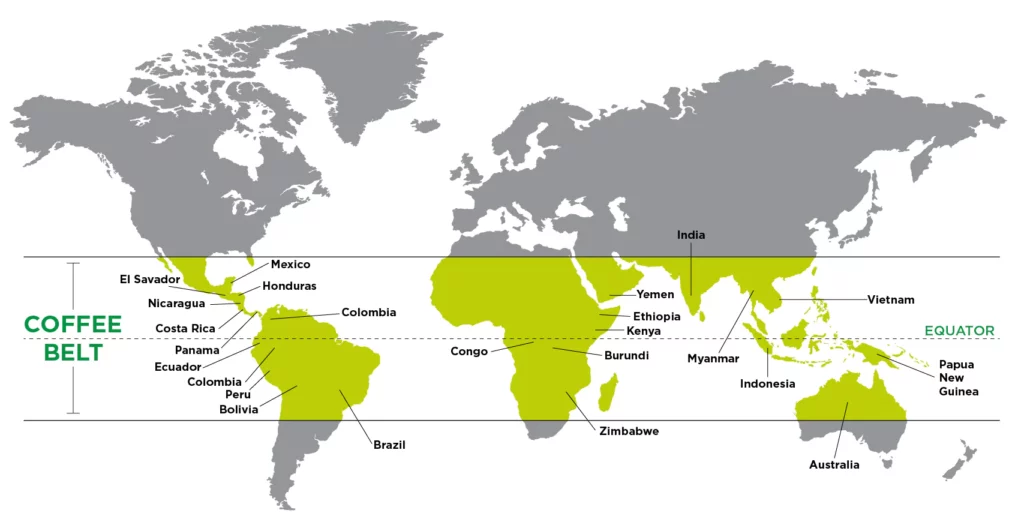
The specific geographic conditions necessary for coffee cultivation define the “coffee belt.” This belt extends from the equator to the Tropic of Cancer in the north and the Tropic of Capricorn in the south.
source: shopify.com
Although coffee of various types can be grown at different altitudes, the major coffee-producing nations include Brazil, Vietnam, Colombia, Indonesia, and Ethiopia.
Coffee trading occurs worldwide, with the largest importers of beans being the European Union, the United States, Japan, Russia, and Canada.
Given the multifaceted process of growing, harvesting, roasting, and transporting coffee, the coffee trade is subject to speculation and influenced by numerous factors that affect its price. Gaining familiarity with these fundamental aspects of the market is essential to master coffee trading.
Factors influencing coffee prices
The intricate nature of coffee production, which involves planting, growth, and harvesting, means that multiple factors must align for coffee to reach the market successfully and be traded.
Unexpected triggers can swiftly disrupt the coffee trading market, resulting in volatility. While volatility offers short-term profit opportunities for traders, those seeking stability may prefer to engage in coffee trading with a more consistent price index, utilising trends as guidance.
Climate: Unforeseen climate conditions, such as frost, floods, or droughts, can devastate crops, driving up prices as suppliers struggle to meet demand. Conversely, favourable weather can result in an oversupply of coffee beans, causing prices to plummet.
Consumer habits: Contemporary consumer preferences and evolving coffee culture impact the demand side of coffee trading. Specialised coffee varieties and concerns about caffeine’s effects and addictive properties have influenced prices. Additionally, during financial downturns or reduced consumer spending, the coffee trade may be negatively affected.
Plant disease: Coffea plants are susceptible to climate and disease, with fungal infections like “coffee leaf rust” posing significant risks. Robusta coffee, being more resilient in the face of such diseases, can affect the prices of both major coffee bean types.
Oil market: The prices of coffee transportation are influenced by the oil market, given that major coffee producers (e.g., Colombia, Brazil, and Vietnam) are located far from the main coffee-consuming regions. Spikes in oil prices subsequently impact coffee trading costs.
Distribution costs: Apart from transportation-related expenses, shipping and freight costs also play a role in the coffee trade’s dynamics and overall pricing.
Geopolitics: Geopolitical issues and instabilities in coffee-producing developing nations, which constitute a significant portion of the global supply, can cause price fluctuations. Similarly, political crises in major consumer nations can drive changes in demand. For instance, the Russia-Ukraine war has impacted Russia’s coffee consumption.
US dollar: Like many commodities markets, coffee trading is priced in US dollars. Fluctuations in the value of the US currency consequently influence the commodity’s price.
Coffee Trading Methods
For those interested in coffee trading, selecting a preferred trading method is the first step.
Spread betting on coffee: This financial derivative allows speculation on coffee’s price movements as an asset. Spread betting on coffee is tax-free in the UK and particularly suitable for short-term trading.
Coffee CFDs: Similar to spread betting, trading coffee CFDs involves trading the difference between the opening and closing positions of a contract, reflecting the coffee market’s price movements. At the contract’s end, the parties exchange the difference, resulting in either profit or loss. Coffee CFDs are taxable in the UK and involve leveraging or margin rate trades, offering the potential for increased profits but also carrying higher risks of losses.
Coffee futures: Trading coffee futures is a popular method that capitalises on the volatility of the coffee market. This approach establishes an exchange at a predetermined future date for a fixed price, enabling traders to benefit from market movements.
Ready to begin coffee trading?
VT Markets provides a user-friendly trading environment, simplifying the process of starting your coffee trading journey.
You can initiate your coffee trading experience by signing up for a free demo account, allowing you to practice trading coffee CFDs and futures on a risk-free platform for 90 days.
Alternatively, you can create a live trading account to jump straight into the action.
If you need guidance on opening your coffee trading account or wish to establish your trading portfolio, feel free to contact us. We are here to assist you in embarking on your trading endeavours.
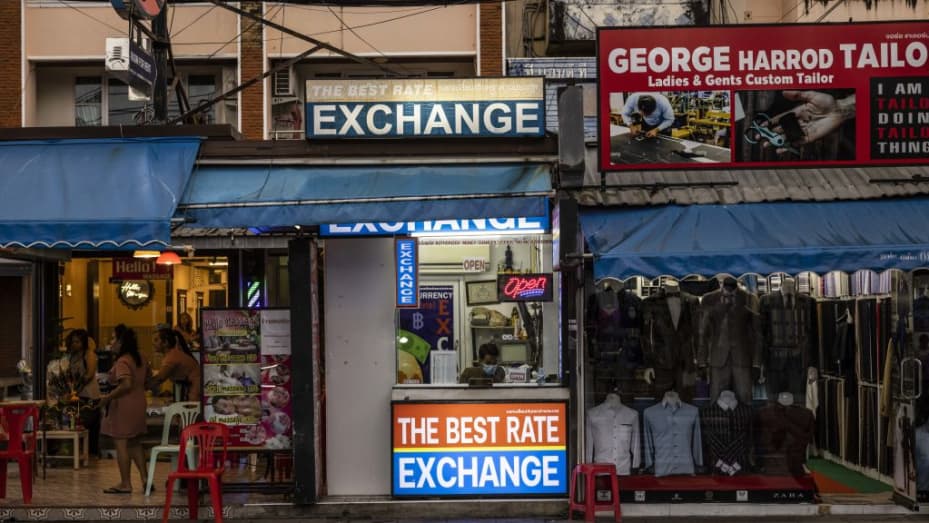
Imagine you’re at a bustling street market in a foreign country, excited to exchange your currency for the local one. As you approach the currency exchange booth, you notice that the exchange rates are constantly changing.
Every time you see the rates fluctuate, even by the tiniest amount, it affects the amount of money you’ll receive in return. That’s where the concept of pips comes into play in the world of Forex trading.
source: CNBC
What is a Pip?
In the world of Forex trading, a pip is the equivalent of the change you witnessed at the currency exchange booth. It stands for “Percentage in Point.”
A pip represents the smallest unit of price movement in a currency pair. Just like the ever-changing exchange rates at the booth, pips indicate the shifts in currency values that traders monitor closely.
Let’s take an example to illustrate this further. Consider the popular EUR/USD currency pair. If the exchange rate for EUR/USD moves from 1.2000 to 1.2001, it means a change of 1 pip. This seemingly small alteration carries significant meaning in the Forex market.
Understanding Pipettes
Now, you might wonder if there’s a way to measure even smaller changes in currency values. That’s where pipettes come into play.
Imagine you’re looking at the EUR/USD pair again, and this time, the exchange rate moves from 1.20000 to 1.20001. This indicates a change of 1 pipette. Pipettes allow for more precise measurements, giving traders a finer level of detail when analysing currency movements.
In most cases, there are 10 pipettes in one pip. By differentiating between pips and pipettes, traders can gain a more accurate understanding of price fluctuations in the Forex market.
The Role of Pips in Forex Trading
Pips play a vital role in Forex trading, acting as the key to unlocking profits and managing risks. They help determine the relative value and volatility of different currency pairs. Let’s explore their significance further through some examples.
Consider major currency pairs like the EUR/USD or GBP/USD. These pairs typically have small pip values, usually around 0.0001. On the other hand, cross currency pairs, such as the EUR/GBP or GBP/JPY, might have higher pip values, such as 0.001 or more.
When trading, it’s crucial to be able to read and understand pip values on trading platforms. Most platforms automatically display pip values for currency pairs, allowing you to assess potential gains or losses accurately.
Don’t underestimate the significance of even small changes in pip values. A seemingly minor movement of just a few pips can have a notable impact on your trades, especially when trading larger positions or utilising leverage.
Pips and Lot Sizes
Now that we’ve explored pips, let’s discuss their relationship with lot sizes. In Forex trading, a lot refers to the standardised quantity of a currency pair that you trade. Different lot sizes are available, including standard (100,000 units), mini (10,000 units), and micro (1,000 units).
The size of your lot determines the pip value. As the lot size increases, so does the pip value. For example, if the pip value for one standard lot is $10, the pip value for one mini lot would be $1, and for one micro lot, it would be $0.10.
Understanding lot sizes is crucial for managing risk effectively. Aligning your lot size with your risk tolerance and account size allows for better control over potential gains and losses.
Pip Spreads and Trading Costs
Pip spreads refer to the difference between the bid price (selling price) and the ask price (buying price) of a currency pair. It represents the cost of entering or exiting a trade. Brokers usually earn their profits from spreads.
For example, if the bid price for EUR/USD is 1.2500, and the ask price is 1.2502, the spread would be 2 pips. Understanding and comparing spreads among different brokers is important to optimise your trading costs.
Trading costs, including spreads, affect your overall profitability. Tighter spreads can be advantageous, especially for frequent traders or those executing scalping strategies. Try VT Markets RAW ECN Account with spreads starting from 0.0 pips.
Pip Calculations and Pipettes in Practice
Calculating pip values is essential to assess potential profits or losses. Let’s go through a step-by-step guide:
Step 1. Identify the currency pair you’re trading and its exchange rate.
Step 2. Determine the pip value by considering the lot size and the pip value for that particular currency pair.
Step 3. Incorporate pipettes if necessary. For instance, if a currency pair has a pipette value of 0.1, the pip value would be ten times smaller than a regular pip.
Practicing pip calculations using different currency pairs and lot sizes will enhance your understanding and proficiency in this fundamental aspect of trading.
Practical Tips for Pip Management
To effectively manage pips and optimise your trading strategy, consider the following tips:
Set realistic profit targets based on pip values and market conditions.
Understand the risk-to-reward ratio before entering a trade to ensure favourable risk management.
Utilise stop-loss and take-profit orders to automate trade exits at predetermined levels, protecting your capital and securing profits.
Manage leverage cautiously, as it amplifies both profits and losses based on pip movements.
By implementing these practical tips, you’ll develop a disciplined approach to trading and enhance your overall success rate.
In conclusion, pips are the building blocks of measuring price movements, determining profits and losses, and managing risk. Remember to practice pip calculations and familiarise yourself with various currency pairs to become a proficient trader. Stay curious, keep learning, and may your trading journey be filled with pips of success!
Please note that the dividends of the following products will be adjusted accordingly. Index dividends will be executed separately through a balance statement directly to your trading account, and the comment will be in the following format “Div & Product Name & Net Volume ”.
Please refer to the table below for more details:
The above data is for reference only, please refer to the MT4/MT5 software for specific data.
If you’d like more information, please don’t hesitate to contact info@vtmarkets.com.
Forex trading in Spain has become increasingly popular, with traders eager to explore the vast opportunities in the global currency market. In this complete guide, we will provide valuable insights to help traders navigate this dynamic market with VT Markets.
Introduction to the industry
Gain a solid understanding of Forex trading, including its basic concepts and the factors that influence currency exchange rates. Learning how trading currency pairs can offer exciting opportunities for profits.
Selecting the Right Forex Broker
Choosing a reputable broker is essential for success in the market. Discover the factors to consider when selecting a broker, including fees, leverage, platform, and educational resources. Additionally, consider VT Markets as your Forex Broker, as we provide one of the most competitive services in the market.
How to Create a Successful Trading Strategy
A well-defined trading strategy is the cornerstone of success in Forex trading. Having a great trading strategy can increase your chances of gaining profits.
Here are the factors to consider when creating a successful trading strategy:
Learning
Learning Forex is an essential step for anyone aspiring to become a successful trader in the industry. By studying the fundamentals, reading charts, analyzing economic indicators, and practicing risk management, traders can make better-informed trading decisions. Therefore, developing a habit of continuous education and practice is key to achieving success in the currency trade.
Developing discipline is crucial in Forex trading. Firstly, it involves learning how to set appropriate risk levels, implement stop-loss orders, and managing emotions to ensure long-term success. Moreover, it is important to avoid overtrading and having a gambling mindset. Additionally, traders in Spain can benefit from the valuable resources and support offered by VT Markets to optimize their risk management practices.
Financial Plans
Creating a solid financial plan is essential when engaging in currency trading. It involves setting clear goals, determining the amount of capital you are willing to invest, and establishing a budget for trading activities.
One important aspect to consider is the minimum amount required to start trading, which varies depending on the broker and trading platform. Thus, it is crucial to assess your financial situation and determine the amount you are comfortable with risking. By carefully managing your financial plan, you can reduce risks and increase the potential for profitable trading outcomes.
Working with the Right Brokers
In Spain, there are several reputable brokers that provide a range of services and features to support traders in their journey. VT Markets is one such broker that offers a comprehensive platform and competitive trading conditions. In addition, we provide a diverse range of trading instruments, competitive spreads, cutting-edge trading platforms, and dedicated customer support.
Forex trading tax in Spain is an important aspect to consider when trading. In Spain, profits from forex trading are typically classified as savings income and subject to taxation. The tax rates applicable to forex trading profits follow the progressive tax system, ranging from 19% to 26%.
Conclusion:
In conclusion, Forex trading in Spain offers immense potential for traders seeking opportunities in the global currency market. With VT Markets as your trusted partner, you can navigate this dynamic market with confidence. Lastly, by embracing this complete guide, you can unlock the full potential of Forex trading with VT Markets in Spain.
Please note that the dividends of the following products will be adjusted accordingly. Index dividends will be executed separately through a balance statement directly to your trading account, and the comment will be in the following format “Div & Product Name & Net Volume ”.
Please refer to the table below for more details:
The above data is for reference only, please refer to the MT4/MT5 software for specific data.
If you’d like more information, please don’t hesitate to contact info@vtmarkets.com.
This week’s economic calendar features US Retail Sales figures, as well as inflation data from both the UK and Canada — all of which have the capacity to move markets significantly. Therefore, it is crucial for traders to be prepared for any volatility that may arise from these key announcements and adjust their approaches as needed.
Keep an eye on the following economic releases:
Canada Consumer Price Index (18 July 2023)
Consumer prices in Canada rose by 0.4% in May 2023, slowing from the 0.7% increase in the previous month.
Analysts anticipate a 0.4% increase in the figures for June, set to be released on 18 July.
US Retail Sales (18 July 2023)
US retail sales rose 0.3% month-over-month in May 2023, following a 0.4% increase in April.
Analysts expect a similar 0.3% growth in the figures for June, scheduled for release on 18 July.
New Zealand Consumer Price Index (19 July 2023)
The Consumer Price Index in New Zealand rose by 1.2% in the March quarter, representing the smallest quarterly price increase since Q1 2021.
Analysts predict a 1.1% uptick in figures for the upcoming quarter, set to be released on 19 July.
UK Consumer Price Index (19 July 2023)
The UK’s consumer price inflation remained stable at 8.7% in May 2023, repeating the 13-month low recorded in the previous month.
Anticipated for release on July 19, the upcoming CPI data is expected to show a further decline to 8.3%.
Employment in Australia (20 July 2023)
Employment in Australia surged by 75,900 to 14.1 million in May 2023. This followed a revised drop of around 4,000 in the previous month. Meanwhile, the unemployment rate decreased to 3.6%, down from April’s figure of 3.7%.
Analysts expect employment figures to increase by 25,100 in the data for June 2023, set to be released on 20 July. The unemployment rate is expected to remain steady at 3.6%.
Start trading now — click here to create your live VT Markets account.
¿Qué es Forex y por qué la gente comercia en Forex?
Forex, también conocido como el mercado de divisas, es el mercado financiero más grande y líquido del mundo, con un volumen de operaciones diario que supera los 5 trillones de dólares. Forex es la plataforma donde se compran, venden e intercambian divisas de diferentes países a través de pares de divisas. Las personas eligen comerciar en Forex por varias razones: la flexibilidad en el horario de operaciones, la alta liquidez, la posibilidad de aprovechar el apalancamiento y la potencial rentabilidad que puede generar.
Aprendiendo Forex
El proceso de aprendizaje de Forex requiere tiempo y paciencia, ya que implica una comprensión profunda de los fundamentos del mercado, como el análisis técnico y fundamental. Es vital familiarizarse con los pares de divisas más operados, que incluyen EUR/USD, USD/JPY y GBP/USD, por su alta liquidez y volatilidad que ofrecen numerosas oportunidades de operación.
Es necesario contar con una plataforma de trading confiable para operar en Forex. Metatrader 4 y Metatrader 5 son las más populares por su simplicidad y la gran cantidad de herramientas y recursos de análisis que ofrecen. Las plataformas de trading permiten a los operadores analizar las condiciones del mercado, realizar operaciones y administrar sus cuentas.
A la hora de elegir un bróker, VT Markets merece consideración. Con su regulación, VT Markets ofrece condiciones de trading competitivas, incluyendo bajos spreads, una amplia gama de pares de divisas y CFDs, y acceso a las plataformas MT4 y MT5. Además, brinda soporte al cliente las 24 horas y una serie de recursos educativos para mejorar tus habilidades de trading.
Lo que necesitas tener en cuenta al operar en Forex
Es crucial ser consciente de los riesgos al operar en Forex y estar dispuesto a aceptarlos. Nunca inviertas dinero que no estés dispuesto a perder. Es fundamental desarrollar una estrategia de trading sólida, realizar un análisis de mercado exhaustivo y gestionar eficazmente el riesgo. La educación continua es clave, ya que los mercados están en constante evolución y los buenos operadores nunca dejan de aprender.
Inversión inicial para operar en Forex
Para invertir en Forex, debes aportar una suma a tu cuenta de trading. Esta cantidad dependerá de tus recursos disponibles, tus expectativas de ganancia y pérdida, y el grado de riesgo que estás dispuesto a asumir.
Es crucial recordar que los brókeres tienen requisitos de depósito mínimo para operar con tu cuenta de trading. Con una inversión baja en el mercado de divisas, te podrías encontrar con limitaciones en la selección de tu estilo de trading y ciertas operaciones podrían no ser posibles debido a la falta de margen.
La importancia de la gestión de riesgos en la inversión en divisas
La gestión de riesgos es esencial al invertir en Forex o en cualquier otro mercado. Deberás establecer metas claras y determinar el nivel de riesgo que estás dispuesto a asumir para alcanzarlas.
➨ El apalancamiento permite al trader operar con un capital mayor al que tiene. Un apalancamiento de 1:100 significa que puedes abrir una posición de 100 euros con solo 1 euro. Esto puede multiplicar tanto tus ganancias como tus pérdidas.
➨ El overtrading implica abrir demasiadas operaciones o operaciones de alto valor que pueden disminuir el margen libre del trader o aumentar el valor del pip.
Los traders profesionales suelen tener retornos anuales del 10-15%. Aspirar a mayores rendimientos puede agotar rápidamente la cuenta del trader.
El trading es un camino para acumular riqueza de forma constante, no un medio para hacerse rico rápidamente. La falta de educación, expectativas poco realistas y fondos limitados son las principales fuentes de riesgo en Forex.
Preguntas Frecuentes
¿Cuál es el monto mínimo para comenzar a operar en Forex? El monto mínimo varía dependiendo del bróker. Algunos permiten comenzar con tan solo $1, mientras que otros pueden requerir un mínimo de $200.
¿Existe una estrategia segura para ganar en el mercado Forex? No existe ninguna estrategia que garantice beneficios en el mercado Forex. No obstante, una buena formación, análisis de mercado y gestión del riesgo pueden aumentar las posibilidades de obtener ganancias.
¿Puedo operar en Forex durante mi tiempo libre? Sí, el mercado Forex está abierto 24 horas al día, 5 días a la semana. Además, con VTrade (trading de copia), puedes replicar las operaciones de traders exitosos, lo que puede ser beneficioso si tienes un horario ocupado.
¿Quiénes son los mejores traders del mundo? Algunos de los traders más exitosos incluyen a Paul Tudor Jones, George Soros y Stanley Druckenmiller.
¿Existe alguna estrategia para principiantes a seguir? Sí, una estrategia popular para principiantes es la de “seguir la tendencia”, que implica identificar y seguir la dirección general del mercado.
Nota: Operar en Forex implica un alto riesgo y no es adecuado para todos. Asegúrate de gestionar los riesgos adecuadamente antes de participar en cualquier actividad comercial.
Conclusión sobre cómo operar en Forex para principiantes
Comenzar a operar en Forex puede ser una ruta emocionante y potencialmente rentable. Sin embargo, es fundamental tener un buen entendimiento del mercado y seguir aprendiendo constantemente. Recordar siempre los riesgos y gestionarlos adecuadamente es esencial para mantenerse en el camino del éxito. Un bróker confiable como VT Markets puede ser un aliado valioso en tu viaje de trading. Al final del día, la paciencia, la dedicación y la disciplina son las claves para triunfar en el mundo del Forex.
Please note that the dividends of the following products will be adjusted accordingly. Index dividends will be executed separately through a balance statement directly to your trading account, and the comment will be in the following format “Div & Product Name & Net Volume ”.
Please refer to the table below for more details:
The above data is for reference only, please refer to the MT4/MT5 software for specific data.
If you’d like more information, please don’t hesitate to contact info@vtmarkets.com.
¿Cuál es el horario y los días de negociación de Forex?
El mercado financiero global opera las 24 horas del día, cinco días a la semana. Esto significa que los inversores y traders tienen la oportunidad de participar en el comercio de divisas y acciones en diferentes mercados en todo el mundo en diferentes momentos del día. Conocer los horarios de apertura y cierre de los principales mercados puede ser esencial para aprovechar al máximo las oportunidades de negociación y maximizar los beneficios. En este artículo, exploraremos los horarios de los mercados mundiales de divisas y bolsa.
Mercado de Divisas (Forex)
El mercado de divisas, también conocido como Forex (abreviatura de Foreign Exchange), es el mercado más grande y líquido del mundo. Aquí es donde se compran y venden las diferentes monedas nacionales. A diferencia de otros mercados financieros, el mercado de divisas opera las 24 horas del día, de lunes a viernes.
Los horarios clave para el mercado de divisas son los siguientes:
1. Sesión de Asia: Inicia alrededor de las 6:00 p.m. GMT del domingo y se superpone con la sesión de Sídney. Los principales mercados de esta sesión son Tokio, Hong Kong y Singapur.
2. Sesión de Sídney: Comienza a las 10:00 p.m. GMT y se superpone con la sesión de Asia. Aunque Sídney no es uno de los mayores centros financieros, esta sesión proporciona liquidez significativa debido a la superposición con otros mercados.
3. Sesión de Tokio: Inicia a las 12:00 a.m. GMT y se superpone con la sesión de Sídney. Tokio es el centro financiero más importante de Asia y es conocido por su alta liquidez.
4. Sesión de Londres: Comienza a las 8:00 a.m. GMT y es considerada la sesión más líquida y activa del mercado de divisas. La superposición con la sesión de Tokio también proporciona una gran cantidad de oportunidades comerciales.
5. Sesión de Nueva York: Inicia a las 1:00 p.m. GMT y se superpone con la sesión de Londres durante unas horas. La superposición de estas dos sesiones genera alta volatilidad y liquidez, lo que la convierte en un momento óptimo para operar.
Es importante tener en cuenta que los horarios pueden variar durante los cambios de horario de verano e invierno en diferentes regiones del mundo.
El mercado de valores es donde se compran y venden las acciones de diferentes empresas. A diferencia del mercado de divisas, el mercado de valores opera en horarios específicos según la ubicación geográfica.
Algunos de los principales horarios de apertura y cierre de las bolsas más influyentes son los siguientes:
1. Bolsa de Nueva York (NYSE): Abre a las 9:30 a.m. EST y cierra a las 4:00 p.m. EST, de lunes a viernes.
2. Bolsa de Valores de Londres (LSE): Abre a las 8:00 a.m. GMT y cierra a las 4:30 p.m. GMT, de lunes a viernes.
3. Bolsa de Tokio (TSE): Abre a las 9:00 a.m. JST y cierra a las 3:00 p.m. JST, de lunes a viernes.
4. Bolsa de Hong Kong (HKEX): Abre a las 9:30 a.m. HKT y cierra a las 4:00 p.m. HKT, de lunes a viernes.
Estos son solo algunos ejemplos de los horarios de las principales bolsas de valores. Cada bolsa tiene su propio horario de operaciones y puede haber variaciones debido a días festivos o eventos especiales.
Es importante tener en cuenta los horarios de apertura y cierre de los mercados, ya que la volatilidad y la liquidez pueden variar según la sesión. Muchos traders aprovechan las superposiciones de sesiones para buscar oportunidades comerciales, ya que se produce un aumento en el volumen de negociación y la volatilidad.
Aprovechando las ventanas de apertura y cierre para ganar en Forex
Los traders aprovechan las ventanas de apertura y cierre en el mercado de divisas para obtener ganancias en Forex. Durante estos períodos, se produce un aumento en la actividad comercial y la volatilidad, lo que crea oportunidades para tomar decisiones informadas y ejecutar estrategias rentables. Al inicio de la sesión, los traders pueden analizar las noticias y eventos que ocurrieron durante la noche y ajustar sus posiciones en consecuencia.
Además, la superposición de las sesiones de diferentes centros financieros, como la de Londres y Nueva York, brinda una mayor liquidez y volatilidad, lo que puede resultar en movimientos de precios más pronunciados y rápidos. Los traders hábiles pueden aprovechar estos momentos para identificar tendencias y patrones de mercado, y ejecutar operaciones en la dirección adecuada para obtener beneficios. Es importante tener en cuenta que la volatilidad también conlleva un mayor riesgo, por lo que es fundamental aplicar una adecuada gestión del riesgo y utilizar herramientas como órdenes de stop-loss para proteger las ganancias y limitar las pérdidas.
Conclusión
Conocer los horarios de apertura y cierre de los mercados mundiales de divisas y bolsa es esencial para los traders. Les permite aprovechar oportunidades y maximizar beneficios. Al estar al tanto de los momentos de mayor actividad y volatilidad, los traders pueden tomar decisiones informadas y ejecutar estrategias rentables. Las superposiciones de sesiones y los momentos de alta liquidez son especialmente beneficiosos, generando movimientos de precios pronunciados y rápidos. Es importante gestionar el riesgo y utilizar herramientas de protección como órdenes de stop-loss. Aprovechar los horarios de operación en Forex aumenta las posibilidades de obtener ganancias consistentes.