Back

Navigating the Trump market: Essential tips for traders

The election of Donald Trump to the US presidency brings with it significant uncertainty and excitement for traders across the globe. Trump’s economic policies, which often emphasise deregulation, tax cuts, and protectionist stances, can cause considerable shifts in financial markets.

Traders need to understand how Trump’s victory might impact key assets. In this article, we’ll explore these potential impacts and provide practical insights for those navigating market fluctuations during this time.

Historical impacts of presidential elections on markets

While it is tempting to make sweeping predictions following the results of a presidential election, historical trends show that the effects of such events are typically short-lived.
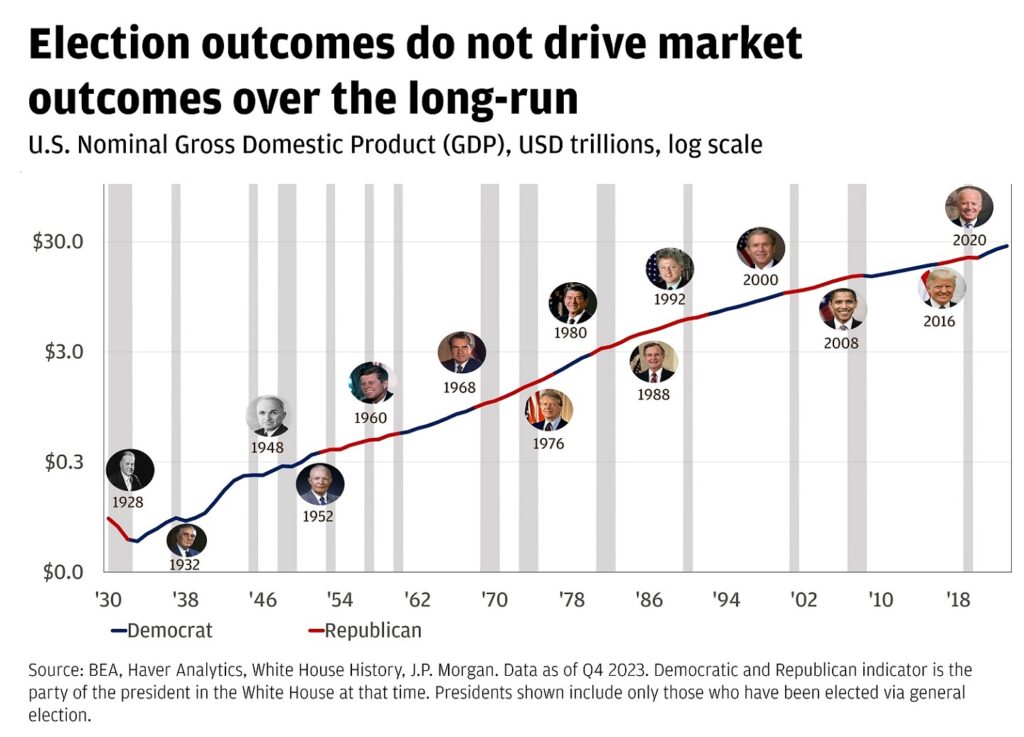
Looking back at past elections, we can see that while volatility often spikes immediately after the election, it’s the long-term changes that matter more.

For instance, during Ronald Reagan’s presidency, regulatory changes significantly impacted industries like telecommunications and energy, while George W. Bush’s tax cuts reshaped the corporate landscape.
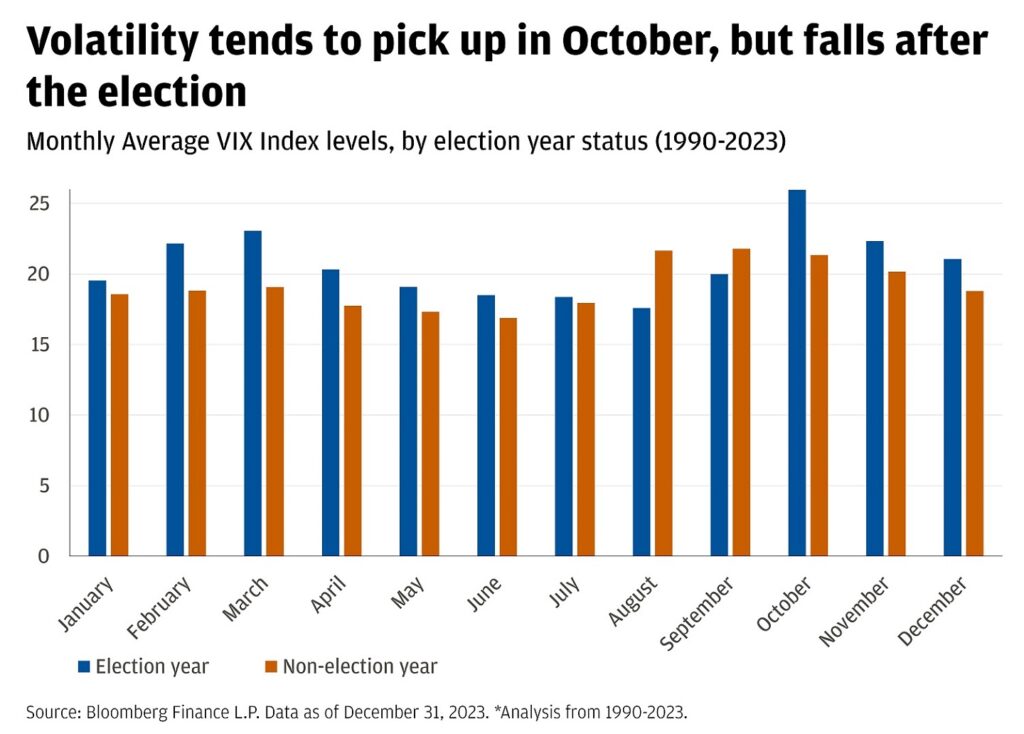
However, both of these shifts unfolded gradually, and their immediate effects were tempered by broader economic trends.

Practical insight: Traders should avoid reacting impulsively to immediate market fluctuations following the election. Instead, they should consider historical patterns and focus on long-term fundamentals to make informed decisions.

Impact on the US dollar

One of the first noticeable effects of Trump’s victory has been a rise in the US dollar. Following the election, the dollar gained approximately 1.65% against major currencies such as the yen, euro, and pound, driven by expectations of increased economic growth.
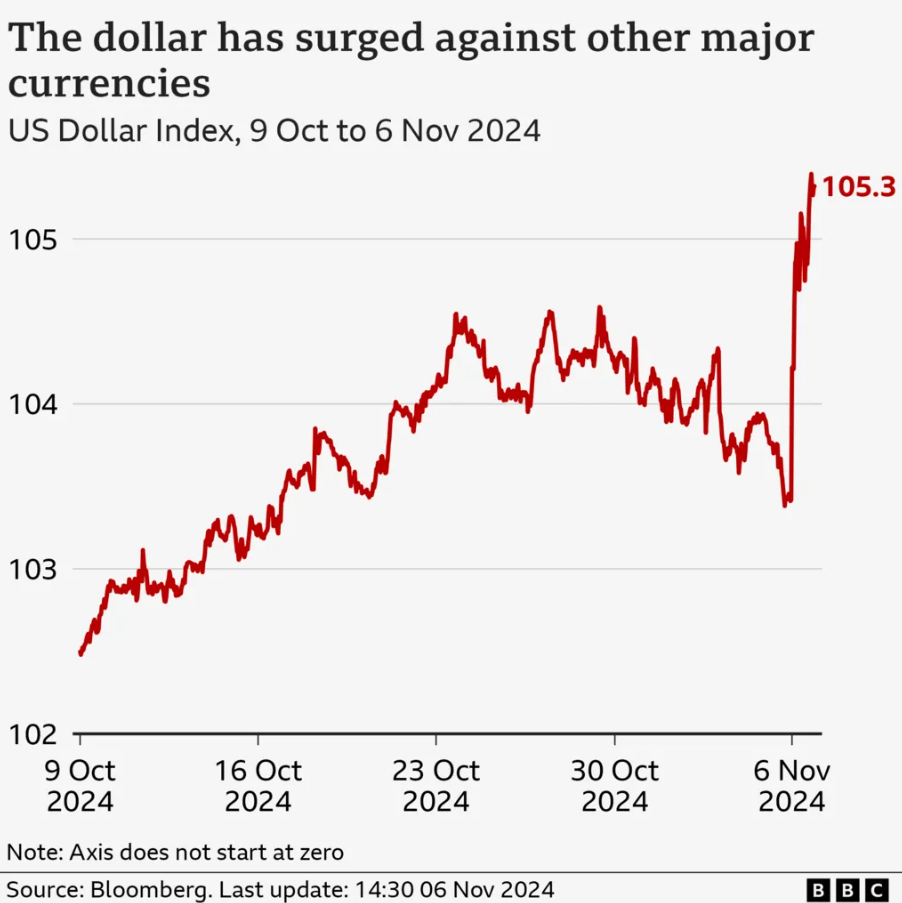
Trump’s policies, including his tax cuts and plans for infrastructure spending, are seen as catalysts for potential growth, which could lead to further appreciation of the USD.

Trump’s “America First” trade policy, with a focus on tariffs and reduced import dependency, could also strengthen the US dollar. By pushing for a reduction in trade deficits, Trump’s administration may foster a more robust dollar.

Practical insight: A stronger USD can make dollar-denominated assets more expensive for foreign buyers, impacting demand for certain commodities, particularly in emerging markets. Traders should consider the potential risks and opportunities that come with fluctuations in the value of the dollar.

Impact on US and global stock markets

In the immediate aftermath of Trump’s victory, the stock markets responded with optimism. US stocks hit record highs, with the S&P 500 futures rising 2.3% and small-cap stocks surging 6.5%.
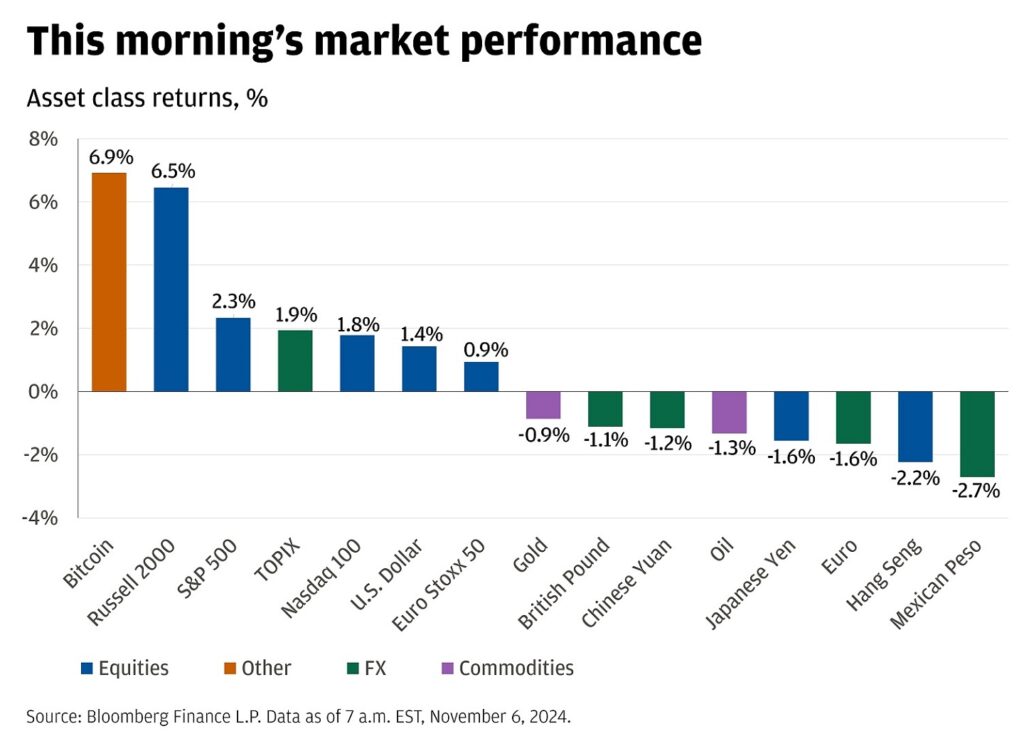
This was driven by the expectation of continued pro-growth policies, including the extension of tax cuts. However, global reactions have been more mixed.

While the FTSE 100 index in the UK rose initially but closed slightly down, major European indexes, the German Dax and French CAC 40, closed down by 1.14% and 0.51%, respectively.

In contrast, Japan’s Nikkei 225 rose 2.6%, while China’s Shanghai Composite Index fell 0.1% and Hong Kong’s Hang Seng dropped 2.23%.

Sector-specific impacts were also evident, with Tesla shares jumping over 14% in pre-market trading on anticipation of reduced regulation, while clean energy stocks saw sharp declines amid expectations of reduced government support.

Practical insight: Traders should consider sectors that are likely to benefit from Trump’s policies, such as energy and manufacturing. However, caution is advised in sectors that may be negatively impacted by protectionist measures, such as clean energy.

Bitcoin’s rise

Another key asset that saw a notable reaction to Trump’s election is Bitcoin. Following the election, Bitcoin surged to a new all-time high of USD 75,999.04.
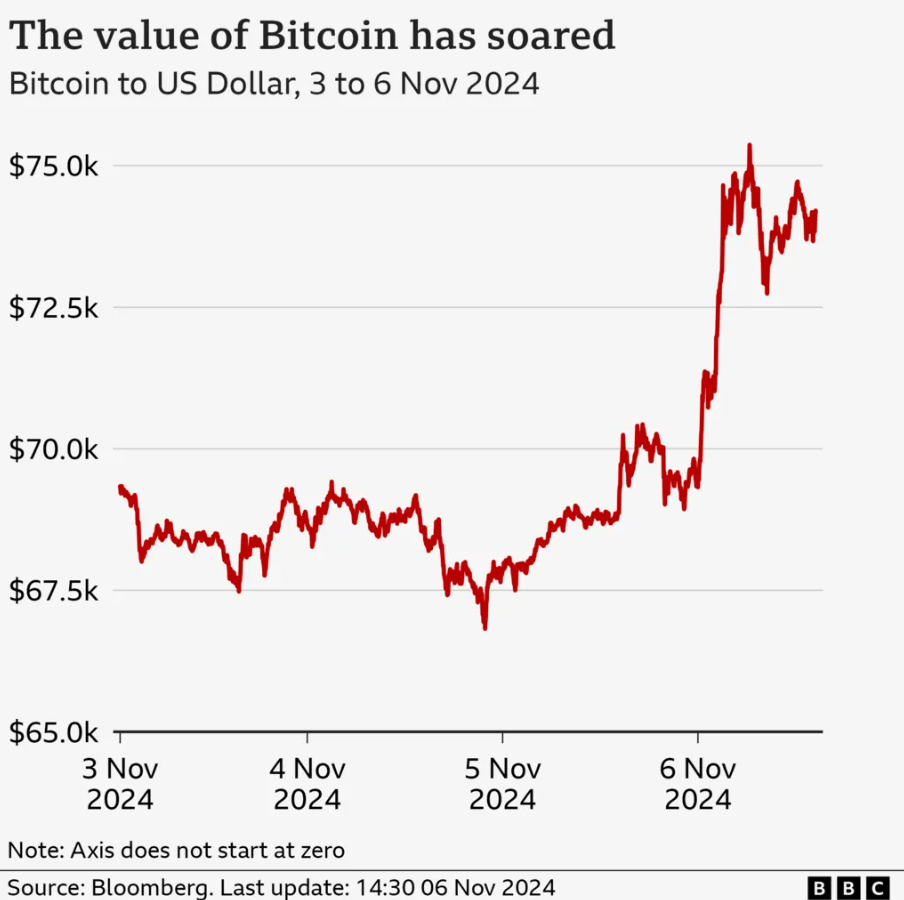
This increase is partially attributed to Trump’s vocal support for cryptocurrencies, with many traders viewing Bitcoin as a hedge against potential USD volatility and government interference.

Bitcoin’s appeal lies in its status as a decentralised digital asset, independent of traditional financial institutions and government control. As Trump’s administration may push for more regulation in some sectors, Bitcoin and other cryptocurrencies might emerge as a more attractive alternative for those seeking to diversify their portfolios.

Practical insight: Traders looking to capitalise on Bitcoin’s rise should be mindful of its inherent volatility. While it can offer substantial gains, Bitcoin can also experience rapid price swings, making it suitable for those with a higher risk tolerance.

Gold’s retreat

Gold, traditionally seen as a safe-haven asset during times of economic uncertainty, faced a decline following Trump’s election.

The price of gold dropped by 0.8% to USD 2,744/oz, as investors shifted their focus from precious metals to stocks and the strengthening USD.
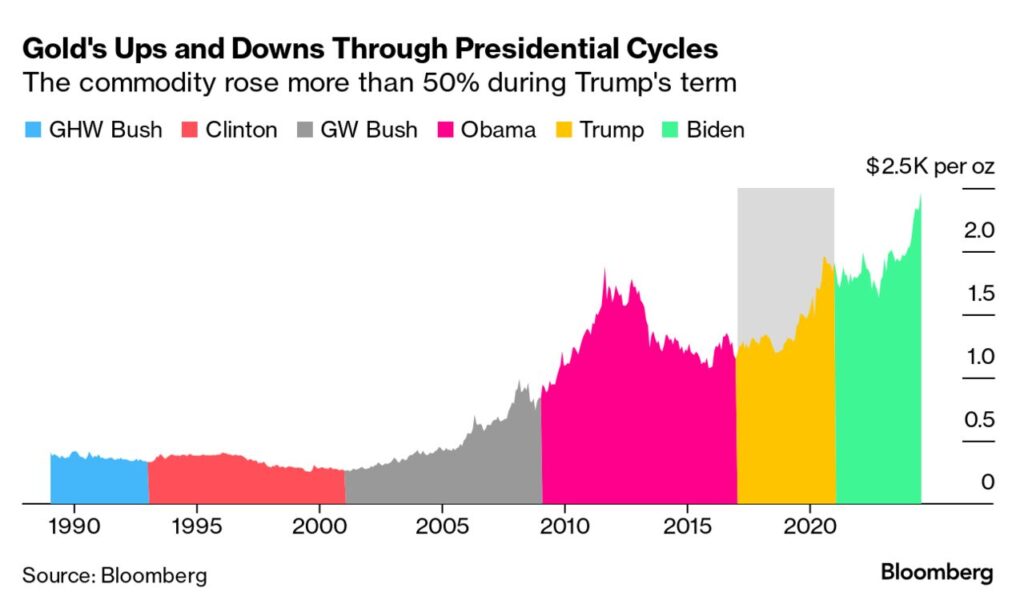
Typically, gold has an inverse relationship with the USD—when the dollar strengthens, the demand for gold often diminishes. As Trump’s policies are expected to favour economic growth and strengthen the dollar, the appeal of gold as a safe-haven asset may diminish.

Practical insight: For traders, it might be wise to reconsider gold’s role in their portfolios, especially in the short term. While gold remains a valuable asset in times of broader market uncertainty, its appeal may diminish during periods of economic optimism.

Oil prices and the “drill baby drill” policy

Trump’s energy policy, which focuses on increasing domestic oil production and reducing reliance on foreign oil, has had a noticeable impact on global oil prices.

Following his election victory, oil prices saw a 1.25% decline to USD 74.50/barrel as markets adjusted to the expectations of higher US production.
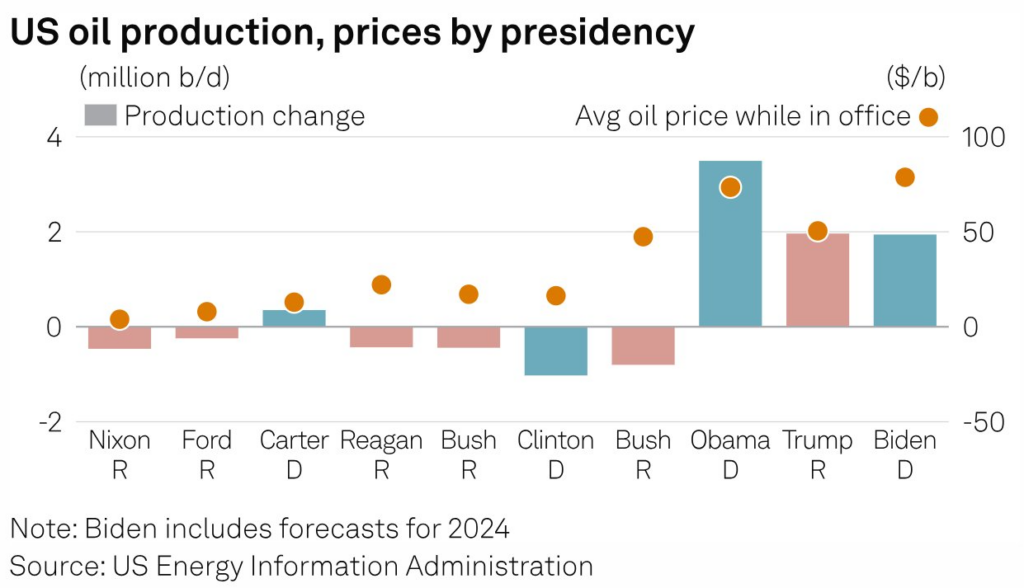
Trump’s promise to “drill baby drill” suggests that the US could become even more self-sufficient in energy production, which would impact both global supply and demand.

While oil prices may remain lower in the short term due to increased supply, there is a possibility that oil prices will stabilise as markets adjust to Trump’s policies.

Practical insight: Traders should be aware of the fluctuations in oil prices and the potential impact of Trump’s pro-oil stance. Although prices may dip in the short term, oil stocks could benefit in the long term from reduced regulatory burdens and increased production.

What traders should expect going forward

Looking ahead, Trump’s policies will likely continue to influence financial markets in both expected and unexpected ways.
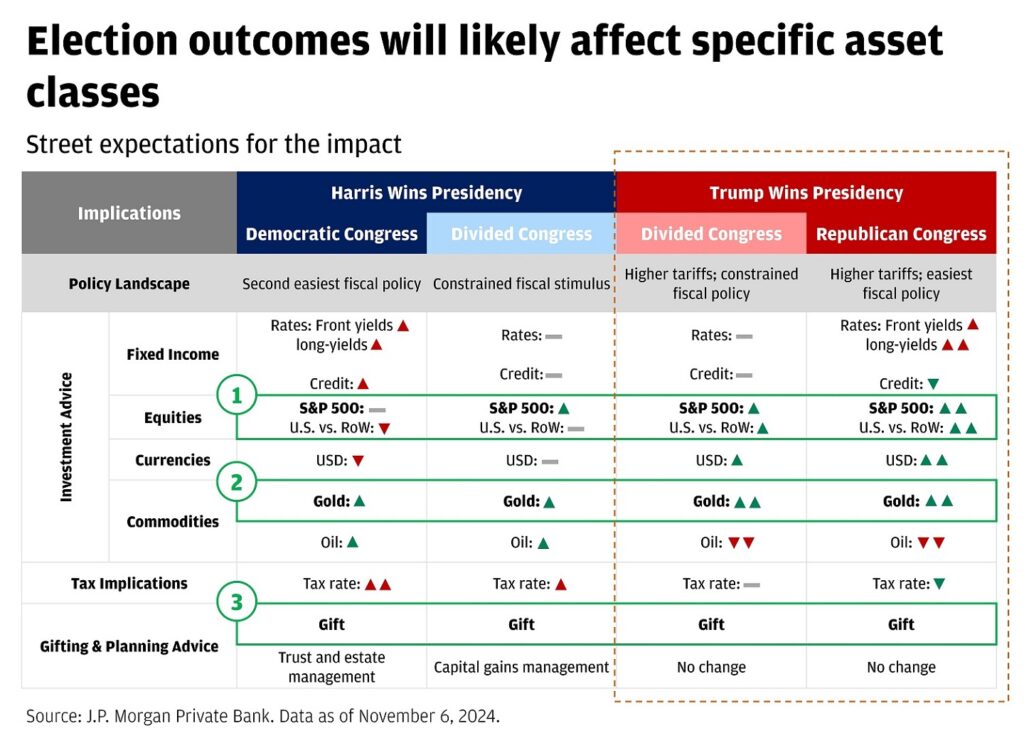
While markets may see initial volatility, traders can expect to see opportunities in sectors such as energy, manufacturing, and technology, which are likely to benefit from Trump’s regulatory changes.

However, volatility will remain a key feature, as trade wars, changes in tariffs, and other policy adjustments could have significant, unpredictable impacts on the market.

Practical insight: Traders should remain informed and adapt their strategies to evolving market conditions. Diversifying their portfolios, staying informed on economic indicators, and avoiding knee-jerk reactions to short-term fluctuations can help them navigate this uncertain period.

Conclusion

Trump’s win presents both opportunities and challenges for traders. The key to success lies in understanding the long-term impacts of his policies on the financial markets and avoiding impulsive decisions based on short-term volatility.

By focusing on fundamentals, diversifying portfolios, and staying informed, traders can capitalise on the shifts in the market while managing the risks associated with a Trump presidency.

To get started trading in this dynamic market environment, open a live account with VT Markets today and access their range of trading tools and educational resources.
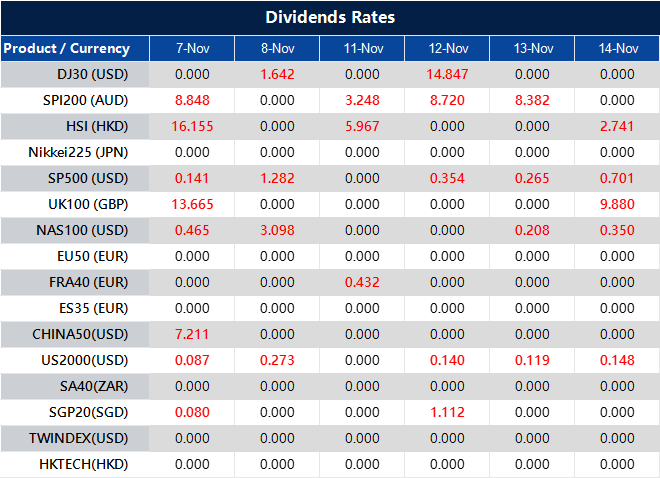
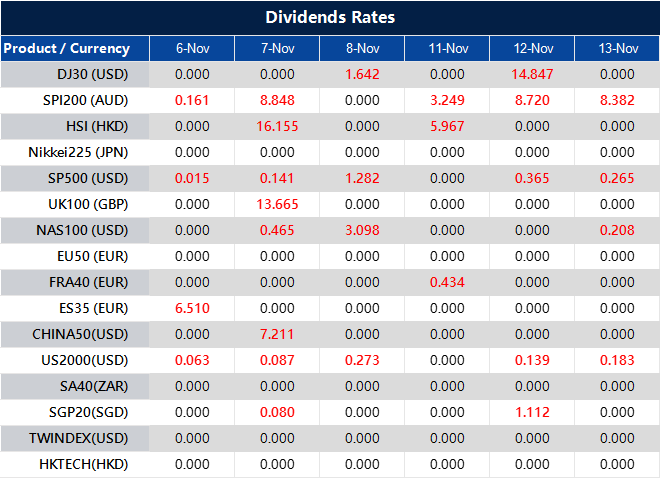
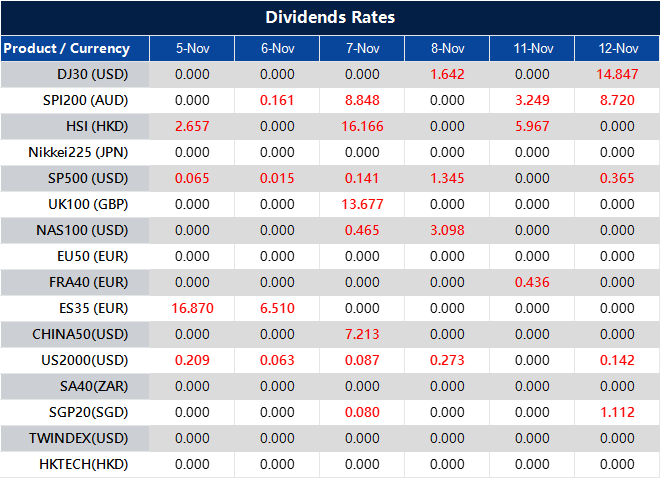
Dividend Adjustment Notice – Nov 07,2024

Dear Client,

Please note that the dividends of the following products will be adjusted accordingly. Index dividends will be executed separately through a balance statement directly to your trading account, and the comment will be in the following format “Div & Product Name & Net Volume ”.

Please refer to the table below for more details:

The above data is for reference only, please refer to the MT4/MT5 software for specific data.

If you’d like more information, please don’t hesitate to contact info@vtmarkets.com.

Dividend Adjustment Notice – Nov 06,2024

Dear Client,

Please note that the dividends of the following products will be adjusted accordingly. Index dividends will be executed separately through a balance statement directly to your trading account, and the comment will be in the following format “Div & Product Name & Net Volume ”.

Please refer to the table below for more details:

The above data is for reference only, please refer to the MT4/MT5 software for specific data.

If you’d like more information, please don’t hesitate to contact info@vtmarkets.com.

¿Qué es el Trump Trade y cómo impacta los mercados financieros?

Por: Eduardo Ramos

El término Trump Trade se refiere a los movimientos de los mercados financieros que surgieron en respuesta a las políticas económicas y comerciales impulsadas por el expresidente de Estados Unidos, Donald Trump. Estas políticas, anunciadas e implementadas durante su mandato (2017-2021), impactaron sectores clave de la economía y generaron expectativas entre los inversores. En este artículo, exploraremos en qué consiste el Trump Trade, cómo se originó y qué efectos tuvo en los mercados financieros.


1. ¿Cómo comenzó el Trump Trade?
El Trump Trade se hizo popular en los primeros días de la administración Trump, cuando las promesas de campaña del presidente impulsaron la confianza de los mercados. Trump prometió reducir impuestos, desregular varios sectores y fomentar políticas proteccionistas, especialmente contra China. Estas promesas llevaron a los inversores a ajustar sus carteras con la expectativa de que ciertos sectores crecerían y otros, posiblemente, enfrentarían retos.

Ejemplos de Promesas y su Efecto
Recortes de impuestos: En 2017, Trump promulgó la Ley de Recortes de Impuestos y Empleos, que redujo el impuesto corporativo del 35% al 21%. Según el Tax Foundation, este recorte aumentó las ganancias de las empresas y atrajo capital de vuelta a Estados Unidos, incentivando a las grandes corporaciones a reinvertir y contratar más empleados.

Desregulación: Trump promovió la eliminación de muchas regulaciones en los sectores de energía, finanzas y manufactura. Según la Oficina de Presupuesto del Congreso (CBO), los recortes en regulaciones ahorraron más de $50 mil millones en costos operativos para empresas de energía y otros sectores. Este cambio incrementó las expectativas de crecimiento en dichos sectores, lo que resultó en un aumento del valor de sus acciones.

Guerra comercial con China: Trump implementó aranceles sobre bienes chinos por valor de cientos de miles de millones de dólares, buscando reducir el déficit comercial de EE. UU. con China. Aunque esto impactó negativamente el costo de algunos productos en EE. UU., impulsó las acciones de empresas estadounidenses que dependían menos de importaciones chinas.

2. Sectores Beneficiados y Afectados
El Trump Trade no afectó de la misma manera a todos los sectores. Algunos se beneficiaron enormemente, mientras que otros experimentaron volatilidad o retrocesos.

Sectores Ganadores
Financiero: Los bancos y empresas de servicios financieros fueron algunos de los mayores beneficiados debido a la desregulación y los recortes fiscales. Según Bloomberg, las acciones de bancos como JPMorgan Chase y Bank of America aumentaron considerablemente tras el inicio de las políticas de Trump.

Energía y minería: La desregulación de la industria energética fue un punto fuerte en la administración Trump. Empresas de petróleo, carbón y gas natural ganaron terreno, especialmente con políticas que incentivaron la producción y exportación de energía de EE. UU.

Infraestructura: A pesar de no concretarse en la escala anunciada, el enfoque en proyectos de infraestructura benefició las acciones de empresas de construcción y proveedores de materiales.

Sectores Afectados
Tecnología: Al depender en gran medida de cadenas de suministro globales, las tensiones comerciales con China afectaron a empresas tecnológicas como Apple y Cisco. La volatilidad en el sector tecnológico fue un reflejo de la incertidumbre generada por la política exterior de Trump.

Agricultura: El conflicto comercial con China afectó a los agricultores de EE. UU., ya que China, uno de los mayores compradores de productos agrícolas estadounidenses, impuso aranceles sobre estos productos en respuesta. El Departamento de Agricultura de EE. UU. informó que los agricultores experimentaron pérdidas significativas, especialmente en la venta de soya, maíz y carne de cerdo.

3. Impacto en el Dólar y el Comercio Global
El Trump Trade también afectó la moneda estadounidense y las relaciones comerciales internacionales.

Fortalecimiento del dólar: Las políticas fiscales expansivas, combinadas con un crecimiento económico robusto, hicieron que el dólar se fortaleciera. Según el índice DXY (que mide el valor del dólar frente a una canasta de monedas globales), el dólar alcanzó máximos durante la administración Trump, lo que impactó las exportaciones de EE. UU. al hacer que los bienes estadounidenses fueran más caros para otros países.

Relaciones comerciales tensas: Además de China, Trump impuso aranceles a países como Canadá, México y la Unión Europea. Esto desató tensiones comerciales y afectó los precios de ciertos productos, desde el acero hasta el vino.

4. ¿Qué aprendieron los inversores?
Los mercados financieros se caracterizan por su capacidad de adaptación. En el caso del Trump Trade, los inversores ajustaron sus estrategias para aprovechar los sectores beneficiados y protegerse de aquellos en riesgo. Entre las lecciones más relevantes se encuentran:

La importancia de las políticas fiscales y regulatorias: Las decisiones de los gobiernos pueden tener un impacto directo en la rentabilidad de ciertos sectores. Invertir en sectores que reciban apoyo gubernamental puede ofrecer ventajas competitivas.

Diversificación en tiempos de incertidumbre: Los cambios rápidos en políticas comerciales y fiscales subrayan la necesidad de diversificación en una cartera de inversión. Esto permite mitigar el riesgo ante eventos externos impredecibles.

5. ¿Qué sucedió después del Trump Trade?
Con el cambio de administración en 2021, algunas de las políticas de Trump fueron revertidas o modificadas. Esto generó nuevos movimientos en los mercados, y los inversores reajustaron sus carteras. Sin embargo, el Trump Trade dejó una marca importante en la economía global, mostrando cómo una administración puede influir rápidamente en el comportamiento del mercado y de los inversores.

En resumen, el Trump Trade fue un fenómeno impulsado por las expectativas y políticas de la administración Trump, que benefició a sectores específicos mientras generaba desafíos para otros. Esta experiencia resalta cómo los mercados responden a las políticas de los gobiernos y la importancia de mantenerse informado y preparado para ajustar las estrategias de inversión en un entorno cambiante.

Dividend Adjustment Notice – Nov 05,2024

Dear Client,

Please note that the dividends of the following products will be adjusted accordingly. Index dividends will be executed separately through a balance statement directly to your trading account, and the comment will be in the following format “Div & Product Name & Net Volume ”.

Please refer to the table below for more details:

The above data is for reference only, please refer to the MT4/MT5 software for specific data.

If you’d like more information, please don’t hesitate to contact info@vtmarkets.com.

The Dow Jones hit a new record high, driven by lower-than-expected US PCE inflation data.

Swan Bitcoin is suing ex-employees for allegedly plotting to steal its bitcoin mining business.

Bowman’s remarks will be monitored for potential market impact.

The Mexican peso weakened against the US Dollar following lower inflation data from the United States.

Jason Dehni warns that major institution influence risks centralizing decentralized finance, contrary to Bitcoin’s intentions.

Back To Top
server

Hola 👋

¿Cómo puedo ayudarte?

Chatea con nuestro equipo al instante

Chat en vivo

Inicia una conversación en vivo por...

  • Telegram
    hold En espera
  • Próximamente...

Hola 👋

¿Cómo puedo ayudarte?

telegram

Escanea el código QR con tu teléfono para iniciar un chat con nosotros, o haz clic aquí.

¿No tienes instalada la aplicación o la versión de escritorio de Telegram? Usa Telegram Web .

QR code